+1 More

Birth | October 20, 1859, Burlington, Vermont | ||||||||
|---|---|---|---|---|---|---|---|---|---|
Death | June 1, 1952, New York | ||||||||
Profession(s) | Writer Educator Philosopher | ||||||||
Family | Spouse: Alice Chipman 6 children | ||||||||
Field | Ethics Aesthetics Philosophy of Experience Philosophy of Education | ||||||||
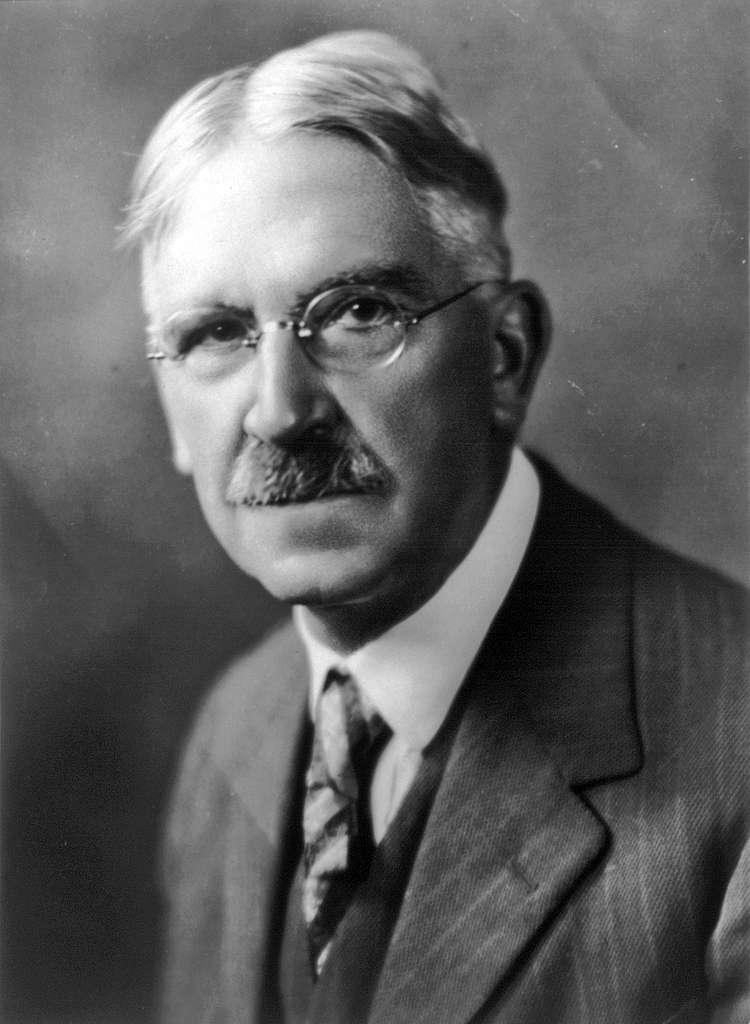
John Dewey (October 20, 1859, Burlington, Vermont – June 1, 1952, New York) was an American philosopher, psychologist, educator, and social reformer. Recognized as one of the founders of pragmatism, Dewey pioneered the theoretical development of democratic education, experiential learning, and applied knowledge. His philosophical thought resonated deeply not only in epistemology and aesthetics but also in ethics, politics, and especially education. He advocated for a life-centered, experience-based education, critiquing traditional rote methods and developing educational models that prioritized democratic and individual development.
John Dewey was born into a middle-class family in Burlington, Vermont. His childhood was shaped within the local culture and the social atmosphere of northeastern America.
After graduating from the University of Vermont in 1879, Dewey briefly worked as a teacher. He completed his doctorate at Johns Hopkins University in 1884. During this period, influenced by figures such as G. Stanley Hall, he turned toward experimental approaches in psychology and philosophy. His interest in education gained both theoretical and pedagogical dimensions during these years.
After earning his doctorate, Dewey began his academic career at the University of Michigan. In 1894, he moved to the University of Chicago, where the Laboratory School he established became a crucial experimental ground for testing his theories. In 1904, he joined Columbia University, where he remained a faculty member until his death.
Throughout his life, Dewey published more than forty books and nearly seven hundred articles. Works such as The School and Society (1899), Democracy and Education (1916), Experience and Nature (1925), and Art as Experience (1934) generated international impact. He left a lasting mark on the modernization of education in the United States and on educational reforms in countries such as Brazil and Türkiye.
Dewey’s philosophy has an experiential and holistic structure. He grounded his ideas in epistemology, aesthetics, ethics, and politics in the dynamic relationships between individuals and their environments. For him, “experience” is the foundation of knowledge and education. Knowledge is constructed through continuous interaction between the individual and the world.
Dewey’s philosophical foundations rest on experiential ontology and practical epistemology. In his conception of being, reality is not a fixed and unchanging structure but a continuous process shaped by experience. Epistemologically, he views knowledge as a construct generated through the individual’s interaction with the environment. For him, knowledge is not an objective or universal truth but a functional tool emerging in the process of solving problems encountered in lived experience. This perspective emphasizes process, context, and action, distinguishing it from classical theories of knowledge. In Dewey’s epistemology, truth is a concept valid only as long as it is tested within experience and proves effective. Ontologically, the human being is a continuously reconstructed entity through relationships with the environment. This foundational view shaped his understanding of education, ethics, and politics.
While it is difficult to identify prominent personal hobbies directly observable in John Dewey’s life, his intense engagement with literature, art, and public policy placed them at the intellectual center of his existence. His writings on art particularly highlight the importance he assigned to the internal dimensions of aesthetic experience.
Dewey married Alice Chipman, whom he met at the University of Michigan. The couple had six children. His wife exerted a significant influence on his educational philosophy. His private life was largely intertwined with his academic productivity.
Even during the 1930s and 1940s, Dewey maintained active academic engagement. Despite retirement, he continued writing on various social issues. In his political writings, he consistently emphasized democracy, freedom, and justice.
John Dewey died in New York on June 1, 1952, at the age of 92. After his death, his ideas inspired pedagogical reforms in many countries.
Dewey’s philosophy continues to influence not only education but also ethics, politics, art, and epistemology. The model he proposed for applying pragmatism to education retains its relevance today. Concepts such as “student-centered education,” “experiential learning,” and “democratic school environment” have become widespread due to his influence. His ideas have illuminated educational policies not only in the United States but also in many countries, including Türkiye.
Many scholars and practitioners who contributed to the philosophy of education have drawn inspiration from Dewey’s ideas. Particularly in areas such as social justice, active learning, and learning by doing, his concepts have become foundational principles of 21st-century pedagogy. In Türkiye, his ideas were referenced in experimental models such as the Village Institutes, and in public education reforms in Latin America.
In 1924, John Dewey visited Türkiye at the invitation of the Ministry of National Education during the founding process of the Turkish Republic and conducted a comprehensive study of the Turkish education system. The report he prepared after this visit played a significant role in the restructuring of Turkish education. Dewey’s recommendations influenced many areas, from teacher training models to school structure and the application of practical methods in education, particularly guiding reforms implemented during the tenure of Mustafa Necati. Dewey’s report was published in 1939 under the title “Report on Turkish Education.” His suggestions contributed to shaping the Turkish education system in alignment with the principles of secularism, populism, and experiential practice.
Ata, Bahri. 2000. “The Influence of an American Educator (John Dewey) on the Turkish Educational System.” The Turkish Yearbook of International Relations 31: 120–131. https://dergipark.org.tr/tr/download/article-file/846003
Bağcı, Hatice Fakioğlu. 2023. “John Dewey’e İlişkin Türkiye’de Yapılan Çalışmaların Analizi.” Millî Eğitim Dergisi 52, no. 239: 1627–1648. https://dergipark.org.tr/tr/download/article-file/2489676
Field, Richard. “John Dewey (1859–1952).” *Internet Encyclopedia of Philosophy*. Accessed July 17, 2025. https://iep.utm.edu/john-dewey/.
Florida Keys History Center-Monroe County Public L. "MM00001595." Flickr. Accessed July 17, 2025. https://www.flickr.com/photos/keyslibraries/7705729592
Library of Congress. "John Dewey, bust portrait." Picryl. Accessed July 17, 2025. https://picryl.com/media/john-dewey-cph3a51565-49d8e5
Sözer, Mehmet Akif, and Burcu Sel. 2015. “John Dewey’in Görüşlerinin Ontolojik ve Epistemolojik Temelde İrdelenmesi.” Ahi Evran Üniversitesi Kırşehir Eğitim Fakültesi Dergisi 16, no. 3: 313–327. https://dergipark.org.tr/tr/download/article-file/1489239
Özüaydın, B. Coşkun. “John Dewey ve Paideia Perennis.” Akdeniz Üniversitesi Sosyal Bilimler Enstitüsü Dergisi 1, no. 1 (2017): 30–40.
Birth | October 20, 1859, Burlington, Vermont | ||||||||
|---|---|---|---|---|---|---|---|---|---|
Death | June 1, 1952, New York | ||||||||
Profession(s) | Writer Educator Philosopher | ||||||||
Family | Spouse: Alice Chipman 6 children | ||||||||
Field | Ethics Aesthetics Philosophy of Experience Philosophy of Education | ||||||||
Early Life and Education
Career and Achievements
Key Achievements
Major Works and Projects
Dewey’s Ontological and Epistemological Foundations
Personal Life
Later Years and Death
Legacy and Influence
Influence in Türkiye