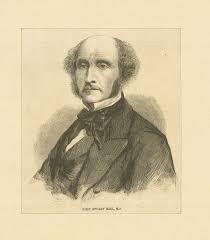
+2 More

Babası | James Mill | ||||||||
|---|---|---|---|---|---|---|---|---|---|
Annesi | Harriet Barrow | ||||||||
Ölüm tarihi | 1873-05-07 | ||||||||
Doğum tarihi | 1806-05-20 | ||||||||
Eş | Harriet Taylor Mill | ||||||||
Profession(s) | Philosopher thinker | ||||||||
Most Famous Work | On Liberty (On Liberty) | ||||||||
Prominent Topics | Individual liberty, freedom of thought and expression, individual-society relationship | ||||||||
Philosophical School | Utilitarianism, liberal thought | ||||||||
Areas of Work | Ethics, political philosophy, legal philosophy, theory of liberty, utilitarianism | ||||||||
Yaş | 66 | ||||||||
Full Name | John Stuart Mill | ||||||||
John Stuart Mill (20 May 1806, London – 7 May 1873, Avignon) was one of the most influential thinkers of 19th century Western philosophy. The conceptual framework he developed in moral philosophy, political philosophy, legal theory and the idea of liberty formed the theoretical foundation of modern liberal thought. Mill regarded the individual not merely as an instrument of social utility but as a being whose moral and intellectual development had intrinsic value.
John Stuart Mill’s intellectual development began at an extraordinary early age. The intense and disciplined education program designed by his father James Mill played a decisive role in shaping Mill’s mental formation. In childhood he became familiar with classical Greek and Latin texts and received systematic instruction in history, logic and philosophy. This early education laid the foundation for the rational analytical and critical mode of thinking he later developed.
This process created the groundwork for Mill’s critical stance toward authority and his commitment to independent thinking. The educational experience also revealed the early intellectual roots of his deep commitment to individual liberty
Mill’s education was conducted within the framework of an individualized intellectual program rather than through traditional academic institutions. This program focused intensely on moral philosophy political theory and logic with utilitarianism at its core. Having closely studied the ideas of Jeremy Bentham and James Mill Mill later critically reinterpreted them and embedded utilitarianism within a broader moral framework.
John Stuart Mill’s philosophy presents an original synthesis that seeks to reconcile classical utilitarianism with the idea of individual liberty. Mill did not reduce utilitarianism to a mere quantitative calculation of pleasure and pain; he regarded intellectual moral and aesthetic values as inseparable components of human happiness. This approach distinguished him from classical utilitarianism and established him as a representative of qualitative utilitarianism.
Mill evaluated the boundaries between the individual and society through the principle of liberty. According to him an individual’s actions may be restricted only when they harm others. This principle is one of the foundational pillars of Mill’s political and legal philosophy. The role of the state is not to suppress individual liberty but to safeguard it.
Mill’s conception of liberty is one of the most systematic examples of modern liberal philosophy. Liberty means the individual’s right to make decisions about his own life without external interference. Mill viewed freedom of thought and expression not merely as an individual right but as a necessary condition for social progress.
According to Mill the existence of intellectual diversity and different ways of life supports societal intellectual development. Therefore the pressure of the majority is one of the central problems he criticized. Liberty is not only a political principle but also the foundation of moral and intellectual growth.
Mill’s moral philosophy is built on the redefinition of utilitarianism. Happiness is not limited to physical pleasures; mental and moral satisfaction carry higher value. Therefore Mill argued that pleasures must be evaluated qualitatively. This approach demonstrates that moral decisions cannot rest solely on quantitative calculations. Morality according to Mill must be a structure that supports the free development of the individual. Social order gains moral legitimacy to the extent that it protects individual autonomy.
Mill’s legal thought is a normative extension of the principle of liberty. The primary function of law is to protect the rights and freedoms of the individual. Law is understood as a structure that upholds moral pluralism and recognizes the individual’s right to shape his own life.
In political philosophy Mill placed representative government pluralism and freedom of expression at the center. The political system must provide a framework that supports rather than hinders individual development.

John Stuart Mill, On Liberty
One of the central texts of John Stuart Mill’s philosophical system is On Liberty which examines the philosophical foundations of the relationship between individual liberty and social authority. According to the sources this work is regarded as the foundational text in which Mill systematically presents his conception of liberty.
In this work Mill grounds the individual’s freedom of thought expression and lifestyle as a moral and political principle. The limit of liberty is defined by the potential of an individual’s actions to harm others. This approach is one of the core pillars of Mill’s legal and political philosophy. Sources emphasize that On Liberty is not merely a defense of political liberty but also presents a vision of social order that enables intellectual and moral development of the individual.
The studies cited evaluate On Liberty alongside Mill’s other works that reinterpret utilitarianism. They argue that individual liberty is not contrary to social benefit but rather a condition that makes long-term social benefit possible. In this respect the work is regarded as a key reference that clearly illustrates the points at which Mill departed from classical utilitarianism.
The final years of Mill’s life were a period during which his ideas were systematically evaluated and debated. He died on 7 May 1873 in the French city of Avignon.
John Stuart Mill has become one of the foundational references of modern liberal philosophy through his views on liberty individual autonomy and moral pluralism. His ideas continue to influence contemporary political philosophy legal theory and human rights debates.
AKDEMİR, Ferhat. 2022. "JOHN STUART MILL’İN DİN ANLAYIŞI: İNSANLIK DİNİ." FLSF Felsefe ve Sosyal Bilimler Dergisi, no. 34 (December): 340–59. Accessed January 19, 2026.
Accessed November 26, 2025.
Accessed November 26, 2025.
Akgüner, Tayfun. "JOHN STUART MİLL’İN FELSEFESİ VE HUKUK GÖRÜŞÜ". Journal of Istanbul University Law Faculty 40, no. 1-4 (August 2011): 623-40. Accessed June 19, 2026.
Doç, Yrd, Gökhan Ak, Nişantaşı Üniversitesi, Đđbf Siyaset, Bilimi Ve Kamu, and Yönetimi Bölümü. 2015. "VI-I) LAÜ Sosyal Bilimler Dergisi." EUL Journal of Social Sciences. Accessed January 19, 2026.
John Stuart Mill, On liberty ( Hürriyet Üzerine). Accessed January 19, 2026.
John Stuart Mill, World History Encyclopedia. Accessed January 19, 2026.
John Stuart Mill. Accessed January 20, 2026.
Murat, Bayram, and Çavuşoğlu Halis. 2016. "Dicle Üniversitesi Sosyal Bilimler Enstitüsü Dergisi." Accessed January 19, 2026.

Babası | James Mill | ||||||||
|---|---|---|---|---|---|---|---|---|---|
Annesi | Harriet Barrow | ||||||||
Ölüm tarihi | 1873-05-07 | ||||||||
Doğum tarihi | 1806-05-20 | ||||||||
Eş | Harriet Taylor Mill | ||||||||
Profession(s) | Philosopher thinker | ||||||||
Most Famous Work | On Liberty (On Liberty) | ||||||||
Prominent Topics | Individual liberty, freedom of thought and expression, individual-society relationship | ||||||||
Philosophical School | Utilitarianism, liberal thought | ||||||||
Areas of Work | Ethics, political philosophy, legal philosophy, theory of liberty, utilitarianism | ||||||||
Yaş | 66 | ||||||||
Full Name | John Stuart Mill | ||||||||
Youth and Education
Childhood and Adolescence
Educational Journey
Career and Philosophical Orientation
Philosophical Positioning
Relationship Between Society Individual and State
Concept of Liberty
Moral and Utilitarian View
Legal and Political Philosophy
His Major Work: On Liberty
Later Years and Death
Legacy and Influence