

This article was automatically translated from the original Turkish version.
+1 More
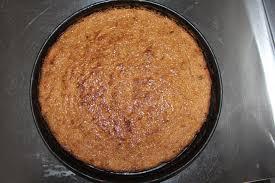
Kadınhanı tahinli pidesi; a type of pide prepared with basic ingredients such as flour, tahini, kaymak, and butter. This pide has a weight of approximately 730 grams, a diameter ranging from 35 to 40 centimeters, and a thickness between 10 and 15 millimeters. It can be served hot, warm, or cold; additionally, it is commonly consumed by pouring cold syrup on top as desired.
The most distinctive feature distinguishing this pide from similar varieties is a special folding technique applied to the dough. This method ensures that tahini, kaymak, and butter integrate completely with the dough. Moreover, the quality of the flour used imparts a unique elasticity to the dough.
For the production of this pide, "Sarıelek TİP 650" bread flour, derived from hard wheat varieties grown in central Anatolian regions such as the Konya Plain and meeting the TS 4500 standard, is preferred. The tahini used must comply with TS 2589:2006, the butter with TS 1331, and the cream with TS 1864 standards. Optionally, walnut kernels of the Kaman, Yalova, Yavuz, or Maraş varieties may be added.
The original flavor of the pide is also influenced by traditional kneading techniques as well as the construction of the baking oven. These ovens are lined with volcanic and andesitic stones sourced from the Sille region (8 kilometers southwest of Konya). The oven base contains a mixture of glass fragments, salt, and slag. Baking is carried out at approximately 250°C using charcoal fires from hardwood trees such as oak and pine.
The pide, once removed from the oven and cooled, can be consumed without syrup. If syrup is preferred, a thick syrup made from 350 grams of sugar, 200 milliliters of water, and a small amount of lemon salt is prepared and allowed to cool. The cold syrup is poured over the cooled pide and the dish is left to rest for 30 minutes before serving.
The shelf life of the pide is four days at room temperature, seven days in a refrigerator (4–5°C), and 12 months in a deep freezer, provided it is properly packaged.
The production of Kadınhanı tahinli pidesi takes place within the administrative boundaries of the Kadınhanı district of Konya province. Compliance with standards is monitored under the coordination of the Kadınhanı Municipal Council.
Inspections, conducted at least twice annually or upon complaint, involve a commission comprising representatives from the Kadınhanı Agricultural District Directorate, the Chamber of Tradespeople and Artisans, the District Governorate Public Health Center, and the Kadınhanı Municipality. The inspection process includes verifying the suitability of raw materials and confirming that the baking ovens possess the volcanic stone characteristics specified in their registration documents. Samples collected are analyzed at the Konya Food Control Laboratory. The commission evaluates the results and holds the authority to impose sanctions when necessary.
Turk Patent and Trademark Office. "Kadınhanı Tahinli Pidesi Tescil Belgesi." Turk Patent and Trademark Office. Accessed October 23, 2025. https://ci.turkpatent.gov.tr/Files/GeographicalSigns/171.pdf
Turkish Patent and Trademark Office. "Kadınhanı Tahinli Pidesi." *Coğrafi İşaretler Portalı*. Accessed October 23, 2025. https://ci.turkpatent.gov.tr/cografi-isaretler/detay/38029

No Discussion Added Yet
Start discussion for "Kadınhanı Tahinli Pide" article
Ingredients and Baking Characteristics
Production Process
Service and Storage Conditions
Registration and Inspection