This article was automatically translated from the original Turkish version.
Plan | Rectangular Plan | ||||||||
|---|---|---|---|---|---|---|---|---|---|
Material(s) | Outer Walls Cut Stone Inner Walls Rubble Stone | ||||||||
Size(s) | North-South Approximately 150m East-West 75m | ||||||||
Location | City Center | ||||||||
Historical | Late Hittite Period | ||||||||
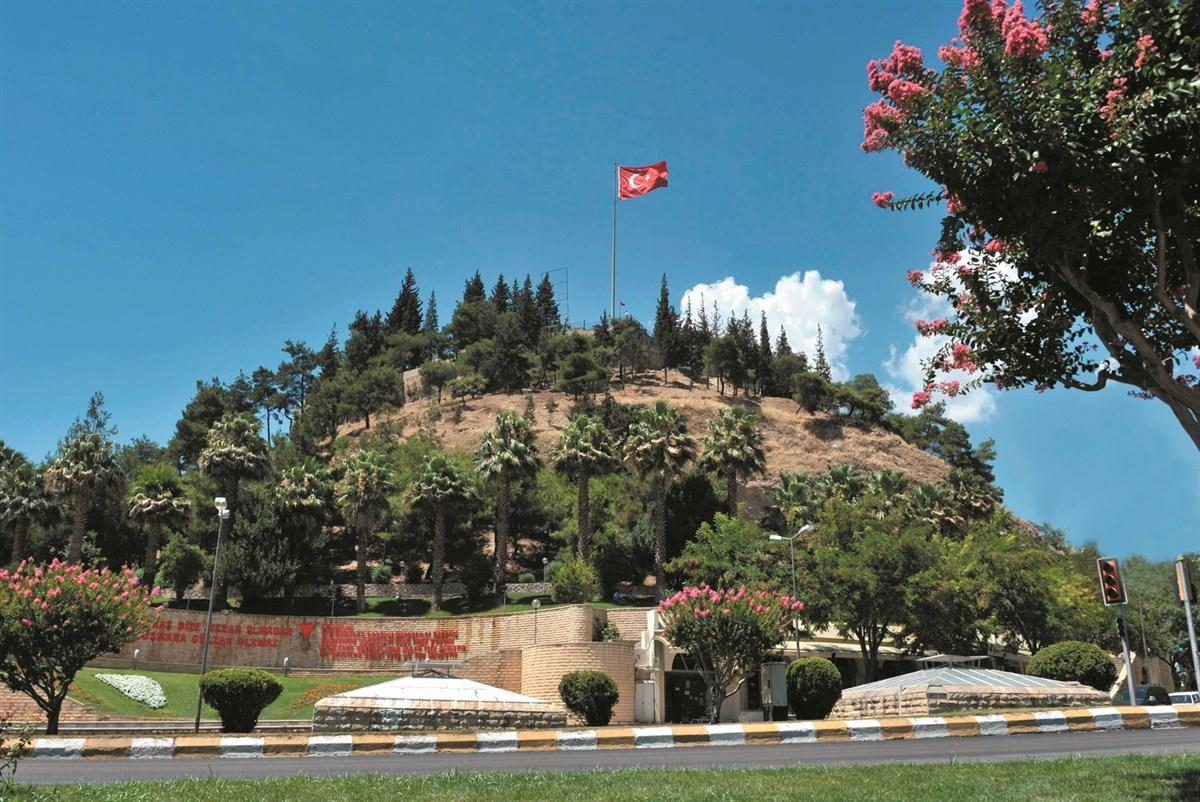
Kahramanmaraş Castle is a historical defensive structure located on a dominant hill in the city center of Kahramanmaraş, in southern Türkiye. Due to its strategic location, the castle has played a decisive role throughout history in the military, administrative, and strategic control of the city, and has been used and modified by various civilizations across different periods.
Historical Maraş Castle (Kahramanmaraş Municipality)
Kahramanmaraş Castle is generally believed to have foundations dating back to the Late Hittite period. The region’s significance as a settlement area since antiquity indicates that the castle was used for defensive purposes from early times. During the Assyrian and Persian periods, the structure maintained its strategic importance and was transformed into a more systematic defensive system under Roman rule.
During the Roman and Byzantine periods, the castle became one of the primary elements of the city’s defense system, particularly strengthened during the Byzantine era. Throughout the Middle Ages, the castle frequently changed hands amid military conflicts between the Byzantines and Arab-Islamic states, undergoing repeated repairs during this period.
Under Seljuk rule, the castle underwent interventions reflecting the characteristics of Anatolian Turkic-Islamic defensive architecture. During the Dulkadirids period, the castle retained its status as the administrative center of Maraş and continued its military function after the region came under Ottoman control. Ottoman-era renovations ensured the structure’s prolonged use.
Kahramanmaraş Castle was primarily constructed using cut and rubble stone. The surviving ramparts and towers reveal a combination of construction techniques from different historical periods, demonstrating that the castle underwent multiple repairs and reconstructions throughout its history.
The castle’s layout is adapted to the natural topography and positioned to enhance its defensive capabilities. The thickness of the walls and the placement of the towers highlight its military function. When compared with similar castles in Anatolia, it shares common features in terms of functionality and defensive priority.
Due to its location, Kahramanmaraş Castle provided a commanding view over the city and served as the central element of the city’s defense system throughout history. The castle was not only a military structure but also symbolized administrative authority. It played a crucial role in controlling threats to the city and has been decisive in Maraş’s historical development.

Inside the Castle (Kahramanmaraş Governorate)
During the National Struggle, the castle became one of the symbolic structures associated with Kahramanmaraş’s resistance. The struggle against the city’s occupation and its liberation on 12 February 1920 strengthened the castle’s historical and symbolic value in the city’s collective memory. During this period, the castle acquired an important place in the collective memory of Maraş’s resistance.
Today, Kahramanmaraş Castle continues to exist as an integral part of the city’s historical fabric. Recognized as a cultural heritage site requiring preservation due to its historical, architectural, and symbolic value, the castle serves as a key reference point for understanding Kahramanmaraş’s cultural heritage.
"60 SANİYEDE KAHRAMANMARAŞ | TARİHİ MARAŞ KALESİ." Büyükşehir Kahramanmaraş. YouTube. Accessed February 22, 2026. https://www.youtube.com/watch?v=ORTMOiaFnrQ
EBA. "Kahramanmaraş Kalesi." *Okul Dışı Öğrenme Ortamları*. Accessed January 12, 2026. https://okuldisiogrenme.eba.gov.tr/place-detail/kahramanmaras-kalesi-5411
Ministry of Culture and Tourism of the Republic of Türkiye. "Kahramanmaraş Kalesi." *Türkiye Kültür Portalı – Gezilecek Yerler*. Accessed January 12, 2026. https://www.kulturportali.gov.tr/turkiye/kahramanmaras/gezilecekyer/kahramanmaras-kalesi
Onikişubat Belediyesi. "Maraş Kalesi." Accessed January 12, 2026. https://onikisubat.gov.tr/maraskale
T.C. Ministry of Culture and Tourism. "Kahramanmaraş Kalesi." *Kültür Portalı*. Accessed January 12, 2026. https://www.kulturportali.gov.tr/portal/kahramanmaras-kalesi
T.C.Kahramanmaraş Valiliği. "Kahramanmaraş Kalesi." Accessed January 12, 2026. https://www.kahramanmaras.gov.tr/kahramanmaras-kalesi
Yıldız, Mustafa, and others. “Görsel Belgelerle Maraş Kalesi’nin Tarihi ve Önemi.” *Academia.edu*. Accessed January 12, 2026. https://www.academia.edu/119276071/Görsel_Belgelerle_Maraş_Kalesinin_Tarihi_ve_Önemi
Yıldız, Mustafa, and others. “Görsel Belgelerle Maraş Kalesi’nin Tarihi ve Önemi.” *Kent Araştırmaları Dergisi*. Accessed January 12, 2026. https://dergipark.org.tr/tr/pub/kent/article/1433808
Yıldız, Mustafa, and others. “Görsel Belgelerle Maraş Kalesi’nin Tarihi ve Önemi.” ResearchGate. Accessed January 12, 2026. https://www.researchgate.net/publication/379437484_Gorsel_Belgelerle_Maras_Kalesi'nin_Tarihi_ve_Onemi

Plan | Rectangular Plan | ||||||||
|---|---|---|---|---|---|---|---|---|---|
Material(s) | Outer Walls Cut Stone Inner Walls Rubble Stone | ||||||||
Size(s) | North-South Approximately 150m East-West 75m | ||||||||
Location | City Center | ||||||||
Historical | Late Hittite Period | ||||||||
No Discussion Added Yet
Start discussion for "Kahramanmaraş Castle" article
History
Architectural Features
Military and Strategic Importance
Role During the National Struggle
Kahramanmaraş Castle Today