This article was automatically translated from the original Turkish version.
+1 More
Registration Number | 712 | ||||||||
|---|---|---|---|---|---|---|---|---|---|
Registration Date | 05.04.2021 | ||||||||
Application Number | C2020/017 | ||||||||
Application Date | 17.01.2020 | ||||||||
Name of the Geographical Indication | Kahta Almond | ||||||||
Product / Product Group(s) | Almond / Processed and unprocessed fruits vegetables and mushrooms | ||||||||
Type of Geographical Indication | Place of origin | ||||||||
Applicant/Registrant(s) | Kahta District Governorship | ||||||||
Address of the Registrant | Hürriyet Neighborhood, Mustafa Kemal Street No:171, Kahta, ADIYAMAN | ||||||||
Geographical Boundary | Adıyaman Province | ||||||||
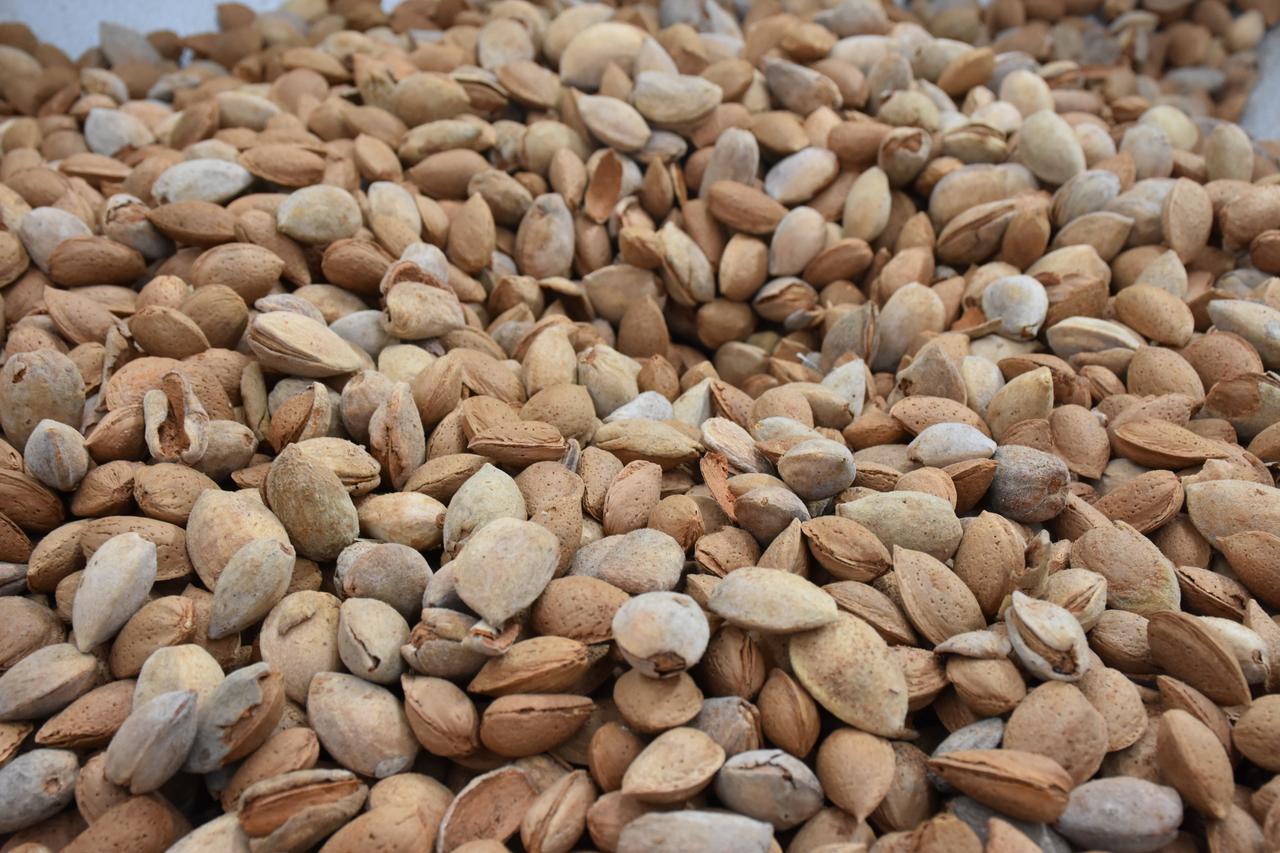
Kahta almond is a variety of almond (Prunus amygdalus Batsch.) cultivated in the Kahta district of Adıyaman Province, resulting from the joint cultivation of the Ferragnes and Ferraduel varieties. This product is distinguished by its late flowering, high kernel yield (approximately 40%), low double-kernel rate, and large-sized kernels. It is geographically indicated and can only be produced within the defined geographical boundaries. The contrasting climatic conditions of Kahta—hot and dry in the south and cool and rainy in the north—combined with the increased humidity provided by the Atatürk Dam, create favorable environmental conditions for the high-quality and consistent production of Kahta almond.
Adıyaman has a transitional climate between the Eastern Anatolia and Mediterranean regions. The southern parts experience hot and dry summers and warm, rainy winters, while the northern parts have cool summers and cold, rainy winters. The increased humidity and climate moderation brought by the Atatürk Dam support the cultivation of Kahta almond. The crop can be grown profitably because cold air does not accumulate in the valleys, thereby reducing frost risk. The most suitable areas are south-facing, well-drained, slightly sloping, and dry lands.
Kahta almond consists of almonds with late flowering and high kernel yield (around 40%), and high oil content (40–60%). The Ferragnes variety has elongated kernels (approximately 3 cm), while the Ferraduel variety has round-oval kernels (approximately 2.5 cm). The double-kernel rate is extremely low. The ripening period extends from mid-September to early October. The almonds are of suitable size for raw consumption, with up to 25 raw kernels per ounce.
Almond trees can grow in dry, calcareous, stony, or sandy soils. However, they cannot thrive in excessively moist or poorly drained soils. In well-drained and deep soils, roots can extend up to 3–3.5 meters. Fertilization should be based on soil analysis.
Late spring frosts are the primary limiting factor in almond cultivation. Although almond flowers can withstand temperatures down to -4°C, the blossoms and fruit set require higher temperatures. Therefore, special precautions must be taken in areas prone to frost. Insufficient summer heat reduces economic yield.
Orchards should be established on slopes with good air circulation, away from forested areas where cold air accumulates, to minimize frost risk. Soil fertility is enhanced with manure, and planting distances are determined according to variety compatibility (e.g., 6x6 m). Ferragnes is the main variety, while Ferraduel, Tuono, and Texas varieties are preferred as pollinators.
In Kahta almond cultivation, propagation can be achieved through direct seed sowing or grafting of rootstocks. Rootstocks may include almond seedlings, peach, plum, or almond-peach hybrids. Common grafting methods include dormant T-budding and whip grafting.
Regular irrigation positively affects kernel size, hull separation, and overall quality. Irrigation should be stopped approximately 34 days before harvest. However, immediate post-harvest watering is essential to meet the trees’ water needs.
Almond trees have the highest nutrient requirement for nitrogen and are typically fertilized once a year with approximately 1 kg of nitrogen per tree. Potassium deficiency can be corrected by foliar application of potassium nitrate. Additionally, it is recommended to apply 10–20 tons of organic fertilizer per hectare every 1–2 years.
The modified leader training system is generally applied. Annual light yield pruning is carried out alongside shaping pruning. Renewal pruning should be performed after 15–20 years.
Cultural measures and appropriate rootstock selection are fundamental. Chemical control is applied either after harvest or early in the season. In newly established orchards, weed control must be carried out regularly during the first 2–3 years.
Almonds are harvested when the outer hull splits open and loses moisture. Harvesting is typically done by hand or with poles, although these methods may damage new season shoots. After harvest, almonds are separated from their hulls and dried until moisture content reaches 8%. Drying must be performed in shaded areas with good air circulation, not in direct sunlight. Storage should occur in dry, cool, and odor-free environments.
The production and labeling practices of Kahta almond are monitored by a minimum three-member oversight body coordinated by the Kahta District Governorship and the Kahta District Directorate of Agriculture and Forestry. Inspections are conducted at least once annually, and reports are submitted to the Turkish Patent and Trademark Office.
Anadolu Ajansı. "Adıyaman’da badem rekoltesinde büyük artış." Accessed August 16, 2025. https://www.aa.com.tr/tr/turkiye/adiyamanda-badem-rekoltesinde-buyuk-artis/1274407.
Türk Patent ve Marka Kurumu. "Kahta Bademi – Coğrafi İşaret Belgesi (PDF)." Accessed August 16, 2025. https://ci.turkpatent.gov.tr/Files/GeographicalSigns/a01d799e-8b14-41b1-b89c-8fe4bcfa9b8c.pdf.
Türk Patent ve Marka Kurumu. "Kahta Bademi." Coğrafi İşaretler Portalı. Accessed August 16, 2025. https://ci.turkpatent.gov.tr/cografi-isaretler/detay/1562.

Registration Number | 712 | ||||||||
|---|---|---|---|---|---|---|---|---|---|
Registration Date | 05.04.2021 | ||||||||
Application Number | C2020/017 | ||||||||
Application Date | 17.01.2020 | ||||||||
Name of the Geographical Indication | Kahta Almond | ||||||||
Product / Product Group(s) | Almond / Processed and unprocessed fruits vegetables and mushrooms | ||||||||
Type of Geographical Indication | Place of origin | ||||||||
Applicant/Registrant(s) | Kahta District Governorship | ||||||||
Address of the Registrant | Hürriyet Neighborhood, Mustafa Kemal Street No:171, Kahta, ADIYAMAN | ||||||||
Geographical Boundary | Adıyaman Province | ||||||||
Ecological and Geographic Characteristics
Distinctive Features
Cultivation Methods
Soil Characteristics
Climatic Requirements
Orchard Establishment
Propagation and Grafting
Agricultural Practices
Irrigation
Fertilization
Pruning
Pest and Disease Management
Harvesting, Drying, and Storage
Monitoring Process