


This article was automatically translated from the original Turkish version.
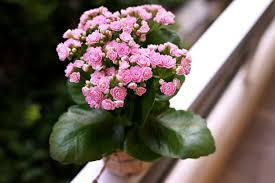
Kalanchoe (Kalanchoe spp.) is a genus of succulent, flowering plants belonging to the Crassulaceae family. Originating primarily from Madagascar and tropical Africa, this genus encompasses approximately 200 species. In particular, Kalanchoe blossfeldiana is widely cultivated as an ornamental plant worldwide. Members of the genus are frequently chosen as indoor ornamental plants due to their succulent characteristics and relatively low maintenance requirements. Some species are also known colloquially as “immortal flower” or “lucky flower.”
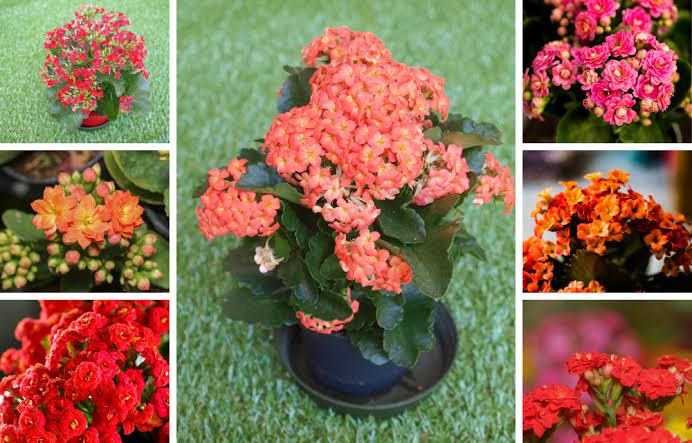
Kalanchoe Flower (Çiçeklerim)
Kalanchoe species are perennial herbaceous or semi-woody plants with succulent leaves. The leaves are typically opposite, thick and oval-shaped, with a waxy surface coating. Flowers develop in dense clusters, are tubular with four petals, and are often brightly colored in shades of red, yellow, orange, or pink. Stems may grow vertically or horizontally, and in some species, plantlets (adventitious buds) form along the leaf margins and can root. Plants typically reach a height of 15–45 cm.
Kalanchoe requires abundant indirect sunlight. Prolonged exposure to direct sunlight may cause leaf scorching, while insufficient light inhibits flowering. A minimum of six hours of bright light per day is recommended for optimal growth and blooming. In winter, when light intensity decreases, supplemental artificial lighting may be necessary.
Thanks to their succulent leaves, Kalanchoe plants are drought-tolerant and store water efficiently. Watering should only occur after the soil has dried completely. Overwatering leads to root rot. During winter months, watering frequency should be reduced; in summer, watering once a week is sufficient provided the soil is checked regularly.
A well-draining, light and porous soil is preferred. Specialized mixes formulated for cacti and succulents are ideal. Sandy-loam soils enriched with organic matter and with a pH of 6.0–6.5 are recommended.
Kalanchoe is a warm-climate plant. The optimal growth temperature range is 18–25 °C. Growth slows below 10 °C, and temperatures below 5 °C can cause damage. The plant is sensitive to frost.
Kalanchoe tolerates low to moderate humidity levels. High humidity increases the risk of fungal diseases. It is best grown in well-ventilated environments with good air circulation.
During the active growing season (spring to summer), a low-nitrogen, phosphorus- and potassium-rich liquid fertilizer can be applied once a month. Over-fertilization may cause excessive leaf growth and reduced flowering. Fertilization should be stopped during winter.
Kalanchoe species are most commonly propagated through leaf or stem cuttings, and in some species, through adventitious plantlets. Leaf cuttings can be placed directly into moist soil after being allowed to dry for several days. A peat-perlite mix is recommended as a rooting medium.
Repotting should be done at the beginning of spring, approximately every two years. As the root system expands, the plant should be moved to a pot one size larger. The new pot must have drainage holes, and a layer of gravel or pumice stone should be placed at the bottom to prevent water accumulation.
Under proper cultivation conditions, Kalanchoe is generally a healthy plant; however, it is susceptible to certain diseases and pests:
Kalanchoe is primarily cultivated as an ornamental plant for indoor and outdoor decorative purposes. Flowering species are especially favored due to their long blooming period and vibrant colors.
Ethnobotanical evidence suggests that certain species (Kalanchoe pinnata, Kalanchoe daigremontiana) possess wound-healing, antimicrobial and anti-inflammatory properties in traditional medicine. However, oral consumption of these species may be toxic; therefore, their use as folk remedies without scientific validation should be avoided.

No Discussion Added Yet
Start discussion for "Kalanchoe (Kalanchoe spp.)" article
Physical Characteristics
Cultivation Conditions
Light
Watering
Soil
Temperature
Humidity
Fertilization
Propagation and Repotting
Diseases and Pests
Uses and Benefits