


This article was automatically translated from the original Turkish version.
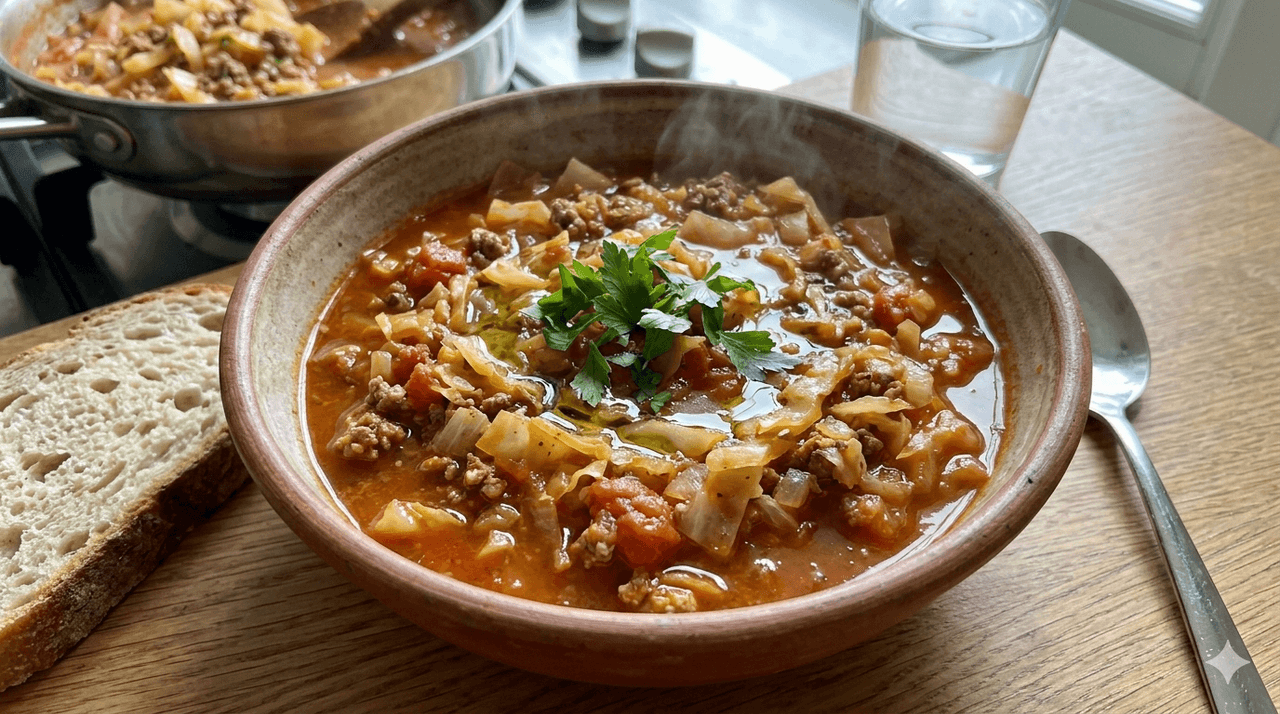
(Yapay Zeka ile oluşturulmuştur.)
Cooking Method(s) | Stew / Soup dish | ||||||||
|---|---|---|---|---|---|---|---|---|---|
Origin(s) | Russia | ||||||||
Featured Flavor | Sourish, slightly bitter and intense cabbage aroma | ||||||||
Cooking Time | 40-50 minutes | ||||||||
Main İngredient | Cabbage | ||||||||
Variations | Minced meat, diced meat, with rice, with bulgur | ||||||||
Kapuska is a hearty and nutritious dish in Turkish cuisine, primarily made with cabbage and commonly consumed during the winter months. It exists in both meat-based and olive oil-based versions and has found a place across a broad cultural spectrum, from rural Anatolian households to royal kitchens.
The word “Kapuska” derives from the term “kapus”, meaning cabbage. The dish’s historical roots extend back to the Ottoman Empire, where it became a traditional winter meal, especially in rural Anatolia. Throughout history, its nutritional value and satiating nature made it a favored dish, evolving regionally through variations in meat types (lamb or beef) and spices, and transmitted as a cultural heritage to the present day.
The main ingredient of Kapuska, white headed cabbage, is classified in botanical literature as Brassica oleraceae var. capitata subvar. alba. This plant species typically features a taproot system and circular leaves with wavy dark green edges. Some local varieties registered as “White Kapuska” are known to originate from Uzbekistan and are preserved by the Black Sea Agricultural Research Institute in Türkiye.
Kapuska is fundamentally prepared by slow-cooking cabbage with various vegetables, meat, and grains over low heat. A classic meat-based Kapuska recipe consists of the following steps:
• Core Ingredients: One medium cabbage, 500 grams of minced meat or cubed meat (lamb or beef), onion, tomato, green pepper, rice, vegetable oil, and spices (salt, black pepper, red pepper flakes).
• Preparation: The cabbage is finely chopped. Onions are sautéed in oil until pinkish, then meat is added and cooked until its moisture is absorbed.
• Cooking: Chopped tomatoes and peppers are added, followed by the cabbage. Sufficient water and spices are incorporated, and the mixture is simmered gently until the cabbage becomes tender.
• Finishing: During the last 15 to 20 minutes of cooking, rice is added and allowed to steam until fully cooked.

Image related to Kapuska dish (generated by artificial intelligence.)
In different regions of Türkiye, Kapuska varies according to local agricultural products and taste preferences:
• Black Sea Region: Cornmeal is added to impart texture and a distinctive flavor.
• Central Anatolia Region: Typically prepared with lamb and strong spices, and served with bulgur pilaf or yogurt.
• Aegean Region: Lighter versions predominate, with reduced meat and an emphasis on olive oil and vegetables.
• Karabük Region: In the version known as “Olive Oil Kapuska”, a touch of sugar is added to balance the flavor.
• Mediterranean Region: Enriched with refreshing herbs such as oregano and mint.
Kapuska is a low-calorie dish with high nutritional value due to its ingredients.
• Digestive System: The high fiber content of cabbage aids in regulating digestion.
• Immune System: Rich in vitamin C and antioxidants, it supports immune function.
• Metabolism: The spices it contains stimulate metabolism, while the added meat provides protein and energy.
• Diet and Weight Management: When prepared without meat or using only olive oil, its high fiber content promotes satiety and assists in weight control.
T.C. Ministry of Agriculture and Forestry. “16-Beyaz Kapuska.” *Mirasımız Yerel Tohum*. Accessed February 21, 2026. https://mirasimizyereltohum.tarimorman.gov.tr/Sayfa/Detay/1388
“Kapuska: Sağlıklı ve Lezzetli Bir Türk Yemeği.” *Türk Dili ve Edebiyatı*. Accessed February 21, 2026. https://turkdiliveedebiyati.com/kapuska/
• “Zeytinyağlı Kapuska - Karabük.” Kültür Portalı. Accessed February 21, 2026. https://www.kulturportali.gov.tr/turkiye/karabuk/neyenir/zeytinyagli-kapuska

(Yapay Zeka ile oluşturulmuştur.)
Cooking Method(s) | Stew / Soup dish | ||||||||
|---|---|---|---|---|---|---|---|---|---|
Origin(s) | Russia | ||||||||
Featured Flavor | Sourish, slightly bitter and intense cabbage aroma | ||||||||
Cooking Time | 40-50 minutes | ||||||||
Main İngredient | Cabbage | ||||||||
Variations | Minced meat, diced meat, with rice, with bulgur | ||||||||
Etymology and Historical Background
Botanical Characteristics and Ingredient Science
Gastronomic Preparation Process (Standard Recipe)
Regional Variations and Types
Nutritional Value and Health Effects