

This article was automatically translated from the original Turkish version.
Karaisalı pepper is a local red pepper variety belonging to the species Capsicum annuum L., cultivated in the Karaisalı district of Adana Province. Distinguished by its non-pungent structure, this pepper measures 7–17 cm in length, 2–7 cm in width, and has a flesh thickness of 2–6 mm; it is widely used in tomato paste production. Production relies on seeds saved from the previous harvest, and seedlings are grown in fertile colluvial soils irrigated by the Çakıt, Üçürge, Körkün, and Eğlence streams. Karaisalı pepper is hand-harvested six to seven times annually and is influenced by the ecological conditions of Karaisalı district, located at the intersection of the Mediterranean and Inner Anatolia climate zones, characterized by high humidity and hot summers and mild, rainy winters.
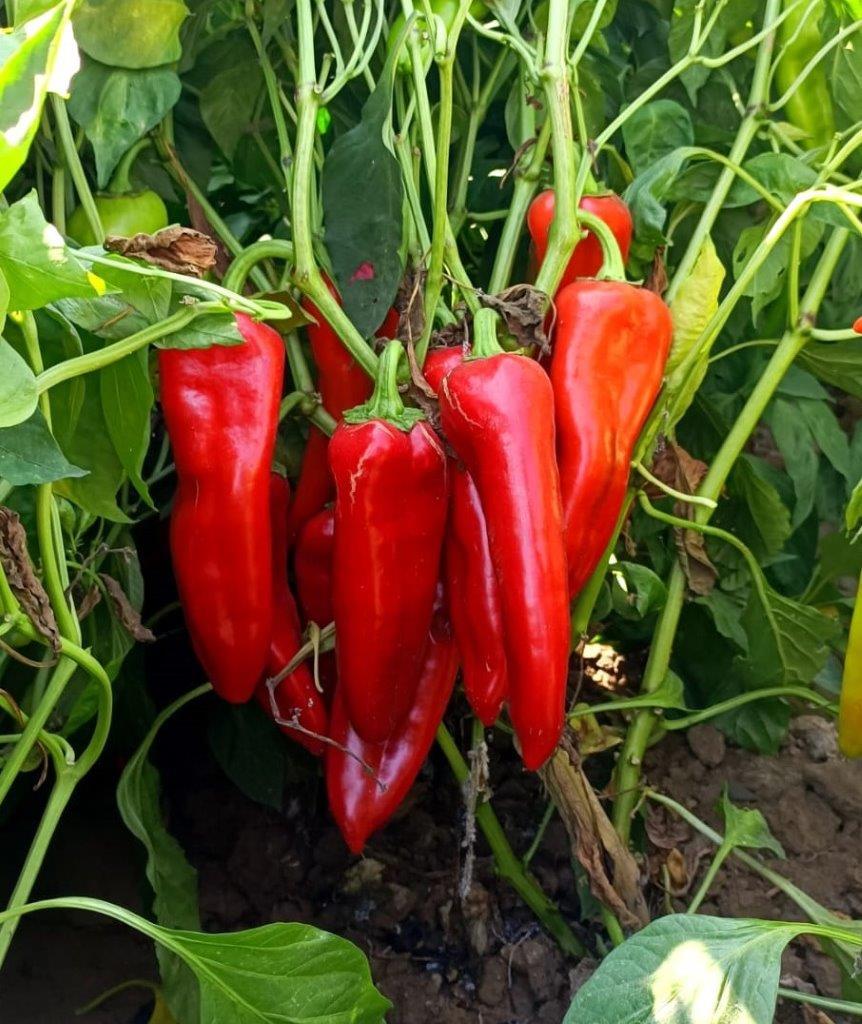
The fruits of Karaisalı pepper are 7 to 17 cm long, 2 to 7 cm wide, and have a flesh thickness ranging from 2 to 6 mm. The plant height varies between 40 and 70 cm. The fruit is red, plump, thin-fleshed, and non-pungent. These characteristics make it particularly suitable for tomato paste production.
Per 100 grams of fresh Karaisalı pepper, the following primary components are present:
These data demonstrate that Karaisalı pepper is a nutritious food product with high vitamin C content and low fat content.
Karaisalı district is situated approximately 90 km north of the Mediterranean Sea, at the foot of the Taurus Mountains, at an elevation of about 241 meters above sea level. The district is dominated by a humid to semi-humid subtropical Mediterranean climate, with hot, dry summers and warm, rainy winters. The meltem winds, blowing from the southwest across the Mediterranean, contribute to high humidity levels throughout the year. The annual average temperature is 18.4 °C.
In terms of soil composition, Karaisalı district features fertile soils including colluvial soils formed around the Üçürge Stream and brown forest soils with high gravel content. Irrigation is supplied by the Çakıt, Üçürge, Körkün, and Eğlence streams, which originate in Niğde and Kayseri.
Karaisalı pepper production is carried out using saved seed from previous harvests. Seeds are dried and stored after harvest and then used for seedling propagation.
The designation “Karaisalı Pepper” must appear on the product packaging or directly on the product. In cases where direct labeling is not feasible, the relevant logo and certification mark must be displayed prominently within the production area for easy visibility.
The reputation of Karaisalı pepper is closely tied to Karaisalı district through its widespread use in local cuisine and its significant role in the regional economy. The tradition of using saved seeds and the intergenerational transmission of cultivation techniques further reinforce this connection. Consequently, all production and processing activities related to Karaisalı pepper must be conducted exclusively within the boundaries of Karaisalı district.
The production and marketing of Karaisalı pepper are monitored by a five-member commission coordinated by the Karaisalı Municipality, comprising representatives from the Karaisalı District Directorate of Agriculture and Forestry, the Karaisalı Chamber of Agriculture, and the village headmen of Çakallı and Güvenç. Inspections are conducted routinely three times per year—in March, August, and September—with additional inspections carried out as needed.
The criteria used during inspections are as follows:

Morphological Characteristics
Chemical Composition and Nutritional Value
Ecological Conditions and Cultivation Area
Cultivation Method
Usage and Packaging
Geographical Boundary and Reputation Link
Inspection and Compliance Process