

This article was automatically translated from the original Turkish version.
Registration Number | 933 | ||||||||
|---|---|---|---|---|---|---|---|---|---|
Registration Date | 26.10.2021 | ||||||||
Application Number | C2018/167 | ||||||||
Application Date | 08.08.2018 | ||||||||
Name of the Geographical Indication | Kargı Tulum Cheese | ||||||||
Product / Product Group(s) | Cheese / Cheeses | ||||||||
Type of Geographical Indication | Place of origin | ||||||||
Applicant/Registrant(s) | Kargı Municipality | ||||||||
Address of the Registrant | Mihrihatun Neighborhood, Atatürk Street No:46, Kargı ÇORUM | ||||||||
Geographical Boundary | Kargı District Çorum Province | ||||||||
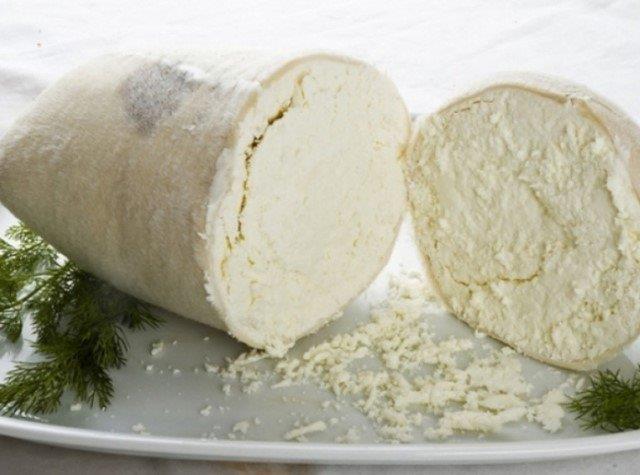
Kargı tulum cheese is a traditional, full-fat, semi-hard cheese produced exclusively in the Kargı district of Çorum Province, Türkiye, using cow, sheep, and goat milk separately. The milk is sourced from animals grazing on the region’s rich vegetation, and the cheese is prepared using traditional methods and aged for at least four months. Its pale yellow color, high fat content, distinctive aroma, and presentation in specially crafted sheepskin sacks distinguish it from other cheeses.
Kargı tulum cheese is a traditional cheese produced under protected designation of origin in the Kargı district of Çorum Province, located in Türkiye’s Black Sea Region. This product is protected by the Kargı Municipality, the registered holder, and may be produced only within the administrative boundaries of Kargı district. The product name and origin emblem must appear on the cheese itself or its packaging; if this is not feasible, the designation and emblem must be visibly displayed at the production facility.
Kargı tulum cheese is made from cow, sheep, and goat milk. The milk is sourced from animals grazing on the highland pastures and mountainous areas of Kargı, where they feed on regional endemic herbs and thyme. This natural flora includes over seventy endemic plant species, eight of which are found exclusively in the Kargı region. These include Campanula ledebouriana, Alkanna froedinii, Centaurea ensiformis, Convolvulus assyricus, Corydalis wendelboi ssp. congesta, Euphorbia anacampseros var. anacampseros, Crocus aerius, and Crocus danfordiae. The grazing conditions in this region directly influence milk yield and quality, imparting a unique flavor and aroma to the cheese.
Kargı tulum cheese is a full-fat, semi-hard cheese with a pale yellow color. The milk used in production is processed without fat removal. Its composition varies depending on the type of milk used. Cheese made from cow’s milk contains 68–70% total dry matter, 69–71% fat, 32–34% protein, 21–23% salt, 2.2–2.8% ash, and 2.5–2.9% lactic acid. Cheese made from sheep’s milk contains 66–68% total dry matter, 30–33% fat, 23–25% protein, 3–3.5% salt, 3–3.5% ash, and 0.7–0.9% lactic acid. Cheese made from goat’s milk contains 35–37% fat, 18–20% protein, 3.5–4% salt, 4.2–4.7% ash, and 0.8–0.9% lactic acid; the total dry matter content is not specified. These variations directly affect the sensory characteristics and nutritional value of the cheese.
In production, each type of milk is processed separately and never mixed. The production process proceeds as follows:
Heating and Inoculation: Raw milk is heated to approximately 24–25 °C and inoculated with 1–1.5% rennet at a strength of 1/8000.
Incubation: The inoculated milk is left to coagulate for approximately 24 hours at a temperature of 15–18 °C.
Draining and Pressing: The formed curd is placed into cloth bags and hung on hooks at 5–7 °C for 24 hours. Pressing, if required, is carried out in wooden troughs.
Salting and Kneading: The curd is broken into pea-sized pieces, salted dry at 15–18 °C, and then kneaded at the same temperature.
Preliminary Aging: The kneaded cheese is packed into cloth bags weighing 15–20 kg and stored at 15–18 °C for 1–2 months.
Aging: After preliminary aging, the cheese is transferred into larger 50 kg bags and aged for at least four months, with the bags being changed every 15–20 days.
Packaging and Sale: The aged cheese is placed into special sheepskin sacks of half, one, or one and a half kilograms. The label must bear the inscription “Made from raw milk.”
The sacks are specially prepared from white sheepskin. The skins are salted during summer months and sun-dried for three months, after which the wool is removed. Following preliminary washing, the skins are kneaded with a mixture of cheese whey and flour and left to rest for one day. After cleaning and cutting, the skins are dried and prepared for use as sacks.
The production and use of Kargı tulum cheese are monitored through a control system coordinated by the Kargı Municipality. The control board consists of representatives from the Kargı Municipality, the Department of Food Engineering at Hitit University, and the Çorum Provincial Directorate of Agriculture and Forestry. Inspections are conducted annually and may also be carried out upon complaint. Criteria checked during inspections include the milk sourcing area, fat content, aging duration, and salt content.
Turk Patent and Trademark Office. "Kargı Tulum Peyniri Teknik Şartnamesi." Accessed July 20, 2025. https://ci.turkpatent.gov.tr/Files/GeographicalSigns/daae0576-ee5e-40b4-bc1a-b6a4cda02c43.pdf.
Turk Patent and Trademark Office. "Kargı Tulum Peyniri." Coğrafi İşaret ve Geleneksel Ürün Adı Bülteni. Accessed July 20, 2025. https://ci.turkpatent.gov.tr/cografi-isaretler/detay/38610.

Registration Number | 933 | ||||||||
|---|---|---|---|---|---|---|---|---|---|
Registration Date | 26.10.2021 | ||||||||
Application Number | C2018/167 | ||||||||
Application Date | 08.08.2018 | ||||||||
Name of the Geographical Indication | Kargı Tulum Cheese | ||||||||
Product / Product Group(s) | Cheese / Cheeses | ||||||||
Type of Geographical Indication | Place of origin | ||||||||
Applicant/Registrant(s) | Kargı Municipality | ||||||||
Address of the Registrant | Mihrihatun Neighborhood, Atatürk Street No:46, Kargı ÇORUM | ||||||||
Geographical Boundary | Kargı District Çorum Province | ||||||||
Geographical Boundary
Raw Materials and Production Area
Physical and Chemical Properties
Production Method
Sheepskin Sack Preparation Process
Monitoring and Control