


This article was automatically translated from the original Turkish version.
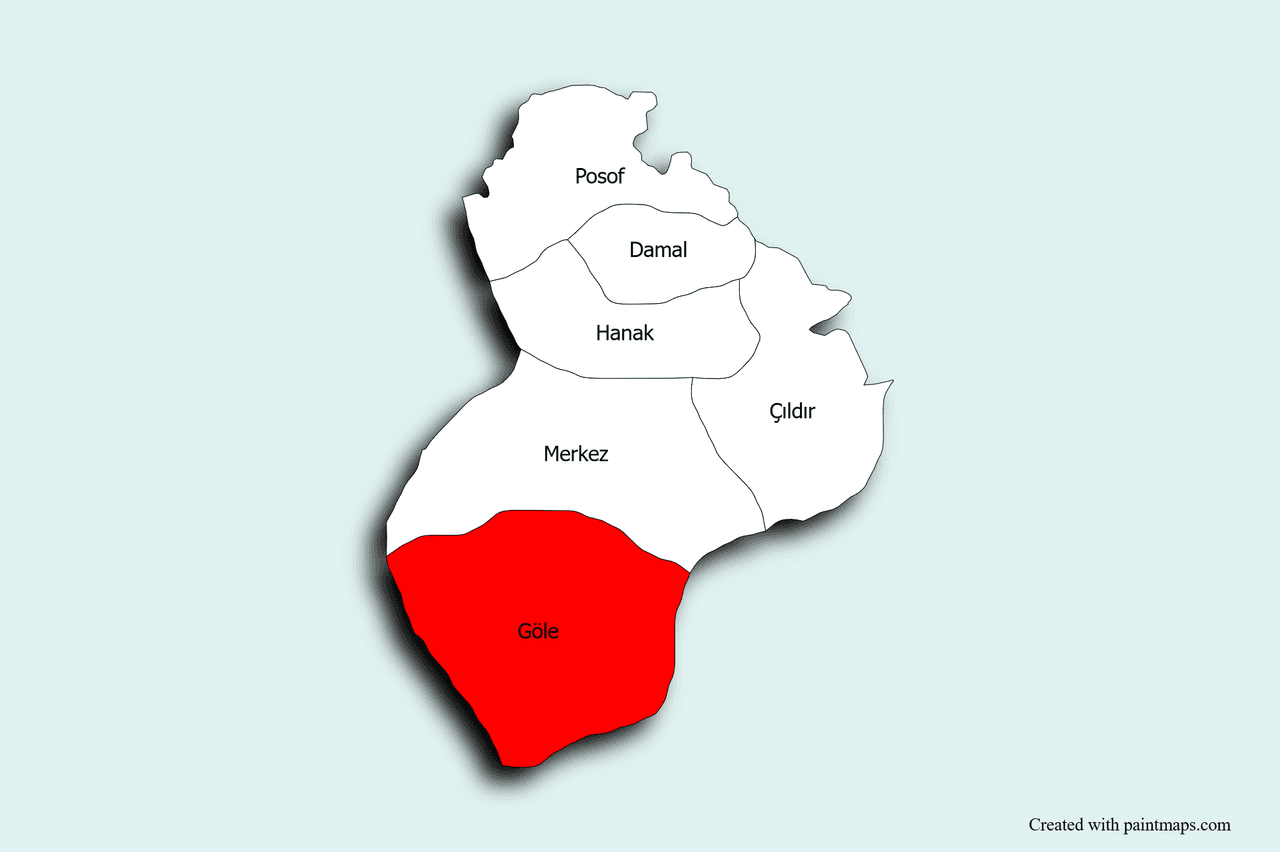
Göle (District)
Province(s) | Ardahan | ||||||||
|---|---|---|---|---|---|---|---|---|---|
Area(s) | 1400 km² | ||||||||
Population (2024) | 22.214 | ||||||||
Elevation(s) | 2008 m | ||||||||
Climate(s) | Continental Climate | ||||||||
Neighboring Districts | Şenkaya Olur Susuz Selim Merkez | ||||||||
Prominent Product | Göle Kaşarı | ||||||||
Mayor(s) | Gökhan Budak (2024) | ||||||||
District Governor | Yunus Emre Fırat (2023) | ||||||||
Göle is a modern settlement located on a high-altitude plateau south of the city center of Ardahan. Due to its geographical position, the region lies under the influence of the Siberian high-pressure system, resulting in a cold climate. Consequently, there is limited arable land in the area. The combination of climate and topography has led to the formation of extensive wetlands and rivers, which support the growth of forests and steppe grasses, while also accelerating the development of animal husbandry—the foundation of the local subsistence economy.

Göle ()
Göle is an ancient settlement that has been influenced by numerous cultures and civilizations throughout history. Its name is believed to derive from the Georgian word “Kola,” which is thought to be linked to the ancient Kingdom of Colchis. However, this name was used historically to refer to the region, not the present-day town of Göle. During the Ottoman period, it was known as “Ardahan-i Küçük,” denoting a small administrative unit within Ardahan.
In 1551, it was attached to Erzurum, and in 1579 to the Kars province. In 1830, its administrative center was moved to Dedeşen village under the Çıldır Sanjak, and in 1866 it became a subdistrict center within the Ardahan kazas. After the Russian occupation in 1878, the district center was established in the village of Merdinik (present-day district center). The district was liberated from Russian occupation on 30 September 1920 by the forces and militias of Kazım Karabekir Paşa, ending forty years of occupation. From that date until 1992, Göle was a district of Kars province; in 1992 it was attached to Ardahan province. A municipal administration was established in Göle district center in 1926. Finally, by Law No. 3806 dated 27 May 1992, Göle was officially integrated into Ardahan province.
Göle district is situated on a flat area approximately 42–45 km from the center of Ardahan province, at an average elevation of 2,030 meters. The district covers an area of 1,420 km² and is bordered by Ardahan city center to the north, the Selim and Sarıkamış districts of Kars to the south, Susuz district to the east, Şenkaya and Olur districts of Erzurum to the west, and Şavşat district of Artvin to the northwest. Villages are scattered across both flat and rugged terrain.
The region is largely covered by green vegetation; approximately 65% of Ardahan’s forests lie within Göle’s boundaries. Other areas are dominated by meadows and pastures, with barley, wheat, and potatoes being the primary agricultural crops. The extensive Göle Plain remains foggy for much of the year and provides suitable pastureland for agriculture.
Göle experiences a severe continental climate. Winters are long and extremely harsh, with temperatures dropping as low as -30 to -35°C and snow depths reaching up to one meter. Summers are mild and rainy, with temperatures rising to 25–30°C. This climatic structure directly influences the district’s natural vegetation and its agricultural and livestock activities.

Göle in winter ()
According to the 2000 census, the population of Göle district was 37,814, with 10,478 residing in the district center and 27,336 in the villages. According to the 2012 Address-Based Population Registration System, the total population was 29,968, with 7,359 in the district center and 22,609 in the villages. The population has declined since the 2000 census. As the data indicate, approximately 70% of the population lives in villages. The population in 2024 was 22,214.
The economy of Göle district is largely based on animal husbandry. It is one of the leading centers in the region for raising both large and small livestock. Alongside animal breeding and dairy production, agriculture focuses on barley, wheat, oats, and potatoes. Poultry farming and beekeeping also contribute significantly to the local economy. To support animal husbandry, the Göle Agricultural Enterprise (İnekhane) was established. Forestry is another important livelihood source, with the Forest Enterprise operating in the region.
The commercial sector includes numerous dairies, industrial facilities, artisan shops, and small enterprises. Economically, Göle surpasses the center of Ardahan province and other districts, serving as the regional commercial hub. In terms of tourism, notable attractions include ruins of tombs, castles, and churches in villages such as Dedeşen and Kalecik. Additionally, the annual Kaşar Festival contributes significantly to both cultural and economic vitality.

Animal husbandry in Göle ()
Ardahan flower honey is a distinctive variety produced from the region’s natural flora with the contribution of the Caucasian bee. It has a transparent, glossy appearance and varies in color from light amber to dark amber depending on seasonal conditions. It has a mild burning sensation on the palate, characteristic of the aromatic plants of the region. This fluid honey gradually crystallizes at low temperatures. Produced in Göle and its surroundings, where rich vegetation and high altitude converge, this honey is natural, chemical-free, and of high quality. Pollen collected primarily from plants of the Boraginaceae and Fabaceae families determines its unique aroma and value.
Göle kaşar is a cheese distinguished by its quality. Prepared for over a century using traditional methods, it continues to be produced in modern dairies today. Göle’s pristine natural environment, endemic plant diversity, and natural pastures enhance the flavor and nutritional value of the cheese. Production begins with raw milk, which is matured at specific temperatures and then kneaded. The milk is sourced from animals grazing on the high-altitude pastures of the region. Göle kaşar has gained an important place in Türkiye and internationally due to its natural composition and superior quality.
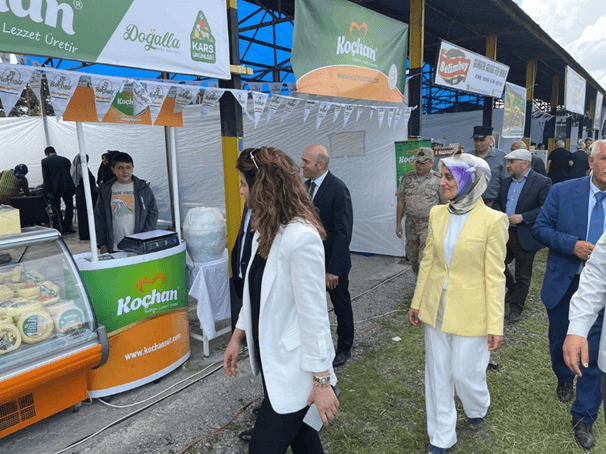
Göle Kaşar Festival ()
Akkurt, Zekeriya, and Patacı, Sami. "Ardahan’ın Göle İlçesindeki Demir Çağı Savunma Yapıları." Karadeniz Uluslararası Bilimsel Dergi, no. 49, Autumn 2021, pp. 45-73. Accessed May 8, 2025.
Anadolu Ajansı. "Ardahan Göle'de termometreler gece eksi 24'ü gösterdi." Photograph, Anadolu Ajansı, Accessed May 8, 2025. https://www.aa.com.tr/tr/gundem/ardahan-golede-termometreler-gece-eksi-24u-gosterdi/3431259
Anadolu Ajansı. “Peynirde lezzetin adı: Göle kaşarı.” Accessed May 8, 2025. https://www.aa.com.tr/tr/yasam/peynirde-lezzetin-adi-gole-kasari/666416
Göle İlçe National Education Directorate. "Göle Kaşar Festivali," photograph, Göle District National Education Directorate, Accessed May 8, 2025 http://www.gole.gov.tr/ilcemizde-22-ulusal-kultur-ve-kasar-festivali-yapildi
Göle İlçe National Education Directorate. "Göle’de hayvancılık," photograph, Göle District National Education Directorate, Accessed May 8, 2025. https://gole.meb.gov.tr/www/ilcemiz-hakkinda/icerik/861
Göle İlçe National Education Directorate. "Kış mevsiminde Göle," photograph. Accessed May 8, 2025. https://gole.meb.gov.tr/www/ilcemiz-hakkinda/icerik/861
Göle İlçe National Education Directorate. "İlçemiz Hakkında." Accessed May 8, 2025. https://gole.meb.gov.tr/www/ilcemiz-hakkinda/icerik/861
Khari, Tetri. “Göle'nin Kısa Tarihi”. Academia. Accessed May 8, 2025. https://www.academia.edu/102410827/G%C3%B6lenin_k%C4%B1sa_tarihi
T.C.Göle Belediyesi. "Tarihçemiz." Accessed May 8, 2025. https://www.gole.bel.tr/tarihce
Turkish Patent and Trademark Office. "Ardahan Çiçek Balı." Accessed May 8, 2025. https://ci.turkpatent.gov.tr/Files/GeographicalSigns/502d86bf-320d-43dd-9395-608613a1bab0.pdf
Türkiye Kalkınma Vakfı. "2024 Yılı İl ve İlçe Bazlı Nüfus." Accessed May 8, 2025. https://tkv-dft.org.tr/upload/2024%20Y%C4%B1l%C4%B1%20%C4%B0l%20ve%20%C4%B0l%C3%A7e%20Bazl%C4%B1%20N%C3%BCfus.pdf

Göle (District)
Province(s) | Ardahan | ||||||||
|---|---|---|---|---|---|---|---|---|---|
Area(s) | 1400 km² | ||||||||
Population (2024) | 22.214 | ||||||||
Elevation(s) | 2008 m | ||||||||
Climate(s) | Continental Climate | ||||||||
Neighboring Districts | Şenkaya Olur Susuz Selim Merkez | ||||||||
Prominent Product | Göle Kaşarı | ||||||||
Mayor(s) | Gökhan Budak (2024) | ||||||||
District Governor | Yunus Emre Fırat (2023) | ||||||||
History
Geography and Climate
Population and Demographic Structure
Economic Structure
Culinary Culture