


This article was automatically translated from the original Turkish version.
+2 More
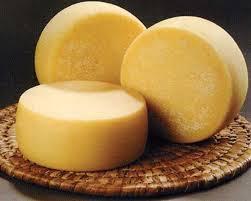
Kars Cheese
Place of Origin | Kars, Türkiye | ||||||||
|---|---|---|---|---|---|---|---|---|---|
Type of Geographical Indication | Place of Origin | ||||||||
File Number | C2014/013 | ||||||||
Application Date | 2014-02-14 | ||||||||
Registration Date | 12.10.2015 | ||||||||
Registration Number | 190 | ||||||||
Product / Product Group(s) | Cheeses | ||||||||
Applicant/Registrant(s) | Rectorate of Kafkas University | ||||||||
Status | Registered | ||||||||
Kars kaşarı is a mature cheese variety produced in the geographical area centered on Kars and Ardahan, including the districts of Arpaçay, Akyaka, Digor, Kağızman, Sarıkamış, Selim, Susuz, Göle, Çıldır, Hanak, Damal, and Posof, as well as the villages, hamlets, and highland pastures under their jurisdiction. Its production is seasonal and relies exclusively on milk obtained during the period when livestock graze freely on pastures between May and August. It is closely associated with Kars province throughout Türkiye and constitutes a vital sector of the regional economy.

Cheese production in Kars dates back to the early years of the Republic of Türkiye. Entrepreneurs who recognized the region’s abundant and high-quality milk potential arrived in the area and began manufacturing kaşar. According to the most concrete records, the first kaşar cheese production in Kars province occurred in 1926 in Kümbetli, the central village of Kars province. The production method proved well-suited to the region’s pastoral structure and geography, leading to widespread local adoption. Between 1927 and 1933, numerous production facilities opened, and more than 40 kaşar workshops became operational within this six-year period. Master cheesemakers trained local workers as apprentices, thereby establishing their own skilled workforce. Today, Kars kaşarı is produced in modern facilities while preserving traditional methods and is marketed throughout the country.
In the geographical area where Kars kaşarı is produced, cattle rearing is based on pasture grazing. Due to elevation, the region experiences delayed warming in spring, and until mid-July, Kars and its surroundings maintain a cool, rainy climate. These climatic conditions foster the development of unique alpine meadows and create ideal conditions for pasture-based large livestock farming. During summer months, the region experiences low temperatures and abundant rainfall, resulting in dense, long-lived vegetation that dries slowly. This climatic profile distinguishes the region from neighboring provinces. The milk used for cheese production comes from animals grazing on pastures in Kars and Ardahan provinces, where approximately 1,600 flowering plant species grow, including about 80 endemic and 20 rare taxa. Kars kaşarı production is seasonal and exclusively uses milk from animals that graze freely on pastures between May and August.
The product is distinguished from similar cheeses by its origin in milk from pasture-grazed animals. Thirty-two compounds—including aldehydes, ketones, esters, fatty acids, terpenes, and hydrocarbons—determine the flavor, aroma, and sensory profile of Kars kaşarı and differentiate it from other varieties. The distinctive taste, aroma, odor, and color of Kars kaşarı arise not only from the region’s unique natural vegetation but also from its cool summers, which promote the formation of unique flavor compounds. In terms of physical properties, fresh Kars kaşarı is whitish when removed from the mold and develops a yellowish hue within a week as a rind forms. The cut surface of fresh kaşarı is whitish, with a mild salty, bland taste reminiscent of milk. The rind of aged Kars kaşarı turns grayish, and its cut surface becomes yellowish-cream. As aging progresses, the texture hardens. Prolonged aging leads to proteolysis, glycolysis, and lipolysis, resulting in a distinctive intense aroma. The flavor is mildly salty and melts easily in the mouth. Due to its low moisture content, its consistency is described as firm. The cut surface is expected to be smooth and even.

The geographical boundary of Kars kaşarı encompasses the districts of Kars and Ardahan, including Arpaçay, Akyaka, Digor, Kağızman, Sarıkamış, Selim, Susuz, Göle, Çıldır, Hanak, Damal, and Posof, as well as the villages, hamlets, and highland pastures under their jurisdiction.
Kars kaşarı is typically produced from cow’s milk, sometimes with the addition of sheep or goat milk. Full-fat and/or partially skimmed milk is used, so the milk fat is not removed.
Milking and Fermentation: Fresh milk from the pastures is filtered and heated to 32–35°C, then inoculated with rennet (commercially produced animal rennet). Fermentation lasts approximately one hour. Fermentation is monitored using traditional methods such as “finger pressing” and “knife cutting.”
Whey Removal: After fermentation is complete, the curd is broken and allowed to settle. The whey is then removed using ladles or centrifuges. Rapid removal of whey enhances cheese quality and prevents souring. Manual pressure is applied to the remaining curd to extract additional whey.
Curd Drainage and Pressing: The curd is spread onto a cheesecloth, gently kneaded by hand, and drained of residual moisture (approximately one hour). The edges of the cheesecloth are gathered and weighted down to press out all remaining whey. In modern production facilities, mechanical pressing systems are now used.
Telemen (Initial Aging): The pressed cheese is cut into large pieces and placed on a rack to begin aging. It may be covered depending on ambient temperature. This stage lasts 3 to 6 hours, depending on environmental conditions, after which the cheese is referred to as “teleme.” Proper aging at this stage ensures the cheese can later be processed in hot water. Masters place great importance on this initial aging phase. Readiness for the next stage is determined by pH testing (target range: 5–5.2) or traditional “proofing” methods such as “leaf unfolding” and “string pulling.”
Cutting the Teleme: The aged teleme is cut by hand or machine into small pieces no thicker than 0.5 cm. Finer cutting is preferred, as thicker pieces require longer cooking and release more fat and protein into the cooking water. After cutting, the teleme is pressed again to remove residual whey.
Cooking the Teleme: The cut teleme is placed into perforated baskets and cooked for 2–3 minutes in hot salted water (72–78°C) with a salinity of 8–10 Baumé, according to the master’s judgment. During cooking, the cheese is stirred with a wooden paddle. When it forms a cohesive mass, the basket is removed from the brine. Temperature and salinity are continuously monitored and adjusted. Cooking duration is determined by the master’s test: the teleme is pulled and must stretch like chewing gum.
Kneading: The cooked teleme is placed on a worktable and kneaded by hand for 4–5 minutes. During kneading, residual cooking water and gases are expelled, and the cheese becomes homogeneous. When the surface becomes glossy and the texture reaches the firmness of an earlobe, the cheese is ready for molding. One distinguishing feature of Kars kaşarı is that cooking, kneading, and shaping are performed entirely by hand.
Shaping and Molding: Once kneading is complete, the cheese is cut to fit the mold and manually shaped into a rounded form known as “göbek bağlatma.” The cheese mass is placed into the mold, which bears the producer’s mark on the front. Before the cheese hardens, the molds are frequently inverted to ensure even top and bottom surfaces. It is essential that no air pockets or folds remain during molding. The molded cheese remains in the molds for approximately 12 hours.
Salting and Preliminary Aging: The molded cheese is transferred to a salting and preliminary aging room. These rooms are specially designed but contain no mechanical equipment; temperature (12–18°C) and humidity (60–70%) are maintained naturally through air circulation and window adjustments. The “Karayel” (northern winds) are considered particularly important during this phase, as they are believed to aid in the cheese’s proper aging without spoilage. The cheese is stored in these rooms for 30–40 days. The master inspects the product daily and performs manual dry-salting if necessary. The cheeses are stacked on shelves and regularly turned. The duration of preliminary aging is determined by the master’s experience and is never less than one month. These rooms must be located at elevations of 1,700 meters or higher.
Final Aging and Packaging: After completing preliminary aging, the kaşarı is packaged (typically five pieces of 12–12.5 kg each are wrapped in woven cloth sacks) and stored in cold storage facilities at 2–8°C with 75% relative humidity for 3 to 6 months to achieve final aging. Before entering cold storage, the cheese is marketed as “fresh Kars kaşarı”; after the third month, it is labeled “aged Kars kaşarı.” Aged Kars kaşarı must be aged for at least 90 days before being released to market.
The use of the geographical indication for Kars kaşarı is monitored by a five-member expert commission coordinated by Kafkas University. This commission conducts periodic or complaint-based inspections across all stages of the process, including production, marketing, and sales. Inspection costs are borne by the relevant companies. These inspections are carried out in addition to those conducted by the Ministry of Food, Agriculture, and Livestock.
Anadolu Ajansı. “Rengini Doğadan Alan Eski Kars Kaşarı Lezzetiyle Damaklarda İz Bırakıyor.” Accessed June 2, 2025. https://www.aa.com.tr/tr/ekonomi/rengini-dogadan-alan-eski-kars-kasari-lezzetiyle-damaklarda-iz-birakiyor/1888012
Anadolu Ajansı. “Yaylalardan Sofralara Uzanan Lezzet: Kars Kaşarı.” Accessed June 2, 2025. https://www.aa.com.tr/tr/yasam/yaylalardan-sofralara-uzanan-lezzet-kars-kasari-/1209989
Ministry of Culture and Tourism. "Kars Kaşarı." *Culture Portal*. Accessed June 2, 2025. https://www.kulturportali.gov.tr/portal/karskasari
Turk Patent and Trademark Office. "Kars Kaşarı – Coğrafi İşaret Detayı." Accessed June 2, 2025. https://ci.turkpatent.gov.tr/cografi-isaretler/detay/38112
Turkish Patent and Trademark Office. "Kars Kaşarı Tescil Belgesi (PDF)." Accessed June 2, 2025. https://ci.turkpatent.gov.tr/Files/GeographicalSigns/190.pdf

Kars Cheese
Place of Origin | Kars, Türkiye | ||||||||
|---|---|---|---|---|---|---|---|---|---|
Type of Geographical Indication | Place of Origin | ||||||||
File Number | C2014/013 | ||||||||
Application Date | 2014-02-14 | ||||||||
Registration Date | 12.10.2015 | ||||||||
Registration Number | 190 | ||||||||
Product / Product Group(s) | Cheeses | ||||||||
Applicant/Registrant(s) | Rectorate of Kafkas University | ||||||||
Status | Registered | ||||||||
History
Definition and Distinguishing Characteristics
Geographical Boundary
Production Method
Monitoring