This article was automatically translated from the original Turkish version.
+1 More
Type of Geographical İndication | Mahreç Sign | ||||||||
|---|---|---|---|---|---|---|---|---|---|
Application Date | 27.09.2021 | ||||||||
Registration Number | 1366 | ||||||||
Registration Date | 25.05.2023 | ||||||||
Product / Product Group(s) | Bakery and Confectionery Products Sweets Dough Products | ||||||||
Province(s) | Kars | ||||||||
Applicant/Registrant(s) | Kars Chamber of Commerce and Industry | ||||||||
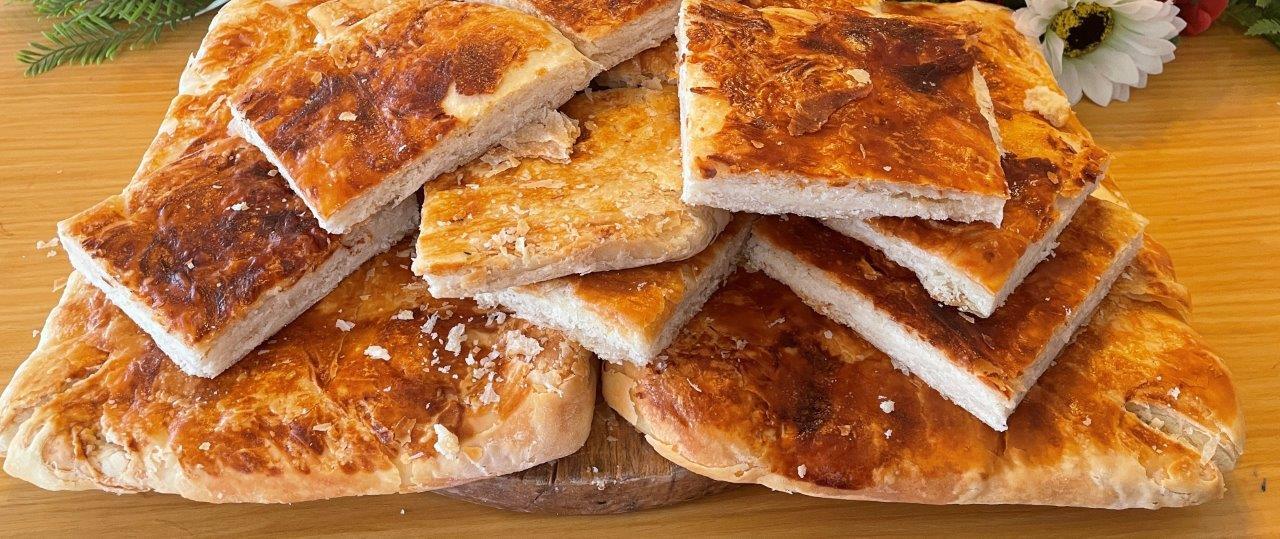
Kars ketesi is a traditional dough-based product unique to the province of Kars in Türkiye’s Eastern Anatolia Region. With its distinctive production techniques, ingredient selection, aroma, and texture, Kars ketesi is an important part of regional culture and was granted geographical indication protection by the Turkish Patent and Trademark Office in 2023.
Kars ketesi is a regional product that has been produced for centuries in Kars and its surroundings. Traditionally prepared in households during special occasions and holidays, it has been passed down through generations as a cultural practice adapted to Kars’s harsh climatic conditions. With its geographical indication registration, both the product’s authenticity has been preserved and its commercial brand value has been enhanced.
The main ingredients used in making Kars ketesi are wheat flour, butter, çökelek (or white cheese), yeast, salt, and water. The defining characteristic of the product is its soft, layered dough filled generously with butter and cheese. The fermentation process is carefully controlled to optimize the dough’s texture and aroma.
Dough Preparation: The dough is made from flour, yeast, water, and salt and kneaded until it becomes elastic and soft.
Fermentation: The dough is fermented at an appropriate temperature for 1 to 2 hours.
Rolling and Filling Preparation: The fermented dough is rolled out in layers and filled with butter and çökelek before being formed into a roll.
Baking: Ketesi are baked in stone ovens or traditional hearths. The baking time and temperature determine the product’s characteristic texture and aroma.
Kars ketesi has a lightly browned, golden-brown crust on its exterior. Its interior is soft, layered, and distinguished by a rich aroma resulting from the combination of butter and çökelek. The balance between sweet and savory notes is one of the product’s most distinctive features.
Kars’s high altitude (approximately 1800 meters) and severe winter climate play a decisive role in wheat production and consequently in the structure of the ketesi dough. Local wheat varieties grown in the region have protein and gluten levels that support the unique texture of ketesi. Additionally, the distinctive properties of regional butter and çökelek directly influence the flavor profile of the product.
Following its geographical indication registration, the production of Kars ketesi has begun to make significant contributions to the local economy. Producers, particularly through cooperatives, are standardizing their products and increasing their visibility in the national market. The preservation of traditional production methods alongside the integration of modern marketing practices is positively impacting regional development.
Turk Patent and Trademark Office. 2025. “Kars KetesiCoğrafi İşaretler Detayı.” Turk Patent and Trademark Office Geographical Indications, Accessed July 26, 2025. https://ci.turkpatent.gov.tr/cografi-isaretler/detay/5104
Turk Patent and Trademark Office.Kars Ketesi Geographical Indication Registration Certificate. Accessed July 27, 2025. https://ci.turkpatent.gov.tr/Files/GeographicalSigns/f3a47551-93db-421a-98ff-13f47801156b.pdf

Type of Geographical İndication | Mahreç Sign | ||||||||
|---|---|---|---|---|---|---|---|---|---|
Application Date | 27.09.2021 | ||||||||
Registration Number | 1366 | ||||||||
Registration Date | 25.05.2023 | ||||||||
Product / Product Group(s) | Bakery and Confectionery Products Sweets Dough Products | ||||||||
Province(s) | Kars | ||||||||
Applicant/Registrant(s) | Kars Chamber of Commerce and Industry | ||||||||
Production Process
Production Stages
Geographical and Climatic Influences
Socio-Economic Importance