This article was automatically translated from the original Turkish version.
+1 More
Type of Geographical İndication | Mahreç Sign | ||||||||
|---|---|---|---|---|---|---|---|---|---|
Application Date | 10.03.2022 | ||||||||
Registration Number | 1295 | ||||||||
Registration Date | 19.12.2022 | ||||||||
Product / Product Group(s) | Handicraft products other than carpets kilims and textiles | ||||||||
Province(s) | Kastamonu | ||||||||
Applicant/Registrant(s) | Kastamonu Provincial National Education Directorate | ||||||||
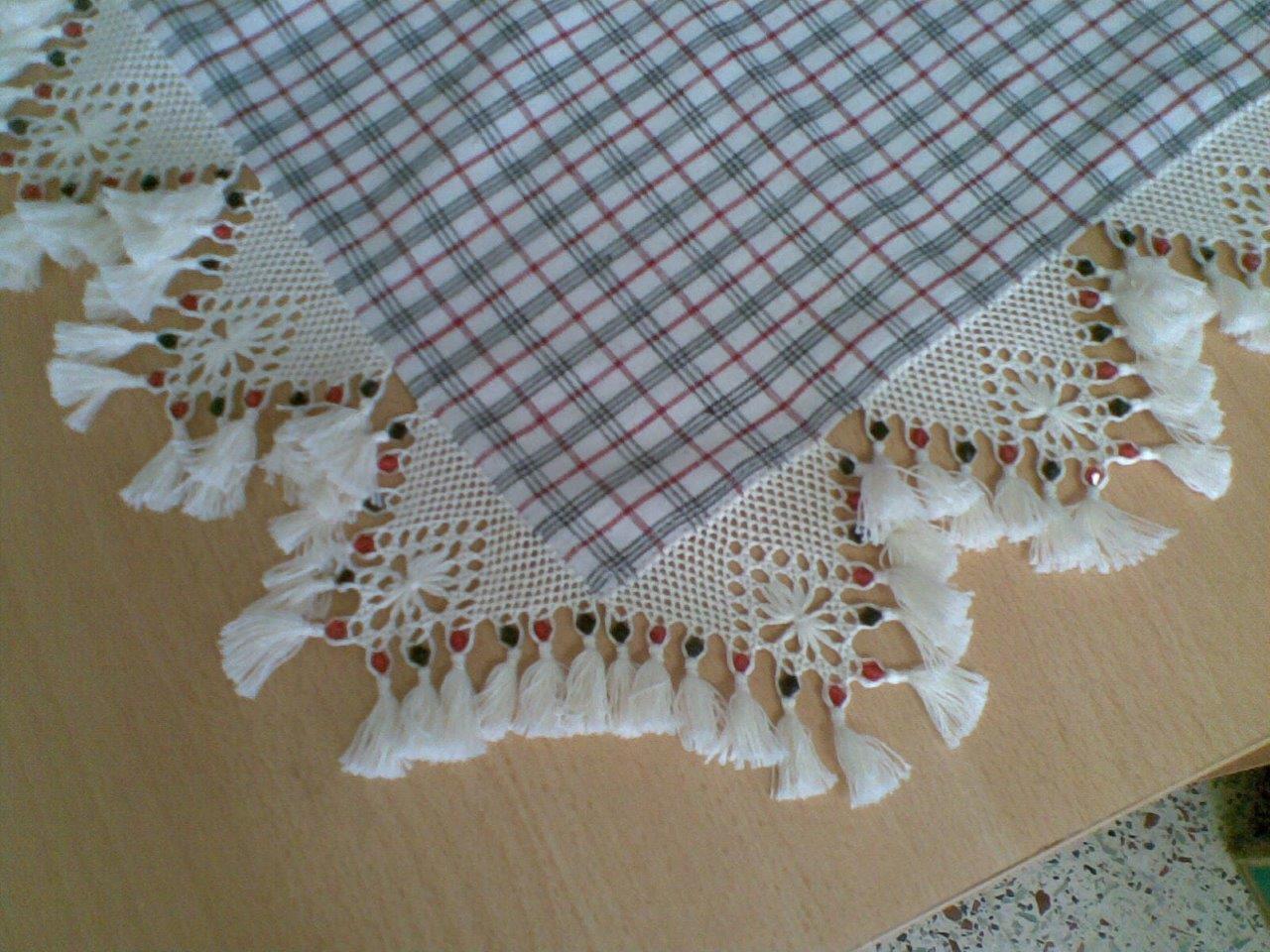
Kastamonu Çarşaf Bağı is a traditional knotting art applied to two or four edges of locally woven sheets known as “sarı kıvrak,” using one of several types of cotton thread. The threads used include No. 20 twisted cotton thread, fantasy thread, and mercerized thread. The knotting process is carried out entirely by hand; no tools are employed. Motifs are formed by compressing the knots with the fingernails. This craft, also known as Kastamonu bağı or tırnak bağı, has become a powerful symbol in local culture, as every individual preparing for marriage traditionally includes it in their dowry chest.
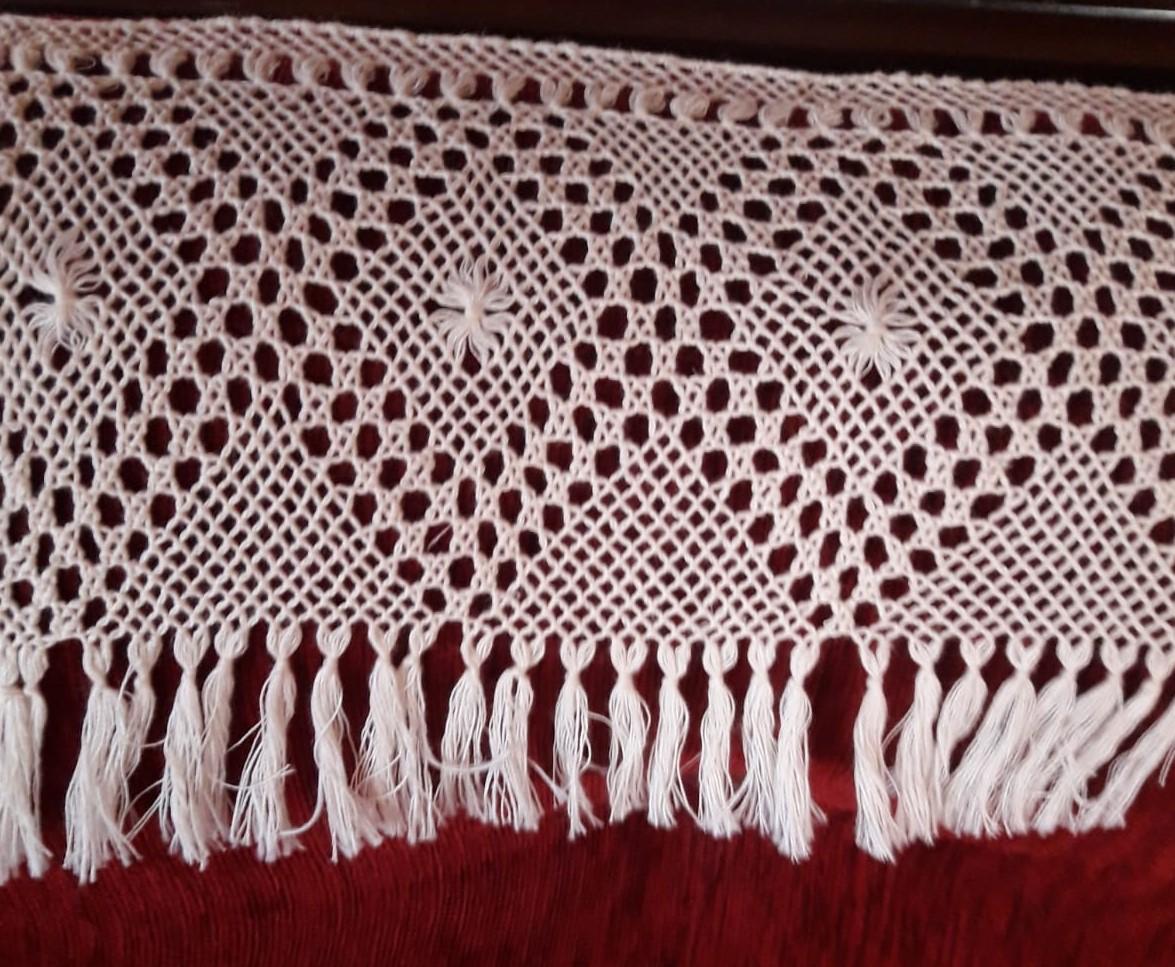
Kastamonu Çarşaf Bağı (Directorate of Kastamonu Handicrafts Education Center)
Originally applied to the edges of sheets, this knotting technique has over time been adapted to various household textiles and garments. It is commonly found on the borders of towels, handwoven tablecloths, living room sets, peştamals, curtains, and sofa covers. In modern interpretations, it has also been incorporated into the hems of clothing and the cuffs of sleeves.
Approximately fifty different knot motifs are found in Kastamonu Çarşaf Bağı. These motifs are named according to the shapes they form. Some known motif names include: doctor’s glasses, quadruple sun, crazy heart, cut sugar, bird’s tongue, scribe’s notebook, lemon-flavored oak leaf, jam plate, baklava, strawberry, sunlit lokum, sunlit scribe’s notebook, heart, pacifier, and snake curve.
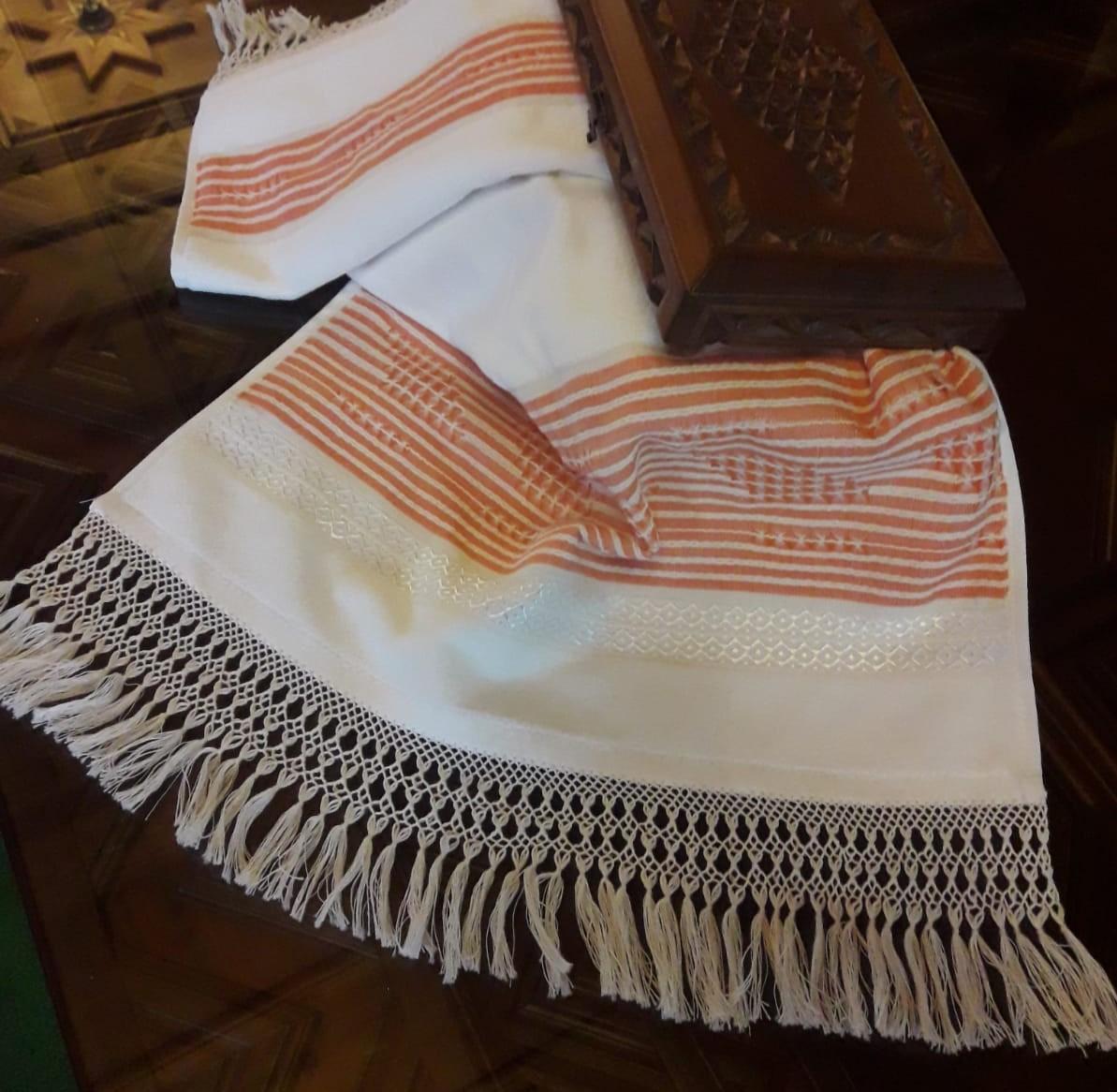
Kastamonu Çarşaf Bağı (Directorate of Kastamonu Handicrafts Education Center)
Materials and Tools Used
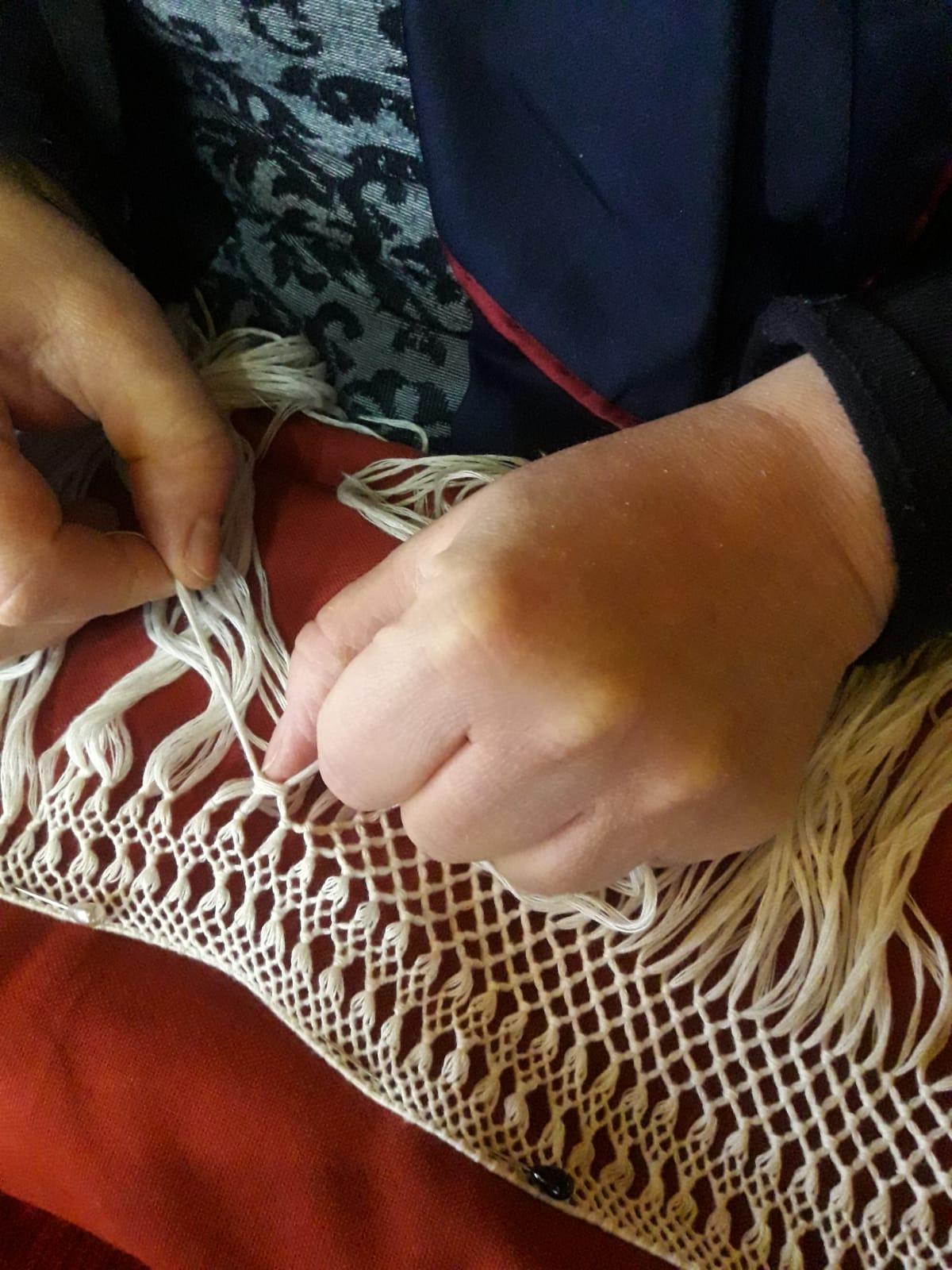
Kastamonu Çarşaf Bağı Production Stage (Kastamonu Handicrafts Education Center Directorate)
The thread length is calculated based on the width of the knotting pattern. The knotting process begins by passing the thread through the edge of the sarı kıvrak fabric using the insertion needle and pulling it to the reverse side. Opposing threads are aligned and knotted; knots are placed more densely at the corners. After knotting is completed, a fringe is left and then cut. In the final stage, decorative elements such as wooden beads, tassels, and pom-poms may be added to enrich the design.
Kastamonu Çarşaf Bağı was officially registered as a Collective Mark by the Turkish Patent and Trademark Office on 19 December 2022. Its entire production takes place within the boundaries of Kastamonu Province, making it a craft intrinsically linked to its geographical origin. It is also listed in the Inventory of Intangible Cultural Heritage and is inspected at least once annually, and as needed, by expert representatives of relevant public institutions.
Kastamonu Çarşaf Bağı. Geographical Indications Portal, Turkish Patent and Trademark Office. Accessed July 12, 2025. https://ci.turkpatent.gov.tr/cografi-isaretler/detay/6263
Çarşaf Bağı. Ministry of Agriculture and Forestry of the Republic of Türkiye,Kastamonu El Education Center Directorate. Accessed July 12, 2025. https://egitim.tarimorman.gov.tr/kastamonu/Menu/34/Carsaf-Bagi
Çarşafbağı. Kastamonu İl Kültür ve Turizm Müdürlüğü. Accessed July 12, 2025. https://kastamonu.ktb.gov.tr/TR-171368/carsafbagi.html

Type of Geographical İndication | Mahreç Sign | ||||||||
|---|---|---|---|---|---|---|---|---|---|
Application Date | 10.03.2022 | ||||||||
Registration Number | 1295 | ||||||||
Registration Date | 19.12.2022 | ||||||||
Product / Product Group(s) | Handicraft products other than carpets kilims and textiles | ||||||||
Province(s) | Kastamonu | ||||||||
Applicant/Registrant(s) | Kastamonu Provincial National Education Directorate | ||||||||
No Discussion Added Yet
Start discussion for "Kastamonu Çarşaf Bağı" article
Cultural Significance and Applications
Motifs
Production Process
Registration and Protection