


This article was automatically translated from the original Turkish version.
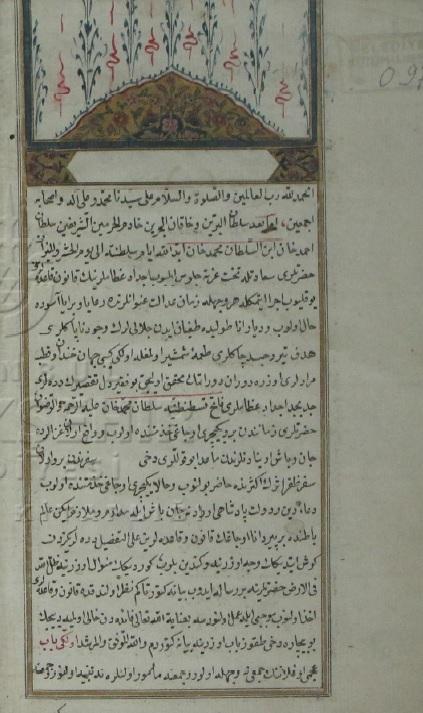
Kavânîn-i Yeniçeriyân, Atatürk Library Municipal Manuscripts O.97
Author(s) | Unknown | ||||||||
|---|---|---|---|---|---|---|---|---|---|
Subject(s) | Janissary Corps | ||||||||
Kavânîn-i Yeniçeriyân is a valuable work that provides original information about the Janissary Corps and is frequently cited by scholars of Ottoman history. There are ten known copies of this work, generally known as Kavânîn-i Yeniçeriyân, though in some of these copies the title is expressed differently. Although the author remains unidentified, it is evident from the text that it was written in 1606. It would be incorrect to describe this work merely as a “law book” compiling laws. When examining the content within place, it becomes clear that the author, who was himself a Janissary, recorded information regarding the Janissary Corps, its practices, and its innovations based on his own experiences and knowledge passed down by his elders.
The work consists of nine chapters (bâb), the contents of which are as follows:
Chapter 1: How are the acemi oğlan gathered? What instructions are given to those responsible for gathering them? Who are the gatherers? How are the acemi oğlan inspected upon arrival in Istanbul? How are they sold after being delivered to the Rumeli and Anatolia Aghas? Who were appointed to receive their Turkish? What is the basis for their sale? After being recorded, how are the allowances assigned to the bags, palace, Gelibolu, and bostans? What are their duties and ships? Who are the çorbacılar?
Chapter 2: How are the acemi oğlan distributed after they leave the gate? What do they wear? What are the rules and regulations governing their rooms? Who are the Room kethüdas and head odabaşıs? What is the role of the odabaşı and vekil-i harç? Why do acemi oğlan receive fifteen akçes every three months among the Janissaries? What is the reason for giving them half a akçe fodla daily? What does it mean to receive harç and to obtain one kile of fodla from the katib? What is the yay and yaka harcı? Why do they fall short by one and a half days’ pay every three months? How do Janissary comrades serve the agha?
Chapter 3: What is the path of those Janissaries who serve the agha? What did they receive when serving as guards? Who are the comrades first chosen to become guards? How many seraser kuşaklı kullukçular serve the agha? What are their names and paths? What are the paths of comrades who serve during campaigns and prove useful? How many akçes do the sipahis receive? To which division were they registered, and what are their tirkeş bahas?
Chapter 4: Why have the sekbanbaşıs existed since ancient times? Why are there thirty-four divisions? How many division chiefs are there and what are their paths? Who are their kethüdas and scribes? What are the Pedestrian and mounted sekbanlar?
Chapter 5: When did the sekbanbaşı rise from within the corps to become an agha? What are the saksoncubaşı, zağarcıbaşı, and turnacıbaşı? What are their paths and allowances? Who are the mounted zağarcılar? What is the position of the Janissary kethüda and the head sergeant and kethüda? What are the muhzırbaşı, hasekiler, and deveciler? What are their paths? Who are the solaklar and what is the solakbaşı? Who are the kethüdas, odabaşıs, müteferrikas, yayabaşıs, division chiefs, and other January aghas?
Chapter 6: Who built the Janissary quarters? Who constructed the Orta Mescidi? What are the new and old quarters? Who established the agha divisions? Who appointed the kapıcılar to prohibit entry and construction within the quarters? Who commissioned the talimhane within the corps? Why did the talimhaneçibaşı, while serving as a division chief, wear the mücevveze? Who are the ocak aghas and yaya beyler? Who is the agha imam? Who is the müezzin? In whose time was this office established? Who caused the solaklar to increase from three hundred to four hundred men?
Chapter 7: What are the duties of the Istanbul aghas? Who are the individuals appointed as Anadolu and Rumeli aghas? What are the paths and services of the acemi yayabaşıs? Who is the acemi oğlan kethüdası? What are the paths of the aşçıbaşıs? Who are the çavuşlar?
Chapter 8: Who is the Janissary katib? What are his duties and allowance? What qualifications must one possess to become a Janissary katib? Who are his şakirdler? What are their paths? What are their services, damage, and corruptions? Who is the agha’s council katib and what is his service? Who are the agha’s kapı şakirdler and in whose time were they established? What are their Benefit and harms? What are their duties? Who are the mukabeleciler and what is their service? How are they appointed? Who are the katipler within the corps? Who is the acemi katib? Who are the other katipler within the corps?
Chapter 9: What practices were introduced that did not exist in the old regulations? What were the reasons for implementing these practices?
Sakin, O (2011). Yeniçeri Ocağı Tarihi ve Yasaları, Doğu Kütüphanesi, İstanbul.
Uzunçarşılı, İ.H. (1988). Osmanlı Devleti Teşkilatından Kapukulu Ocakları Acemi Ocağı ve Yeniçeri Ocağı. Türk Tarih Kurumu Basımevi, Ankara.
Uğur, A. (2023). Kavânîn-İ Yeniçeriyân’a Göre Yeniçeri Temini ve İlk Uygulamalar. Anasay(26), 97-121.
Özbek, Ö. (2017). Kavânîn-i Yeniçeriyân (İnceleme-Metin-Dizin), On Sekiz Mart Üniversitesi Sosyal Bilimler Enstitüsü, PhD thesis, Çanakkale.

Kavânîn-i Yeniçeriyân, Atatürk Library Municipal Manuscripts O.97
Author(s) | Unknown | ||||||||
|---|---|---|---|---|---|---|---|---|---|
Subject(s) | Janissary Corps | ||||||||
No Discussion Added Yet
Start discussion for "Kavânîn-i Yeniçeriyân" article