


+2 More

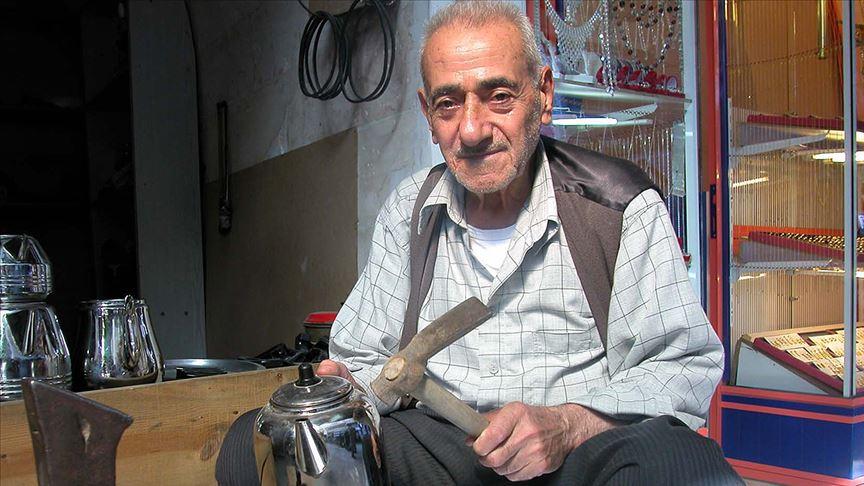
Kazancı Bedih
Birth | 1939, Şanlıurfa | ||||||||
|---|---|---|---|---|---|---|---|---|---|
Death | 19.01.2004, Şanlıurfa | ||||||||
Profession(s) | Gazelhan folk music artist | ||||||||
Real Name | Bedih Yoluk | ||||||||
One of the prominent representatives of Şanlıurfa’s musical tradition, Kazancı Bedih (Bedih Yoluk) was a folk artist renowned in the second half of the 20th century particularly for his performances of sıralı geceler and gazel recitations. Born Bedih Yoluk, the artist contributed significantly over many years to the preservation and intergenerational transmission of traditional music in the city where he lived. The nickname “Kazancı” derives from his father’s profession as a kazancı and eventually became inseparable from his name.

Kazancı Bedih (AA)
Kazancı Bedih was born in Şanlıurfa in 1929. Growing up within Şanlıurfa’s traditional cultural framework, he showed an early interest in music and developed particular mastery in gazel recitation. He was educated through the traditional master-apprentice model, acquiring and transmitting his musical knowledge primarily through oral tradition.
Kazancı Bedih’s relationship with music was shaped within Şanlıurfa’s distinctive tradition of sıralı geceler. These gatherings were not merely social events for entertainment but also served as spaces for musical performance, conversation, literary exchange, and cultural transmission. In these settings, Bedih assumed both the role of performer and educator.
While classical Turkish music strongly influenced his repertoire, regional long melodies and gazels held a central place. His interpretations in the gazel form attracted considerable attention from audiences and gradually established him as a recognized figure in this domain. His vocal control and improvisational skill during gazel recitations distinguished him as an original voice within regional music.
The sıralı geceler, an indispensable part of Şanlıurfa’s cultural fabric, formed the core of Kazancı Bedih’s artistic life. During these evenings, cultural heritage was kept alive not only through music but also through conversation, anecdotes, folk literature, and local dialects. Bedih was both a carrier and a shaper of this tradition.
Under his leadership, sıralı geceler became informal educational environments where younger generations learned the nuances of music, including techniques of bağlama playing, lyrical delivery, and musical etiquette. In this sense, Kazancı Bedih can be regarded not merely as a performer but also as a transmitter of tradition.
Kazancı Bedih died in Şanlıurfa in 2004 as a result of carbon monoxide poisoning from a faulty stove. His passing was met with deep sorrow among folk music circles, especially in Şanlıurfa. His grave is located in Şanlıurfa.
Subsequent assessments emphasized his pivotal role in the oral transmission of traditional music and solidified his identity with the sıralı geceler tradition. Throughout his life, he acquired his musical knowledge entirely through informal means, without any formal academic or technical musical training—a legacy that holds a significant place in local memory.
Some recordings of Kazancı Bedih’s sıralı geceler, along with documentaries and archival materials, have been preserved and continue to transmit his performance style and repertoire to future generations.
Anadolu Ajansı. "Urfa'nın Unutulmaz Sesi Kazancı Bedih Anılıyor." Anadolu Ajansı, October 28, 2019. https://www.aa.com.tr/tr/kultur-sanat/urfanin-unutulmaz-sesi-kazanci-bedih-aniliyor-/1707181.
Haliliye Belediyesi. "Pir Kazancı Bedih’i Tanıyalım." Accessed May 2, 2025. https://www.haliliye.bel.tr/icerik/4873/43/pir-kazanci-bedihi-taniyalim
Türkiye Turizm Ansiklopedisi. "Kazancı Bedih." Türkiye Turizm Ansiklopedisi, Accessed May 2, 2025. https://turkiyeturizmansiklopedisi.com/kazanci-bedih.
YouTube. "Kazancı Bedih | Öyle Ser-Mestim Ki İdrâk Etmezem Dünyâ Nedir." YouTube video, February 10, 2023. Accessed May 3, 2025. https://www.youtube.com/watch?v=FeTwoGxP6fo
Kazancı Bedih
Birth | 1939, Şanlıurfa | ||||||||
|---|---|---|---|---|---|---|---|---|---|
Death | 19.01.2004, Şanlıurfa | ||||||||
Profession(s) | Gazelhan folk music artist | ||||||||
Real Name | Bedih Yoluk | ||||||||
Life and Artistic Journey
Contributions to Sıralı Geceler and Musical Culture
Death and Legacy