

This article was automatically translated from the original Turkish version.
+1 More
Location | Istanbul Türkiye | ||||||||
|---|---|---|---|---|---|---|---|---|---|
Establishment | 1 October 2005 | ||||||||
Building History | Late 19th century (Second Abdülhamid period) | ||||||||
Previous Names | Zürafalı Köşk, Perili Köşk | ||||||||
Days the Museum Is Open | Tuesday: 10.00 - 12.30 / 13.30 - 16.30, Thursday: 10.00 - 12.30 / 13.30 - 16.30, Saturday: 10.00 - 12.30 / 13.30 - 16.30 | ||||||||
Kâzım Karabekir Museum is a private museum established in honor of Kâzım Karabekir Pasha, one of Türkiye’s prominent military and statesman figures, located in the Beykoz district of Istanbul. The museum is housed in the historic kiosk where the Pasha lived with his family and sheds light on the social and cultural atmosphere of its time through both its architecture and interior contents.

Kâzım Karabekir Museum (Kâzım Karabekir Foundation)
The kiosk, now serving as a museum, was constructed in wood by Antepli Münif Tahir Pasha, Minister of Education during the reign of Sultan Abdülhamid II, for the Italian architect and sculptor Rozette. The kiosk exhibits a refined Italian architectural influence and was long known among the public as the “Zürafalı Kiosk” due to the large giraffe statue in its garden. Over time, the eerie sounds produced by the statue in the wind led to it also being called the “Perili Kiosk”.
After the collapse of the Ottoman State, the kiosk remained vacant for many years until it was purchased by Kâzım Karabekir Pasha on 15 November 1930. The Karabekir family moved into the house under modest conditions, gradually making it habitable despite the lack of glass in the windows and absence of furniture. After the Pasha was appointed President of the Grand National Assembly in 1938, the family relocated to Ankara, and the kiosk was subsequently used as a summer residence.
During his lifetime, Kâzım Karabekir Pasha arranged part of the kiosk as a personal museum, displaying items and documents he had preserved since childhood. After his death, the kiosk continued to be used by his family. However, following the death of his daughter Emel Karabekir Özerengin in 1984, the building remained closed for many years.
In 2002, the Kâzım Karabekir Foundation was established by the Pasha’s daughters, Hayat Karabekir Feyzioğlu and Timsal Karabekir Yıldıran, along with his granddaughter Gülden Gazioğlu.
Through this foundation, efforts to convert the kiosk into a museum were initiated, and on 1 October 2005, it was opened to the public as a private museum under the supervision of the Ministry of Culture and Tourism.
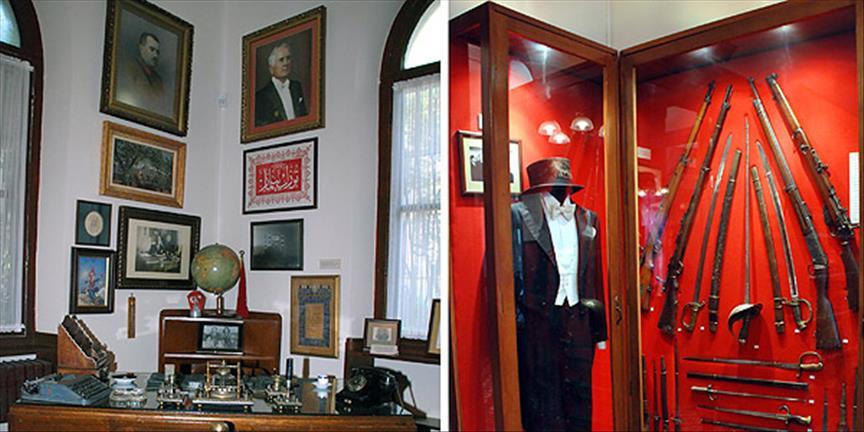
The Kâzım Karabekir Museum is organized as a “living house museum”. With the contributions of Museum Director Figen Batı, the interiors have been restored using original and historical artifacts reflecting the period in which the Pasha and his family lived. The museum is two-storied:
Upper Floor: Contains the bedroom belonging to the Pasha and his wife İclal Hanım, a dedicated room displaying family photographs, and sections housing clothing items.
Lower Floor: Includes the family’s sitting room, Kâzım Karabekir Pasha’s study, and the reception hall for guests, all restored and opened to visitors in their original form.
The museum displays Kâzım Karabekir Pasha’s uniforms, handwritten documents, personal belongings, family photographs, and historical documents from the era. In this way, the museum brings together both an individual life story and significant traces of Türkiye’s modern history.
The Kâzım Karabekir Museum is a special destination for history enthusiasts and those wishing to see documents that bear witness to the founding process of the Republic of Türkiye. Visiting hours and entry conditions are determined by the Kâzım Karabekir Foundation. The museum stands out as one of the few private house museums in Türkiye, preserving its historical identity.
Anadolu Ajansı. "Adı Müzesinde Yaşatılıyor." Accessed August 16, 2025. https://www.aa.com.tr/tr/kultur-sanat/adi-muzesinde-yasatiliyor/413015
Kâzım Karabekir Vakfı. "Müze." Kâzım Karabekir Vakfı Resmî Web Sitesi. Accessed August 16, 2025. https://www.kazimkarabekirvakfi.org.tr/muze.php
Location | Istanbul Türkiye | ||||||||
|---|---|---|---|---|---|---|---|---|---|
Establishment | 1 October 2005 | ||||||||
Building History | Late 19th century (Second Abdülhamid period) | ||||||||
Previous Names | Zürafalı Köşk, Perili Köşk | ||||||||
Days the Museum Is Open | Tuesday: 10.00 - 12.30 / 13.30 - 16.30, Thursday: 10.00 - 12.30 / 13.30 - 16.30, Saturday: 10.00 - 12.30 / 13.30 - 16.30 | ||||||||
No Discussion Added Yet
Start discussion for "Kâzım Karabekir Pasha Museum" article
Historical and Architectural Features
The Process of Museum Conversion
Museum Collection and Sections
Visitation and Significance