This article was automatically translated from the original Turkish version.
+1 More
Type of Geographical İndication | Mahreç Sign | ||||||||
|---|---|---|---|---|---|---|---|---|---|
Application Date | 06.11.2017 | ||||||||
Registration Number | 437 | ||||||||
Registration Date | 21.06.2019 | ||||||||
Product / Product Group(s) | Rugs and kilims | ||||||||
Province(s) | Gümüşhane | ||||||||
Applicant/Registrant(s) | Kelkit District Governorship | ||||||||
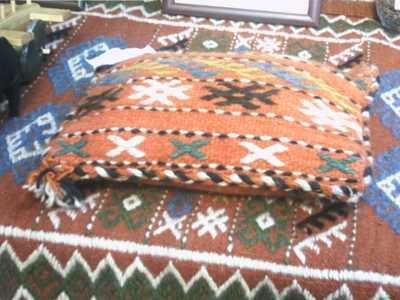
Kelkit Zilli Kilim is a handwoven artistic product unique to the Kelkit district of Gümüşhane and represents a cultural heritage passed down through generations. Made from 100% wool, 100% root dye, and 100% kirman yarn, this kilim was officially registered on 21 June 2019 under Industrial Property Law No. 6769 as a geographical indication. Produced within the boundaries of Kelkit district using local craftsmanship and traditional techniques, this product is registered by the Kelkit Subprovince.

Kelkit Zilli Kilim (AA)
The Kelkit Zilli Kilim is a handcraft woven on looms by master artisans using wool yarn twisted with kirman. Its name derives from the term “zilu,” referring to its long and fluffy texture, which over time evolved into “zilli kilim.” Smaller versions are called “ziliçe.” Distinctive features include a flat-weave technique and geometric patterns formed through intricate designs. Weaving is performed using a wrapping method with three weft threads over one warp thread, without relying on fixed warp pairs. The interior and exterior parts of the motifs are filled with contrasting colors to create a rich visual effect.
The Kelkit Zilli Kilim is woven on stretching looms. In these looms, the upper and lower rollers remain fixed while the warps are stretched using lateral support sockets. As weaving progresses, the kilim is rolled downward. The primary tools and materials used in production include:

Kelkit Zilli Kilim (AA)
The warp is prepared on the loom as a single thread:
Weft threads are colored using plant-based root dyes. Common dye sources include red root, palamut, oak acorn, walnut shell, saffron, cehri, labada, mint, karamuk, onion, and hazelnut shell. Mordants such as alum, vinegar, lemon salt, and oak acorn are used to fix the colors.
The Kelkit Zilli Kilim is an integral part of the cultural identity of the Kelkit district, with all stages of production taking place within its geographic boundaries. Local artisans preserve and transmit traditional knowledge and skills across generations, sustaining this art form. The motifs and weaving techniques reflect the historical and cultural fabric of the region.
The quality standards of the Kelkit Zilli Kilim are monitored by a supervisory body composed of representatives from the Kelkit Subprovince, the Kelkit District Public Education Center, and the Kelkit Kilim Preservation Education Culture Social and Mutual Aid Association. Inspections are conducted annually or in response to complaints. During inspections, compliance with the requirement that the kilim be made from 100% wool, root dye, and kirman yarn, as well as the accuracy of the motifs, is verified.
Anadolu Ajansı. 2025. “Gümüşhane's 'Kelkit zilli kilimi' woven with root dye entrusted to women.” Accessed July 17, 2025. https://www.aa.com.tr/tr/kultur/gumushanenin-kok-boya-ile-yapilan-kelkit-zilli-kilimi-kadinlara-emanet/3520177.
Ministry of Culture and Tourism of the Republic of Türkiye. 2013. “Zilli Kilim – Gümüşhane.” *Kültür Portalı*, February 24, 2013 (updated November 9, 2017). Accessed July 17, 2025. https://www.kulturportali.gov.tr/turkiye/gumushane/nealinir/zilli-kilim.
Turkish Patent and Trademark Office. "Kelkit Zilli Kilimi." Accessed July 17, 2025. https://ci.turkpatent.gov.tr/cografi-isaretler/detay/38406.

Type of Geographical İndication | Mahreç Sign | ||||||||
|---|---|---|---|---|---|---|---|---|---|
Application Date | 06.11.2017 | ||||||||
Registration Number | 437 | ||||||||
Registration Date | 21.06.2019 | ||||||||
Product / Product Group(s) | Rugs and kilims | ||||||||
Province(s) | Gümüşhane | ||||||||
Applicant/Registrant(s) | Kelkit District Governorship | ||||||||
Definition and Characteristics
Technical Specifications
Production Process
Warp Preparation
Thread Dyeing
Cultural and Geographic Context
Monitoring and Protection