This article was automatically translated from the original Turkish version.
+2 More
Location | Şahmuratlı Village Türkiye Yozgat Sorgun | ||||||||
|---|---|---|---|---|---|---|---|---|---|
Period(s) | Iron Age around 600 BCE | ||||||||
Ancient Name | Pteria | ||||||||
Wall Length | Approximately 7 km | ||||||||
Excavations | Since 1993, under the leadership of Dr. Summers and Dr. Branting | ||||||||
Findings | Phrygian inscriptions, ivory decoration, Byzantine coins | ||||||||
Architecture(s) | Public and civil structures water system | ||||||||
Located within the boundaries of Şahmuratlı Village, part of the Sorgun District in Yozgat Province, Türkiye, the Kerkenes Ruins are recognized as one of the largest Iron Age settlements in Central Anatolia. Believed to be the ancient city of Pteria mentioned in classical sources, the site was first scientifically investigated through surface surveys initiated in 1993. Today, excavations and research are conducted by international teams and continue to make significant contributions to our understanding of the region’s history.
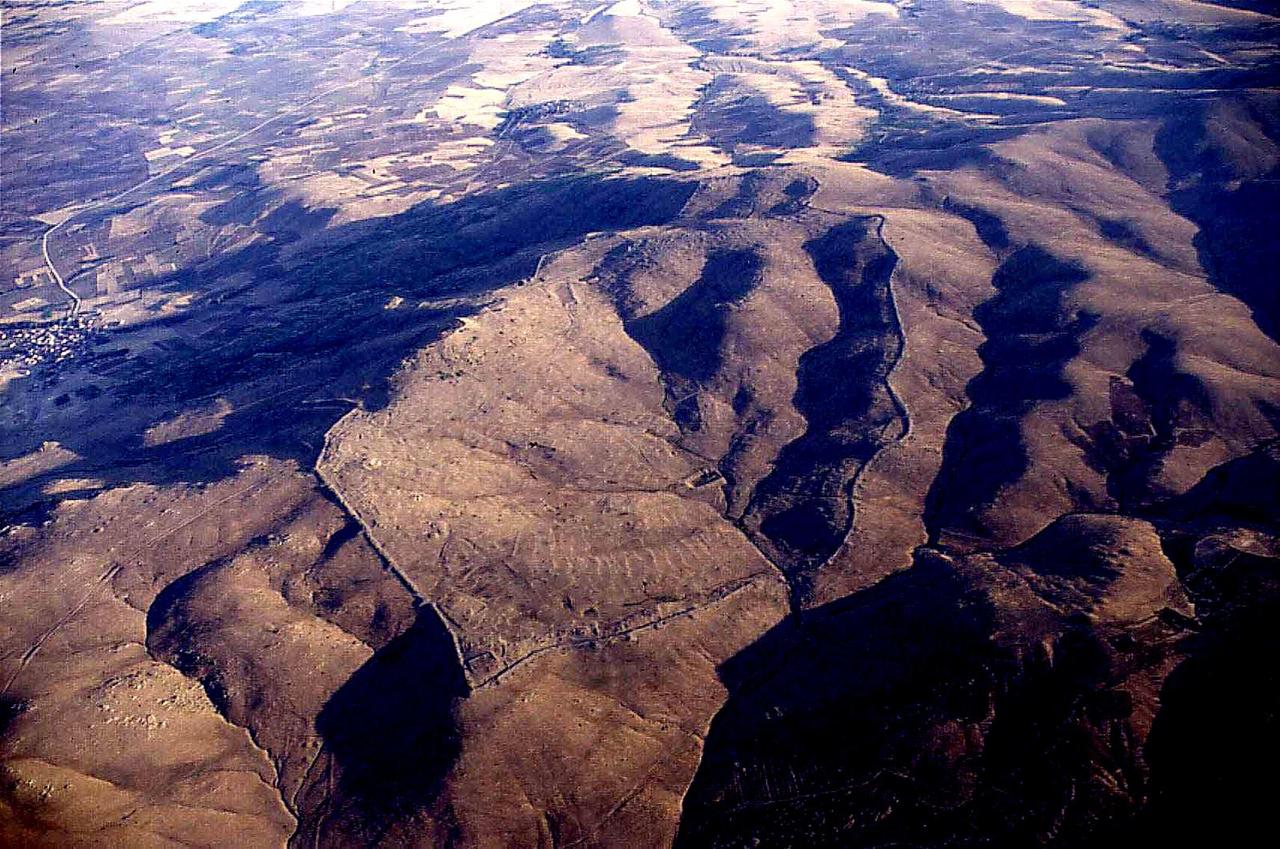
Kerkenes Ruins (Türkiye Culture Portal)
The Kerkenes Ruins are located 50 kilometers from the center of Yozgat Province and 13 kilometers from the district of Sorgun. The settlement occupies the summit of Kerkenes Mountain, within the boundaries of Şahmuratlı and İdrisli. The city, situated on gently sloping terrain, is enclosed by a 7-kilometer-long defensive wall that encircles an area of approximately 2.5 square kilometers. The site also contains several water bodies including Sülüklü Lake (Big Lake), Kızlar Lake and Atlar Lake. A gap of approximately four meters on the western side is interpreted as a gate in the city wall.
It is estimated that Kerkenes was founded around 600 BCE by the Medes. However, Phrygian inscriptions uncovered during excavations in 2003 indicate that the city was heavily influenced by Phrygian culture before its destruction. Ancient sources identify this city as Pteria. In 547 BCE, the city was captured by the Persians; its inhabitants were taken captive, the settlement was burned, and its walls were demolished. The destruction of Pteria resulted from the campaign of the Persian king Cyrus the Great following an attack by the Lydian king Croesus.
According to Herodotus, during the final phase of a prolonged war between the Medes and the Lydians, a solar eclipse occurred on 28 May 585 BCE, leading to the cessation of hostilities. This event is known as the “Solar Eclipse Battle,” and the peace treaty that followed was reinforced by mutual marital alliances between the two sides.
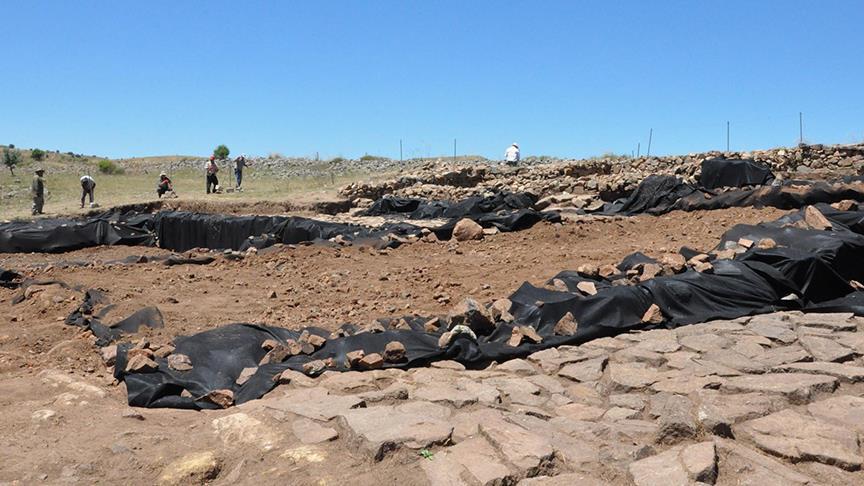
Archaeological activity at Kerkenes began in 1993 with surface surveys, continued in collaboration with museums between 1998 and 2000, and from 2001 onward was systematically conducted under the direction of Dr. Geoffrey Summers. In recent years, excavations have been led by Dr. Scott Branting and his teams. The site has revealed public buildings, examples of civilian architecture, an advanced water collection system, and stone-paved streets.
The settlement extensively used easily erodible sandstone in its architecture and inscriptions. One of the building clusters located in the northern part of the city was investigated during the 2025 excavations, revealing a columned structure and associated groups of buildings. Artifacts dating to the Iron Age, particularly the late 7th century BCE, were found in these structures. A total of 757 building clusters have been identified within the city.
An ivory furniture fragment uncovered during excavations is currently on display at the Ankara Museum of Anatolian Civilizations. Due to warfare and looting, the ancient city has yielded only limited high-quality cultural artifacts. A Byzantine coin discovered in 2004 indicates that the site was still subject to illicit excavations roughly a thousand years after its destruction. Additionally, some Galatian tombs dating to the 3rd–2nd centuries BCE are believed to have been plundered during the Byzantine period.
Ministry of Culture and Tourism. "Kerkenes Harabeleri (Kayıp Şehir Pteria)." *Kültür Portalı*. Accessed June 23, 2025. https://www.kulturportali.gov.tr/turkiye/yozgat/gezilecekyer/kerkenes-harabeleri-kayip-sehir-pteria.
Yozgat İl Özel İdaresi. "Kerkenez Harabeleri – Keykavus Kalesi – Kayıp Şehir Pteria." Yozgat İl Özel İdaresi. Accessed June 23, 2025. http://www.yozgatozelidare.gov.tr/kerkenez-harabeleri-keykavus-kalesi-kayip-sehir-pteria.

Location | Şahmuratlı Village Türkiye Yozgat Sorgun | ||||||||
|---|---|---|---|---|---|---|---|---|---|
Period(s) | Iron Age around 600 BCE | ||||||||
Ancient Name | Pteria | ||||||||
Wall Length | Approximately 7 km | ||||||||
Excavations | Since 1993, under the leadership of Dr. Summers and Dr. Branting | ||||||||
Findings | Phrygian inscriptions, ivory decoration, Byzantine coins | ||||||||
Architecture(s) | Public and civil structures water system | ||||||||
Location and Physical Characteristics
Historical Background
Ancient Sources and the Solar Eclipse
Archaeological Investigations and Discoveries
Architectural and Material Features
Artifacts and Cultural Heritage