

This article was automatically translated from the original Turkish version.
+1 More
Location | Istanbul Türkiye | ||||||||
|---|---|---|---|---|---|---|---|---|---|
Year of Construction | 1907 | ||||||||
Patron | Abbas Hilmi Pasha | ||||||||
Architectural Style(s) | Art Nouveau | ||||||||
Feature(s) | Tower with Bosphorus view Stained Glass Ceiling Steam Elevator | ||||||||
Architect(s) | Delfo Seminati | ||||||||
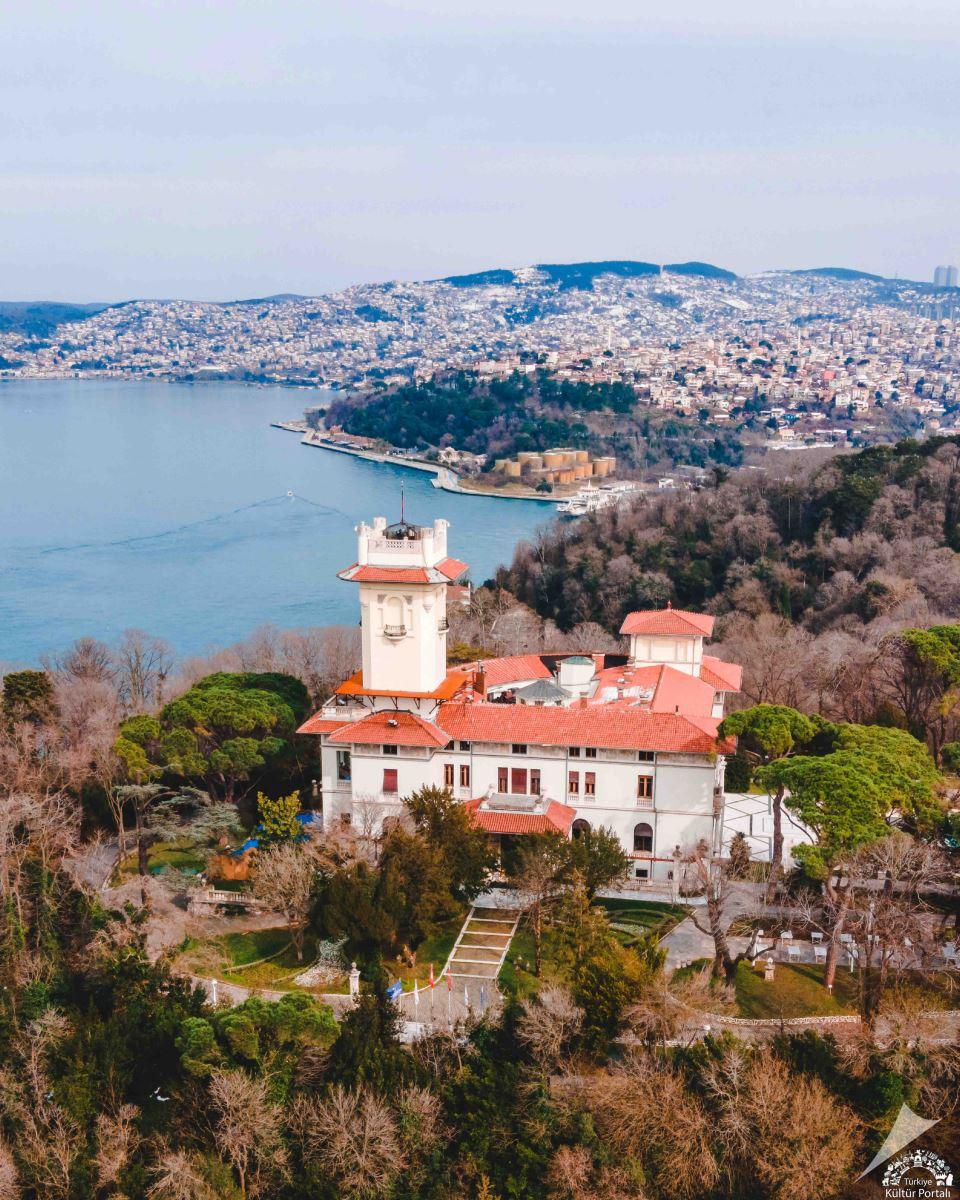
Khedive Palace is a historical structure located on the Çubuklu ridges overlooking the Bosphorus in the Beykoz district of Istanbul, Türkiye. It was commissioned in 1907 by Abbas Hilmi Pasha, the last khedive of Egypt under the Ottoman Empire, from the Italian architect Delfo Seminati. The palace reflects the European-influenced architectural sensibilities of its time and is one of the examples of Art Nouveau style in Istanbul.

Khedive Palace (Türkiye Culture Portal)
In the late 19th century, Ottoman-Egyptian relations became complex due to British influence in Egypt. Abbas Hilmi Pasha, as governor of Egypt, frequently visited Istanbul to demonstrate his loyalty to the Ottoman Empire while also seeking political support against British dominance. During this period, in 1903, he purchased two wooden yalıs and the surrounding wooded area in Çubuklu. After demolishing the yalıs, he constructed a grand palace and an observation tower on the approximately 270-dönüm plot of land.
Occupying an area of about 1,000 square meters, the Khedive Palace features various interior and exterior spaces. The main entrance opens onto a monumental marble fountain at its center. High ceilings with stained glass, circular floor plans connecting the salons, elegant staircases, and a large lounge with a fireplace reflect the Western lifestyle of the era.
One of the palace’s structures, the observation tower, was designed to be accessible both by staircase and by a steam-powered elevator, an advanced technology of the time. The tower offers a panoramic view of both shores of the Bosphorus.
In 1914, following the British declaration of a kingdom in Egypt, Abbas Hilmi Pasha was deposed and his title officially abolished. He spent the rest of his life in exile in Switzerland, while his family continued to reside in the Khedive Palace until 1937. In the same year, the building was purchased by the Istanbul Municipality.
After its acquisition, the palace remained neglected for many years and was abandoned until the early 1980s. In 1984, a comprehensive restoration was carried out by Çelik Gülersoy on behalf of the Turkish Touring and Automobile Association, after which the building briefly operated as a hotel and restaurant. Since 1996, it has been managed by Beltur A.Ş., a subsidiary of the Istanbul Metropolitan Municipality, as a social facility.
Today, the Khedive Palace serves the public as a restaurant, café, and event venue. Its gardens feature a large rose garden, walking trails, and wooded areas. The interior and exterior spaces are frequently chosen for weddings, meetings, art events, and photo shoots.
The Khedive Palace is a multi-layered example of cultural heritage, reflecting through its architecture the Ottoman Empire’s opening to the West in its final years, and through its history the process of dissolution in Ottoman-Egyptian relations. This structure, attracting both local and international visitors, stands among the examples of Western-style palace architecture in Istanbul.
Hanilçe, Murat. “Hidiv Kasrı.” Türkiye Turizm Ansiklopedisi. Accessed August 16, 2025. https://turkiyeturizmansiklopedisi.com/hidiv-kasri
T.C. Beykoz District Governorship. “Hidiv Kasrı.” T.C. Beykoz District Governorship. Accessed August 16, 2025. http://www.beykoz.gov.tr/hidiv-kasri
T.C. Kültür ve Turizm Bakanlığı. "Hidiv Kasrı." Kültür Portalı. Accessed August 16, 2025. https://www.kulturportali.gov.tr/turkiye/istanbul/gezilecekyer/hidiv-kasri

Location | Istanbul Türkiye | ||||||||
|---|---|---|---|---|---|---|---|---|---|
Year of Construction | 1907 | ||||||||
Patron | Abbas Hilmi Pasha | ||||||||
Architectural Style(s) | Art Nouveau | ||||||||
Feature(s) | Tower with Bosphorus view Stained Glass Ceiling Steam Elevator | ||||||||
Architect(s) | Delfo Seminati | ||||||||
Historical Background
Architectural Features
Political and Social Transformation
From Neglect to Preservation
Current Use and Significance
Cultural Heritage and Architectural Symbol