This article was automatically translated from the original Turkish version.
+1 More
Kilis Tava
Food Type | Oven dish / Type of kebab | ||||||||
|---|---|---|---|---|---|---|---|---|---|
Geographic Origin | Kilis, Türkiye | ||||||||
Main Ingredient | Medium-fat lamb mince, onion, pepper, parsley, tomato | ||||||||
Base Layer | Summer: Eggplant, Winter: Potato | ||||||||
Cooking Method(s) | In a stone or wood oven in a tray | ||||||||
Serving Style | Served hot with claw-shaped pide and ayran | ||||||||
Traditional Use | Frequently preferred on Ramadan tables and special occasions | ||||||||
Cultural Feature | Integrated into neighborhood culture through butcher-oven collaboration | ||||||||
Registration Status | Geographical Indication Product (2022) | ||||||||
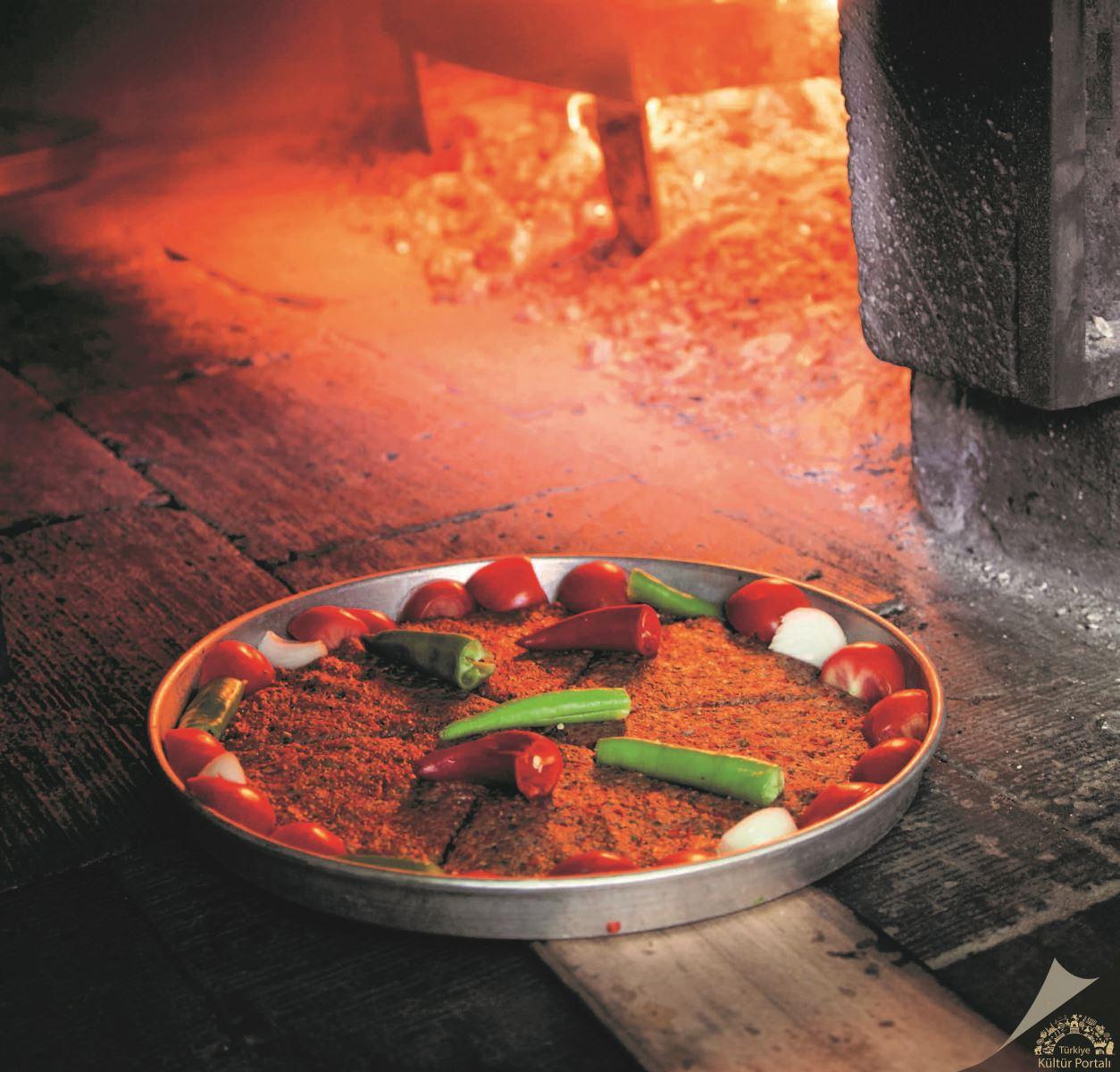
Kilis Tava is a traditional oven dish specific to the city of Kilis in Türkiye’s Southeastern Anatolia Region. It is typically baked in stone ovens using large round trays. A medium-fat lamb mince is mixed with finely chopped vegetables and regional spices, then spread evenly over the tray; sliced eggplant or potato is placed underneath depending on the season. The dish’s most distinctive feature is its preparation through collaboration between butchers and bakers: the mince is kneaded at the butcher’s shop and then taken to the neighborhood oven for baking.
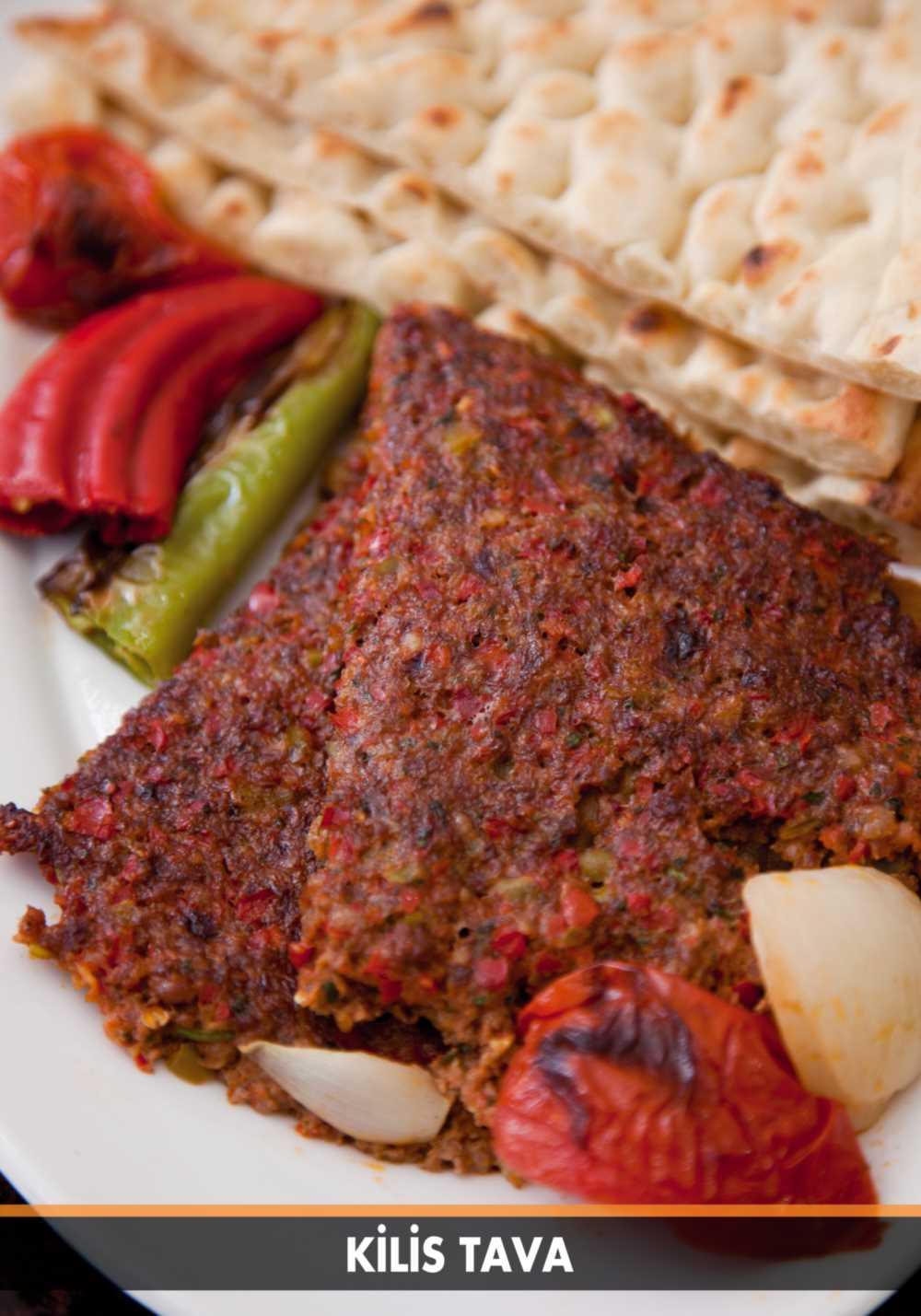
Kilis Tava ( Culture Portal )
In preparing Kilis Tava, lamb mince obtained from the rib and breast cuts is preferred. This mince is combined with finely chopped onion, green or red pepper, parsley, salt, and various spices. All ingredients are thoroughly mixed by hand or with a cleaver. The prepared mixture is evenly spread over a tray lined with sliced eggplant or potato. The top is garnished with slices of tomato and pepper. Traditionally, it is baked quickly at high heat in a stone oven.
The base layer of Kilis Tava varies with the seasons. Eggplant is used during summer months, while potato is preferred in winter. This variation adds both visual diversity and distinct flavor profiles to the dish.
Kilis Tava is typically served hot, accompanied by tırnaklı pide, ayran, and seasonal salads. It can be prepared in individual portions or in large trays suitable for family meals. It is one of the indispensable dishes served during iftar tables in Ramadan.
This dish is not merely a culinary delight but also holds an important place in Kilis’s social life. The involvement of multiple tradespeople and family members in its preparation has given the dish the character of a communal ritual. Rows of trays waiting to be baked in neighborhood ovens are a tangible expression of this cultural shared practice.
Although Kilis Tava now appears on modern restaurant menus, it is still prepared in its most authentic form using traditional methods in stone ovens. In recent years, it has been officially registered as a geographical indication, contributing to the local economy and gaining recognition as an attractive destination in gastronomic tourism.
Kilis Valiliği. "Kilis Yemekleri." Kilis Valiliği Resmî Web Sitesi. Accessed June 27, 2025. http://www.kilis.gov.tr/kilis-yemekleri.
Kilis İl Directorate of Culture and Tourism. “Kilis Tava.” Kilis Provincial Directorate of Culture and Tourism Official Website. Accessed June 27, 2025. https://kilis.ktb.gov.tr/TR-61783/kilis-tava.html.
T.C. Ministry of Culture and Tourism. “Kilis Tava.” *Turkey Culture Portal*. Accessed June 27, 2025. https://www.kulturportali.gov.tr/turkiye/kilis/neyenir/kilis-tava.

Kilis Tava
Food Type | Oven dish / Type of kebab | ||||||||
|---|---|---|---|---|---|---|---|---|---|
Geographic Origin | Kilis, Türkiye | ||||||||
Main Ingredient | Medium-fat lamb mince, onion, pepper, parsley, tomato | ||||||||
Base Layer | Summer: Eggplant, Winter: Potato | ||||||||
Cooking Method(s) | In a stone or wood oven in a tray | ||||||||
Serving Style | Served hot with claw-shaped pide and ayran | ||||||||
Traditional Use | Frequently preferred on Ramadan tables and special occasions | ||||||||
Cultural Feature | Integrated into neighborhood culture through butcher-oven collaboration | ||||||||
Registration Status | Geographical Indication Product (2022) | ||||||||
Preparation
Seasonal Variations
Serving Style
Cultural Significance
Its Place Today