


This article was automatically translated from the original Turkish version.
+2 More
Location | It is located within the boundaries of Keskin District Kırıkkale Province. It is approximately 3 km from the district center. | ||||||||
|---|---|---|---|---|---|---|---|---|---|
Physical Characteristics | It has a structure approximately 285 meters long with multiple floors and rooms. | ||||||||
Dating | It dates back to the Roman and Byzantine periods. | ||||||||
Sulu Cave is located within the boundaries of Keskin District in Kırıkkale Province, in Türkiye’s Central Anatolia Region, at the Arzu Bayırı locality of Altıntaş Village. This cave structure, exhibiting both semi-natural and semi-artificial characteristics, attracts attention from both geological and archaeological perspectives. With a total length of 285 metres, it displays a three-level structure.
The cave is situated in an area containing rock formations from the Pliocene epoch. Sedimentary rocks such as marble, sandstone, and mudstone are prominently observed in the cave’s formation. These geological deposits explain both the natural processes behind the cave’s development and its suitability for human intervention.

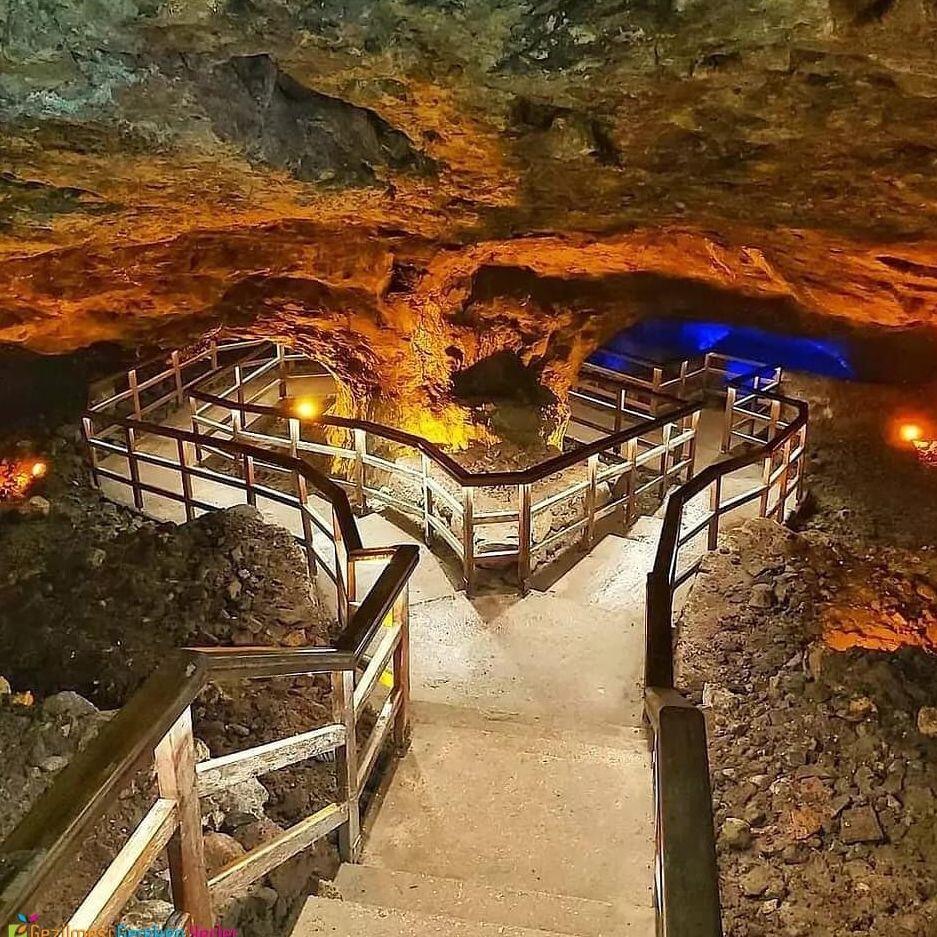
Image of Kırıkkale Sulu Cave - Anadolu Agency
Sulu Cave consists of three main galleries:
The cave lies within the vadose zone (the area above the groundwater table) and remains largely dry for most of the year. During rainy periods, water seeping from the ceiling contributes to the formation of natural reservoirs inside the cave. These waters are collected in artificial pools, rendering them usable. This feature is the origin of the cave’s name.
According to archaeological findings and structural analyses, Sulu Cave:
These uses demonstrate that the cave is not merely a natural formation but also a cultural structure shaped by human intervention.
The presence of mining traces, water pools, and artificial niches within the cave indicates that the area has been functionally utilized since antiquity. In this regard, Sulu Cave is regarded as a multi-layered cultural heritage site encompassing settlement, production, and defense functions.

Image of Kırıkkale Sulu Cave - Kırıkkale Tourism and Promotion Portal
On 11 July 2013, the cave was officially registered by the General Directorate of Cultural Heritage and Museums and opened to the public as an archaeological site under the administration of the Ankara Museum of Anatolian Civilizations. Currently, approximately 115 metres of the cave have been adapted for tourist visits. Walking paths, directional signage, and protective structures have been installed in this area.
In recent years, restoration and environmental improvement works have been carried out to integrate the cave into tourism. These efforts have included the installation of safety measures, lighting systems, and visitor information infrastructure.
Anadolu Ajansı. "Sulu Mağara Turizme Kazandırılıyor." Anadolu Ajansı, September 12, 2019. https://www.aa.com.tr/tr/turkiye/sulu-magara-turizme-kazandiriliyor/1579697
Arkeoloji ve Sanat Yayınları. "Sulu Mağara’nın Restorasyonu İçin Çalışmalar Sürüyor." Arkeoloji ve Sanat. Accessed May 26, 2025. https://www.arkeolojisanat.com/shop/blog/sulu-magaranin-restorasyonu-icin-calismalar-suruyor_3_622129.html
Kırıkkale Turizm ve Tanıtım Portalı. "Sulu Mağara." Accessed May 26, 2025. https://www.kirikkale.com.tr/mekan/sulu-magara
T.C. Kültür ve Turizm Bakanlığı. "Kırıkkale Keskin Sulu Mağara." Turkish Museums. Accessed May 26, 2025.
Türkiye Turizm Ansiklopedisi. "Keskin Sulu Mağara." Türkiye Turizm Ansiklopedisi. Accessed May 26, 2025.

Location | It is located within the boundaries of Keskin District Kırıkkale Province. It is approximately 3 km from the district center. | ||||||||
|---|---|---|---|---|---|---|---|---|---|
Physical Characteristics | It has a structure approximately 285 meters long with multiple floors and rooms. | ||||||||
Dating | It dates back to the Roman and Byzantine periods. | ||||||||
No Discussion Added Yet
Start discussion for "Kırıkkale Sulu Cave" article
Geological Features
Structural and Architectural Features
Hydrological Features
Historical Uses
Archaeological and Cultural Value
Protection Status and Visit