

This article was automatically translated from the original Turkish version.
+2 More
Location | Urla - İzmir / Türkiye | ||||||||
|---|---|---|---|---|---|---|---|---|---|
Period(s) | 4000 BCE - Classical Period | ||||||||
Civilization | Ancient Ionia | ||||||||
Settlement Layers | Continuous settlement from the Chalcolithic Period to the Classical Period | ||||||||
Archaeological Sites | Classical Period Necropolis Khyton Settlement Limantepe Quarantine Island | ||||||||
Klazomenai is an ancient Ionian city located on the western coast of Anatolia, north of the Urla-Çeşme Peninsula, in the center of the Gulf of İzmir. As one of the twelve Ionian cities, this settlement has been inhabited since prehistoric times and developed a distinct urban identity especially from the Iron Age onward. The city’s remains on the present-day Karantina Island, where the Urla Bone Hospital stands, extend westward from Limantepe to the foothills of the Ayyıldız and Cankurtaran hills.
The territory of Klazomenai extends eastward near Smyrna and westward to the border with Erythrai around Hypokremnos (İçmeler). Gülbahçe Village is considered the western boundary, while the southern extent of the settlement reaches the Sığacık Gulf. The Temple of Apollo is believed to have been located near the Agamemnon Hot Springs in the vicinity of Balçova. The classical-era necropolis lies west of the chain between Ayyıldız and Cankurtaran hills, along the route of the ancient Klazomenai-Hypokremnos-Erythrai road.
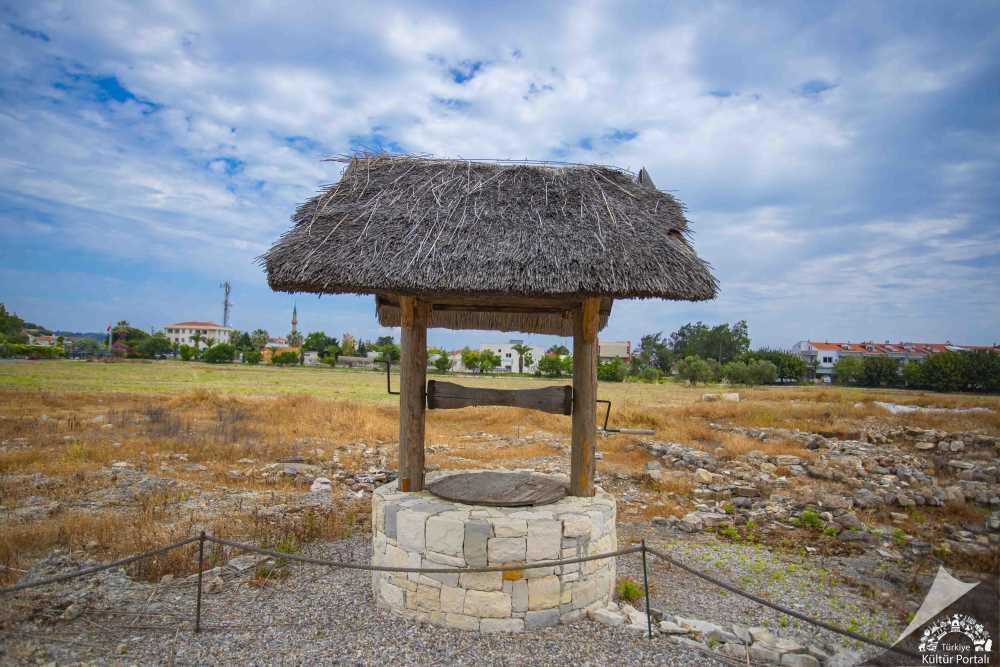
Klazomenai (Türkiye Culture Portal)
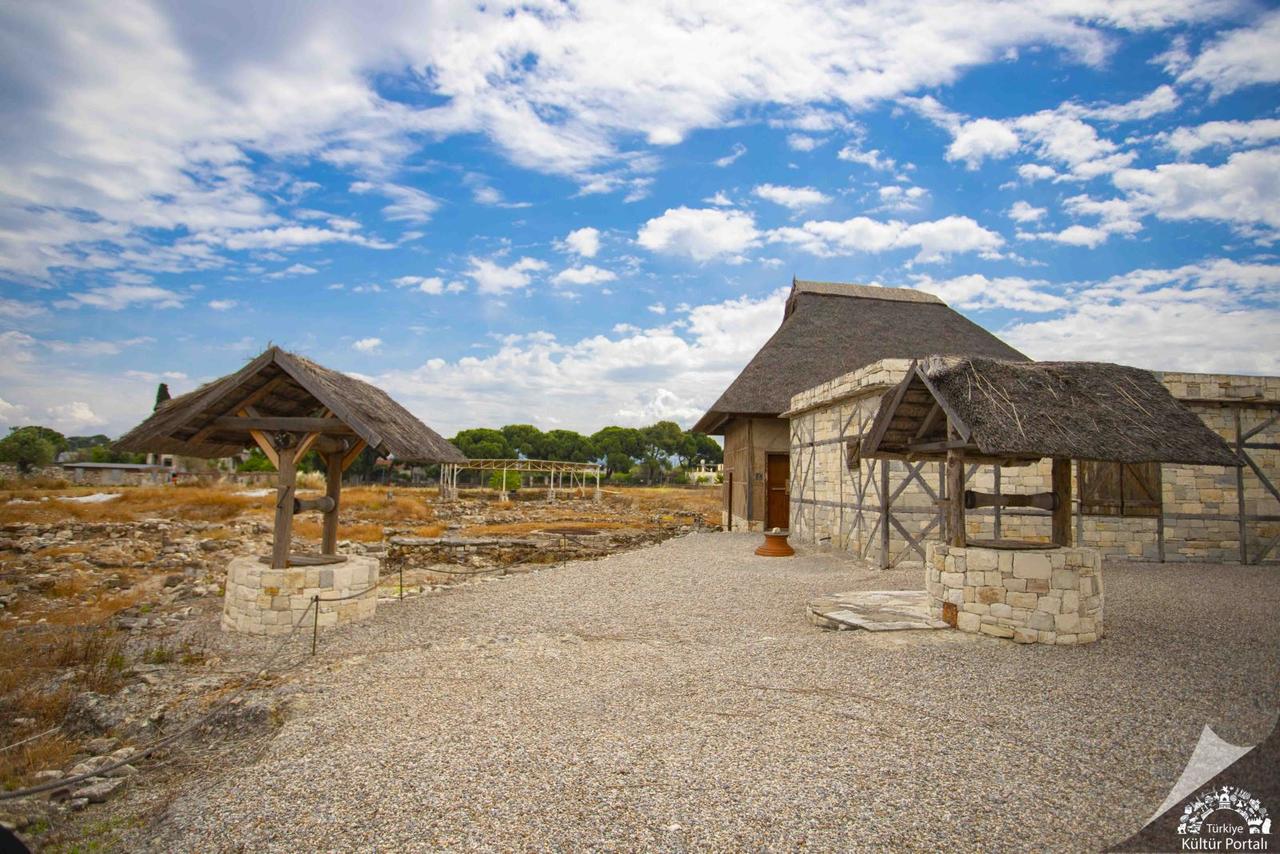
The origins of Klazomenai trace back to the Limantepe settlement, dating to around 4000 BCE. During the Geometric period (900–650 BCE), houses with apsidal and rectangular plans were constructed. In the 7th century BCE, the city was enclosed by walls, but its development during the Archaic period was interrupted by the Persian conquest of 546 BCE. Around 525–520 BCE, the settlement was revitalized, and after the Ionian Revolt of 499 BCE, urban life was relocated to Karantina Island. In the first half of the 4th century BCE, a group not aligned with Athens established a grid-planned settlement on Limantepe known as Khyton; this area was abandoned around 350 BCE. Subsequently, the mainland was used exclusively for agricultural purposes.
.jpg&w=1280&q=75)
Klazomenai (Türkiye Culture Portal)
The first scientific excavations were conducted by Greek archaeologist G. P. Oikonomos between 1921 and 1922. Work was carried out under the auspices of the Ministry of Culture in 1979–1980, and from 1981 onward, excavations were systematically organized under the leadership of Güven Bakır. Since 2007, the excavation directorship has been held by Prof. Dr. Yaşar E. Ersoy. Excavations at Limantepe were initiated in 1950 by Ekrem Akurgal, continued by Güven Bakır in 1979, and subsequently carried out by Hayat Erkanal from 1980 onward.
Excavations have uncovered strata from the Archaic and Classical periods, as well as traces of the Late Bronze Age (second half of the 2nd millennium BCE). Layers dating to the Early Bronze Age (3rd millennium BCE) represent some of the earliest examples of urbanization in western Anatolia. A palace structure of the “corridor house” type from this period indicates the presence of political and economic authority in the region. A city wall approximately six meters high has also been unearthed from the same era. Round-plan single-room houses, ovens, and numerous small artifacts from the Middle Bronze Age have been recovered.
Klazomenai is notable for an olive oil production facility dating to the 6th century BCE. This facility features 15 carved rock-cut basins of varying functions, providing evidence of large-scale production. Equipment such as hand mills, grinding stones, and hot-water separation vessels demonstrates technological advancement in the region. Distinctive Klazomenai amphorae with band decorations were used for transporting olive oil and wine, indicating an active role in foreign trade. The city contributed to the foundation of the trading center at Naucratis in Egypt and to the colonization of the Black Sea region. Today, the production facility is planned to be converted into the Museum of Ancient Olive Oil Technology.
.jpg&w=1280&q=75)
Tools Used in Production (Türkiye Culture Portal)
The Klazomenai Archaeological Site is protected under the authority of the Republic of Türkiye Ministry of Culture and Tourism and is open to visitors as an archaeological area. The site is featured on the Culture Portal and in museum guides, enabling on-site observation. Although not listed on the UNESCO World Heritage List, it is recognized nationally as a significant cultural heritage site due to its status as one of the oldest and most continuously inhabited settlements in the Aegean region.
T.C. Ministry of Culture and Tourism. "Klazomenai Örenyeri." Türkiye Kültür Portalı. Accessed June 29, 2025. https://www.kulturportali.gov.tr/turkiye/izmir/gezilecekyer/klazomenai-orenyeri
T.C. Ministry of Culture and Tourism. “KLAZOMENAI ÖRENYERİ.” *Müze Türkiye*. Accessed June 29, 2025. https://muze.gov.tr/muze-detay?SectionId=IKZ01&DistId=MRK.
T.C. Ministry of Culture and Tourism. “Klazomenai (Urla).” *İzmir İl Directorate of Culture and Tourism*. Accessed June 29, 2025. https://izmir.ktb.gov.tr/tr-210592/klazomenai-urla.html.

Location | Urla - İzmir / Türkiye | ||||||||
|---|---|---|---|---|---|---|---|---|---|
Period(s) | 4000 BCE - Classical Period | ||||||||
Civilization | Ancient Ionia | ||||||||
Settlement Layers | Continuous settlement from the Chalcolithic Period to the Classical Period | ||||||||
Archaeological Sites | Classical Period Necropolis Khyton Settlement Limantepe Quarantine Island | ||||||||
No Discussion Added Yet
Start discussion for "Klazomenai Archaeological Site" article
Settlement History and Urban Development
Archaeological Excavations
Archaeological Findings and Settlement Layers
Olive Oil Production and Economy
Cultural Heritage Status