

This article was automatically translated from the original Turkish version.
Registration Number | 653 | ||||||||
|---|---|---|---|---|---|---|---|---|---|
Registration Date | 20.01.2021 | ||||||||
Application Number | C2018/229 | ||||||||
Application Date | 05.12.2018 | ||||||||
Name of the Geographical Indication | Koyulhisar Domatesi | ||||||||
Product / Product Group(s) | Processed and Unprocessed Fruits Vegetables and Mushrooms | ||||||||
Type of Geographical Indication | Place of Origin | ||||||||
Applicant/Registrant(s) | Koyulhisar Chamber of Agriculture | ||||||||
Koyulhisar Tomato (Solanum lycopersicum L.) is a local tomato variety cultivated exclusively in the Koyulhisar district of Sivas Province. Production is primarily carried out in Yukarıkale Village, as well as in Aşağıkale Village and the villages of Dilekli, Yalnıztepe, Bahçe and Gökdere. The seeds used are heirloom seeds that have been preserved for many years. In 2018, a geographical indication application was submitted by the Koyulhisar Chamber of Agriculture, and on 20 January 2021, it was officially registered and protected by the Turkish Patent and Trademark Office.

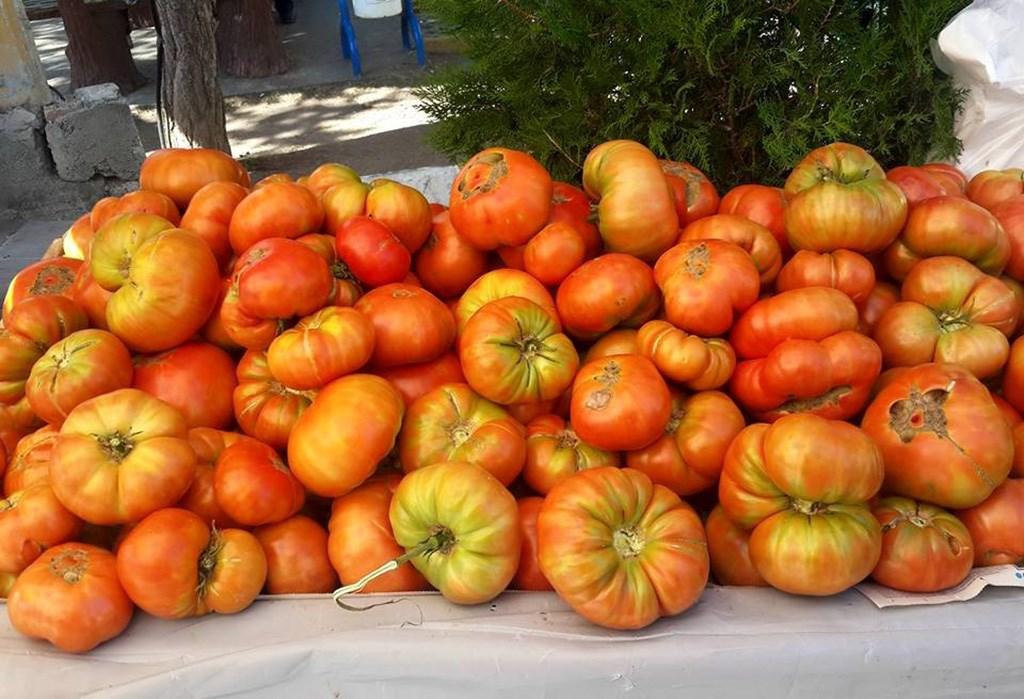
Koyulhisar Tomato (AA)
The Koyulhisar Tomato produces large, round-flattened fruits with irregular indentations and protrusions on their surface. The flesh is pinkish-red and contains seeds. The skin is thin and the shelf life is short, making it ideal for fresh consumption. Its taste, aroma and fragrance differ from those of other tomato varieties. Fruit weight ranges from 300 to 500 grams, with a lycopene content of at least 50 mg/kg. The soluble dry matter content is at least 4%, the pH value ranges between 4 and 5, and the titratable acidity is at least 0.4%. Approximately 50% of the dry matter consists of reducing sugars.
Cultivation of the Koyulhisar Tomato begins with transplanting seedlings into greenhouses or open fields. After soil preparation, planting is carried out using the transplanting method, followed by necessary maintenance operations. The first weeding is performed 10 to 15 days after planting, and the second weeding occurs two to three weeks later. During weeding, soil is mounded around the base and weeds are removed. Shoots emerging from lower leaves are pruned, and plants are trained to grow with two to three stems. Irrigation is typically conducted using drip systems or by filling furrows. Pruning increases light exposure and air circulation, and helps prevent the spread of diseases and pests. Harvesting is done manually during the period when fruits transition from green to red, depending on ripeness and market conditions. Harvested tomatoes are placed in containers suitable for food contact without causing damage.
The Koyulhisar Tomato thrives in temperate and warm climatic conditions. Temperatures below -3°C can damage the plants. Seedlings are transplanted into fields in spring, after the last frost, when soil and air temperatures reach 12–15°C. Cultivation is best suited to well-drained, wind-protected, sun-exposed areas. Deep, humus-rich and nutrient-dense loamy soils are preferred. Organic matter content in the soil can be increased through farmyard manure and green manuring; fertilizers are applied three to four months before planting and are supplemented with irrigation water when necessary.
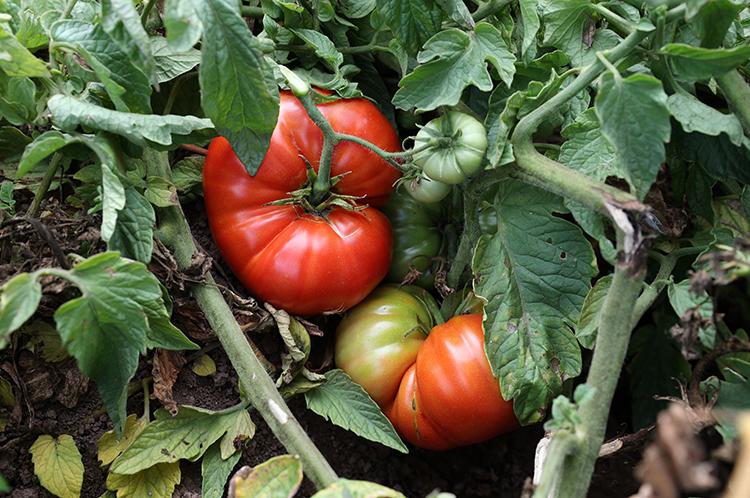
Koyulhisar Tomato (AA)
Seedlings are transplanted after the last frost risk has passed and soil and air temperatures reach 12–15°C. Seedlings with open flowers are not used for transplanting, and planting should occur when the air is cool. Soil is tilled to a depth of 25–30 cm approximately one month before transplanting. Plants are arranged in rows with row spacing of 80–100 cm and plant spacing of 50–60 cm. Seedlings are planted using a planting stick, with approximately two-thirds of the stem buried in the soil, followed by watering. Protective measures are taken against root and stem base diseases. The first weeding is carried out 10–15 days after planting, and the second weeding occurs two to three weeks later. During weeding, soil is mounded around the base and weeds are removed; lower leaves touching the soil are removed. Shoots emerging from lower leaves are pruned while small, and plants are trained to grow with two to three stems.
Irrigation is essential for yield in Koyulhisar Tomato cultivation. During the seedling stage, plants are irrigated continuously or periodically according to climatic conditions. Irrigation is typically performed using drip systems or by filling furrows; care is taken to avoid direct contact of water with fruits during furrow irrigation. Irrigation may also be applied after harvest. Pruning is performed to increase light-exposed surface area, improve air circulation, and prevent the proliferation of diseases and pests. Pruning includes removal of suckers, tip pruning and leaf pruning; shoots from lower leaves are removed while small, and plants are trained to grow with two to three stems.
Harvesting of the Koyulhisar Tomato takes place manually during the period when fruits transition from green to red, depending on ripeness, distance to market and consumer demand. Harvesting typically begins in mid-July and continues until the end of November. Tomatoes are hand-picked and placed in food-safe, damage-resistant containers. The Koyulhisar Tomato is best consumed fresh and, due to its low transport tolerance, must be consumed quickly. It is served on tables sliced or salted with coarse salt.

Koyulhisar Tomato (AA)
Monitoring of the Koyulhisar Tomato is conducted by a committee of at least three members coordinated by the Koyulhisar Chamber of Agriculture, with participation from the Chamber and the District Directorate of Agriculture and Forestry. Inspections are carried out at least once per year; additional inspections may be conducted in response to complaints or as needed. Compliance with geographical indication criteria and production methods is verified, and any identified non-conformities are reported to the relevant parties. Inspection reports are submitted to the Turkish Patent and Trademark Office.
Anadolu Ajansı. “Koyulhisar Domatesi Ata Tohumundan Yetiştiriliyor.” Anadolu Ajansı, September 24, 2024. Accessed August 18, 2025. https://www.aa.com.tr/tr/yasam/koyulhisar-domatesi-ata-tohumundan-yetistiriliyor/3339311.
Sivas Valiliği. "Koyulhisar Kale Domatesi." Sivas Valiliği. Accessed August 18, 2025. https://www.sivas.gov.tr/koyulhisar-kale-domatesi.
Türk Patent ve Marka Kurumu. “Koyulhisar Domatesi Tescil Belgesi PDF.” Coğrafi İşaretler Portalı. Accessed August 18, 2025. https://ci.turkpatent.gov.tr/Files/GeographicalSigns/72e27081-4798-4c02-8db2-a81e2563dab4.pdf.
Türk Patent ve Marka Kurumu. “Koyulhisar Domatesi.” Coğrafi İşaretler Portalı. Accessed August 18, 2025. https://ci.turkpatent.gov.tr/cografi-isaretler/detay/38668.

Registration Number | 653 | ||||||||
|---|---|---|---|---|---|---|---|---|---|
Registration Date | 20.01.2021 | ||||||||
Application Number | C2018/229 | ||||||||
Application Date | 05.12.2018 | ||||||||
Name of the Geographical Indication | Koyulhisar Domatesi | ||||||||
Product / Product Group(s) | Processed and Unprocessed Fruits Vegetables and Mushrooms | ||||||||
Type of Geographical Indication | Place of Origin | ||||||||
Applicant/Registrant(s) | Koyulhisar Chamber of Agriculture | ||||||||
Distinctive Characteristics
Cultivation Method
Climate and Soil Requirements
Seedling Transplanting and Maintenance
Irrigation and Pruning
Harvesting and Consumption
Monitoring and Control