


This article was automatically translated from the original Turkish version.
+1 More
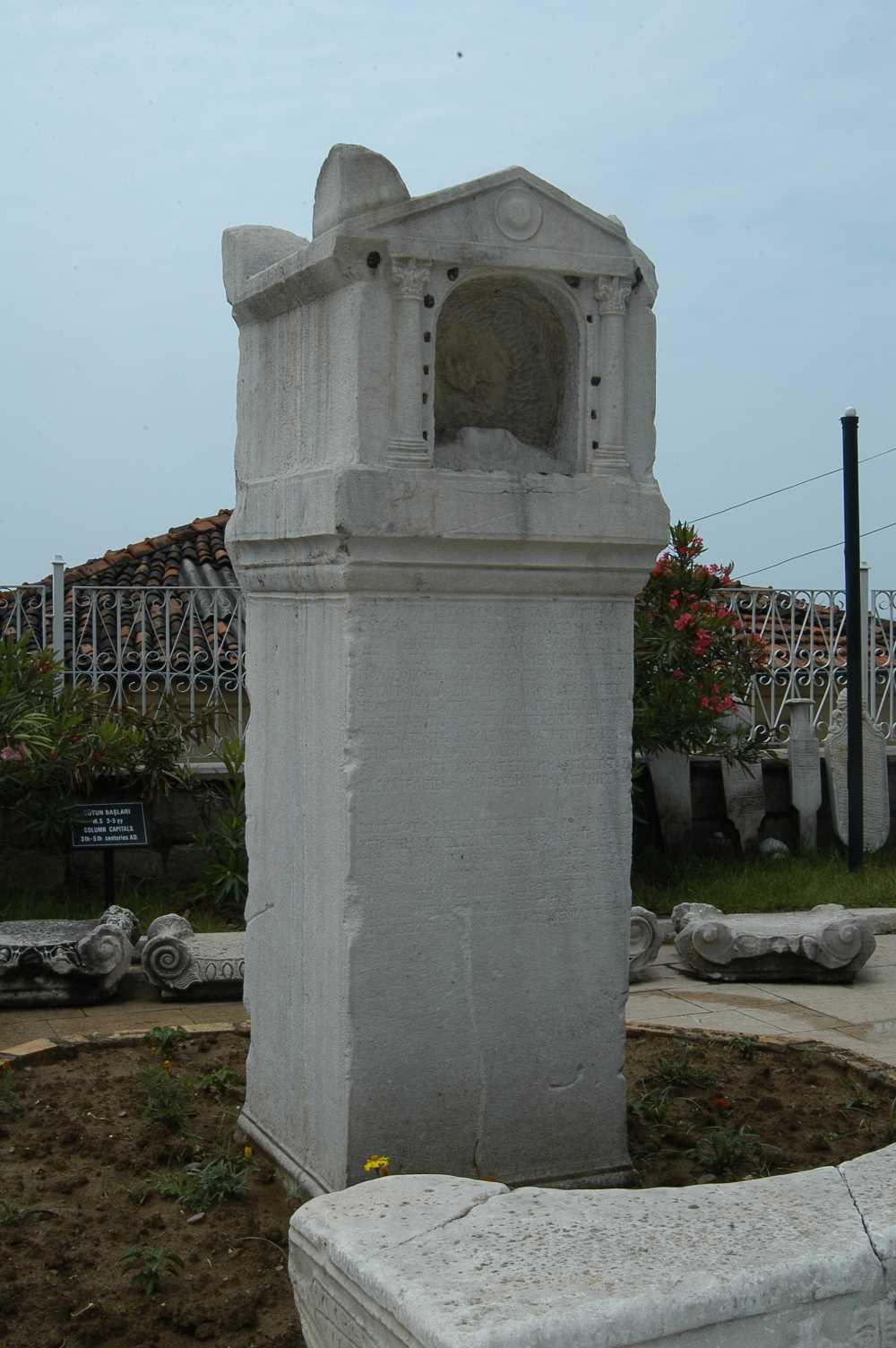
Krispos Monumental Tomb (Cultural Portal)
Location | Ereğli Museum Garden Türkiye Zonguldak Karadeniz Ereğli | ||||||||
|---|---|---|---|---|---|---|---|---|---|
History | Roman Period, approximately 2nd century CE | ||||||||
Built for Whom | Krispos (Egyptian pantomime artist) | ||||||||
Architectural Feature(s) | Corinthian-capital columns Greek inscription headless bust triangular pediment aedicula (niche) | ||||||||
Inscription Language | Greek | ||||||||
The Krispos Monumental Tomb is a funerary monument constructed in honor of a Roman-era Egyptian pantomime artist, featuring classical architectural elements. It is currently preserved in the garden of the Ereğli Museum in the Karadeniz Ereğli district of Zonguldak Province.
In antiquity, artistic activities held a significant place within the boundaries of the Roman Empire. The pantomime artist Krispos, of Egyptian origin, came to Heraclea Pontica (modern-day Karadeniz Ereğli) to perform. Pantomime, a form of silent storytelling through dance and theatrical movement, was a widespread and respected genre of stage art in its time.
Following Krispos’s untimely death at the age of 29, a grand monumental tomb was erected in his memory. This structure should be regarded not only as a tribute to an individual artist but also as a representation of the artistic values of the era.
The Krispos Monumental Tomb can be interpreted as a social reflection of the value accorded to artists. In Roman culture, funerary monuments erected after death as signs of respect were not limited to family members but could also be built for individuals recognized by the broader community. This monument highlights the level of acceptance pantomime art achieved in Anatolia. Moreover, it exemplifies cross-cultural interaction: the fact that an artist of Egyptian origin was honored with such a tribute on Anatolian soil underscores the fluidity of identities and the unifying role of art in antiquity.
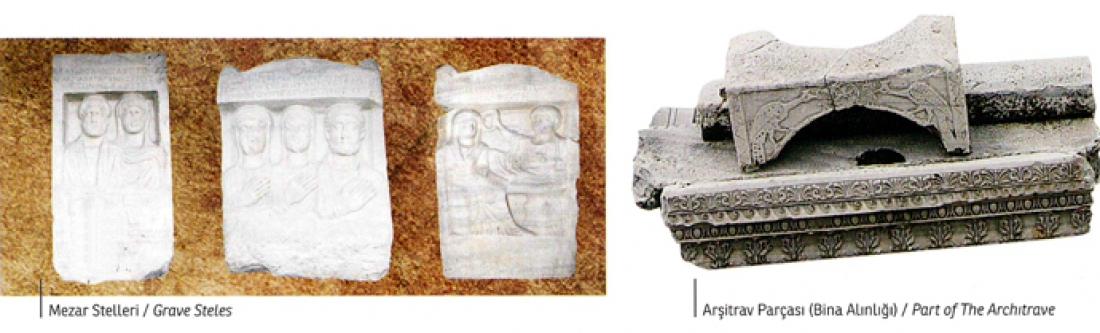
Krispos Monumental Tomb (Karadeniz Ereğli Municipality)
The monument is constructed of marble. This choice was common in antiquity for both aesthetic and durability reasons. While it is unclear whether the marble was locally sourced or imported, the presence of high-quality marble quarries in the vicinity of Ereğli supports the likelihood of local production.
The inscription on the front face of the monument is written in Ancient Greek and employs a poetic style. Comprising 19 lines, the text reflects not only the life story of Krispos but also the philosophical conception of death. It describes tombs as “the final wall of human beings,” emphasizing that the body is laid to rest in the earth and that return is impossible.
The phrase “Krispos, citizen of the land of Pharaos” (Egypt) explicitly denotes his origin. This epigraphic text serves as an example of both the contemporary tradition of funerary inscriptions and the cultural emphasis on individual remembrance.
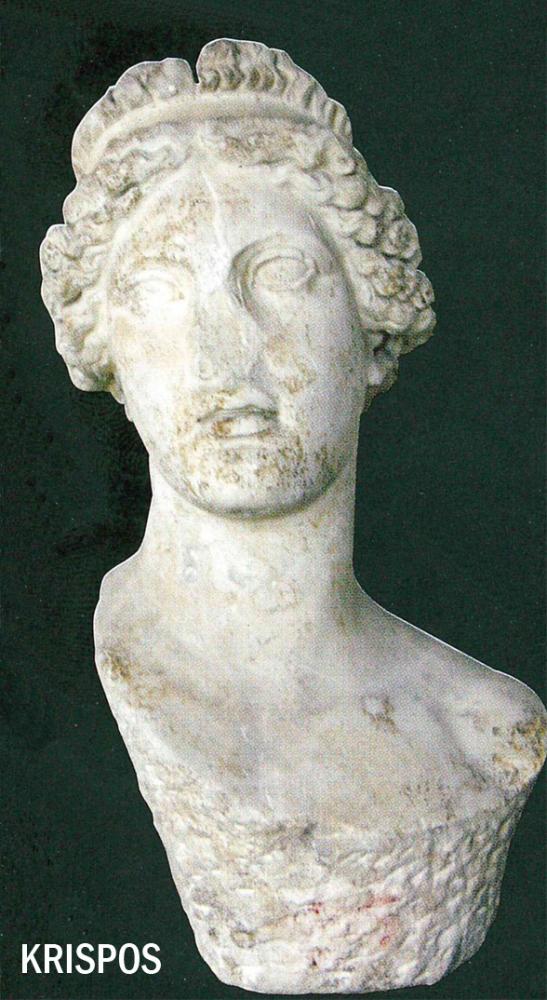
Krispos Monumental Tomb (Karadeniz Ereğli Municipality)
When considered together, the form and content of the monument reveal that it is not merely a tombstone but also functions as a “monument to art.” The headless state of Krispos’s bust may, according to some interpretations, signify both physical damage and, metaphorically, the inevitability of death. The aesthetic language of the architectural form and the inscription illustrates the ancient relationship between art and mortality. The monument physically represents the artist’s immortality.
The Krispos Monumental Tomb is currently preserved in the garden of the Ereğli Museum. It is displayed outdoors in a manner suitable for public access, offering visitors both visual and cultural experiences. Regular maintenance and restoration efforts are evident to protect the monument from environmental factors. The tomb holds an important place in the cultural tourism inventory of Karadeniz Ereğli and is presented as a tangible heritage element that sheds light on the region’s history.
The Krispos Monumental Tomb is a unique example of cultural heritage that demonstrates the social value of art and artists during the Roman period, through its architectural and epigraphic features. The architectural elements used in the tomb and the stylistic expression of the inscription reveal a structure where individual memory and public honor coexist.
In terms of the universality of art, cultural interaction, and posthumous commemorative rituals, this monument possesses significance beyond the local level and holds universal importance. As one of the rare examples in Anatolian archaeology of a monumental tomb dedicated to an individual artist, the structure further enhances its value for research and conservation.
Karadeniz Ereğli Municipality. "Krispos Anıt Mezarı." Kdz. Ereğli Belediyesi Resmi Web Sitesi. Accessed July 12, 2025. https://www.kdzeregli.bel.tr/detay/57-krispos
Ministry of Culture and Tourism. "Crispos Anıt Mezarı." *Kültür Portalı*. Accessed July 12, 2025. https://www.kulturportali.gov.tr/turkiye/zonguldak/gezilecekyer/crispos-anit-mezari

Krispos Monumental Tomb (Cultural Portal)
Location | Ereğli Museum Garden Türkiye Zonguldak Karadeniz Ereğli | ||||||||
|---|---|---|---|---|---|---|---|---|---|
History | Roman Period, approximately 2nd century CE | ||||||||
Built for Whom | Krispos (Egyptian pantomime artist) | ||||||||
Architectural Feature(s) | Corinthian-capital columns Greek inscription headless bust triangular pediment aedicula (niche) | ||||||||
Inscription Language | Greek | ||||||||
No Discussion Added Yet
Start discussion for "Krispos Monumental Tomb" article
Historical and Biographical Background
Meaning in Cultural and Social Context
Architectural Features
Material and Technique
Structural Components
Epigraphic Content and Literary Analysis
Artistic and Symbolic Value
Conservation Status and Current Location