

This article was automatically translated from the original Turkish version.
+2 More
Kruber Cave (Voronya)
Also Known as | Voronya Cave | ||||||||
|---|---|---|---|---|---|---|---|---|---|
Location | Abkhazia (within Georgia's borders Caucasus Mountains) | ||||||||
Year of Discovery | 1960 | ||||||||
Depth(s) | 2 224 m | ||||||||
Important Event(s) | 224 m (current record) latest measurement → 2 197 m Gennady Samokhin reached 2 in 2012 000 m threshold was surpassed for the first time the 2 In 2004 | ||||||||
Significance | It is the deepest known natural cave in the world | ||||||||
Krubera Cave is a subterranean formation known as the second deepest natural cave in the world and a significant contributor to speleological literature. It is located within the Arabika Massif in the Abkhazia region of northwestern Georgia. With a surveyed depth of 2,199 meters (±20 m), it held the title of “the deepest cave in the world” for many years. Its alternative name, Voronya Cave, means “crow cave” in Russian.
Krubera Cave is situated in the Gagra Mountains near the Black Sea coast, within the western section of the Arabika Massif. The region features a karst geology based on limestone, which has resulted in the cave being composed largely of vertical drops, narrow passages, and water-filled tunnels. Temperatures within the cave remain below freezing, leading to the widespread presence of icy waterfalls and deep pools of standing water. These conditions provide valuable insights not only into the subsurface biosphere but also into the cave’s geological structure.
The cave was first discovered in 1960, but its depth potential attracted significant attention only in the 2000s. Exploration efforts initiated in 2001 under the leadership of the Ukrainian Speleological Association achieved the first serious depth measurement of 1,710 meters, establishing Krubera as the deepest cave in Europe.
In 2004, the Krubera-Voronya Cave became the first cave in the world to exceed a depth of 2,000 meters.
In 2012, Ukrainian caver Gennady Samokhin measured the cave’s lowest point at 2,197 meters. According to current measurements, the cave’s depth is accepted as 2,224 meters, maintaining its position as the deepest known cave in the world.
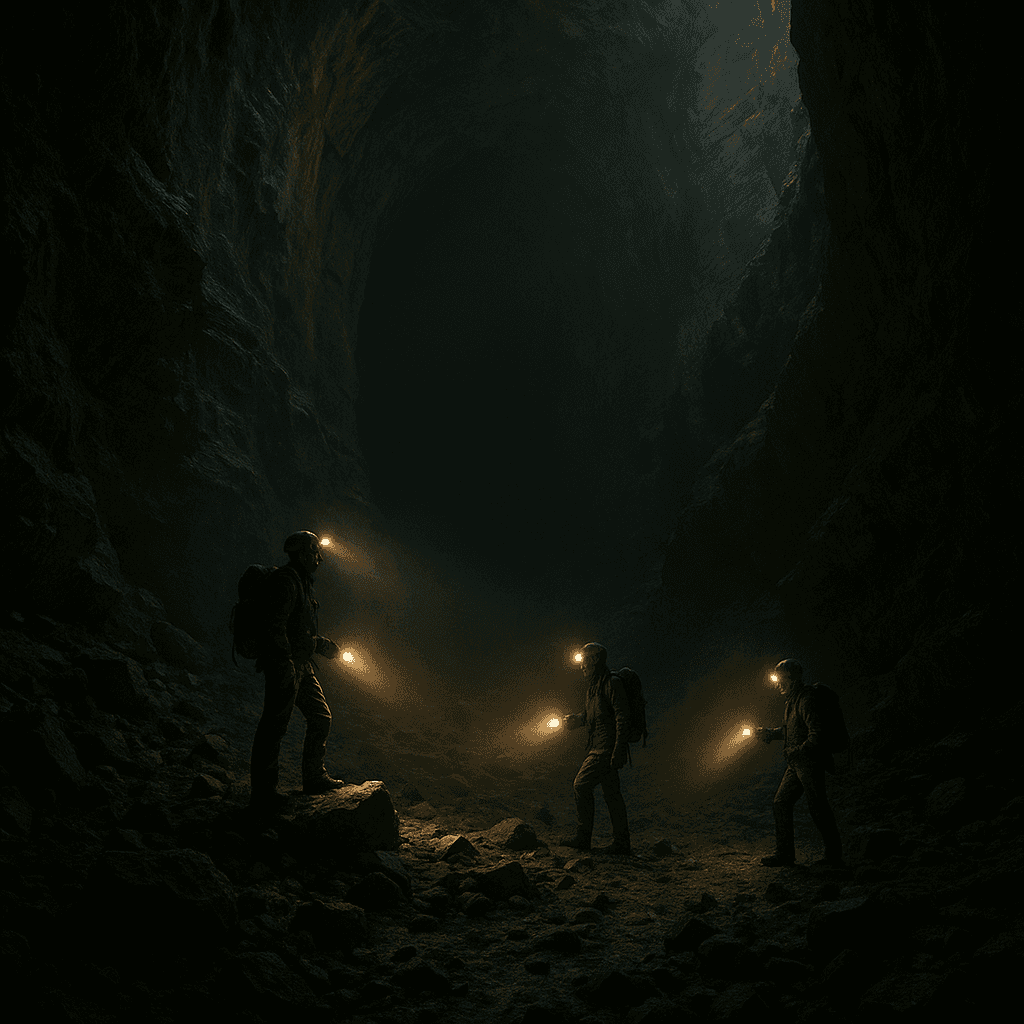
Exploring Krubera Cave requires substantial technical equipment and physical endurance.
Documentary on Krubera Cave (Ruhi Çenet)
Krubera hosts a representative ecosystem of the subsurface biosphere.
Exploration efforts have involved international teams of scientists and cavers from countries beyond Ukraine, including Russia, Spain, and the United Kingdom. These teams have shared knowledge and equipment, advancing exploration through collaborative projects across multiple nations.
Krubera Cave is closed to tourism. Access is restricted exclusively to highly trained specialists, authorized research teams, and professional speleologists. Due to the cave’s fragile ecosystem and safety risks, conservation measures are of paramount importance:
Although Krubera held the title of “the deepest cave in the world” until 2012, the Veryovkina Cave, located in the same region within the Arabika Massif, has since claimed the title with a measured depth of 2,212 meters. However, it is believed that Krubera still contains unexplored sections and may potentially reach even greater depths.
"Krubera Cave Expeditions." Georgia.to. Accessed April 28, 2025.
Klimchouk, Alexander. “In a Search for the Route to 2000 Meters Depth: The Deepest Cave in the World in the Arabika Massif, Western Caucasus.” *Speleogenesis and Evolution of Karst Aquifers* 1, no. 4 (2003): 1–20. https://www.researchgate.net/publication/220044209.
Ruhi Çenet Medya. "Yerin Altında 2.000 Metre: Dünyanın En Derin Mağarası – Krubera." YouTube video, 35:41. December 12, 2024. https://www.youtube.com/watch?v=OPUTLWhhqCo&t=277s.
“Krubera Cave Is the Most Impressive and Terrifying Cave We've Ever Seen.” IFLScience. Accessed April 28, 2025.

Kruber Cave (Voronya)
Also Known as | Voronya Cave | ||||||||
|---|---|---|---|---|---|---|---|---|---|
Location | Abkhazia (within Georgia's borders Caucasus Mountains) | ||||||||
Year of Discovery | 1960 | ||||||||
Depth(s) | 2 224 m | ||||||||
Important Event(s) | 224 m (current record) latest measurement → 2 197 m Gennady Samokhin reached 2 in 2012 000 m threshold was surpassed for the first time the 2 In 2004 | ||||||||
Significance | It is the deepest known natural cave in the world | ||||||||
Geographical Location and Geological Structure
History of Exploration
Exploration Conditions and Challenges
Biological and Scientific Significance
International Participation and Scientific Collaboration
Tourism and Conservation
Current Status and Competition