

This article was automatically translated from the original Turkish version.
+2 More
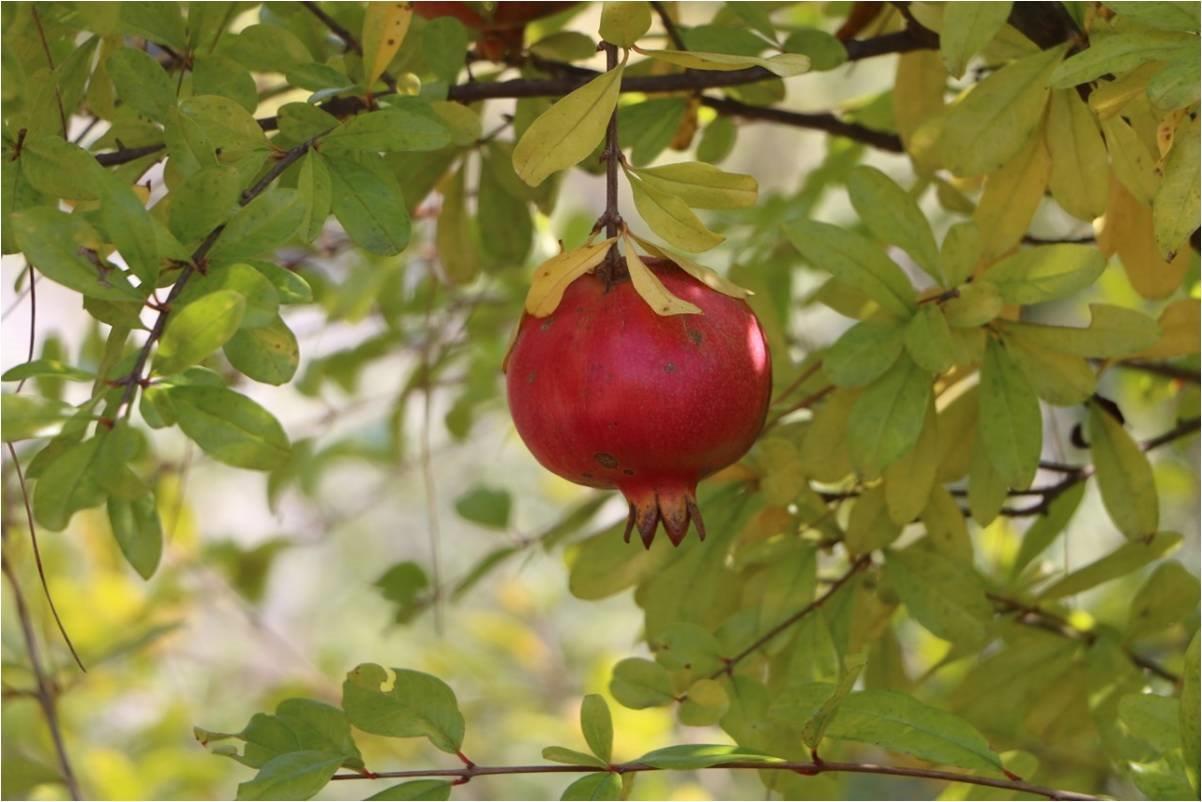
Kuytucak pomegranate is a local variety cultivated in the village of Kuytucak, within the Kozan district of Adana province, and registered under its place of origin. This pomegranate develops under unique soil and climatic conditions shaped by a microclimate at an elevation of approximately 400 meters. It is distinguished by its thin skin, large seeds, sweet flavor, easy seed separation, and small to medium-hard seed structure. The peel color is yellow with approximately 30% red coverage, while the arils are pink.
Kuytucak pomegranate is a large-seeded, thin-skinned, sweet, and easily separable fruit. Its seeds are small to medium in hardness. The peel color is yellow with approximately 30% red coverage, and the arils are pink. The average fruit weight ranges from 195 to 268 g, with a fruit width of 74.50–80.20 mm and a length of 66.70–69.30 mm. The peel thickness measures 4.00–4.60 mm, and the weight of 100 arils is 41–56 g. The soluble dry matter content is 14.50–15.50%, and the titratable acidity ranges from 1.20–1.70%. The aril yield is determined at 71–78%.
The development of this pomegranate’s distinctive characteristics is influenced by the region’s alkaline, calcareous, and shallow soil structure, as well as its microclimate, which exhibits transitional subtropical and temperate features. Harvesting begins in mid-September and continues until the end of November. Harvesting must be performed exclusively with shears to avoid damage to the fruit, particularly to the calyx region.
Seedling production is carried out using 15–20 cm long cuttings taken from the previous year’s shoots during November–December. The lower end of the cuttings can be wounded to promote callus formation or treated with hormones. Planting spacing is set at 5–10 cm between cuttings in the row and 15–20 cm between rows. Seedlings are typically planted after leaf fall, during December–February.
During planting, weak shoots are pruned and excessively long roots are shortened. Planting holes are dug to a depth and diameter of 40–60 cm. Farmyard manure is mixed into the soil and supplemented with irrigation water. Rows are arranged in a north-south orientation to optimize air circulation and sunlight exposure. Through shaping pruning, seedlings develop trunk and canopy structures within 2–3 years.
Productive trees require regular maintenance from the age of three. Soil cultivation, removal of weeds, and moisture conservation are key practices. Pruning is performed from leaf fall until early spring. Particularly, basal shoots, overcrowded branches, and weak or diseased branches are regularly removed.
The soil must be kept continuously moist from February–March until fruit ripening. Soil moisture is especially critical during flowering and fruit set. Irrigation is stopped 10–15 days before harvest to prevent fruit cracking. Irrigation is carried out using the furrow method. Fertilization is applied based on soil analysis results.
Trees whose productivity declines after 20–30 years are rejuvenated by encouraging new shoots emerging from the root collar. This process is carried out gradually over several years by cutting back a few trunks annually.
Harvesting begins in mid-September when fruits attain their full color and size. Since Kuytucak pomegranates flower at different times, harvesting is conducted in two to three rounds. Fruits are not pulled by hand; shears are used to prevent damage. Fruits are placed in crates with care to avoid injury to the calyx region.
Kuytucak pomegranates can be stored for 1–2 months under suboptimal conditions. However, during this period, quality losses such as rotting, peel dulling, and shriveling may occur. Therefore, only sound and undamaged fruits should be stored, and ideal storage conditions must be maintained.
The monitoring of the geographical indication production of this product is carried out by a four-member oversight body composed of representatives from the Kozan Directorate of Agriculture and Forestry, the Kozan Vegetable, Fruit and Traders Artisans Chamber, the Kozan Chamber of Agriculture, and coordinated by the Kozan Chamber of Commerce. Inspections are conducted at least once annually during the harvest season, upon complaint, or when necessary. Inspections cover criteria such as whether production occurs within the defined geographical boundaries, compliance with production and maintenance practices, conformity of fruit characteristics to specifications, and adherence to labeling and packaging regulations.

Distinctive Characteristics
Production Method
Propagation and Planting
Annual Maintenance
Irrigation and Fertilization
Rejuvenation
Harvest and Storage
Monitoring