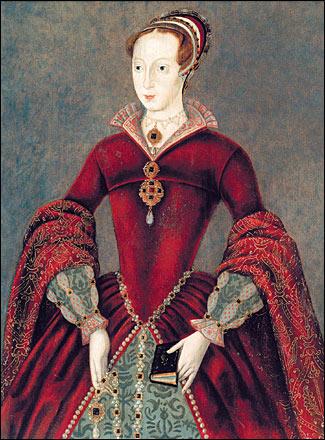
Lady Jane Grey
Babası | Henry Grey | ||||||||
|---|---|---|---|---|---|---|---|---|---|
Eş | Guilford Dudley | ||||||||
Annesi | Frances Brandon | ||||||||
Ölüm tarihi | 1554-03-13 | ||||||||
Dynasty | Tudor dynasty | ||||||||
Lady Jane Grey was an English noblewoman who reigned as queen of England for nine days, from 10 to 19 July 1553, during the Tudor period. Proclaimed queen in accordance with the will of King Edward VI as part of a Protestant succession plan, she was deposed when Mary I, daughter of Henry VIII, gained the support of the people and the nobility and seized the throne. Following her brief reign, she was tried for treason and executed.
Jane Grey was born in October 1537 in Leicestershire, England. Her father was Henry Grey, Duke of Suffolk, and her mother was Frances Brandon, daughter of Mary Tudor, sister of Henry VIII. Through this lineage, Jane was a direct descendant of the Tudor dynasty. Her family belonged to the high nobility, and her father’s political ambitions were among the key factors shaping Jane’s later position. She spent much of her childhood at the family estate of Bradgate Park.
Jane Grey received an advanced humanist education rare for women in 16th-century England. She attained proficiency in Latin, Greek, and Hebrew, and also studied French and Italian. Her education was overseen by scholars influenced by Protestant teachings, one of the most important being John Aylmer, who later became Archbishop of Canterbury. Her mastery of classical texts and intellectual achievements were noted by contemporary sources.
Shortly before his death, Edward VI issued a document excluding his Catholic half-sisters Mary and Elizabeth from the line of succession and naming Jane Grey as his heir. This arrangement was orchestrated by John Dudley, Duke of Northumberland, the king’s most powerful advisor. To strengthen his political position, Dudley arranged the marriage of his son, Guildford Dudley, to Jane Grey.
After Edward VI died on 6 July 1553, Jane Grey was proclaimed queen on 10 July. However, the majority of the public and the aristocracy recognized Mary Tudor, daughter of Henry VIII, as the legitimate heir. Mary quickly gathered support and advanced on London, where she was recognized as queen on 19 July 1553. Thus, Jane Grey’s reign ended after nine days.
Jane Grey married Guildford Dudley in 1553 in a politically motivated union arranged by both families, not based on personal choice. The marriage was brief; after Jane’s deposition, the couple was imprisoned together. Historical records about Jane Grey’s private life are limited; apart from her religious beliefs and dedication to education, few detailed accounts of her personal life survive.
After Queen Mary ascended the throne, Jane Grey was initially pardoned and placed under house arrest in the Tower of London. However, in 1554, during Wyatt’s Rebellion, her father Henry Grey’s involvement with the rebels led to Jane being viewed once again as a political threat. She was subsequently tried for treason and beheaded in the Tower of London on 12 February 1554. Her husband Guildford Dudley was executed on the same day. She was approximately sixteen years old at the time of her death.
Lady Jane Grey is remembered in English history as the “Nine Days’ Queen.” Her brief reign is viewed as a consequence of the succession struggles within the Tudor dynasty. She occupies a place in English historical writing and literature as a historical figure.
Accessed November 26, 2025.
Art UK. "The Last Moments of Lady Jane Grey." Art UK. Accessed December 4, 2025.
Flickr. "Lady Jane Grey, graddaughter of Princess Mary Tudor". *Ann Longmore-Etheridge* Accessed December 4, 2025. https://www.flickr.com/photos/60861613@N00/
Historic Royal Palaces. "Lady Jane Grey (1537–1554)." Tower of London – Historic Royal Palaces. Accessed December 4, 2025.
Historic Royal Palaces. "Lady Jane Grey’s First Moments as a Tower of London Prisoner." HRP Blog. Accessed December 4, 2025.
National Portrait Gallery. "Lady Jane Dudley (née Grey)." National Portrait Gallery Collections. Accessed December 4, 2025.
National Portrait Gallery. "Lady Jane Grey (Portrait)." National Portrait Gallery – Collections. Accessed December 4, 2025.
Some Grey Matter. "Introducing the Edwards Portrait of Lady Jane Grey Dudley." Some Grey Matter. Accessed December 4, 2025.
The Dudley Women. "Jane Grey." The Dudley Women. Accessed December 4, 2025.

Lady Jane Grey
Babası | Henry Grey | ||||||||
|---|---|---|---|---|---|---|---|---|---|
Eş | Guilford Dudley | ||||||||
Annesi | Frances Brandon | ||||||||
Ölüm tarihi | 1554-03-13 | ||||||||
Dynasty | Tudor dynasty | ||||||||
Early Life and Family
Education
Political Process and Reign
Personal Life and Marriage
Imprisonment and Execution
Historical Significance