This article was automatically translated from the original Turkish version.
+2 More
Author(s) | Taha Kılınç | ||||||||
|---|---|---|---|---|---|---|---|---|---|
Publisher(s) | Ketebe Yayınları | ||||||||
Type(s) | Research-Investigation Essay | ||||||||
Number of Pages | 145 pages | ||||||||
Theme(s) | Occupation through media and education Identity/memory Colonization of language The birth of modern Hebrew | ||||||||
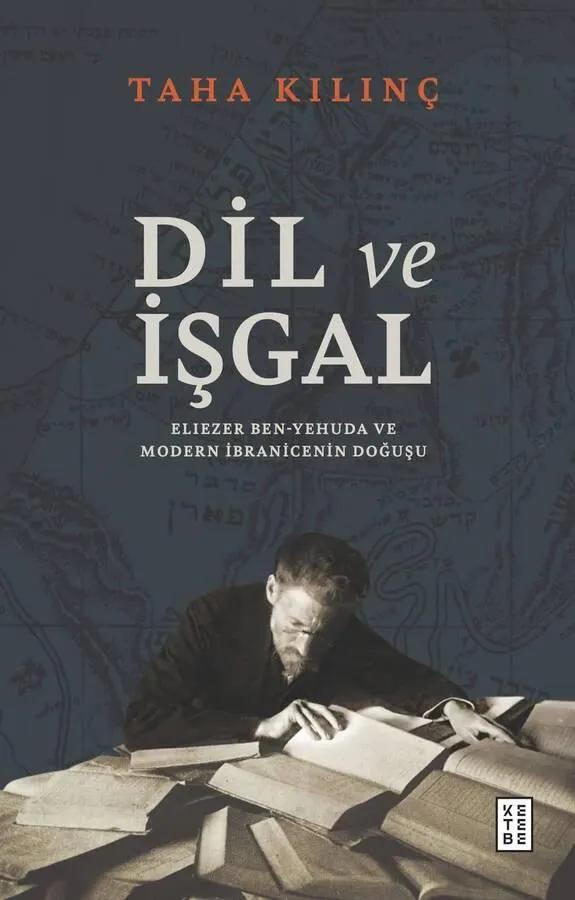
Language and Occupation is an essay by journalist and writer Taha Kılınç, published in 2024, which examines historically and sociologically how language has been used as a tool of cultural domination. The author argues that in the modern era, language functions not merely as a means of communication but also as a method of mental occupation. The book presents a concrete example of how a language can be reconstructed, focusing particularly on the emergence of Modern Hebrew and the efforts of its principal architect, Eliezer Ben Yehuda.
The book consists of 22 chapters, each addressing a different geography, historical period, or case study. Through this structure, the author illustrates how language has been transformed into a global instrument of colonization, using examples to clarify the relationship between language and civilization. According to Kılınç, the most enduring way to subjugate a society is to transform its language. In this vein, the book offers a critique of both Western colonialism and the passivity of indigenous societies during this process.
One of the book’s most compelling and detailed sections is devoted to the biography of Eliezer Ben Yehuda and the genesis of Modern Hebrew. In the 19th century, Ben Yehuda migrated to Palestine with the goal of transforming Classical Hebrew into a spoken language of daily life, undertaking comprehensive lexicographical work, publishing initiatives, and linguistic reforms to achieve this. Kılınç interprets Ben Yehuda’s efforts within the context of national identity construction and summarizes his activities with the statement: “To create a new nation, a new language was needed; that language was Modern Hebrew.”
Ben Yehuda’s endeavors extended beyond the linguistic sphere and carried a political objective: the revitalization of Hebrew was intended to forge a shared identity and national consciousness among the Jewish people. In this context, language became a strategy of resistance and survival. Kılınç contrasts this example with the distance Muslim societies have maintained from their own languages, emphasizing that a similar intellectual mobilization has not occurred in the Islamic world.
Kılınç explains, through examples from various regions, how language has been turned into an instrument of occupation. The dominance of French in Morocco, English in Lebanon, and English in India within education and public life are viewed as manifestations of Western cultural hegemony. This linguistic dominance leads not only to the transformation of vocabulary but also to the reshaping of modes of thought. The author terms this process “conceptual occupation” and asserts that language functions as a superior system that determines the universe of meaning.
The book repeatedly emphasizes that language is not merely a tool of communication but also a carrier of identity and a repository of collective memory. Kılınç argues that the destruction or transformation of a language equates to the erasure of social memory. In this context, the removal of Ottoman Turkish from education and its replacement by Western languages created a rupture in collective consciousness. The book contends that this rupture has produced not only an intellectual but also a cultural trauma.
According to Kılınç, modern educational systems and media apparatuses are the most powerful instruments sustaining Western linguistic dominance. The continued adoption of former colonial languages in countries that gained independence after colonialism is a sign of ongoing mental occupation. In Arab countries, the preference for French and English in official documents, diplomatic discourse, and universities exemplifies this phenomenon.
Kılınç, Taha. Dil ve İşgal. İstanbul: Ketebe Yayınları, 2024.

Author(s) | Taha Kılınç | ||||||||
|---|---|---|---|---|---|---|---|---|---|
Publisher(s) | Ketebe Yayınları | ||||||||
Type(s) | Research-Investigation Essay | ||||||||
Number of Pages | 145 pages | ||||||||
Theme(s) | Occupation through media and education Identity/memory Colonization of language The birth of modern Hebrew | ||||||||
No Discussion Added Yet
Start discussion for "Language and Occupation (Book)" article
Structure and Core Orientations of the Book
Eliezer Ben Yehuda and the Rebirth of Modern Hebrew
The Colonization of Language: Historical Examples
Language, Memory, and Identity
Occupation Through Education, Media, and Bureaucracy