


+1 More

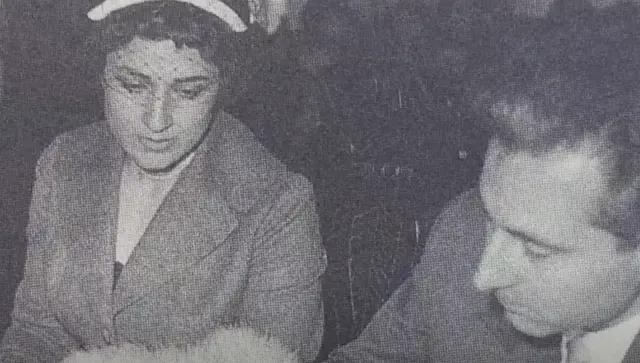
Leyla Erbil and Her Spouse
Leyla Erbil
Doğum tarihi | 1931-01-12 | ||||||||
|---|---|---|---|---|---|---|---|---|---|
Eş | Mehmet Erbil Aytek Şay | ||||||||
Place of Death | Istanbul | ||||||||
Ölüm tarihi | 2013-07-19 | ||||||||
Place of Birth | Istanbul | ||||||||
Profession(s) | Writer translator | ||||||||
Educational Life | Istanbul University English Language and Literature (did not complete) Kadıköy Girls' High School Beşiktaş Girls' Middle School Esma Sultan Primary School | ||||||||
Movements | Existentialism, feminist literature, postmodernism influences | ||||||||
Çocuk | Fatoş Erbil | ||||||||
Leila Erbil, born on January 12, 1931, in the Fatih district of Istanbul, was the middle of three sisters. She spent her childhood first in Fatih and later in Beşiktaş, where her family moved. She began her education at Esma Sultan Primary School and completed middle school at Beşiktaş Second Girls’ Middle School, where she met a teacher who significantly influenced her early interest in literature.
She started her high school education at Beyoğlu Girls’ High School but continued and graduated from Kadıköy Girls’ High School in 1950. Even during her high school years, she took her first steps into the literary world through stories and poems she wrote. During this period, she formed friendships with figures such as Metin Eloğlu, Selahattin Hilav, and Nevzat Özmeriç, beginning to engage with the intellectual circles of the time. After graduating from high school, she enrolled in the Department of English Language and Literature at Istanbul University’s Faculty of Letters.
Shortly after beginning her university studies, she interrupted her education due to a brief marriage to Aytek Şay. Between 1953 and 1955, she worked as a secretary for Scandinavian Airlines. During these years, she met Sait Faik Abasıyanık, one of the writers she greatly admired in literature, and maintained a close friendship with him until his death in 1954. In the same year, she married Mehmet Erbil.
In 1955, she moved to Ankara with her husband. This relocation allowed her to become part of a more vibrant and productive literary environment. In her early years in Ankara, she participated in artistic and intellectual circles that included figures such as Vüs’at O. Bener, İlhan Berk, Mithat Fenman, Fethi Kopuz, and Kaya-İlhan Kopuz. Between 1956 and 1957, she worked as a translator and secretary at Ankara State Water Works.
Leila Erbil’s first published short story, “Uğraşsız,” appeared in 1956 in the journal Seçilmiş Hikayeler, at the encouragement of her close friend Metin Eloğlu. Following this debut, her stories continued to be published in major literary journals of the era, including Ataç, Dost, Dönem, Papirüs, Türk Dili, Türkiye Defteri, Yeditepe, Yelken, Yeni a, Yeni Dergi, and Yeni Ufuklar.
In 1957, she moved to İzmir with her husband. In 1960, her daughter Fatoş was born, and the same year her first short story collection, Hallaç, was published. In İzmir, unable to find the same intellectual circles she had known in Istanbul and Ankara, Erbil returned to Istanbul with her family after her husband’s bankruptcy and settled in Teşvikiye. In 1961, she joined the Workers’ Party of Turkey (TİP) and served in the party’s Art and Culture Bureau under Fethi Naci, alongside Edip Cansever and Ahmet Oktay.
In 1967, she briefly worked as a clerk at the Turkish Consulate in Zurich. Her second short story collection, Gecede, was published in 1968. She submitted this book for the Sait Faik Short Story Award but did not win; in response, she decided in 1969 never to participate in any award competition again. That same year, she lost her father, resigned from her job, and began writing full-time. In 1970, she became one of the founding members of the Turkish Artists’ Union, and in 1974, of the Turkish Writers’ Union.
An Interview on Leila Erbil (Olcay Akyıldız and Murat Gülsoy) (Ataşehir Culture)
Leila Erbil’s first novel, Tuhaf Bir Kadın, was published in 1971; it was followed in 1977 by her short story collection Eski Sevgili. In 1979, she was honored with an honorary membership by the University of Iowa in the United States. That same year, at the invitation of the Center for American Culture, she participated in the International Writers’ Workshop and delivered a seminar on Turkish literature.
In 1984, she lost her mother, who had long been battling Alzheimer’s disease. The impact of this loss appeared in her second novel, Karanlığın Günü, published in 1985, in autobiographical elements. In 1986, the death of her close friend Tezer Özlü was a profound loss for her. The third novel they had planned together, Mektup Aşkları, was published in 1988 in Özlü’s memory. The collection of letters exchanged between them, Tezer Özlü’dan Leyla Erbil’e Mektuplar, was published in 1995.
In 1998, her essay collection Zihin Kuşları was published, followed in 2001 by her novel Cüce. Throughout the 1990s, she continued to attract public attention through both her literary output and political views. In 1996, she was one of the signatories of a statement drawing attention to F-type prisons and hunger strikes. In the 1999 general elections, she ran as a parliamentary candidate for the Freedom and Solidarity Party (ÖDP); however, she left the party shortly afterward.
In 2002, she was nominated for the Nobel Prize in Literature by the Turkish PEN Writers’ Association, becoming the first Turkish woman ever nominated for the prize. Her novels Üç Başlı Ejder and Kalan were published in 2005 and 2011 respectively. In 2013, she was awarded the PEN Short Story Prize for her literary contributions and her efforts toward a secular, democratic Türkiye. That same year, her final novel, Tuhaf Bir Erkek, was published.
From the 1950s onward, Leila Erbil adopted an alternative approach to traditional literary forms, developing an experimental style in language and structure. She departed from conventional punctuation systems to create her own usage, and through modifications in syntax, she sought to expand the boundaries of literary expression. Some critics, such as Asım Bezirci, found her innovative language and narrative style difficult to comprehend and lacking in aesthetic justification. However, Erbil emphasized that these choices were deliberate and rooted in the psychological states of her characters. In her own words, the language of characters she described as “mad” freed her from conventional meaning structures and allowed her to experiment with unconventional narrative forms.
In her works, Erbil explored middle-class morality, individualization, gender relations, and the position of women within these frameworks. Her writings, which blur the boundaries between reality and fiction, poetry and prose, past and present, examine the tense relationship between the individual’s inner world and society. According to Belgin Tarhan, Erbil narrates the crisis and trauma of bearing witness to violence and oppression masked by unequal and unjust relations in all her works. She brings to light evils marginalized by collective memory, using the resources of philosophy, psychiatry, and modern literature, and invites the reader to confront themselves. In Erbil’s narratives, violence and injustice manifest in three spheres: the household, the cultural world, and the state. Her literature possesses a political stance that overturns the existing order, extending its reach from socioeconomic relations into the cultural capillaries of the household. Among writers she embraced, she counted Samuel Beckett, Jean-Paul Sartre, Franz Kafka, Dostoyevski, and Sait Faik. She also acknowledged the influence of Karl Marx’s theories of society and history, Sigmund Freud’s psychoanalysis, and existentialist philosophy.
In Leila Erbil’s literature, the family is not defined by emotions such as love, compassion, or loyalty, but by hierarchical and unjust relationships. Injustice is first encountered within the family. From her first short story collection, Hallaç, to her final work, Tuhaf Bir Erkek, Erbil entered many unexplored territories. Considering her affinity with Marxist philosophy, mothers act as guardians of the patriarchal order, imposing restrictions on their daughters regarding body, space, and profession. There are similarities between traditional and secular mothers, as both types may inflict violence upon their children. Erbil challenges the system through female characters who read, write, question, and seek freedom. Critiques of the literary and cultural world occupy an important place in her works. Although she initially believed socialism would resolve male dominance and gender discrimination, she later stated that she had lost this belief.
The majority of Erbil’s characters are women, many of whom are educated, middle- or upper-middle-class, intellectual, and politically left-wing or dissenting. These characters, who closely resemble the author herself, strive to become themselves by rejecting the external world, surpassing social norms and established structures. Sexuality in Erbil’s works is used to critique the societal structures that confine individuals, particularly women, and to expose mechanisms of repression.
Leila Erbil’s literary texts proceed without adhering to the classical narrative structure of beginning, development, and conclusion. She frequently employs the stream-of-consciousness technique and is regarded as one of the most radical practitioners of this method in Turkish literature. The bulk of her texts is built upon unfiltered thoughts passing through the minds of fictional characters. The narrative world is often shaped by characters who experience hallucinations, confront death, suffer mental fragmentation, or endure psychological distress. In an interview, Erbil stated that she wrote as if her texts were dictated to her by “the mad.”
Poet İlhan Berk emphasized that a fundamental element in Erbil’s works is rebellion, and that the central subject of her writing is “language.” Füsun Akatlı described Erbil as a “passionate and obsessive language artisan.” Erbil’s language sometimes constructs closed structures that draw the reader inward; in this structure, language becomes both a means of concealment and revelation. When the text opens up, Turkey’s social and historical background becomes evident. Erbil reflected her sensitivity to social issues directly or indirectly in her texts, maintaining the stance of a writer committed to intellectual responsibility.
Some critics, such as Asım Bezirci, viewed her experimental language as contrary to the goal of a socially realistic writer seeking to reach a broad audience. However, Leila Erbil defined herself as “a human not made for an obedience society” and linked her unconventional narrative forms to the psychological depth of her characters.
From 2005 onward, Leila Erbil battled Langerhans Cell Histiocytosis, a rare disease. In a statement regarding her illness, she associated it with “the cruelty, injustices, and costs humanity has paid that I encountered as the world developed and was compelled to witness throughout my life.”
Erbil passed away in Istanbul on July 19, 2013. After her death, the book Leylim Leylim: Ahmet Arif’ten Leyla Erbil’e Mektuplar, containing her correspondence with Ahmet Arif, was published. Her works have been translated into several languages, including German, English, French, Kurdish, and Russian.
The Leila Erbil Special Collection was donated to Boğaziçi University in 2016 by her daughter, Fatoş Erbil. The collection includes approximately forty notebooks written by Erbil from 1940 until her death, letters exchanged with friends, handwritten notes, personal documents, newspaper and magazine clippings, published writings, posters and artworks, awards, and various personal objects. This collection serves as an important resource for researchers studying the culture and literary life of a generation in Türkiye.
Aydın, Hilal - *Fırat Üniversitesi Sosyal Bilimler Dergisi*. Accessed June 30, 2025. https://dergipark.org.tr/tr/download/article-file/447406
Boğaziçi University Archive Center. Accessed June 30, 2025. https://arsivmerkezi.bogazici.edu.tr/collections/leyla-erbil.php
Nazım Hikmet Culture and Art Research Center. "Leyla Erbil Special Collection." Accessed June 30, 2025. https://nazimhikmetmerkezi.com/projeler/leyla-erbil-ozel-koleksiyonu/
Tarhan, Belgin. "Turkish Studies" 11, no. 3 (2016): 47–62. Accessed June 30, 2025. https://dergipark.org.tr/tr/download/article-file/2974534
YouTube. "Bir Dünya Edebiyat - Leyla Erbil." Martı Medya. "Ekran Alıntısı." 10 min, 39 sec. Accessed June 19, 2025. https://www.youtube.com/watch?v=Qza_EhKSCfs
Youtube. "Edebiyat Akşamları - Dünya Öykü Günü - Leylâ Erbil'den Kalan." Ataşehir Kültür. Accessed June 19, 2025.
Şahin, Burcu. *Türk Edebiyatı İsimler Sözlüğü.* Accessed June 30, 2025. https://teis.yesevi.edu.tr/madde-detay/erbil-leyla

Leyla Erbil and Her Spouse
Leyla Erbil
Doğum tarihi | 1931-01-12 | ||||||||
|---|---|---|---|---|---|---|---|---|---|
Eş | Mehmet Erbil Aytek Şay | ||||||||
Place of Death | Istanbul | ||||||||
Ölüm tarihi | 2013-07-19 | ||||||||
Place of Birth | Istanbul | ||||||||
Profession(s) | Writer translator | ||||||||
Educational Life | Istanbul University English Language and Literature (did not complete) Kadıköy Girls' High School Beşiktaş Girls' Middle School Esma Sultan Primary School | ||||||||
Movements | Existentialism, feminist literature, postmodernism influences | ||||||||
Çocuk | Fatoş Erbil | ||||||||
Marriages and Early Professional Experiences
Literary Life and Career
Major Works and Awards
Literary Style and Themes
Thematic Approach and Political Poetics
Concept of Language
Illness and Death
Archive