


+1 More

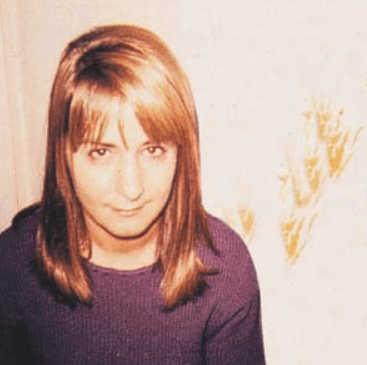
Tezer Özlü
Doğum tarihi | 1943-09-10 | ||||||||
|---|---|---|---|---|---|---|---|---|---|
Place of Death | Zurich, Switzerland | ||||||||
Ölüm tarihi | 1986-02-18 | ||||||||
Place of Birth | Zurich, Switzerland | ||||||||
Annesi | Nimet Özlü | ||||||||
Babası | Sabih Özlü | ||||||||
Education | Hans Peter Marti (1984–1986) Erden Kıral (1968–1981) Güner Sümer (1964–1968) | ||||||||
Profession(s) | Writer Theater Actor Translator | ||||||||
Tezer Özlü was born in 1943 in the district of Simav, Kütahya, and throughout her life engaged in activities in the fields of education, art, and literature across various geographical regions. Her family’s professional relocations to different parts of Anatolia led her to spend her childhood in diverse social environments. Her education continued in several cities across Turkey and Europe, and she contributed significantly to artistic endeavors, particularly in theater and translation. Her works foreground themes of childhood, loneliness, social alienation, and the inner world of the individual, and she produced writings in genres such as the novel, short story, and letter. Özlü spent the final years of her life abroad and died in Switzerland in 1986.
Tezer Özlü was born on 10 September 1943 in the district of Simav, Kütahya. Her father, Sabih Özlü, was a lawyer and educator, and her mother, Nimet Hanım, was a teacher. She was the youngest of three children. Her elder brother, Demir Özlü, is known as a writer, and her sister, Sezer Duru, as a translator. Due to her family’s professional assignments, her childhood was spent in Anatolian towns such as Ödemiş and Gerede.
Özlü began her primary education in Gerede and completed it at Taksim 29 Ekim Primary School after moving to Istanbul. She continued her secondary education at St. Georg Austrian High School but left without graduating. In 1961 she participated in a student camp in Vienna, and in 1963 she moved to Germany without completing her high school studies. After a brief stay in Paris, she returned to Turkey and graduated in 1965 from Istanbul Boys’ High School as an external student.
During her time in Ankara, she established connections with the Ankara State Theater (AST), where she performed in theatrical productions and undertook translations. During this period, she met various artists and worked as a translator for the Turkish Sugar Factories and the Goethe-Institut. She played an active role in artistic and cultural circles.
She married the playwright Güner Sümer in 1964; this marriage ended in 1968. In the same year, she married the director Erden Kıral, and in 1973 they had a daughter named Deniz. This marriage also ended in 1981. In 1984, she entered her third marriage with the Canadian artist Hans Peter Marti.
In 1981, she went to Germany under the Berlin Artists Program with a DAAD scholarship. There, she wrote her work Auf den Spuren eines Selbstmords (On the Trail of a Suicide) in German and won the Marburg Literature Prize in 1983 for this work. In 1984 she settled in Zurich, underwent treatment for a tumor in her chest, and died in Switzerland on 18 February 1986. Her funeral was held on 25 February 1986 at the Aşiyan Cemetery in Istanbul.
Tezer Özlü’s literary career began with short stories written at a young age. Her first story, “Fortuna,” was published in 1963 in the journal Yeni İnsan. Subsequent stories appeared in journals such as Yeni Dergi, Yeni Ufuklar, and Milliyet Sanat. These stories were collected in book form in 1978 under the title Eski Bahçe, and after her death, in 1987 under the title Eski Bahçe – Eski Sevgi. In these stories, she moved beyond classical short story structures to explore themes such as childhood, repression, loneliness, and social alienation.
Her first novel, published in 1980 as Çocukluğun Soğuk Geceleri (The Cold Nights of Childhood), presents a biographical narrative with strong autobiographical elements. The novel focuses on the individual’s conflicts with family, school, and societal structures, as well as psychological disintegration and spiritual confinement. Structurally, the novel is not chronological; it employs time shifts and stream-of-consciousness techniques.
Her second major work, Yaşamın Ucuna Yolculuk (Journey to the Edge of Life, 1984), is a narrative written in German that traces the lives of writers such as Kafka, Svevo, and Pavese. Themes of death, loneliness, existential questioning, and alienation come to the fore. The narrative presents a fragmented structure rather than a conventional novel form and is interwoven with philosophical subtexts.
Among the works published after Tezer Özlü’s death are:
In Tezer Özlü’s works, the inner world of the individual, loneliness, alienation, childhood trauma, female experience, oppressive societies, and migration are central themes. Her narratives frequently incorporate autobiographical elements. Space and time are often indeterminate, with the individual’s mental processes taking precedence. She is regarded among modern Turkish writers who place existential concerns at the core of their work. In particular, her narrative Yaşamın Ucuna Yolculuk has also been examined within the context of migrant literature.
Ankay, Nurcan. "Tezer Özlü’nün Eserlerinde Otobiyografik Anlatım." Edebiyat ve Dil Araştırmaları Dergisi, Accessed May 10, 2025.
Emer, Funda Kızıler, and Sema Batumoğlu. “Hermann Hesse’nin *Siddhartha* ve Tezer Özlü’nün *Yaşamın Ucuna Yolculuk* Adlı Eserlerinde Varoluş Sorunsalı.” *Dil ve Edebiyat Araştırmaları* 29 (2024): 136–155. https://doi.org/10.30767/diledeara.1402693. Accessed May 10, 2025.
Simavi, Zeynep. "Tezer Özlü: A Marginal Voice Against the Approved Notion of the Intellectual." Master's thesis, Orta Doğu Teknik Üniversitesi, 2006. Accessed May 10, 2025.
Taşdemir, Sinem and Hikmet Asutay. "Göçmen Yazını Bağlamında Tezer Özlü’nün Yaşamın Ucuna Yolculuk Adlı Eserinde ‘Yalnızlık’ Teması." Balkan ve Yakın Doğu Sosyal Bilimler Dergisi 5, no. 2 (2019): 34–41. Accessed May 10, 2025.
Türk Edebiyatı İsimler Sözlüğü. “Özlü, Tezer.” TEİS. https://teis.yesevi.edu.tr/madde-detay/ozlu-tezer. Accessed May 10, 2025.

Tezer Özlü
Doğum tarihi | 1943-09-10 | ||||||||
|---|---|---|---|---|---|---|---|---|---|
Place of Death | Zurich, Switzerland | ||||||||
Ölüm tarihi | 1986-02-18 | ||||||||
Place of Birth | Zurich, Switzerland | ||||||||
Annesi | Nimet Özlü | ||||||||
Babası | Sabih Özlü | ||||||||
Education | Hans Peter Marti (1984–1986) Erden Kıral (1968–1981) Güner Sümer (1964–1968) | ||||||||
Profession(s) | Writer Theater Actor Translator | ||||||||
Birth and Family Life
Educational Life
Theater and Translation Work
Marriages and Family Life
Life Abroad and Death
Literary Life
Early Works and Short Story Writing
Novels
Other Works
Themes and Narrative Features