


This article was automatically translated from the original Turkish version.
+1 More
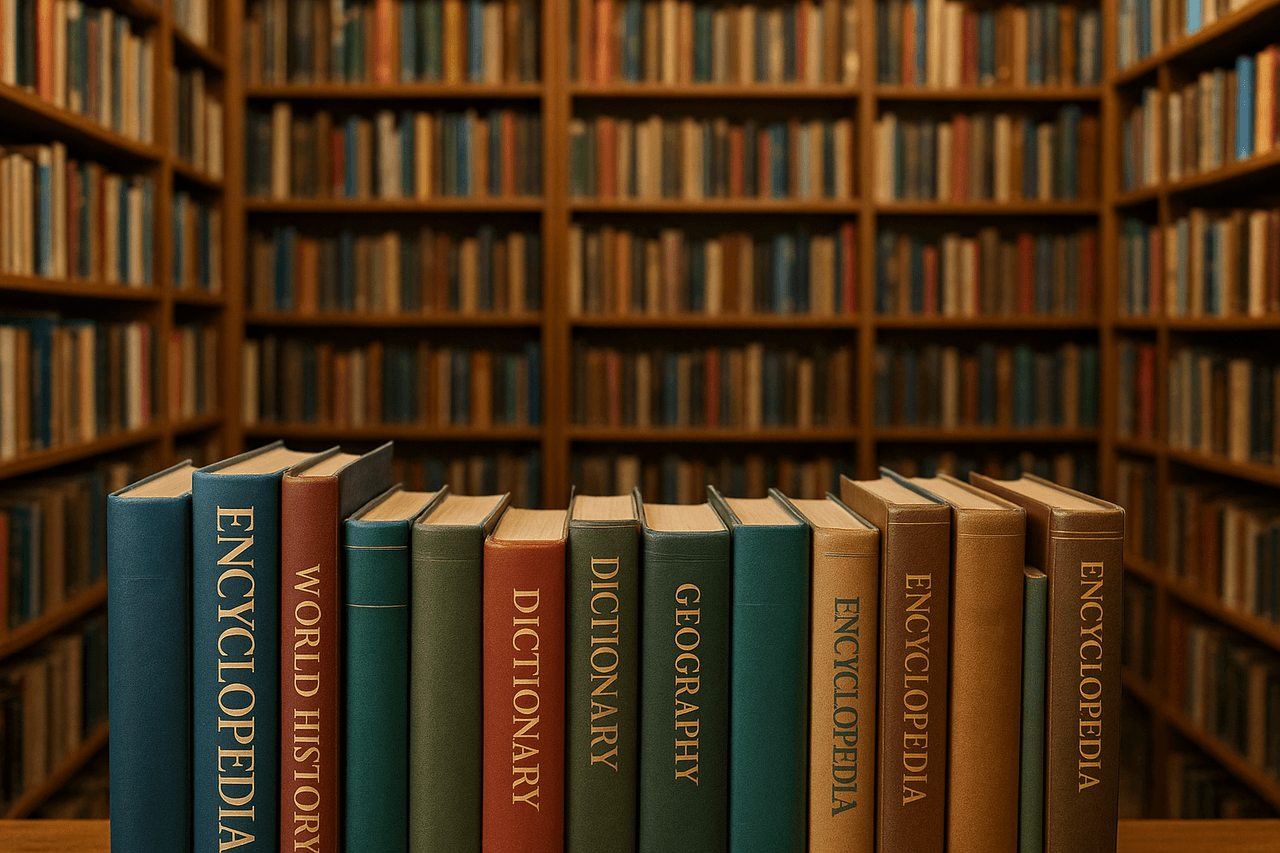
Library (generated with artificial intelligence.)
Subject(s) | The role of libraries in the production and circulation of information transmission | ||||||||
|---|---|---|---|---|---|---|---|---|---|
Field | History of Science / Cultural History | ||||||||
Throughout history, information has transcended the boundaries of the individual mind and acquired a social character as one of humanity’s most valuable and universal heritages. From the moment it is produced, information is inherently open to sharing, playing a decisive role in the formation of collective memory, the development of cultures, and the continuity of civilizations. In this process, the book and the library have emerged as fundamental tools for the materialization, preservation, and circulation of knowledge.
From the moment it is articulated, knowledge ceases to be personal and acquires a public character. Its circulation occurs through educational institutions, scientific communication networks, museums, laboratories, written and visual media, public interaction spaces, and especially libraries. The meaning and function of knowledge are shaped by the cultural context in which it develops; when abstracted from this context, it becomes incompletely understood. Knowledge is recognized as a collective product of societies and a universal value accessible to all of humanity.【1】
The circulation of knowledge is examined under two headings: horizontal and vertical transmission. Horizontal transmission encompasses the movement of knowledge within a single cultural sphere, between different cultural spheres, or across entirely distinct civilizations. Vertical transmission refers to the transfer of knowledge across generations through social structures such as libraries, academies, museums, coffeehouses, and similar institutions. Both forms of transmission contribute to the universalization of knowledge.
Throughout history, knowledge has passed through various communication channels to reach the present day. During the oral culture period, storytelling, memorization techniques, and rhythmic recitation played significant roles in the transmission of knowledge; however, the lack of verification mechanisms and dependence on memory weakened the reliability of knowledge.【2】 . With the emergence of writing, abstract ideas acquired a permanent form, enabling knowledge to be physically handled, stored, and transmitted beyond geographical boundaries.
The storage of papyrus and clay tablets in Egypt and Mesopotamia constituted the earliest examples of libraries; these spaces became external memory repositories of civilizations. Over time, the culture of handwritten manuscripts developed, yet the constant copying of texts led to issues of accuracy.【3】 . The widespread adoption of printing technology brought standardization of texts, enabled access by broader audiences, and made scientific verification possible, creating a qualitative leap in knowledge production.【4】

Library (generated by Artificial Intelligence.)
The adoption by Halid b. Bermek, vizier of the Abbasids, of the codex—books composed of bound pages rather than scrolls—marked a pivotal stage in the transformation of book culture.【5】 . This innovation was not merely physical; it also spurred advances in writing materials, book production, and the tradition of citation. In the Islamic world, book production and authorship were regarded as esteemed pursuits; calligraphers, illuminators, and copyists became central figures in book culture.【6】
The madrasa and library established in Baghdad by Nizamü’l-Mulk, vizier of Seljuk Sultan Alparslan, became one of the leading intellectual centers of the era.【7】 . The emergence of hospital libraries in medieval Islamic states and the donation of books by scholars such as Ibn al-Nafis to these institutions demonstrate the strengthening of institutionalized knowledge circulation.【8】 . The prevalence of libraries in Anatolian Seljuk madrasas indicates the integration of knowledge with education.【9】
Ottoman libraries represent the continuation of this intellectual legacy. Although much of the heritage was lost due to wars and destruction, the collections that have survived to the present serve as evidence of the high value placed on knowledge.
Libraries are not merely places where knowledge is stored but also centers where it enters public circulation. Through books, mental interaction emerges between individuals who have never met, enabling libraries to serve as spaces for consultation and debate that foster new knowledge production. As structures offering equal access to knowledge regardless of language, culture, religion, or class, they contribute to social development.
The sharing of knowledge is an element that encourages innovation, supports interdisciplinary work, and accelerates socio-economic progress. Libraries play a central role in the construction of knowledge-based societies. By ensuring the continuity of knowledge through digital archives, databases, and new technologies, they contribute to the transmission of cultural heritage to future generations. Knowledge remains incomplete unless shared. Libraries are indispensable institutions for the preservation, dissemination, and societal engagement of knowledge. The free circulation of knowledge is one of the fundamental elements of individual and social progress. Therefore, supporting libraries is not only an act of defending cultural heritage but also an embrace of a knowledge-based approach to building the future.【10】
Acar, M. Şinasi. Osmanlı’dan Bugüne Gözümüzden Kaçanlar. İstanbul: YEM, 2016. https://sinasiacar.com/osmanlidan-bugune-gozumuzden-kacanlar/
Eisenstein, Elizabeth L. The Printing Press as an Agent of Change. Cambridge: Cambridge University Press, 1982. https://archive.org/details/printingpressasa001-2eise_l3z7
Erünsal, İsmail. Osmanlılarda Kütüphaneler ve Kütüphanecilik. İstanbul: Timaş, 2015. https://www.researchgate.net/publication/282914760_Osmanlilarda_Kutuphaneler_ve_Kutuphanecilik
Pederson, Johannes. The History of the Book in the Islamic World. Trans. Mustafa Macit Karagözoğlu. İstanbul: Klasik, 2013. https://www.academia.edu/40507725/Johannes_Pedersen_%C4%B0slam_D%C3%BCnyas%C4%B1nda_Kitab%C4%B1n_Tarihi_trc_Mustafa_Macit_Karag%C3%B6zo%C4%9Flu
Pyenson, Lewis, and Susan Sheets-Pyenson. Servants of Nature: A History of Scientific Institutions, Enterprises, and Sensibilities. Canada: Harper Collins, 1999. https://archive.org/details/servantsofnature0000pyen_x9n2
Sarton, George. Bilim Tarihinde Yöntem. Trans. Remzi Demir, Melek Dosay, Yavuz Unat, and Güldeniz Can. Ankara: Doruk, 1997. https://www.academia.edu/32238234/George_Sarton_Bilim_Tarihinde_Y%C3%B6ntem_Sunu%C5%9F
Özdemir, Nihal Fırat. Yeni Bilginin Dolaşım Araçları: 17. Yüzyılda İngiltere’de Yeni Bilginin Kamusallaşması. İstanbul: Ketebe, 2021. https://www.researchgate.net/publication/384312988_Yeni_Bilginin_Dolasim_Araclari17_Yuzyil_Ingiltere'sinde_Yeni_Bilginin_Kamusallasmasi
[1]
George Sarton, Bilim Tarihinde Yöntem, çev. Remzi Demir, Melek Dosay, Yavuz Unat, Güldeniz Can, Ankara: Doruk, 1997, s.12.
[2]
M. Şinasi Acar, Osmanlı’dan Bugüne Gözümüzden Kaçanlar, İstanbul: YEM, 2016, s.109.
[3]
Lewis Pyenson – Susan Sheets-Pyenson, Servants of Nature; A History of Scientific Institutions, Enterprises, and Sensibilities, Canada: Harper Colins, 1999, s.212.
[4]
Elizabeth L. Eisenstein, The Printing Press as an Agent of Change, Cambridge: Cambridge University Press, 1982, s. 146, 342.
[5]
Johannes Pederson, İslam Dünyasında Kitabın Tarihi, çev. Mustafa Macit Karagözoğlu, İstanbul: Klasik, 2013, s.65.
[6]
Pederson, age., s.65.
[7]
İsmail Erünsal, Osmanlılarda Kütüphaneler ve Kütüphanecilik, İstanbul: Timaş, 2015, s.32.
[8]
Erünsal, age., s.61.
[9]
Erünsal, age., s.75
[10]
Erünsal, age., s.78.

Library (generated with artificial intelligence.)
Subject(s) | The role of libraries in the production and circulation of information transmission | ||||||||
|---|---|---|---|---|---|---|---|---|---|
Field | History of Science / Cultural History | ||||||||
No Discussion Added Yet
Start discussion for "Library as a Medium for the Circulation of Knowledge" article
The Public Nature of Knowledge
The Transition from Oral to Written Culture and Printing
The Development of the Book, Book Culture, and the Library
The Library: Center of Knowledge Circulation