


This article was automatically translated from the original Turkish version.

Lightweight Kriptografi (Yapay zeka tarafından oluşturulmuştur.)
Lightweight Cryptography is a collection of encryption methods developed to ensure secure data communication on devices with limited processing power, low energy availability, and constrained memory capacity. It is specifically designed for low-resource environments such as the Internet of Things (IoT), wireless sensor networks, wearable technologies, and smart cards. While traditional encryption algorithms such as AES and RSA offer strong security, they are unsuitable for such devices due to their high energy and hardware costs. Lightweight cryptography aims to strike a balance between security, efficiency, and minimal resource consumption.

Representative security visualization (generated by artificial intelligence)
According to the Lightweight Cryptography Report published by the National Institute of Standards and Technology (NIST) in 2017, the growing number of security vulnerabilities in IoT devices has highlighted the need for strong yet lightweight encryption methods. This report is regarded as one of the first significant steps toward establishing new-generation cryptographic standards.
Research by Indira Kalyan Dutta, Bhaskar Ghosh, and Magdy Bayoumi emphasizes the critical role of lightweight cryptography in IoT security, particularly in addressing the concept of the “Internet of Insecure Things.”
According to William J. Buchanan and colleagues, lightweight cryptography has evolved around two main approaches:
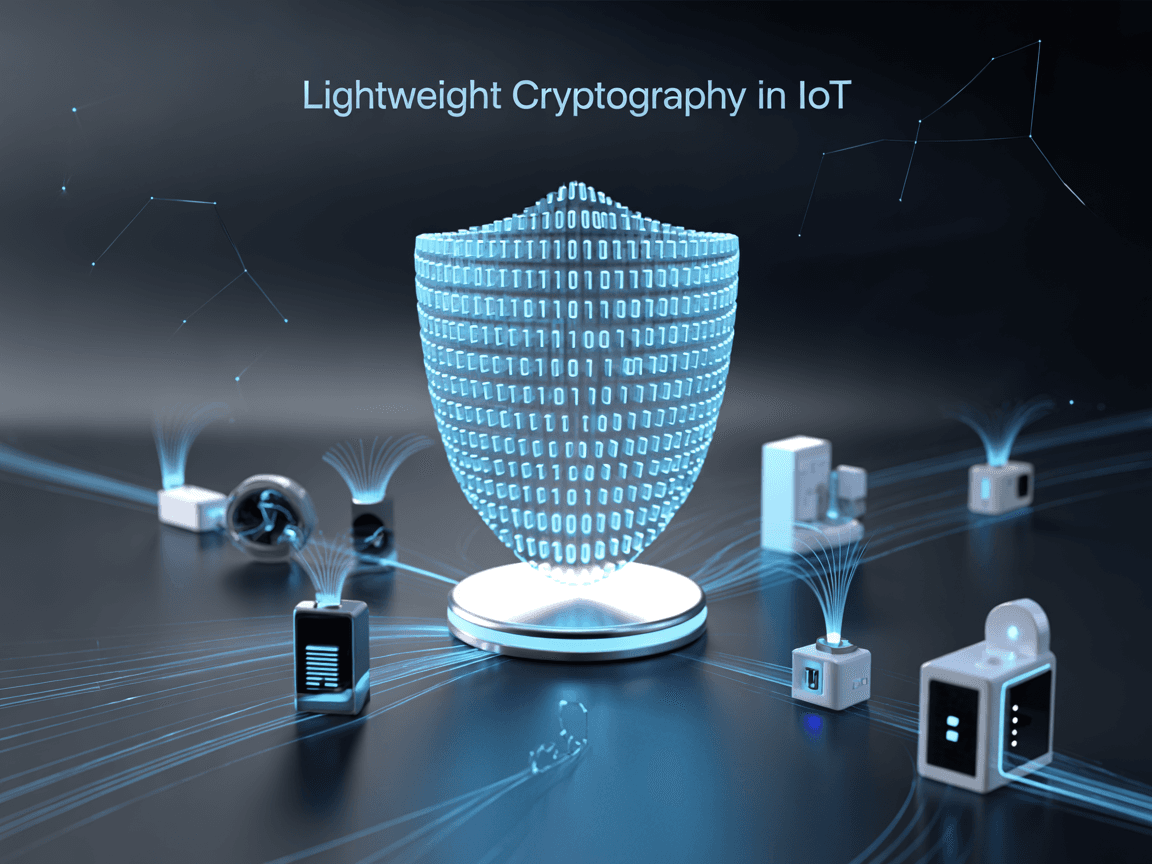
Relationship between security and IoT devices(generated by artificial intelligence)
Dutta, Ghosh, and Bayoumi’s 2021 review demonstrates that the proliferation of IoT has further increased the importance of lightweight cryptography. The authors note that classical encryption solutions are functionally inadequate for resource-constrained devices, making specially designed lightweight cryptographic methods essential for securing the IoT ecosystem.

Lightweight Kriptografi (Yapay zeka tarafından oluşturulmuştur.)
No Discussion Added Yet
Start discussion for "Lightweight Cryptography" article
Historical Development
Key Features
Design Principles
Encryption Methods
Applications
Lightweight Cryptography and IoT Security