

This article was automatically translated from the original Turkish version.
Building Type | Civic architectural example, Konak | ||||||||
|---|---|---|---|---|---|---|---|---|---|
Location | Hepkebirler Neighborhood Kastamonu Merkez | ||||||||
Commissioned by | Liva (Brigadier General) Pasha, a military and administrative state official who served in Kastamonu during the Ottoman period | ||||||||
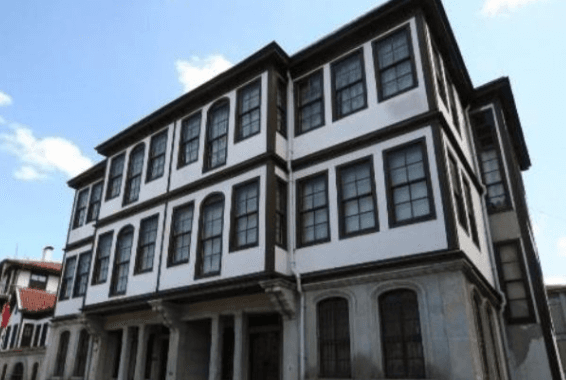
Liva Paşa Konağı is a cultural heritage site established when a civil architectural example from the Ottoman period in the center of Kastamonu was converted into a museum. The museum aims to document the traditional lifestyle, handicrafts, and everyday objects of Kastamonu and its surroundings within an ethnographic framework. Originally built as a residence, the building is now used as a space for cultural memory and exhibition.

Liva Paşa Konağı ( Kültür Portalı )
Liva Paşa Konağı was constructed between 1879 and 1881 by Mir Liva Sadık Paşa. Its construction coincides with a period when traditional mansion architecture was widespread in Ottoman provincial towns. In this context, the mansion serves as an architectural document offering indirect insights into Kastamonu’s social structure, family organization, and lifestyle culture.
The building was nationalized by the Ministry of Culture and Tourism in 1978 and opened to the public as an Ethnography Museum in 1997 after completion of restoration works. This transformation was carried out while preserving the building’s original architectural features.
Liva Paşa Konağı is a three-story structure built on a basement level. The building includes:
This spatial arrangement reflects the haremlik–selamlık division and multifunctional usage patterns typical of Ottoman-era mansions. The predominant use of wood as a building material aligns with the civil architectural sensibility of the period. The mansion’s plan integrates spaces designed for both family life and guest reception.
The museum is functionally organized by floor according to its exhibition concept:
This floor is designated for exhibition and administrative areas. It displays historical photographs relating to Kastamonu’s past, serving as visual documentation of the city’s recent history. Through these photographs, information is provided on the urban fabric, social life, and architectural environment.
The middle floor is primarily dedicated to handicrafts and everyday objects. Exhibits in this section include:
Additionally, traditional clothing, handcrafted items, and various weapons dating from the late 19th and early 20th centuries are displayed on this floor. The exhibition layout is designed to illustrate the relationship between production and use.
The upper floor is arranged to reflect the mansion’s original usage. This section includes:
Mannequins, original or period-appropriate furniture, and historical garments are used to materialize the lifestyle of the era. This arrangement aims to visually convey the daily practices of Ottoman mansion life.
The artifacts exhibited in the museum consist of objects reflecting the traditional production methods, social relations, and cultural habits of Kastamonu and its surroundings. The collection particularly documents local economic activities and craft culture through handicrafts. Clothing and accessories provide data on social status, gender roles, and ceremonial culture.
Liva Paşa Konağı – Ethnography Museum serves the purpose of preserving Kastamonu’s civil architectural heritage and documenting local culture. The building offers a tangible research site for scholars in the fields of architectural history and ethnography. It is one of the few examples that integrate residential architecture with exhibition functions.
Culture Portal. "Liva Paşa Konağı – Etnografya Müzesi." Accessed January 1, 2026.
Kastamonu Belediyesi. "Liva Paşa Konağı Etnografya Müzesi." Accessed January 1, 2026. https://www.kastamonu.bel.tr/livapasa-konagi-etnografya-muzesi/
Ministry of Culture and Tourism of the Republic of Turkey. "Liva Paşa Konağı Etnografya Müzesi." Accessed January 1, 2026.

Building Type | Civic architectural example, Konak | ||||||||
|---|---|---|---|---|---|---|---|---|---|
Location | Hepkebirler Neighborhood Kastamonu Merkez | ||||||||
Commissioned by | Liva (Brigadier General) Pasha, a military and administrative state official who served in Kastamonu during the Ottoman period | ||||||||
Construction Process and Historical Background
Architectural Features
Functional Organization by Floor
Ground Floor
Middle Floor
Upper Floor
Ethnographic Nature of the Collection
Cultural and Academic Significance