This article was automatically translated from the original Turkish version.
+1 More
Author(s) | Canan Tan | ||||||||
|---|---|---|---|---|---|---|---|---|---|
Number of Pages | 352 | ||||||||
Type(s) | Novel | ||||||||
Publisher(s) | Doğan Kitap Yayınları | ||||||||
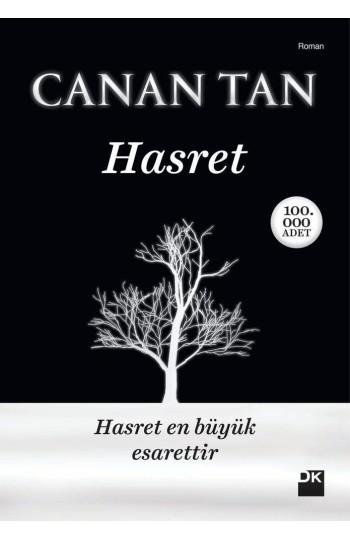
Hasret is a dramatic work that explores the true love and decades-long longing between a Muslim young man and a Rum girl, set within the tradition of exchange-themed love novels in Turkish literature. The novel unfolds against a broad historical backdrop spanning from the War of Independence through the pre-Republican era and into the Second World War. Its central focus is a love story that develops under difficult conditions, intertwined with cultural conflicts and the impact of migration on individuals.
The novel’s protagonist, Tacettin, is the youngest son of a tribal family with ten children. Working in a government office, Tacettin spends his free time with his friends Aris and Artin. One day, he meets Patricia, a young woman of Greek descent. The two fall in love at first sight. However, because Patricia is non-Muslim, their love is rejected by both Tacettin’s family and society at large.
Despite all pressures, the couple marries and have a son named Ali. But historical events ultimately tear them apart. Following Treaty of Lausanne (1923), the compulsory Turkish-Greek population exchange forces Patricia to emigrate to Greece with her son. In Greece, Patricia seeks refuge under the protection of a Turkish baker and gradually finds herself compelled to conceal her son’s Turkish identity—changing his name to ensure his survival.
Tacettin, meanwhile, tries to carry on with his life; he enters into a marriage of convenience with another woman, but he never erases his love for Patricia from his heart. Years later, during World War II, Patricia’s son Ali is wounded in battle and meets Aris, Tacettin’s old friend, in a hospital. Suspicious of the striking resemblance between Ali and his father, Aris reveals the truth. With his mother’s consent, Ali sets out for Türkiye to find Tacettin.
Tacettin: A courageous young man who pursues his love despite family and societal pressure. He continues his life consumed by longing for both Patricia and his son.
Patricia: A young woman of Rum origin. She falls in love with Tacettin and marries him despite the hardships. After migration, she hides her son’s identity to ensure his safety.
Ali: The son of Patricia and Tacettin. Raised by his mother with his Turkish identity concealed. Upon learning the truth about his father, he embarks on a journey to find him.
Aris and Artin: Loyal friends of Tacettin. Aris is the one who, years later, reveals the truth to Tacettin’s son.
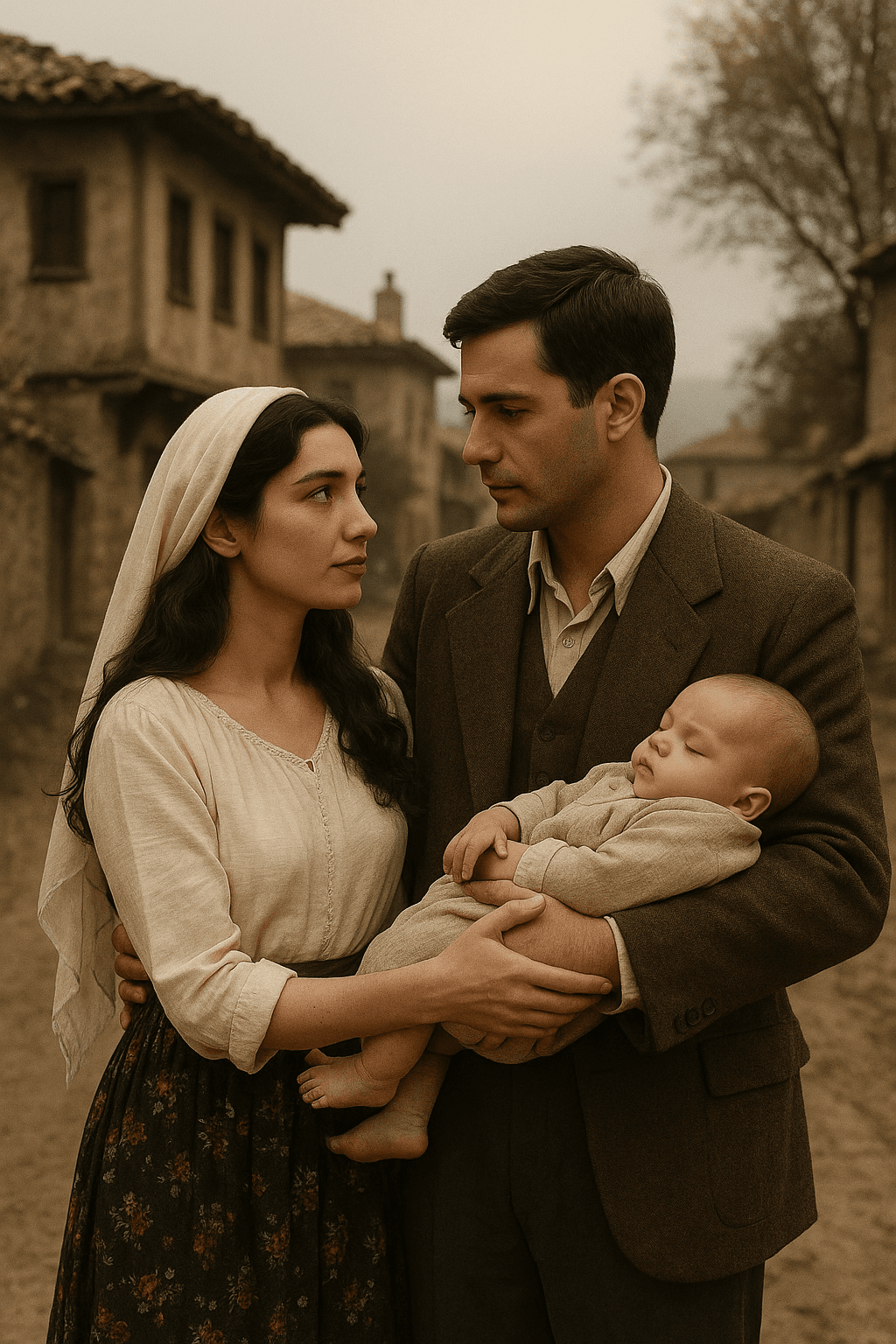
Tacettin, Patricia, and Ali (Generated by Artificial Intelligence)
Love and Forbidden Love: At the heart of the novel lies the love between a Muslim young man and a Rum girl. The relationship between Tacettin and Patricia is tested by religious, cultural, and social barriers. This love is not merely a personal choice but also a rebellion against societal norms. Throughout the novel, love is portrayed as inseparable from sacrifice, courage, and loyalty.
Longing and Yearning: This theme, reflected in the novel’s title, weaves through the characters’ prolonged separations and hopes for reunion. Tacettin’s yearning for both Patricia and his son Ali deepens the emotional intensity of the story. Longing here is not only interpersonal but also a yearning for the past, for homeland, and for belonging.
Migration and Exchange: The Turkish-Greek population exchange following the Treaty of Lausanne is one of the most defining historical events in the novel. The forced migration of Patricia and her son Ali to Greece reveals the dramatic human impact of this policy. Migration here is not merely spatial but also entails a rupture of identity and emotional dislocation.
Identity and Belonging: The concealment of Ali’s Turkish identity by his mother places the theme of identity at the center of the narrative. His internal conflict upon discovering his true origins demonstrates that belonging is not solely an inherited trait but a constructed perception shaped over time. The novel examines the complex relationship between cultural identity and individual selfhood.
Cultural Conflict and Tolerance: The coexistence of Muslims and non-Muslims in the town of Keskin reflects the multicultural fabric of Anatolia. Yet the hostility surrounding Tacettin and Patricia’s marriage reveals how this cultural diversity sometimes veers away from tolerance and into conflict. The novel foregrounds the search for understanding and empathy in the face of difference.
War and Loss: The War of Independence and the Second World War form a crucial backdrop to the novel. These wars directly shape the characters’ lives, causing separations, migrations, and personal destruction. The physical and psychological toll of war is especially deepened through Ali’s military experience.
Family, Loyalty, and Devotion: Tacettin’s loyalty to Patricia and his son endures despite the passing years and his marriage to another woman. This theme underscores the enduring nature of true love and the powerful instinctual bond between a father and his child. Similarly, Aris’s decision, years later, to fulfill his duty as a friend by reuniting Ali with his father reinforces this theme.
Tan, Canan. Hasret. Doğan Kitap Yayınları, 2013.

Author(s) | Canan Tan | ||||||||
|---|---|---|---|---|---|---|---|---|---|
Number of Pages | 352 | ||||||||
Type(s) | Novel | ||||||||
Publisher(s) | Doğan Kitap Yayınları | ||||||||
Plot
Characters
Themes