This article was automatically translated from the original Turkish version.
+1 More
Country | Netherlands | ||||||||
|---|---|---|---|---|---|---|---|---|---|
Province(s) | Limburg | ||||||||
Administration | Municipality | ||||||||
Area(s) | 60.12 km² | ||||||||
Time Zone | CET (UTC+1); daylight saving time CEST (UTC+2) | ||||||||
Language(s) | Dutch German and English French Maastrichtian dialect | ||||||||
Location and Geography | On the banks of the Meuse River; on the border with Belgium and Germany | ||||||||
Climate(s) | Oceanic summers are warm and winters are cool compared to the Netherlands | ||||||||
Maastricht, located in the southernmost part of the Netherlands, is known as the city where the Maastricht Treaty was signed, laying the foundation for the European Union, and where the euro was born. The city has been a settlement site for various civilizations since Roman times, and as a result, remnants and cultural heritage elements from multiple historical periods have survived to the present day.
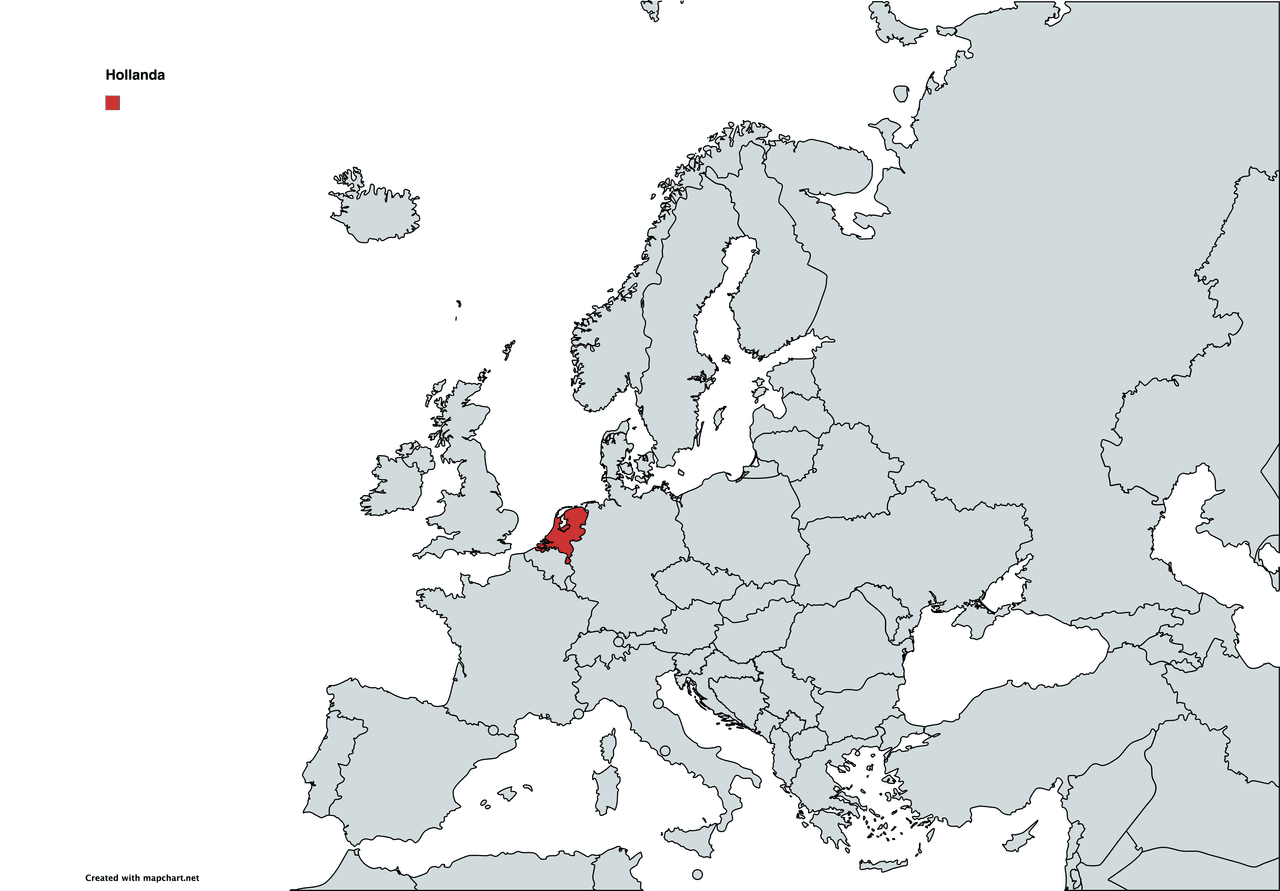
Maastricht is the capital of the Limburg province and lies at the southernmost tip of the Netherlands. Built along the banks of the Maas (Meuse) River, the city is situated very close to the borders of Liège (Belgium) and Aachen (Germany). Due to its location, Maastricht has historically been a crossroads of trade routes and remained open to interactions among different cultures.
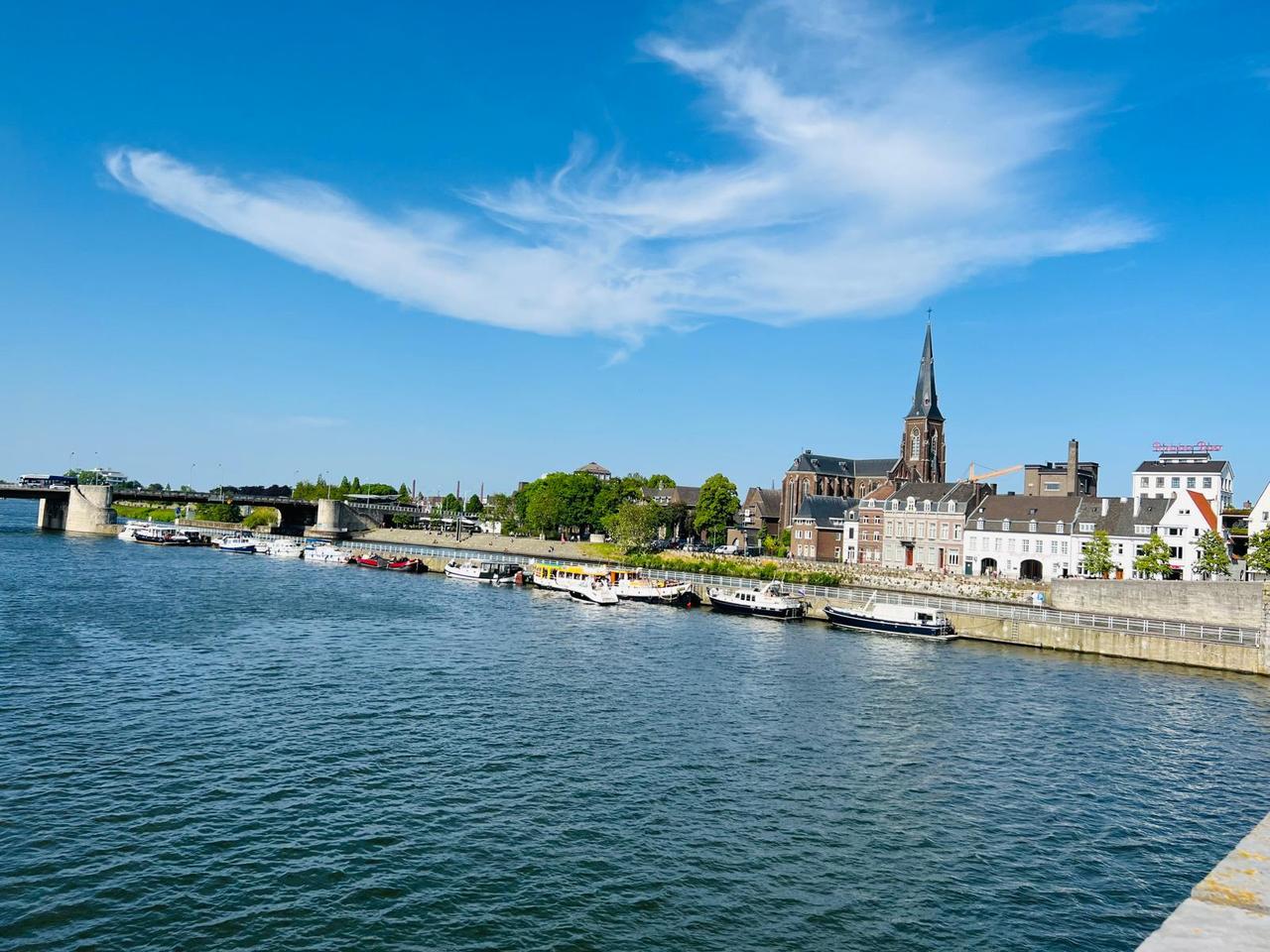
Maas (Meuse) River, 2023 (Photo: Melike Erol)
The surrounding area differs from the flat plains typical of much of the Netherlands, featuring hills, forested areas and agricultural land. This undulating topography reflects the distinct geographical character of the Limburg region compared to other parts of the country.
The population of the municipality of Maastricht in 2025 is 125,563, with an area of 60.06 km² and a population density of approximately 2,090 per km². Age distribution, migration background and household data for the city are regularly published by the municipality on its Maastricht in Cijfers portal.
Maastricht has a temperate oceanic climate and is a city with high precipitation levels. Even the driest month receives considerable rainfall. Summers are generally mild and winters are cool and wet. Extreme heat or cold waves are rare. Annual precipitation is evenly distributed throughout the year, and all four seasons are distinctly felt. The average annual temperature is approximately 15.6 °C. July is the warmest month with an average maximum temperature of 23 °C, while January is the coldest with an average minimum temperature of around 3 °C.
In the Netherlands, early childhood education (daycare and pre-school) supports children’s social and cognitive development but is not compulsory. Children typically attend these institutions voluntarily between the ages of 2 and 4. In Maastricht, early childhood education is widely chosen but is not legally mandatory.
In Maastricht, as throughout the Netherlands, children begin primary school at age 4, although compulsory education begins at age 5. Primary education lasts eight years, during which students receive instruction not only in basic skills but also in subjects based on cultural diversity. Due to Maastricht’s multicultural character, foreign languages such as English and German are commonly introduced at an early age in schools.
The second stage of compulsory education, secondary education, begins at age 12, and students are divided into three main tracks according to their academic performance and aspirations:
Because students in Maastricht grow up in a multilingual and international environment, foreign language courses and cultural modules play a more prominent role when they choose their educational profiles.
The University of Maastricht, established in 1976, hosted 23,324 students as of 2024【1】, approximately 61% of whom are of international origin.
Maastricht is considered one of the oldest settlements in Europe. Bridges and roads constructed during the Roman period contributed to the city’s development as a commercial and military center. Throughout the Middle Ages, the city served as a hub for religious, economic and cultural activities, with textile and leather production playing a significant role in regional development.
Throughout history, Maastricht came under the rule of various states including Burgundy, Spain, Austria and France, each leaving distinct layers on its historical heritage. The Basilica of Saint Servatius reflects the region’s religious and architectural traditions as one of the oldest churches in Europe. The siege of Maastricht in 1673 by French commander Vauban underscores the city’s importance in European military history.
During World War II, the city was occupied by the German army in 1940 and became one of the first Dutch cities liberated by Allied forces in 1944.
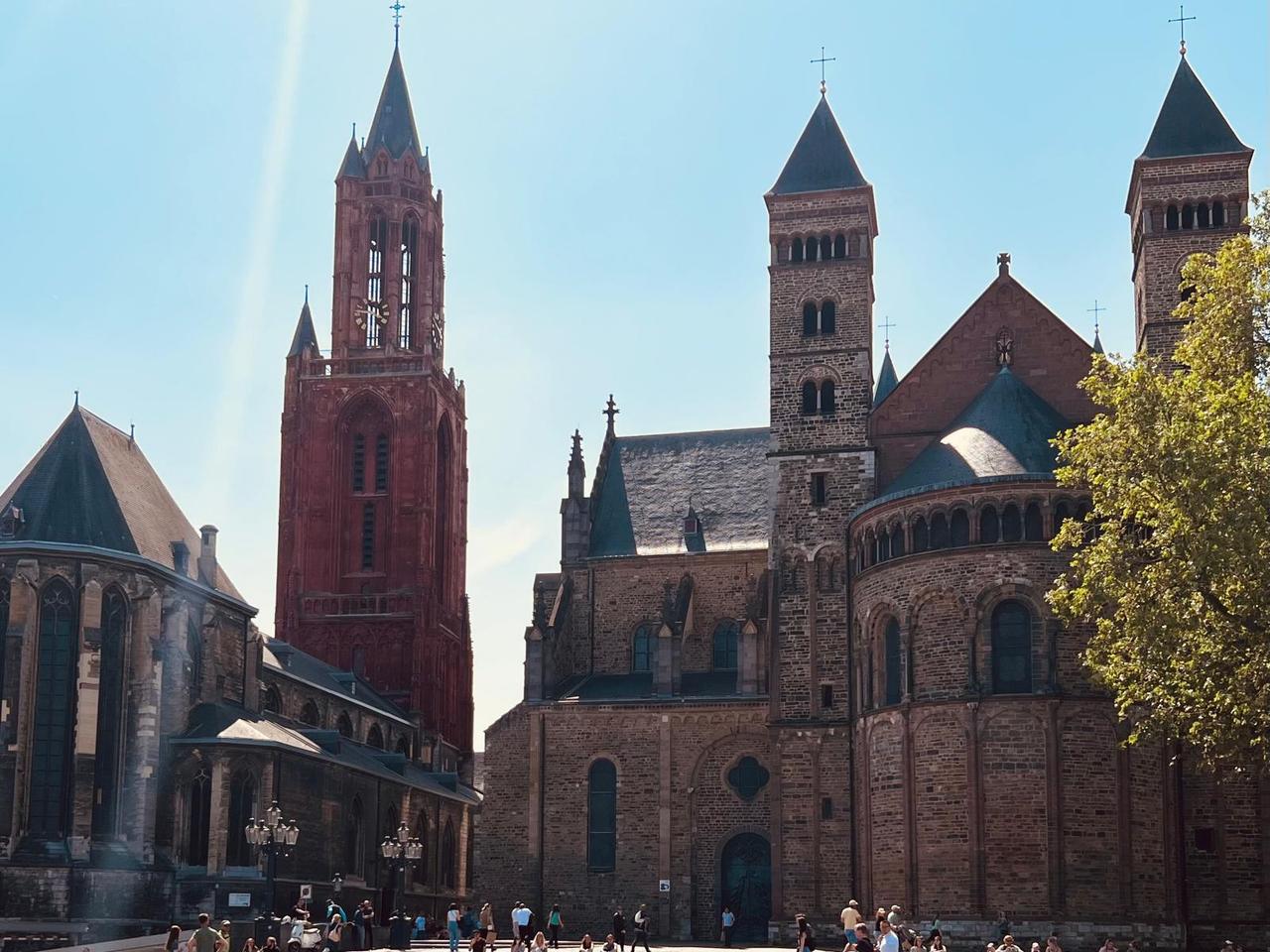
Basilica of Saint Servatius, 2023 (Photo: Melike Erol)
Maastricht carries influences from Dutch, Belgian and German cultures alike. Its architecture bears traces of German and French styles. Its gastronomy reflects the fusion of these three cultures: local dishes such as Zuurvlees (sour meat stew), vlaai (fruit tart) and nonnevotte (sweet cake) are blended examples of German, Belgian and French culinary traditions. Linguistically, the city is multilingual. Although Dutch is the official language, the Maastricht dialect (Mestreechs), along with French, German and English, is frequently used in daily life and education.
Maastricht’s importance stems from its role in European Union history. The Maastricht Treaty, signed in 1992 and effective from 1993, established the European Union and laid the foundation for the common currency, the euro. For this reason, Maastricht is a politically and economically significant city not only for the Netherlands but for all of Europe. The city hosts the world-renowned art fair TEFAF (The European Fine Art Fair), attracting thousands of art lovers annually. With over 1,600 registered historical buildings, Maastricht is the second city in the Netherlands, after Amsterdam, with the largest number of national heritage sites.
Maastricht has preserved historical and cultural elements from various periods since Roman times. The signing of the Maastricht Treaty in 1992 further elevated the city’s status as a pivotal location in the history of the European Union.
Climate-Data. "Climate: Maastricht." Climate-Data.org. Accessed September 29, 2025. https://en.climate-data.org/europe/the-netherlands/limburg/maastricht-893/
Government of the Netherlands. “Primary Education.” Government.nl. Accessed October 3, 2025. https://www.government.nl/topics/secondary-education
Government of the Netherlands. “Primary Education.” Government.nl. Accessed September 29, 2025. https://www.government.nl/topics/primary-education
Government of the Netherlands. “Tertiary (Higher) Education.” Government.nl. Accessed October 3, 2025. https://www.government.nl/topics/secondary-vocational-education-mbo-and-tertiary-higher-education/tertiary-higher-education?utm
InterNations. "International Schools and the Education System in the Netherlands." internations.org. Accessed September 29, 2025. https://www.internations.org/netherlands-expats/guide/education
Maastricht University. “Facts and Figures.” Maastricht University. Accessed September 29, 2025. https://www.maastrichtuniversity.nl/about-um/organisation/facts-figures?utm
MapChart. "Europe JPG." MapChart. Accessed September 29, 2025. https://www.mapchart.net/europe.html
Overheid.nl. "Register van Overheidsorganisaties – Gemeente Maastricht." Accessed September 29, 2025. https://organisaties.overheid.nl/32664/Gemeente_Maastricht
Weeda, E. J. 2011. “Maastricht.” In *Plants and Habitats of European Cities*, edited by Norbert Müller and John Kelcey. New York, NY: Springer. Accessed September 29, 2025. https://doi.org/10.1007/978-0-387-89684-7_8
[1]
Maastricht University, “Facts and Figures, ” Maastricht University, erişim 29 Eylül 2025, https://www.maastrichtuniversity.nl/about-um/organisation/facts-figures?utm

Country | Netherlands | ||||||||
|---|---|---|---|---|---|---|---|---|---|
Province(s) | Limburg | ||||||||
Administration | Municipality | ||||||||
Area(s) | 60.12 km² | ||||||||
Time Zone | CET (UTC+1); daylight saving time CEST (UTC+2) | ||||||||
Language(s) | Dutch German and English French Maastrichtian dialect | ||||||||
Location and Geography | On the banks of the Meuse River; on the border with Belgium and Germany | ||||||||
Climate(s) | Oceanic summers are warm and winters are cool compared to the Netherlands | ||||||||
Location and Geography
Demography
Climate
Educational System
Early Childhood Education
Starting Primary Education and Compulsory Education
Secondary Education
Higher Education
History
Cultural Richness
Global Significance