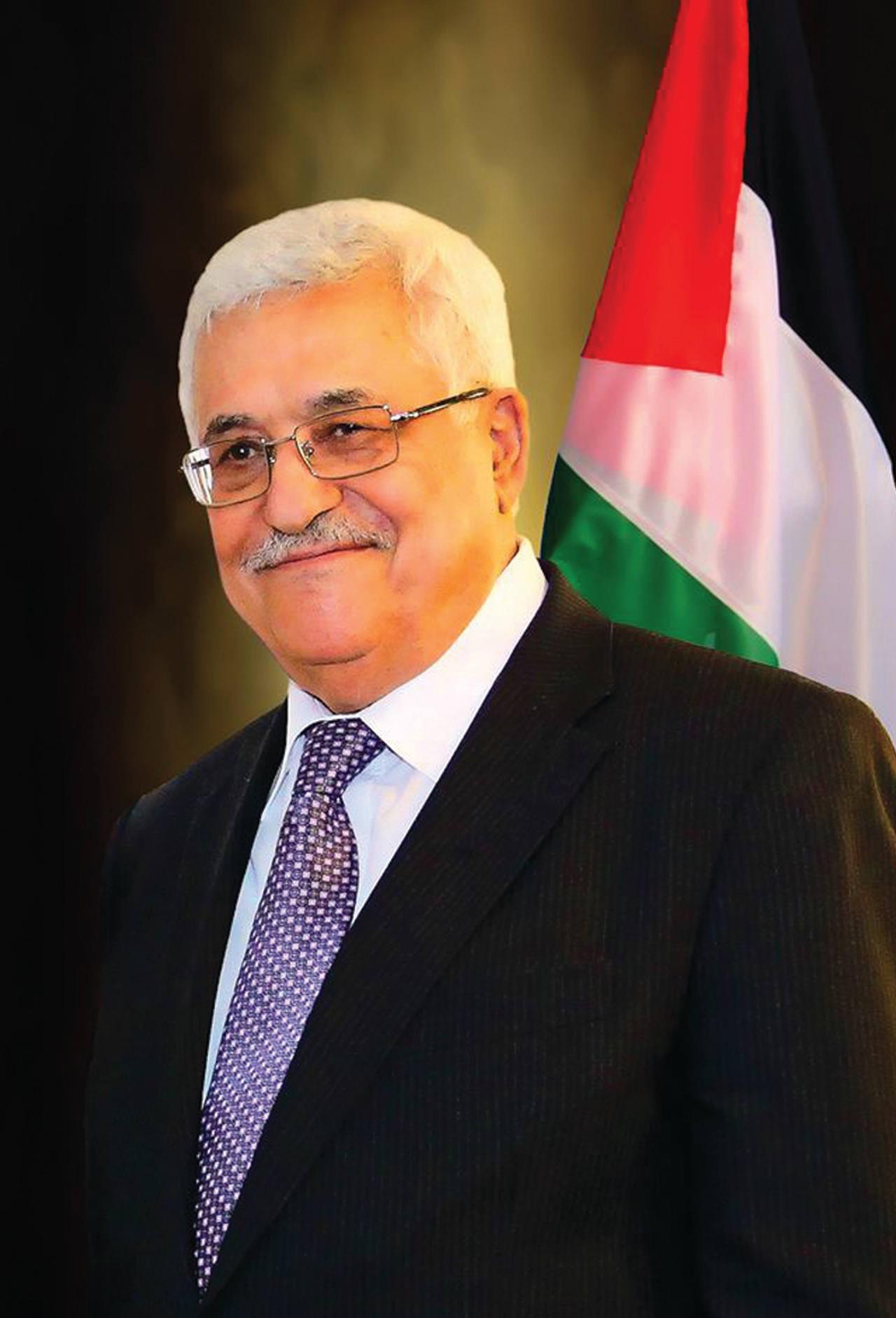



Pen name | Abu Mazen | ||||||||
|---|---|---|---|---|---|---|---|---|---|
Spouse | Amina Abbas | ||||||||
Birth | 15 November 1935 Safed/Safad | ||||||||
Child | Mazen (Deceased) Yasser Tareq/Tariq | ||||||||
Education | Damascus University (Law) Moscow (Ph.D.) | ||||||||
Political line | Palestine Liberation Organization (PLO) Palestinian Authority Fatah | ||||||||
Profession | Lawyer Teacher Politician | ||||||||
Important positions | Presidency of the Negotiations Directorate of FKÖ Presidency of the Palestine-Jordan Committee PLO Director of Arab and International Relations Leader of the Oslo Delegation Prime Ministership Presidency of the Palestinian Authority | ||||||||
Works | More than 60 Arabic-language copyrights | ||||||||
Mahmud Abbas (1935–) is a politician who has held senior positions within the institutional structures of the Palestinian National Movement and the Palestinian Authority. He was among the founding members of Fatah and has led both the Palestine Liberation Organization (PLO) and the Palestinian Authority. Abbas is also known by the kunya “Abu Mazen.” He was born on 15 November 1935 in Safed/Safad. In 1948, he and his family migrated to Syria and became refugees.【1】Palestinian Authority【2】 He played a leading role in the 1993 Oslo negotiations and is regarded as one of the architects of the process.【3】 He served as Prime Minister of the Palestinian Authority in 2003 and was elected President of the Palestinian Authority in January 2005 with 62 percent of the vote.【4】 He has authored over 60 books in Arabic and gained prominence through works such as The Road to Oslo, From Oslo to Palestine, and Three Years after Oslo.【5】
Mahmud Abbas completed his primary education in Safed. After the 1948 Nakba and the subsequent Israeli occupation, he left Safed with his family and, like many other Palestinians, migrated to Syria where he became a refugee.【6】 At age 13, he worked for two years to support his family while continuing his education at home. He later returned to formal schooling and completed his secondary education.【7】 After secondary school, he studied law at Damascus University and graduated with a law degree in 1958.【8】
Mahmud Abbas’s educational journey was reshaped following forced displacement. After relocating from Safed to Damascus with his family in 1948, he worked for many years to support himself while intermittently continuing his education.【9】 He completed secondary education in the early 1950s and enrolled at the Faculty of Law at Damascus University. He graduated with a law degree in 1958; during this period, he became politically engaged under the influence of rising debates on independence and identity across the Arab world.【10】
During university, he joined solidarity associations formed among Palestinian students and played an active role in the social and political organization of Palestinian youth in Syria. In the late 1950s, alongside his legal studies, he independently studied history and international relations and developed ideas on Arab nationalism and the Palestinian movement.
After completing his education, he briefly worked as a teacher in Qatar and from 1957 onward served as a public official within the Qatari Ministry of Education.【11】In Qatar, he established contacts with Palestinian intellectuals abroad and between 1958 and 1965 prepared reports on economic planning and employment policies. This technical role provided him with close insight into the functioning of Arab administrations.

Mahmud Abbas Speaking (Anadolu Ajansı)
In the 1960s, alongside his educational and professional activities, he participated in political organizing and built connections with Palestinian diaspora communities in Damascus, Doha, and Kuwait.【12】 During this period, he came into contact with one of the groups that formed the initial organizational core of Fatah and became one of its founding members in 1965.
Mahmud Abbas earned his doctorate in Moscow in 1982. He completed his doctoral studies at the Institute of Oriental Studies at Moscow University, where his thesis examined the relationship between Zionism and the Nazi regime. This thesis generated debate within Palestinian political literature due to its historical and diplomatic context. During his years in Moscow, the Soviet Union’s influence in the Arab world shaped Abbas’s later diplomatic orientation.
While in Moscow, he analyzed the relationship between Soviet foreign policy and Arab causes and advocated for multilateral diplomacy in addressing the Palestinian issue. During this time, he was influenced by Arab socialist movements and laid the theoretical foundations for the “negotiationist wing” within the PLO during the 1980s.
Abbas’s educational path followed a three-stage trajectory from the 1950s to the 1980s:
This trajectory made him one of the most educated leaders of the Palestinian political movement and equipped him with expertise in international law, refugee issues, and negotiation.
As one of the leading figures in Palestinian politics, Mahmud Abbas has maintained a public life while keeping his private life largely out of the public eye. Abbas is married to Amina Abbas, and they have three sons: Mazen, Yasser, and Tareq (Tariq). Their eldest son, Mazen Abbas, died in 2002 in Qatar from a heart attack; Abbas’s widely used kunya “Abu Mazen” is associated with this family context.【14】
Mahmud Abbas worked briefly as a teacher at the secondary level and continued his studies at home.【15】 In 1957, he joined the Qatari Ministry of Education and held this position until 1970.【16】 During the same period, he earned his law degree from Damascus University in 1958.
His official title in Qatar has been recorded differently across various sources: The Palestinian Ministry of Foreign Affairs and Expatriates’ biography states he served as “director of employees affairs” in the Qatari Ministry of Education in 1957.【17】The Central Election Commission report records the same period under the title “human resources director,” noting that he traveled multiple times to the West Bank and Gaza Strip to select teachers for employment in Qatar.【18】 The Palestinian Embassy in Italy’s profile states he served as “Chief of Staff” in the Qatari Ministry of Education between 1957 and 1970.【19】

Mahmud Abbas at the UN (Anadolu Ajansı)
It is also documented that during his time in Qatar, he succeeded in employing Palestinians from the West Bank and Gaza in various jobs in Qatar.【20】 In 1970, he devoted all his professional efforts to the Palestinian cause. During this period, his connection with Fatah was established in Qatar; a U.S. Congressional Research Service (CRS) report notes that he joined Fatah in Qatar.【21】
Mahmud Abbas’s national-political organizing began in the mid-1950s when, alongside colleagues, he established a clandestine national organization. This network laid the groundwork for the Palestinian National Liberation Movement, Fatah, which officially launched its activities on 1 January 1965.【22】 During his years in Qatar, he joined Fatah and became part of its early cadre.【23】
His institutional position within the organization was consistently documented from the mid-1960s onward. The Palestinian Central Election Commission’s 2005 Presidential Election Report lists his membership in the Fatah Central Committee since 1964.【24】 The Palestinian Ministry of Foreign Affairs and Expatriates’ biography records the same starting date as “member of the Fatah Central Council.” Within the PLO, he assumed membership in the PLO Executive Committee from 1980 onward.

Mahmud Abbas at the UN (Anadolu Ajansı)
During the 1970s and 1980s, under the leadership of Yasser Arafat over Fatah and the PLO, Abbas was among Arafat’s senior aides and positioned within the organization’s decision-making circles. The European Union Election Observation Mission Report identifies Abbas as one of the figures from Arafat’s “inner circle” and associates him with the core cadre that remained influential in Fatah/PLO politics for decades.【25】 The same report classifies Abbas as part of Fatah’s “old guard,” linking this group to the PLO leadership that returned to Palestine in the mid-1990s during the Oslo process.
Mahmud Abbas served as Director of the Negotiations Department within the Palestine Liberation Organization (PLO) from 1974 to 2003.【26】 From the 1970s onward, he initiated contact with Jewish and pacifist groups within Israel.【27】 He chaired the Palestine-Jordan Committee from 1979 to 1981. From 1984 to 2000, he headed the unit responsible for the PLO’s national and international relations. This role is described in the Palestinian Embassy in Italy’s profile as Director of the “Arab and International Relations” Department from 1984 to 2000.
In the Oslo channel, Abbas represented the PLO at the signing of the “Oslo Accord” on the White House lawn in Washington on 13 September 1993. The Palestinian Embassy in Italy’s profile gives the date of this signature as “31 September 1993”; the text reflects this day-month format.【28】 Abbas signed the “transition agreement” on behalf of the PLO in Washington on 23 September 1995. The European Council on Foreign Relations (ECFR) profile identifies Abbas as one of the key architects of the 1993 Oslo process and notes that he led the Palestinian negotiation team that prepared the 1993 agreement.【29】
Norwegian actors such as Thorvald Stoltenberg, Johan Jørgen Holst, and Jan Egeland played prominent roles in the Oslo process; the text notes their contribution in establishing the first official contacts between the PLO and the Israeli government.【30】 Abbas’s political stance, as described in the election observation report, supported the Intifada but viewed the armed Intifada as a mistake and argued that it should be replaced by a negotiated solution.【31】 The ECFR profile also defines Abbas as a figure who long advocated a political dialogue line with Israel.【32】
The Oslo process advanced through a direct and secret diplomatic channel facilitated by Norway, following the two-track negotiations initiated by the 1991 Madrid Conference. This channel enabled the establishment of official contacts between the Palestine Liberation Organization (PLO) and the Israeli government. During this process, the parties moved toward mutual recognition, culminating in the signing of the Declaration of Principles on Interim Self-Government Arrangements (DOP / “Oslo Accord”) in 1993.【33】
The “secret channel” nature of the Oslo talks was evident in both the working methods of the negotiation team and its communication with leadership. Ahmed Qurie (Abu Ala) wrote that the Oslo delegation operated by receiving instructions from the PLO’s highest leadership (in Tunis) before each round and providing briefings after each round; within this top-tier circle were Yasser Arafat, Mahmud Abbas, and Yaser Abed Rabbo.【34】 This narrative also records that prior to Oslo, limited unofficial contacts had occurred between Israeli peace movements, intellectuals, and political circles; during the Oslo channel, however, high-level secrecy became essential to reach an agreement.【35】
In Norway, the process was institutionalized through the involvement of the foreign ministry and its officials. Thorvald Stoltenberg, as minister, endorsed the process; his successor Johan Jørgen Holst and assistant Jan Egeland played a catalytic role in establishing the first official contacts between the PLO and the Israeli government.【36】
Mahmud Abbas was among the central figures in the institutional architecture of Oslo. The ECFR profile identifies Abbas as one of the architects of the 1993 Oslo process and states that he led the Palestinian negotiation team that produced the Oslo agreements in 1993.【37】 Ahmed Qurie’s account also notes Abbas’s support for the efforts during the Oslo negotiations and records that Abbas gifted Qurie a copy of his 1994 book Through Secret Channels with an inscription of dedication.【38】

Mahmud Abbas at the Turkish Grand National Assembly (Anadolu Ajansı)
It is known that Abbas signed the Oslo Accord on behalf of the Palestinian side at the White House on 13 September 1993 and the “transition agreement” on behalf of the PLO in Washington on 23 September 1995. The Palestinian Embassy in Italy’s profile, however, gives the date of the signing of the Declaration of Principles in Washington as “31 September 1993.”【39】
The “implementation agreements” phase of Oslo progressed through phased Israeli withdrawals and the establishment of limited self-governance arrangements. The UN chronology notes that the implementation agreements following the 1993 DOP led to partial Israeli troop withdrawals, elections for the Palestinian Council and the Palestinian Authority presidency, partial releases of detainees, and the establishment of an administration operating in Palestinian self-governance areas.【40】 The CRS report also records that after Norway’s facilitation of secret diplomacy, the PLO recognized Israel in 1993 and that the Oslo agreements opened a limited self-governance area for Palestinians.【41】
The Oslo process also revealed divisions within Palestinian domestic politics around the negotiation line. The EU Election Observation Report links Abbas to the PLO leadership that returned to Palestine in the mid-1990s during the Oslo process; it notes that Abbas supported the Intifada but viewed the armed Intifada as a mistake and argued that it should be replaced by a negotiated solution.【42】 The 2005 Election Report, in its candidate biographies, records that Mustafa Barghouthi resigned from the Madrid negotiation team due to the continuation of settlement activities and the trajectory of negotiations leading to the Oslo Accords, thereby demonstrating that Oslo kept alive debates in Palestinian politics over “legitimacy and method.”【43】
The Palestinian Authority (PA) operated as a hybrid structure with separate executive and legislative branches; the PA President shared executive powers with the government, while the Palestinian Legislative Council (PLC) assumed the legislative role. During Yasser Arafat’s tenure, much of the executive function was effectively concentrated in Arafat’s hands; this situation kept the “reform” agenda on the political agenda for years.【44】
Mahmud Abbas became the first Prime Minister of the PA in March 2003. At the same time, Arafat, as PA President, retained ultimate decision-making authority and control over security services; as a result, Abbas could not exercise full powers in the prime ministerial office. Abbas resigned from the premiership in September 2003; his resignation was influenced by tensions with Arafat and dissatisfaction with the process underway with the United States and Israel.【45】

Mahmud Abbas during his Visit to Turkey (T.C. İletişim Başkanlığı)
Following Arafat’s death on 11 November 2004, the Basic Law’s Article 37/2 mandated that elections be held within 60 days, and the date of 9 January 2005 was set.【46】 The 9 January 2005 election was the first presidential election since the 20 October 1996 vote, in which approximately 75 percent of voters participated and Arafat won the presidency by a wide margin.【47】 On 12 January 2005, the Central Election Commission (CEC) convened in Ramallah; after announcing provisional results on 10 January, it declared the final results.
In its 12 January 2005 announcement, the CEC reported that Mahmud Abbas received 501,448 votes, or 62.52 percent; Mustafa Barghouthi received 156,227 votes, or 19.48 percent. Tayseer Khaled received 26,848 votes (3.35 percent); Abd Alhalim Ashqar received 22,171 votes (2.76 percent); Basam Al Salhi received 21,429 votes (2.67 percent); Assayed Barakeh received 10,406 votes (1.30 percent); and Abd Al-Karim Shbair received 5,717 votes (0.71 percent). Invalid votes totaled 30,672 (3.82 percent), blank votes 27,159 (3.39 percent), and total votes cast 802,077.【48】
The Commission found that the majority of complaints concerned illegal campaigning on election day, actions of candidate representatives, and the conduct of CEC personnel; no complaints were filed regarding the vote-counting process.【49】 Post-election verification revealed that 504 individuals had voted more than once and 84 individuals were under the age of 18; these names were referred to the Prosecutor General’s Office on 23 February 2005.【50】 Abbas won the 2005 presidential election; when his four-year term expired in 2009, the PLO Central Council extended his term indefinitely until new elections were held.
The International Crisis Group’s report dated 1 February 2023 addresses how reports on Mahmud Abbas’s advanced age and health have placed the “next leader” issue at the center of Palestinian politics.【51】 The report notes that Abbas’s sudden death or incapacitation could trigger a crisis; however, both Fatah and Palestinian Authority (PA) circles regard public discussion of the issue as a risk to political stability.【52】 The same report emphasizes that the succession pathway remains institutionally “closed and fluid,” with no clear, universally accepted procedure established; as a result, the process largely depends on power balances and de facto decisions.【53】
The most prominent executive step in 2024 was the institutionalization of the “reform” agenda through the prime ministerial office. Reuters reported on 14 March 2024 that Abbas appointed Muhammad Mustafa as Prime Minister of the Palestinian Authority, noting that this appointment occurred amid mounting pressure to reform and revitalize the PA institutions.【54】 Abbas, at this point, is positioned as the “most powerful figure” within the Palestinian Authority; the new government move is linked to the will to respond to external actors’ demands for “change in governance.”

Mahmud Abbas during his Visit to Turkey (Anadolu Ajansı)
In 2025, a direct institutional step to address the succession issue was the creation of a position analogous to “vice president” within the PLO. On 24 April 2025, after a two-day meeting, the PLO Central Council established a “vice president” role within the PLO Executive Committee; this position was formally institutionalized as “Vice President of the State of Palestine.”【55】It was recorded that Abbas would select his vice president from among the 15 members of the PLO Executive Committee and retain the authority to remove him from office. The decision’s adoption by a vote of 170 to 1, with one abstention, is also a notable numerical detail.【56】
These institutional steps have proceeded in tandem with the goal of achieving a “single authority” to prevent internal Palestinian division.【57】 On 21–22 July 2024, in Beijing under Chinese auspices, 14 Palestinian factions including Fatah and Hamas signed a unity declaration; the declaration outlined goals such as establishing a “single and unified” administration across Gaza, the West Bank, and East Jerusalem, holding elections as soon as possible, and creating an interim unified leadership mechanism.【58】 The declaration also called on Mahmud Abbas to begin consultations with the factions for the formation of a unity government.【59】
Al Jazeera. "Profile: Mahmoud Abbas." Al Jazeera, December 6, 2017. Accessed January 12, 2026.https://www.aljazeera.com/news/2017/12/6/profile-mahmoud-abbas
Anadolu Ajansı. "Abbas TBMM'de Konuştu." Anadolu Ajansı Foto Galeri. Accessed January 12, 2026.https://www.aa.com.tr/tr/pg/foto-galeri/abbas-tbmmde-konustu/0
Anadolu Ajansı. "BM Genel Kurulu, Mahmud Abbas'ın Üyelere Video Kaydından Hitap Etmesini Onayladı." Accessed January 12, 2026.https://www.aa.com.tr/tr/dunya/bm-genel-kurulu-mahmud-abbasin-uyelere-video-kaydindan-hitap-etmesini-onayladi/3692870.
Anadolu Ajansı. “Filistin Devlet Başkanı Abbas Türkiye'de.” Anadolu Ajansı Foto Galeri. Accessed January 12, 2026.https://www.aa.com.tr/tr/pg/foto-galeri/filistin-devlet-baskani-abbas-turkiyede/0/34270.
Anadolu Ajansı. “Filistin Devlet Başkanı Abbas: Filistin'i 6 Ülkenin Tanıması Adil Barışın Sağlanması İçin Önemli Bir Adım.” Accessed January 12, 2026.https://www.aa.com.tr/tr/dunya/filistin-devlet-baskani-abbas-filistini-6-ulkenin-tanimasi-adil-barisin-saglanmasi-icin-onemli-bir-adim/3695782.
Associated Press. “Palestinians Create Role for a Vice President and Possible Successor to Aging Leader Abbas.” AP News, April 24, 2025. Accessed January 12, 2026.https://apnews.com/article/israel-palestinians-hamas-war-politics-abbas-succession-738817eed8d17b97ada3ddc912ce0804
Central Elections Commission. "The CEC Announces the Final Results of the 2005 Presidential Election." United Nations Information System on the Question of Palestine (UNISPAL), January 12, 2005. Accessed January 12, 2026.https://www.un.org/unispal/document/auto-insert-202562/
Central Elections Commission. *Report on Second Presidential Elections: January 9, 2005*. Ramallah: Central Elections Commission, March 30, 2005. Accessed January 12, 2026.https://www.elections.ps/portals/0/pdf/PE2005_Final_Report-en.pdf
Embassy of Palestine Roma - Italy. "President." Accessed January 12, 2026.https://www.ambasciatapalestina.com/en/palestine/president/.
Entous, Adam. "Firms Run by President Abbas's Sons Get U.S. Contracts." Reuters, April 22, 2009. Accessed January 12, 2026.https://www.reuters.com/article/world/firms-run-by-president-abbass-sons-get-us-contracts-idUSTRE53L2Q2/
European Council on Foreign Relations. “Mahmoud Abbas (President).” *Mapping Palestinian Politics*. Accessed January 12, 2026.https://ecfr.eu/special/mapping_palestinian_politics/mahmoud_abbas/.
European Union Election Observation Mission. *West Bank and Gaza Presidential Elections, 9 January 2005: Final Report*. 2005. Accessed January 12, 2026.https://aceproject.org/ero-en/regions/mideast/PS/palestine-final-report-presidential-elections-eu/at_download/file
International Crisis Group. “Managing Palestine’s Looming Leadership Transition.” Middle East Report No. 238. February 1, 2023. Accessed January 12, 2026.https://www.crisisgroup.org/middle-east-north-africa/east-mediterranean-mena/israelpalestine/238-managing-palestines-looming-leadership-transition
Los Angeles Times. "Abbas Has Artery Blockage Cleared." June 2, 2005. Accessed January 12, 2026.https://www.latimes.com/archives/la-xpm-2005-jun-02-fg-abbas2-story.html
National Democratic Institute for International Affairs. *Final Report on the Palestinian Presidential Election: January 9, 2005*. Washington, DC: National Democratic Institute for International Affairs, 2005. Accessed January 12, 2026.https://www.ndi.org/sites/default/files/1819_wegz_finalreport_041505_5.pdf
Qurayʻ, Aḥmad. *From Oslo to Jerusalem: The Palestinian Story of the Secret Negotiations*. Yeni bs. London: Bloomsbury Academic, 2006. Accessed January 12, 2026.https://books.google.com.au/books?id=EZVtAAAAMAAJ&source=gbs_book_other_versions_r&cad=2
Reuters. “Palestinian President Abbas Appoints New Prime Minister of Palestinian Authority.” Reuters, March 14, 2024. Accessed January 12, 2026.https://www.reuters.com/world/middle-east/palestinian-president-abbas-appoints-new-prime-minister-palestinian-authority-2024-03-14/
Sezer, Selim. "Filistin ulusal birliği ve Mahmud Abbas'ın rolü: Tarihsel bir dönüm noktası." Anadolu Ajansı, August 15, 2024. Accessed January 12, 2026.https://www.aa.com.tr/tr/analiz/filistin-ulusal-birligi-ve-mahmud-abbasin-rolu-tarihsel-bir-donum-noktasi/3303278
State of Palestine Ministry of Foreign Affairs and Expatriates. “President.” Accessed January 12, 2026.https://www.mofa.pna.ps/en-us/palestine/president
Türkiye Cumhuriyeti Cumhurbaşkanlığı İletişim Başkanlığı. “Cumhurbaşkanı Erdoğan, Filistin Devlet Başkanı Abbas ile Görüştü.” September 18, 2025. Accessed January 12, 2026.https://www.iletisim.gov.tr/turkce/haberler/detay/cumhurbaskani-erdogan-filistin-devlet-baskani-abbas-ile-gorustu-18-09-25
United Nations. “History of the Question of Palestine.” The United Nations Information System on the Question of Palestine (UNISPAL). Accessed January 12, 2026.https://www.un.org/unispal/history/
WRAL. "Mahmoud Abbas Fast Facts." Accessed January 12, 2026.https://www.wral.com/story/mahmoud-abbas-fast-facts/17200596/.
Zanotti, Jim. *The Palestinians: Background and U.S. Relations*. CRS Report RL34074. Washington, DC: Congressional Research Service, March 18, 2021. Accessed January 12, 2026.https://www.congress.gov/crs_external_products/RL/PDF/RL34074/RL34074.49.pdf
[1]
European Council on Foreign Relations. “Mahmoud Abbas (President).” Mapping Palestinian Politics. Erişim tarihi: 12 Ocak 2026. https://ecfr.eu/special/mapping_palestinian_politics/mahmoud_abbas/.
[2]
Embassy of Palestine Roma - Italy. “President.” Erişim tarihi: 12 Ocak 2026. https://www.ambasciatapalestina.com/en/palestine/president/.
[3]
State of Palestine Ministry of Foreign Affairs and Expatriates. “President.” Erişim tarihi: 12 Ocak 2026. https://www.mofa.pna.ps/en-us/palestine/president.
[4]
State of Palestine Ministry of Foreign Affairs and Expatriates. “President.” Erişim tarihi: 12 Ocak 2026. https://www.mofa.pna.ps/en-us/palestine/president.
[5]
European Council on Foreign Relations. “Mahmoud Abbas (President).” Mapping Palestinian Politics. Erişim tarihi: 12 Ocak 2026. https://ecfr.eu/special/mapping_palestinian_politics/mahmoud_abbas/.
[6]
European Council on Foreign Relations. “Mahmoud Abbas (President).” Mapping Palestinian Politics. Erişim tarihi: 12 Ocak 2026. https://ecfr.eu/special/mapping_palestinian_politics/mahmoud_abbas/.
[7]
State of Palestine Ministry of Foreign Affairs and Expatriates. “President.” Erişim tarihi: 12 Ocak 2026. https://www.mofa.pna.ps/en-us/palestine/president.
[8]
Embassy of Palestine Roma - Italy. “President.” Erişim tarihi: 12 Ocak 2026. https://www.ambasciatapalestina.com/en/palestine/president/.
[9]
State of Palestine Ministry of Foreign Affairs and Expatriates. “President.” Erişim tarihi: 12 Ocak 2026. https://www.mofa.pna.ps/en-us/palestine/president.
[10]
Embassy of Palestine Roma - Italy. “President.” Erişim tarihi: 12 Ocak 2026. https://www.ambasciatapalestina.com/en/palestine/president/.
[11]
Central Elections Commission. Report on Second Presidential Elections: January 9, 2005. Ramallah: Central Elections Commission, 30 Mart 2005. Erişim tarihi: 12 Ocak 2026, s. 1. https://www.elections.ps/portals/0/pdf/PE2005_Final_Report-en.pdf.
[12]
State of Palestine Ministry of Foreign Affairs and Expatriates. “President.” Erişim tarihi: 12 Ocak 2026. https://www.mofa.pna.ps/en-us/palestine/president.
[13]
State of Palestine Ministry of Foreign Affairs and Expatriates. “President.” Erişim tarihi: 12 Ocak 2026. https://www.mofa.pna.ps/en-us/palestine/president.
[14]
European Council on Foreign Relations. “Mahmoud Abbas (President).” Mapping Palestinian Politics. Erişim tarihi: 12 Ocak 2026. https://ecfr.eu/special/mapping_palestinian_politics/mahmoud_abbas/.
[15]
State of Palestine Ministry of Foreign Affairs and Expatriates. “President.” Erişim tarihi: 12 Ocak 2026. https://www.mofa.pna.ps/en-us/palestine/president.
[16]
Al Jazeera. "Profile: Mahmoud Abbas." Al Jazeera, 6 Aralık 2017. Erişim tarihi: 12 Ocak 2026. https://www.aljazeera.com/news/2017/12/6/profile-mahmoud-abbas.
[17]
Central Elections Commission. Report on Second Presidential Elections: January 9, 2005. Ramallah: Central Elections Commission, 30 Mart 2005. Erişim tarihi: 12 Ocak 2026, s. 43. https://www.elections.ps/portals/0/pdf/PE2005_Final_Report-en.pdf.
[18]
Embassy of Palestine Roma - Italy. “President.” Erişim tarihi: 12 Ocak 2026. https://www.ambasciatapalestina.com/en/palestine/president/.
[19]
State of Palestine Ministry of Foreign Affairs and Expatriates. “President.” Erişim tarihi: 12 Ocak 2026. https://www.mofa.pna.ps/en-us/palestine/president.
[20]
Central Elections Commission. Report on Second Presidential Elections: January 9, 2005. Ramallah: Central Elections Commission, 30 Mart 2005. Erişim tarihi: 12 Ocak 2026, s. 43. https://www.elections.ps/portals/0/pdf/PE2005_Final_Report-en.pdf.
[21]
Embassy of Palestine Roma - Italy. “President.” Erişim tarihi: 12 Ocak 2026. https://www.ambasciatapalestina.com/en/palestine/president/.
[22]
State of Palestine Ministry of Foreign Affairs and Expatriates. “President.” Erişim tarihi: 12 Ocak 2026. https://www.mofa.pna.ps/en-us/palestine/president.
[23]
Zanotti, Jim. The Palestinians: Background and U.S. Relations. CRS Report RL34074. Washington, DC: Congressional Research Service, 18 Mart 2021. Erişim tarihi: 12 Ocak 2026, s. 25. https://www.congress.gov/crs_external_products/RL/PDF/RL34074/RL34074.49.pdf.
[24]
State of Palestine Ministry of Foreign Affairs and Expatriates. “President.” Erişim tarihi: 12 Ocak 2026. https://www.mofa.pna.ps/en-us/palestine/president.
[25]
Zanotti, Jim. The Palestinians: Background and U.S. Relations. CRS Report RL34074. Washington, DC: Congressional Research Service, 18 Mart 2021. Erişim tarihi: 12 Ocak 2026, s. 21. https://www.congress.gov/crs_external_products/RL/PDF/RL34074/RL34074.49.pdf.
[26]
Central Elections Commission. Report on Second Presidential Elections: January 9, 2005. Ramallah: Central Elections Commission, 30 Mart 2005. Erişim tarihi: 12 Ocak 2026, s. 43. https://www.elections.ps/portals/0/pdf/PE2005_Final_Report-en.pdf.
[27]
European Union Election Observation Mission. West Bank and Gaza Presidential Elections, 9 January 2005: Final Report. 2005. Erişim tarihi: 12 Ocak 2026, s. 11. https://aceproject.org/ero-en/regions/mideast/PS/palestine-final-report-presidential-elections-eu/at_download/file.
[28]
State of Palestine Ministry of Foreign Affairs and Expatriates. “President.” Erişim tarihi: 12 Ocak 2026. https://www.mofa.pna.ps/en-us/palestine/president.
[29]
European Council on Foreign Relations. “Mahmoud Abbas (President).” Mapping Palestinian Politics. Erişim tarihi: 12 Ocak 2026. https://ecfr.eu/special/mapping_palestinian_politics/mahmoud_abbas/.
[30]
Embassy of Palestine Roma - Italy. “President.” Erişim tarihi: 12 Ocak 2026. https://www.ambasciatapalestina.com/en/palestine/president/.
[31]
European Council on Foreign Relations. “Mahmoud Abbas (President).” Mapping Palestinian Politics. Erişim tarihi: 12 Ocak 2026. https://ecfr.eu/special/mapping_palestinian_politics/mahmoud_abbas/.
[32]
Qurayʻ, Aḥmad. From Oslo to Jerusalem: The Palestinian Story of the Secret Negotiations. Yeni bs. Londra: Bloomsbury Academic, 2006. Erişim tarihi: 12 Ocak 2026. https://books.google.com.au/books?id=EZVtAAAAMAAJ&source=gbs_book_other_versions_r&cad=2.
[33]
European Union Election Observation Mission. West Bank and Gaza Presidential Elections, 9 January 2005: Final Report. 2005. Erişim tarihi: 12 Ocak 2026. https://aceproject.org/ero-en/regions/mideast/PS/palestine-final-report-presidential-elections-eu/at_download/file.
[34]
European Council on Foreign Relations. “Mahmoud Abbas (President).” Mapping Palestinian Politics. Erişim tarihi: 12 Ocak 2026. https://ecfr.eu/special/mapping_palestinian_politics/mahmoud_abbas/.
[35]
United Nations. “History of the Question of Palestine.” The United Nations Information System on the Question of Palestine (UNISPAL). Erişim tarihi: 12 Ocak 2026. https://www.un.org/unispal/history/.
[36]
Qurayʻ, Aḥmad. From Oslo to Jerusalem: The Palestinian Story of the Secret Negotiations. Yeni bs. Londra: Bloomsbury Academic, 2006. Erişim tarihi: 12 Ocak 2026. https://books.google.com.au/books?id=EZVtAAAAMAAJ&source=gbs_book_other_versions_r&cad=2.
[37]
Qurayʻ, Aḥmad. From Oslo to Jerusalem: The Palestinian Story of the Secret Negotiations. Yeni bs. Londra: Bloomsbury Academic, 2006. Erişim tarihi: 12 Ocak 2026, s. 3. https://books.google.com.au/books?id=EZVtAAAAMAAJ&source=gbs_book_other_versions_r&cad=2.
[38]
Qurayʻ, Aḥmad. From Oslo to Jerusalem: The Palestinian Story of the Secret Negotiations. Yeni bs. Londra: Bloomsbury Academic, 2006. Erişim tarihi: 12 Ocak 2026, s. 4. https://books.google.com.au/books?id=EZVtAAAAMAAJ&source=gbs_book_other_versions_r&cad=2.
[39]
European Council on Foreign Relations. “Mahmoud Abbas (President).” Mapping Palestinian Politics. Erişim tarihi: 12 Ocak 2026. https://ecfr.eu/special/mapping_palestinian_politics/mahmoud_abbas/.
[40]
Qurayʻ, Aḥmad. From Oslo to Jerusalem: The Palestinian Story of the Secret Negotiations. Yeni bs. Londra: Bloomsbury Academic, 2006. Erişim tarihi: 12 Ocak 2026, s. 2. https://books.google.com.au/books?id=EZVtAAAAMAAJ&source=gbs_book_other_versions_r&cad=2.
[41]
Embassy of Palestine Roma - Italy. “President.” Erişim tarihi: 12 Ocak 2026. https://www.ambasciatapalestina.com/en/palestine/president/.
[42]
United Nations. “History of the Question of Palestine.” The United Nations Information System on the Question of Palestine (UNISPAL). Erişim tarihi: 12 Ocak 2026. https://www.un.org/unispal/history/.
[43]
Zanotti, Jim. The Palestinians: Background and U.S. Relations. CRS Report RL34074. Washington, DC: Congressional Research Service, 18 Mart 2021. Erişim tarihi: 12 Ocak 2026, s. 37. https://www.congress.gov/crs_external_products/RL/PDF/RL34074/RL34074.49.pdf.
[44]
European Union Election Observation Mission. West Bank and Gaza Presidential Elections, 9 January 2005: Final Report. 2005. Erişim tarihi: 12 Ocak 2026. https://aceproject.org/ero-en/regions/mideast/PS/palestine-final-report-presidential-elections-eu/at_download/file.
[45]
Central Elections Commission. Report on Second Presidential Elections: January 9, 2005. Ramallah: Central Elections Commission, 30 Mart 2005. Erişim tarihi: 12 Ocak 2026. https://www.elections.ps/portals/0/pdf/PE2005_Final_Report-en.pdf.
[46]
European Union Election Observation Mission. West Bank and Gaza Presidential Elections, 9 January 2005: Final Report. 2005. Erişim tarihi: 12 Ocak 2026. https://aceproject.org/ero-en/regions/mideast/PS/palestine-final-report-presidential-elections-eu/at_download/file.
[47]
Zanotti, Jim. The Palestinians: Background and U.S. Relations. CRS Report RL34074. Washington, DC: Congressional Research Service, 18 Mart 2021. Erişim tarihi: 12 Ocak 2026, s. 25. https://www.congress.gov/crs_external_products/RL/PDF/RL34074/RL34074.49.pdf.
[48]
European Union Election Observation Mission. West Bank and Gaza Presidential Elections, 9 January 2005: Final Report. 2005. Erişim tarihi: 12 Ocak 2026, s. 12. https://aceproject.org/ero-en/regions/mideast/PS/palestine-final-report-presidential-elections-eu/at_download/file.
[49]
European Union Election Observation Mission. West Bank and Gaza Presidential Elections, 9 January 2005: Final Report. 2005. Erişim tarihi: 12 Ocak 2026, s. 11. https://aceproject.org/ero-en/regions/mideast/PS/palestine-final-report-presidential-elections-eu/at_download/file.
[50]
Central Elections Commission. "The CEC Announces the Final Results of the 2005 Presidential Election." United Nations Information System on the Question of Palestine (UNISPAL), 12 Ocak 2005. Erişim tarihi: 12 Ocak 2026. https://www.un.org/unispal/document/auto-insert-202562/.
[51]
Central Elections Commission. "The CEC Announces the Final Results of the 2005 Presidential Election." United Nations Information System on the Question of Palestine (UNISPAL), 12 Ocak 2005. Erişim tarihi: 12 Ocak 2026. https://www.un.org/unispal/document/auto-insert-202562/.
[52]
Central Elections Commission. Report on Second Presidential Elections: January 9, 2005. Ramallah: Central Elections Commission, 30 Mart 2005. Erişim tarihi: 12 Ocak 2026, s. 62. https://www.elections.ps/portals/0/pdf/PE2005_Final_Report-en.pdf.
[53]
International Crisis Group. “Managing Palestine’s Looming Leadership Transition.” Middle East Report No. 238. 1 Şubat 2023. Erişim tarihi: 12 Ocak 2026, s. 28. https://www.crisisgroup.org/middle-east-north-africa/east-mediterranean-mena/israelpalestine/238-managing-palestines-looming-leadership-transition.
[54]
International Crisis Group. “Managing Palestine’s Looming Leadership Transition.” Middle East Report No. 238. 1 Şubat 2023. Erişim tarihi: 12 Ocak 2026, 28. https://www.crisisgroup.org/middle-east-north-africa/east-mediterranean-mena/israelpalestine/238-managing-palestines-looming-leadership-transition.
[55]
International Crisis Group. “Managing Palestine’s Looming Leadership Transition.” Middle East Report No. 238. 1 Şubat 2023. Erişim tarihi: 12 Ocak 2026, 30. https://www.crisisgroup.org/middle-east-north-africa/east-mediterranean-mena/israelpalestine/238-managing-palestines-looming-leadership-transition.
[56]
Reuters. “Palestinian President Abbas Appoints New Prime Minister of Palestinian Authority.” Reuters, 14 Mart 2024. Erişim tarihi: 12 Ocak 2026. https://www.reuters.com/world/middle-east/palestinian-president-abbas-appoints-new-prime-minister-palestinian-authority-2024-03-14/.
[57]
Associated Press. “Palestinians Create Role for a Vice President and Possible Successor to Aging Leader Abbas.” AP News, 24 Nisan 2025. Erişim tarihi: 12 Ocak 2026. https://apnews.com/article/israel-palestinians-hamas-war-politics-abbas-succession-738817eed8d17b97ada3ddc912ce0804.
[58]
Associated Press. “Palestinians Create Role for a Vice President and Possible Successor to Aging Leader Abbas.” AP News, 24 Nisan 2025. Erişim tarihi: 12 Ocak 2026. https://apnews.com/article/israel-palestinians-hamas-war-politics-abbas-succession-738817eed8d17b97ada3ddc912ce0804.
[59]
Selim Sezer. "Filistin ulusal birliği ve Mahmud Abbas'ın rolü: Tarihsel bir dönüm noktası." Anadolu Ajansı, 15 Ağustos 2024. Erişim tarihi: 12 Ocak 2026. https://www.aa.com.tr/tr/analiz/filistin-ulusal-birligi-ve-mahmud-abbasin-rolu-tarihsel-bir-donum-noktasi/3303278.

Pen name | Abu Mazen | ||||||||
|---|---|---|---|---|---|---|---|---|---|
Spouse | Amina Abbas | ||||||||
Birth | 15 November 1935 Safed/Safad | ||||||||
Child | Mazen (Deceased) Yasser Tareq/Tariq | ||||||||
Education | Damascus University (Law) Moscow (Ph.D.) | ||||||||
Political line | Palestine Liberation Organization (PLO) Palestinian Authority Fatah | ||||||||
Profession | Lawyer Teacher Politician | ||||||||
Important positions | Presidency of the Negotiations Directorate of FKÖ Presidency of the Palestine-Jordan Committee PLO Director of Arab and International Relations Leader of the Oslo Delegation Prime Ministership Presidency of the Palestinian Authority | ||||||||
Works | More than 60 Arabic-language copyrights | ||||||||
Childhood and Education
Family and Private Life
Early Professional Experience and Qatar Period
Rise within Fatah and the PLO
Institutionalization of Negotiation and Diplomacy Activities
Oslo Process and Agreements Period (1992–1995)
Executive Experience in the Palestinian Authority
Recent Politics and Succession Issue