This article was automatically translated from the original Turkish version.
+2 More
Registration Number | 1164 | ||||||||
|---|---|---|---|---|---|---|---|---|---|
Registration Date | 06.07.2022 | ||||||||
Application Number | C2020/367 | ||||||||
Application Date | 28.10.2020 | ||||||||
Name of the Geographical Indication | Malatya Cheese | ||||||||
Product / Product Group(s) | Cheese / Cheeses | ||||||||
Type of Geographical Indication | Certification Mark | ||||||||
Applicant/Registrant(s) | Malatya Chamber of Commerce and Industry | ||||||||
Address of the Registrant | Niyazi Mah. Buhara Bulvarı C 195/1 Battalgazi MALATYA | ||||||||
Geographical Boundary | Kahta and Gerger Districts Sincik Çelikhan Adıyaman Province Centers: Central Doğanyol and Hekimhan Districts Doğanşehir Darende Akçadağ Yeşilyurt Malatya Province Centers: Battalgazi | ||||||||
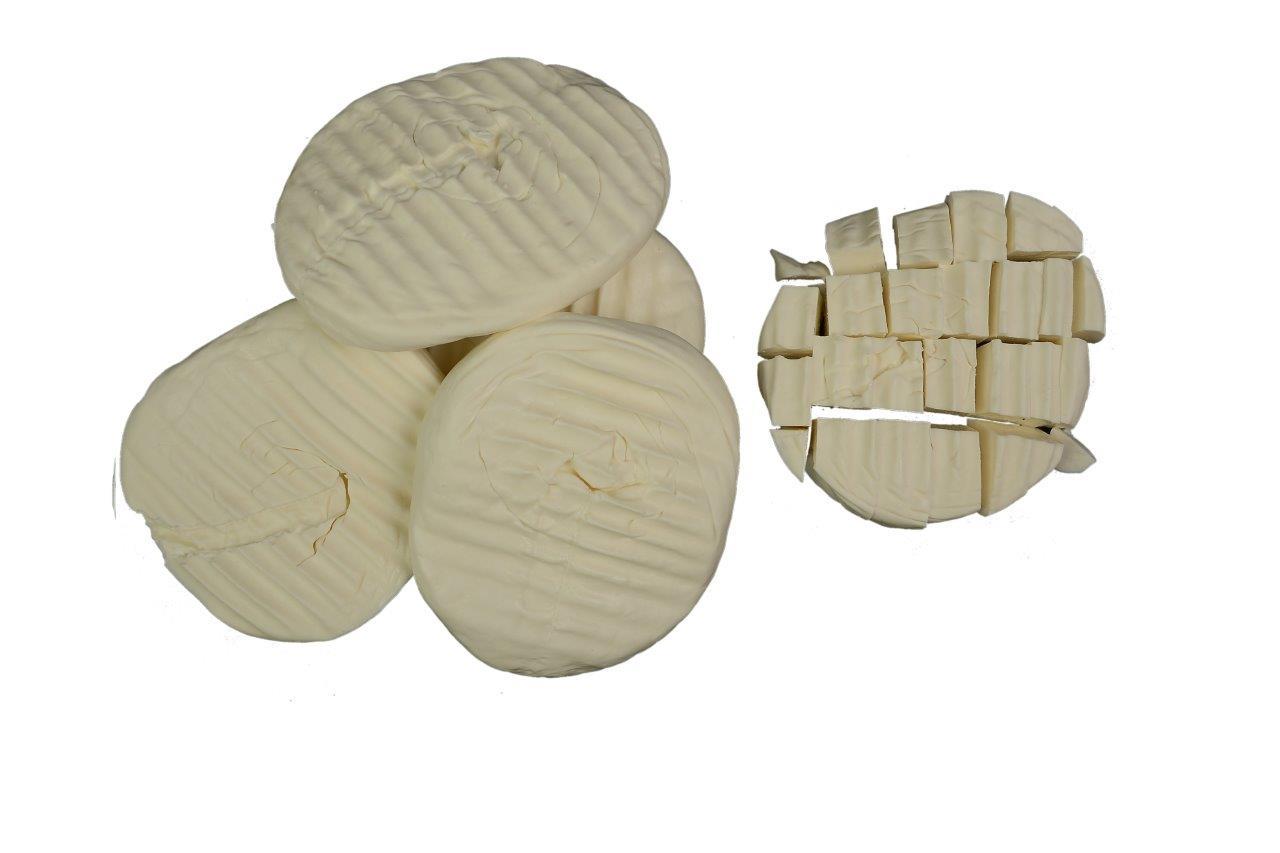
Malatya cheese is a semi-hard cheese with a protected designation of origin, produced in Malatya and partially in Adıyaman provinces. This cheese has a diameter of 10–15 cm and a thickness of 2–3 cm, with a cylindrical shape and a grooved surface resulting from impressions made by reed presses. It exhibits a porcelain-white to slightly yellowish color, produces a characteristic sound when chewed, and can be cooked on a hot pan without melting or crumbling. It is made from raw or pasteurized cow’s or sheep’s milk and consumed either fresh or after 90 days of ripening. Its physical and chemical properties include esters, acids, aldehydes, ketones, alcohols, and terpenic compounds such as limonene.
Malatya cheese is produced in a cylindrical form. Its diameter ranges from 10 to 15 cm and its thickness from 2 to 3 cm. The color varies between porcelain white and light yellowish tones. The grooved surface is formed during production by the use of reed-based pressing tools. The texture is semi-firm and, characteristically, emits an audible crunch when chewed. Additionally, it is notable for its ability to be cooked at high temperatures without melting or breaking apart.
The chemical properties of Malatya cheese differ between fresh and ripened forms. The pH of fresh cheese ranges from 5.8 to 6.1, while that of ripened cheese drops to between 5.2 and 5.7. The total dry matter content is 43–45.7% in fresh cheese and 41–44.1% in ripened cheese. The fat content remains constant at 18.8–20.8% in both forms. The salt content is 4–5.2% in fresh cheese and increases to 6.9–7.5% in the ripened product.
The aromatic profile of the cheese contains various volatile compounds. The most prominent volatile compounds identified in Malatya cheese are:
These compounds contribute to the cheese’s distinctive flavor and aroma profile.
Malatya cheese can be produced using either industrial or traditional methods. In both methods, the milk used is obtained from cows or sheep raised within the designated geographical boundaries, or from a mixture of both types of milk.
In industrial production, milk is pasteurized at a temperature not exceeding 70 °C. The milk is then inoculated with rennet or a microbial culture known locally as “şişe mayası” at approximately 35 °C. For every 100 liters of milk, 15–20 grams of culture are used. After about one hour, the curd is broken and placed into triangular cloth bags called “süzek.” The curd is then pressed between reeds for approximately 10 minutes. This process, known as “cold pressing,” imparts the cheese’s characteristic shape.
After cold pressing, the cheese is boiled for at least 10 minutes in water or whey at 85–90 °C. This step, called “hot pressing,” plasticizes the cheese mass and ensures the desired form is achieved. Following pressing, the cheese is removed from the reeds and immersed in cold water, then left to cool for 5–10 minutes to stabilize its shape. This stage is critical for maintaining form, and the product at this point is known as “fresh Malatya cheese.”
The fresh cheese is then stored in a brine solution containing 12–15% salt for one night before being packaged in food-grade plastic or tin containers for sale. Alternatively, the cheese may be ripened for up to 90 days in brine containing 10–12% salt or under vacuum packaging.
In traditional production, raw milk is used. The process follows similar stages to industrial production. However, cheese made from raw milk must be ripened for at least 90 days in cold storage at 4–7 °C. Traditional cheeses that complete the ripening process may be marketed in various packaging sizes or in brine. Vacuum-packed versions are also available for consumption. It is mandatory for Malatya cheese produced by traditional methods to bear the label “Ripened for 90 days.” Malatya cheese must be consumed within a maximum of six months from production.
The origins of Malatya cheese date back more than 100 years. It holds a significant place in the regional culinary culture. The milk used in production is sourced exclusively from animals raised within the defined geographical boundaries, establishing a direct link between the product and its origin. Therefore, all stages of production must be carried out within this designated geographical area.
The production, processing, and marketing of Malatya cheese are coordinated by the Malatya Chamber of Commerce and Industry. The control authority consists of at least three experts from the Malatya Chamber of Commerce and Industry, the Faculty of Engineering at İnönü University (Department of Food Engineering), and the Malatya Provincial Directorate of Agriculture and Forestry. Inspections are conducted at least once annually and may also be carried out at any time upon complaint or need.
The following elements are verified during inspections:
The control authority may, if necessary, procure services from experts employed by public or private institutions. The registering organization is responsible for initiating legal proceedings to protect the rights arising from the geographical indication.
Turk Patent and Trademark Office. "Malatya Peyniri." Geographical Indications. Accessed July 13, 2025. https://ci.turkpatent.gov.tr/cografi-isaretler/detay/2883.
Turkish Patent and Trademark Office. "Malatya Peyniri." Geographical Indications File (PDF). Accessed July 13, 2025. https://ci.turkpatent.gov.tr/Files/GeographicalSigns/67d3caf0-71c3-4fa5-a746-29d8d3d1883e.pdf.

Registration Number | 1164 | ||||||||
|---|---|---|---|---|---|---|---|---|---|
Registration Date | 06.07.2022 | ||||||||
Application Number | C2020/367 | ||||||||
Application Date | 28.10.2020 | ||||||||
Name of the Geographical Indication | Malatya Cheese | ||||||||
Product / Product Group(s) | Cheese / Cheeses | ||||||||
Type of Geographical Indication | Certification Mark | ||||||||
Applicant/Registrant(s) | Malatya Chamber of Commerce and Industry | ||||||||
Address of the Registrant | Niyazi Mah. Buhara Bulvarı C 195/1 Battalgazi MALATYA | ||||||||
Geographical Boundary | Kahta and Gerger Districts Sincik Çelikhan Adıyaman Province Centers: Central Doğanyol and Hekimhan Districts Doğanşehir Darende Akçadağ Yeşilyurt Malatya Province Centers: Battalgazi | ||||||||
Physical Properties
Chemical Properties
Production Method
Industrial Production
Traditional Production
Geographical Link
Control