This article was automatically translated from the original Turkish version.
+2 More
Registration Number | 1014 | ||||||||
|---|---|---|---|---|---|---|---|---|---|
Registration Date | 26.01.2022 | ||||||||
Application Number | C2018/147 | ||||||||
Application Date | 05.07.2018 | ||||||||
Name of the Geographical Indication | Malatya Foam Pestil | ||||||||
Product / Product Group(s) | Pestil / Chocolate Confectionery and Related Products | ||||||||
Type of Geographical Indication | Certification Mark | ||||||||
Applicant/Registrant(s) | Malatya Chamber of Commerce | ||||||||
Address of the Registrant | İsmetiye Mah. Buhara Cad. Yeni Mektep Sok. No.181/A Battalgazi MALATYA | ||||||||
Geographical Boundary | Malatya Province | ||||||||
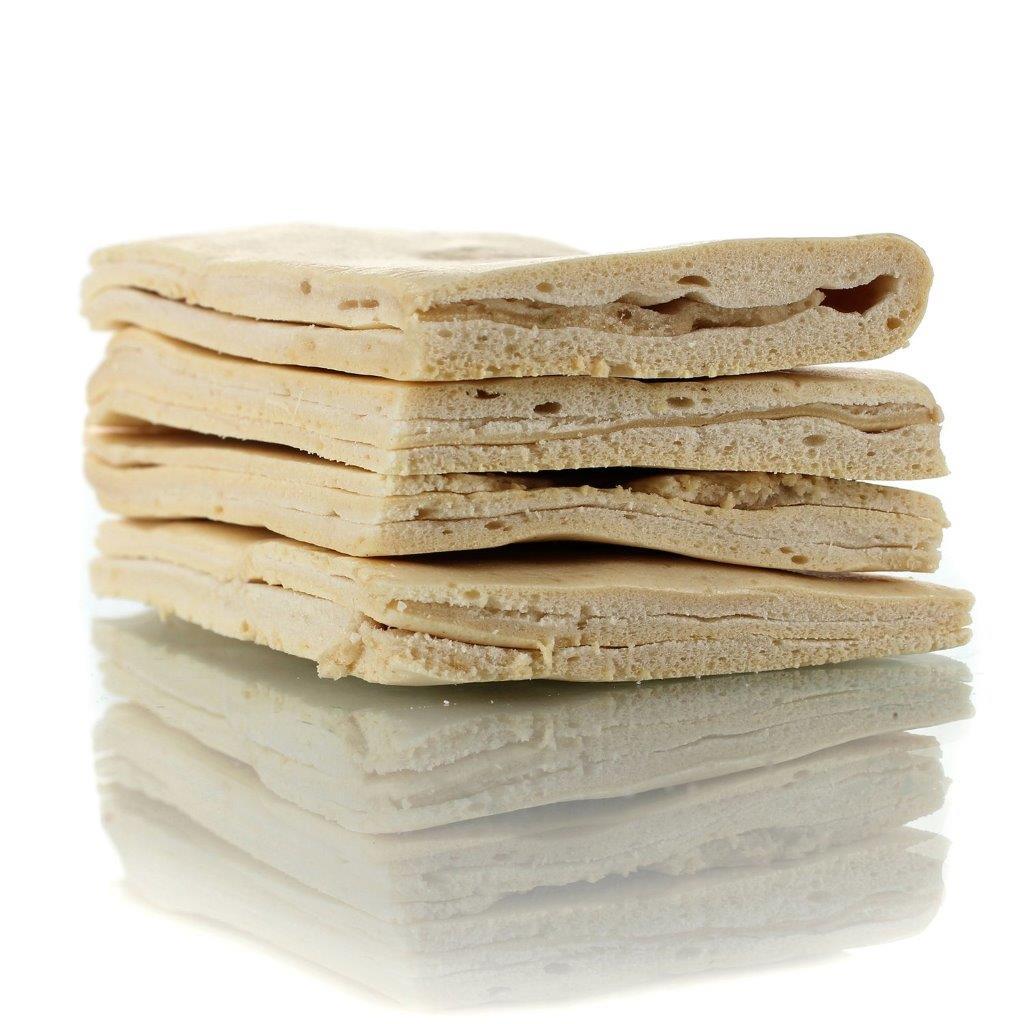
Malatya Köpük Pestili is a unique variety of pestil registered with a geographical indication from Malatya Province. It is produced using grape juice, white sugar, and wheat flour; the preference for wheat flour over starch in its production causes the dough to foam during whipping, resulting in the product’s characteristic crisp and brittle texture. The pestil has a light dark white color and a sweet, slightly sour taste. It is known chemically for its low moisture content (not exceeding 11.3%) and high dry matter content (not less than 88.7%).
Malatya Köpük Pestili is one of the types of pestil known locally as “bastık.” In its production, wheat flour is preferred over starch, which is commonly used in traditional pestil making. This difference enables the proteins in wheat flour to form a stable foam during the whipping process. The defining characteristic of this pestil is its brittle, crisp, and lightly dark white structure, achieved through drying in a foamed state. It exhibits a sweet and slightly sour flavor profile, while its texture remains soft.
The chemical analysis values for Malatya Köpük Pestili are as follows:
These values demonstrate that the product is a light, crisp variety of pestil that can be stored for extended periods due to its low moisture content and high dry matter ratio.
The production of Malatya Köpük Pestili is carried out exclusively using white grapes grown within the geographical boundaries of Malatya Province. Both the raw material and production technique are unique to Malatya. To produce approximately 6 kilograms of the product, the following ingredients are used:
The production process proceeds as follows:
The production of Malatya Köpük Pestili occurs exclusively within the boundaries of Malatya Province. The product’s reputation stems from its place in Malatya’s culinary tradition and the exclusive use of white grapes cultivated within this geographical region. Consequently, a direct link exists between the product and its geographical origin. The entire production process is required to be carried out within this defined geographical boundary.
The production and marketing of Malatya Köpük Pestili are subject to regular monitoring. Oversight authority is coordinated by the Malatya Chamber of Commerce. The monitoring body consists of a four-member team representing the Malatya Chamber of Commerce, the Malatya Provincial Directorate of Agriculture and Forestry, the Food Engineering Department of İnönü University Malatya, and the Malatya Chamber of Agriculture. Inspections are conducted at least once annually, and additional inspections may be carried out as needed or in response to complaints.
During inspections, the following are verified:
The monitoring body may, when necessary, obtain services from expert institutions or individuals in the public or private sector. The registering organization is responsible for initiating legal proceedings to protect rights related to the product.
Turk Patent and Trademark Office. "Malatya Köpük Pestili Coğrafi İşaret Tescil Belgesi." Accessed July 13, 2025. https://ci.turkpatent.gov.tr/Files/GeographicalSigns/ed2413a0-2e06-4eef-b6e9-3bce14f2a8f4.pdf.
Turkish Patent and Trademark Office. "Malatya Köpük Pestili." Accessed July 13, 2025. https://ci.turkpatent.gov.tr/cografi-isaretler/detay/38597.

Registration Number | 1014 | ||||||||
|---|---|---|---|---|---|---|---|---|---|
Registration Date | 26.01.2022 | ||||||||
Application Number | C2018/147 | ||||||||
Application Date | 05.07.2018 | ||||||||
Name of the Geographical Indication | Malatya Foam Pestil | ||||||||
Product / Product Group(s) | Pestil / Chocolate Confectionery and Related Products | ||||||||
Type of Geographical Indication | Certification Mark | ||||||||
Applicant/Registrant(s) | Malatya Chamber of Commerce | ||||||||
Address of the Registrant | İsmetiye Mah. Buhara Cad. Yeni Mektep Sok. No.181/A Battalgazi MALATYA | ||||||||
Geographical Boundary | Malatya Province | ||||||||
No Discussion Added Yet
Start discussion for "Malatya Foam Pestil" article
Distinctive Features
Chemical Composition
Production Method
Geographical Boundary and Local Connection
Monitoring and Control