


This article was automatically translated from the original Turkish version.
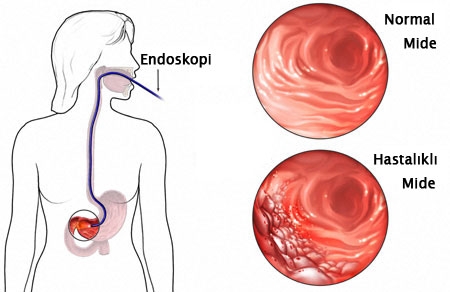
Stomach malign neoplasms are malignant tumors that develop in the gastric tissue and most commonly present as adenocarcinoma. Gastric cancer is one of the most common types of cancer worldwide and has a higher incidence particularly in Asia countries. These tumors may be asymptomatic in early stages but can cause symptoms such as weight loss abdominal pain difficulty swallowing and bleeding in advanced stages. The development of gastric cancer involves risk factors such as Helicobacter pylori infection tobacco use dietary factors and genetic susceptibility important. Treatment requires a multidisciplinary approach involving methods such as surgery chemotherapy and radiotherapy.
Gastric cancer is one of the leading causes of cancer-related deaths globally. Incidence varies significantly by geographic region. It is more common in Asian countries such as Japan China and Korea while showing a declining trend in recent years in West countries. It occurs twice as frequently in men as in women and is typically diagnosed in individuals over the age of 50 age.
The main risk factors contributing to the development of gastric malignant neoplasms are as follows:
The Helicobacter pylori bacterium can trigger cancer development by causing chronic inflammation of the gastric mucosa. This infection is responsible for a significant proportion of gastric cancer cases.
Smoking significantly increases the risk of gastric cancer. Carcinogens in tobacco smoke cause DNA damage to the gastric epithelium.
Excessive consumption of salty smoked or preserved foods increases the risk of gastric cancer. In contrast consumption of fresh fruit and vegetables has a protective effect.
Individuals with a family history of gastric cancer have an elevated risk. In particular mutations in the CDH1 gene are associated with hereditary diffuse gastric cancer.
Obesity and chronic gastroesophageal reflux disease (GERD) increase the risk of adenocarcinoma at the esophagogastric junction.
The majority of gastric malignant neoplasms are of the adenocarcinoma type. These tumors originate from the glandular epithelial cells of the gastric mucosa. Histologically there are two main subtypes:
Intestinal Type: Composed of well-differentiated cells and typically associated with Helicobacter pylori infection.
Diffuse Type: Has a more aggressive course with cells diffusely infiltrating the gastric wall. Hereditary diffuse gastric cancer falls into this group place.
Gastric malignant neoplasms may be asymptomatic or cause only mild symptoms in early stages. In advanced stages the following signs may appear:
Definition is established through endoscopy and biopsy. During endoscopy the gastric mucosa is examined and biopsies are taken from suspicious lesions. Imaging techniques such as CT MRI and PET-CT may also be used to assess tumor spread.
The treatment of gastric malignant neoplasms is planned according to the tumor stage location and the patient’s overall health status. The main treatment approaches are as follows:
In early stage tumors surgical removal of the tumor tissue is the common treatment option. Subtotal or total gastrectomy (removal of part or all of the stomach) may be performed. If Lymph node involvement is present lymph node dissection is carried out.
Chemotherapy may be administered before surgery (neoadjuvant) or after surgery (adjuvant). In advanced cases palliative chemotherapy is used to improve the patient’s quality of life palliative.
Radiotherapy may be used as adjuvant therapy after surgery or for locally advanced tumors. Radiotherapy uses high-energy radiation to none tumor cells.
Targeted drugs such as trastuzumab may be used for HER2-positive tumors. Additionally immunotherapy (PD-1 inhibitors) has become an effective treatment option in recent years.
The prognosis of gastric malignant neoplasms depends on tumor stage histological type and response to treatment. Five-year survival rates range from 60 to 70 percent in early stage tumors but fall below 20 percent in advanced stages. Regular follow-up after treatment is essential for early detection of recurrences.

No Discussion Added Yet
Start discussion for "Malign Neoplasms of the Stomach" article
Epidemiology of Gastric Malignant Neoplasms
Risk Factors
Helicobacter pylori Infection
Tobacco Use
Dietary Factors
Genetic Susceptibility
Obesity and Reflux
Pathological Features
Clinical Findings and Diagnosis
Treatment Methods
Surgical Treatment
Chemotherapy
Radiotherapy
Targeted Therapies
Prognosis and Follow-up