


This article was automatically translated from the original Turkish version.
+2 More
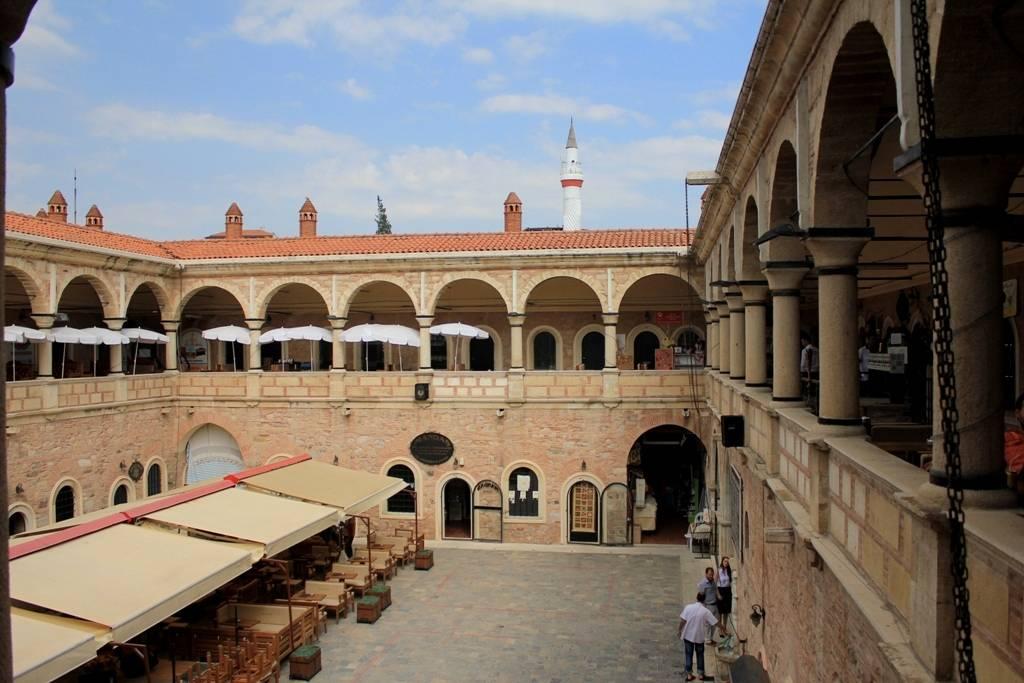
Yeni Han
Name(s) | Yeni Han | ||||||||
|---|---|---|---|---|---|---|---|---|---|
Location | Şehzadeler Türkiye Manisa | ||||||||
Construction Date(s) | Second half of the 19th century | ||||||||
Plan Type | Rectangular plan with courtyard and arcades | ||||||||
Number of Floors | 2 | ||||||||
Material(s) | Stone and brick | ||||||||
Original Function | Commerce, warehouse, accommodation | ||||||||
Current Function | Tourism, handicrafts, cultural activities | ||||||||
Yeni Han is an Ottoman-era commercial caravanserai located in the Şehzadeler district of Manisa, constructed in the second half of the 19th century. The two-story, courtyard-based, arcaded structure reflects the classical caravanserai typology and today continues to serve both tourist and cultural functions by housing craft workshops, cafes, and exhibition spaces.
Manisa Yeni Han (Varol Cangüzel)
Yeni Han is situated within the boundaries of the Şehzadeler district of Manisa province. It is located in the historic center of Manisa, along the traditional trade axis. The structure continues to largely maintain its commercial function and is one of the surviving caravanserais from the Ottoman period. It is embedded within the surrounding bazaar fabric and is one of the city’s most significant cultural heritage elements.
The exact construction date of Yeni Han is unknown, but it is dated to the second half of the 19th century. No foundation inscription has been found. As its name suggests, it was built later than other contemporary caravanserais and thus acquired the designation “new.” In Manisa, a major commercial center during the Ottoman period, such structures were used to accommodate caravans and store goods.
Yeni Han is a rectangular building constructed in two stories. It features an arcaded arrangement surrounding a central courtyard. The ground floor contains spaces used as storage and shops, while the upper floor consists of rooms. These upper rooms were intended for the accommodation of travelers. The arcades rest on stone columns. The building’s architectural design reflects the classical Ottoman caravanserai plan. Walls are constructed using a combination of stone and brick. The main entrance retains much of its original structure.
The ground floor of the building was designated for trade and storage activities, while the upper floor housed accommodation rooms. During its original period of use, the caravanserai served both to lodge travelers and to securely store goods. Over time, its commercial function declined, but certain sections continued to be used by small merchants and artisans. In the 20th century, renovations adapted the structure for use as craft workshops, exhibition areas, and venues for cultural activities.

A Shop in Yeni Han (

A Cafe in Yeni Han (
Yeni Han is listed among the cultural assets registered by the Ministry of Culture and Tourism. The building was restored in the late 20th century. Restoration efforts preserved its original architectural elements while implementing necessary structural reinforcements. Today, the courtyard hosts various cultural and artistic events. The structure is recognized as a functional building that remains active both for visitation and use.

Yeni Han Courtyard (
Yeni Han is one of the most frequently visited sites during tourist excursions in Manisa. Within the building, various craft workshops, souvenir shops, and cafeterias operate. The courtyard and arcades offer visitors an authentic atmosphere of the traditional Ottoman caravanserai. It also hosts a range of cultural events and exhibitions. In this regard, Yeni Han plays a vital role in preserving historical heritage while sustaining its cultural use.
"Yeni Han (Manisa)." Türkiye Turizm Ansiklopedisi. Accessed May 11, 2025. https://turkiyeturizmansiklopedisi.com/yeni-han-manisa.
"Yeni Han." *Türkiye'nin Tarihi Eserleri*. Accessed May 11, 2025. https://www.turkiyenintarihieserleri.com/?oku=1239.
"Yeni Han." Kültür Envanteri. Accessed May 11, 2025. https://kulturenvanteri.com/yer/yeni-han/#17.1/38.613022/27.432755.
"Yeni Han." Kültür Portalı (Gezilecek Yerler). Accessed May 11, 2025. https://www.kulturportali.gov.tr/turkiye/manisa/gezilecekyer/yen-han.
"Yeni Han." Kültür Portalı. Accessed May 11, 2025. https://kulturportali.gov.tr/turkiye/manisa/kulturenvanteri/yen-han.
"Çarşılar, Bedestenler, Hanlar." Manisa İl Kültür ve Turizm Müdürlüğü. Accessed May 11, 2025. https://manisa.ktb.gov.tr/TR-73046/carsilar-bedestenler-hanlar.html.
Cangüzel, Varol. *Afyonkarahisar Kalesi ve Efsanesi*. YouTube video, 6:21. Date Published August 10, 2021. Accessed May 13, 2025. https://www.youtube.com/watch?v=xe5NLHV3CG4

Yeni Han
Name(s) | Yeni Han | ||||||||
|---|---|---|---|---|---|---|---|---|---|
Location | Şehzadeler Türkiye Manisa | ||||||||
Construction Date(s) | Second half of the 19th century | ||||||||
Plan Type | Rectangular plan with courtyard and arcades | ||||||||
Number of Floors | 2 | ||||||||
Material(s) | Stone and brick | ||||||||
Original Function | Commerce, warehouse, accommodation | ||||||||
Current Function | Tourism, handicrafts, cultural activities | ||||||||
Location
History
Architectural Features
Function and Usage
Restoration and Conservation Status
Touristic and Cultural Significance