
(Anadolu Ajansı)
Mark Rutte
Date of Birth | 14 February 1967 | ||||||||
|---|---|---|---|---|---|---|---|---|---|
Place of Birth | The Hague, Netherlands | ||||||||
Nationality | Dutch | ||||||||
Education | Leiden University, Dutch history | ||||||||
Profession | Politician, former human resources manager and teacher | ||||||||
Political Party | People's Party for Freedom and Democracy (VVD) | ||||||||
Leadership of VVD | 2006–2023 | ||||||||
Prime Ministership of the Netherlands | October 2010–July 2024 | ||||||||
Governments Presided Over | Four coalition governments | ||||||||
Secretary General of NATO | From 1 October 2024 | ||||||||
Order in NATO | 14th Secretary General | ||||||||
Main Characteristic | Longest-serving prime minister in Dutch history | ||||||||
Mark Rutte (born 14 February 1967, The Hague) is a Dutch politician, former private sector executive, and teacher. He led the People’s Party for Freedom and Democracy (VVD) from 2006 to 2023. From October 2010 to July 2024, he headed four coalition governments, becoming the longest-serving prime minister in Holland history.【1】 Rutte assumed office as the 14th Secretary General of NATO on 1 October 2024, succeeding Jens Stoltenberg.【2】
Mark Rutte was born on 14 February 1967 in The Hague, Netherlands.【3】 His father, Izaac Rutte, was a representative of a Dutch company operating in the Dutch East Indies. As the youngest of six children, Rutte began playing the piano in childhood.【4】
He once considered pursuing conservatory training and a career in music but later abandoned this path to study history at Leiden University. He completed his master’s degree in Dutch history in 1992.【5】
After completing his university studies, Rutte began working at Unilever in 1992, where he was involved in personnel training and corporate restructuring within the human resources department.【6】
In 1997, he was appointed head of human resources at Van den Bergh Nederland, a subsidiary of the Unilever group. He held this position until 2002, overseeing operations at the company which also included the Calvé brand.【7】 That same year, he became director of human resources at IGLOMora Group BV, another Unilever subsidiary.【8】
Rutte’s private sector career ended in July 2002 when he began serving in government. Over approximately ten years, he worked in human resources management, personnel training and corporate restructuring.
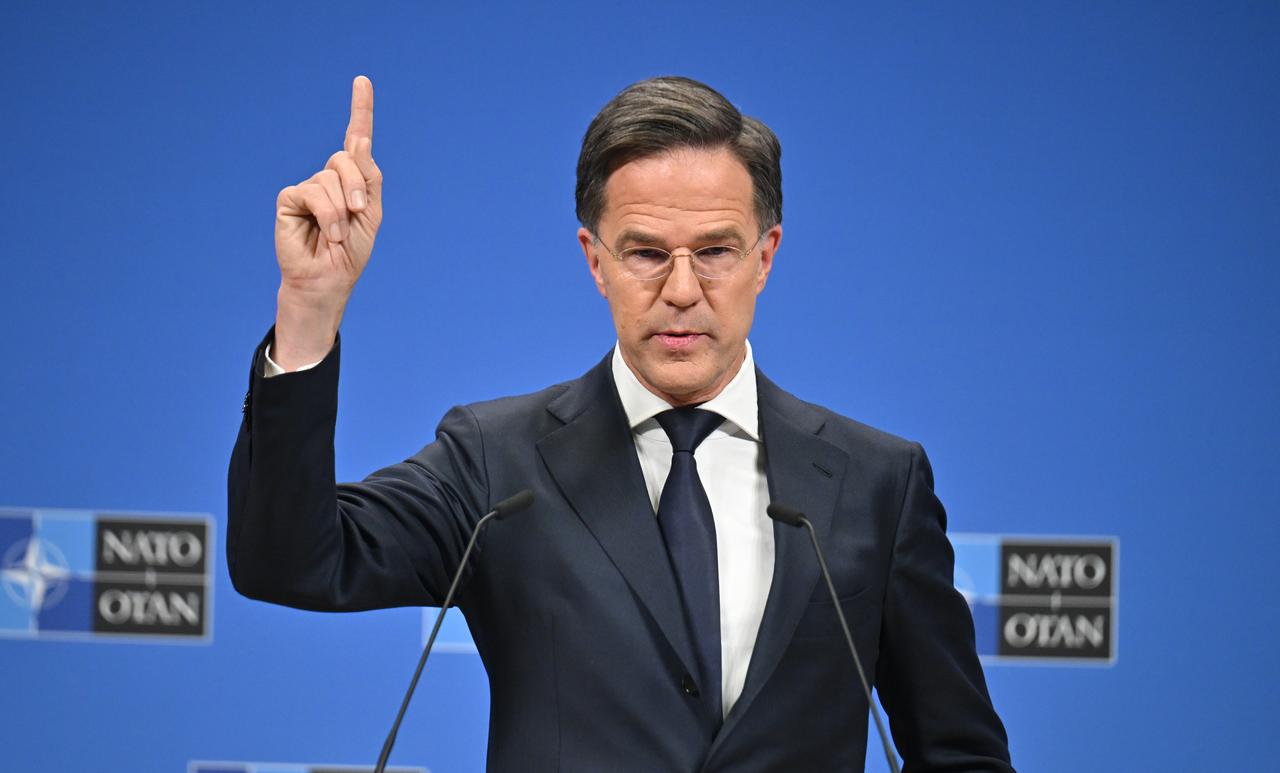
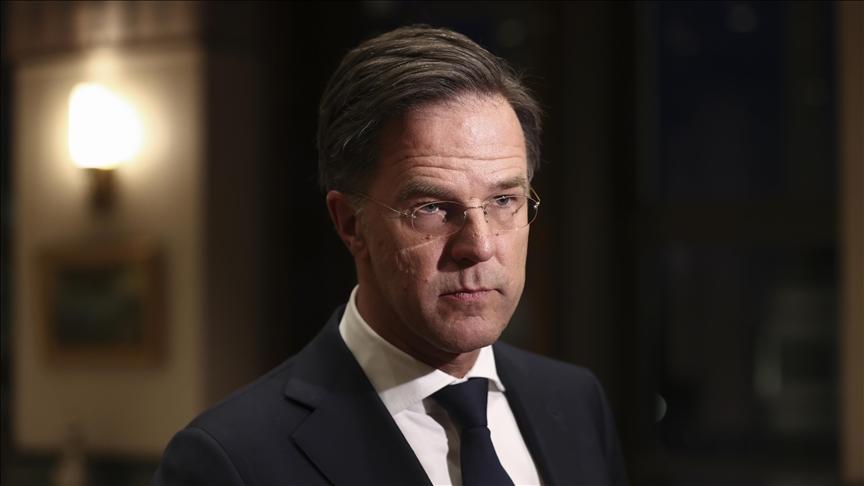
Mark Rutte (Anadolu Ajansı)
Rutte’s political activities predate his entry into the private sector. From 1988 to 1991, he led the youth wing of the VVD.【9】 During this period, he played a role in resolving internal disagreements among different factions and uniting various tendencies under a common leadership structure.【10】
He began his national political career in 2002, when in July he was appointed State Secretary for Social Affairs and Employment in the first cabinet led by Jan Peter Balkenende.【11】 He retained the same position in the second Balkenende cabinet.
Rutte served as a member of the House of Representatives for the VVD between January and May 2003.【12】 In June 2004, he was appointed State Secretary for Education, Culture and Science, a role he held until June 2006, focusing on vocational education and higher education.【13】
In 2006, Rutte ran against Rita Verdonk for the leadership of the VVD. He narrowly won the party leadership election against Verdonk, who advocated stricter policies on migration.【14】 In June 2006, he assumed leadership of the VVD parliamentary group.【15】
Despite losing the leadership election, Verdonk received more personal votes than Rutte in the 2006 general elections, placing second on the VVD list. The VVD lost six seats in the elections, falling to 22 members in the House of Representatives.【16】 The election result triggered ongoing political debates within the party regarding ideological direction and leadership.
Members supporting Verdonk favored a VVD that pursued liberal economic policies and a more clearly conservative stance on social and cultural issues. Rutte, however, embraced a strategy focused on developing policies addressing current economic and social challenges rather than adhering to fixed ideological positions, aiming to broaden the party’s voter base.【17】
During this period, Rutte expressed openness to cooperation with the center-left Labour Party. He also supported the development of a “green right” program within the VVD, incorporating climate change and environmental policies.【18】 As a result, environmental policies, previously only marginally included in the party’s agenda, were formally incorporated into its platform.
As the effects of the 2008 global financial crisis became evident, economic and public finance issues rose to the top of the VVD’s political agenda. In the same year, Rutte submitted a motion of no confidence against the Balkenende government over budgetary policies. Although the motion was not adopted, it garnered support from various segments of the political spectrum.【19】
In the Netherlands, governments are typically formed through coalitions of multiple parties. The House of Representatives has 150 seats, and a governing majority requires the support of at least 76 members.【20】 Since no single party can achieve this majority, post-election coalition negotiations are necessary among parties representing diverse political orientations.
The traditional political structure based on Protestant, Catholic, social democratic and liberal social segments began to dissolve from the late 1960s. Voter loyalty to traditional parties declined while new political parties emerged.【21】 The party fragmentation that became prominent from the 1990s has made election outcomes more volatile and government formation processes longer.【22】
Rutte’s leadership of the VVD and his premiership were shaped by his ability to broker compromises among different parties and unite diverse political tendencies within a single government. Under Rutte’s leadership, VVD policies were adjusted according to the electoral cycle and coalition partners rather than adhering to a fixed position on the left-right spectrum.【23】
This approach enabled the party to reach diverse voter groups but also drew criticism for blurring the VVD’s ideological identity and concentrating decision-making within a narrow circle of advisors.【24】
Following the collapse of the Balkenende government, the 2010 general elections saw the VVD become the largest party in Dutch history for the first time, winning 31 seats compared to the Labour Party’s 30.【25】
The VVD’s election platform called for cutting public spending by 20 billion euros by 2015 and reducing the budget deficit to levels compliant with European Union criteria.【26】 The party’s electoral success was also influenced by the loss of votes by previous governing parties and the search for alternative economic responses to the crisis.
Queen Beatrix entrusted Rutte with the task of forming a government. Since the VVD lacked an outright majority, coalition talks were held with the Christian Democratic Appeal. Geert Wilders’ Freedom Party did not join the government directly but agreed to provide parliamentary support to the resulting minority government.【27】
The government formed by the VVD and the Christian Democratic Appeal took office with external support from the Freedom Party. Rutte became Prime Minister and Minister of General Affairs in October 2010.【28】 Thus, he became the first liberal politician to assume the office of Prime Minister in the Netherlands after a gap of 92 years.【29】
The first Rutte government prioritized mitigating the effects of the global financial crisis on the Dutch economy and reducing the budget deficit. Public spending cuts were implemented, particularly in the field of social policy.【30】 These measures contributed to a decline in purchasing power and a reduction in public support for the government.
The government opposed increased financial aid from the European Union budget to Southern European countries, citing the fact that the Netherlands contributed more to the EU budget than it received in funding.【31】
The Freedom Party could not agree with the government on new budget cuts and withdrew its parliamentary support in April 2012.【32】 After losing its majority, the government resigned and Rutte submitted his resignation to Queen Beatrix. Following the collapse of the first Rutte government, which had served for about a year and a half, early elections were called.【33】
In the early general elections of September 2012, the VVD won 41 seats, achieving its highest number ever in its history.【34】 The party received 26.6 percent of the vote, while the Labour Party came second with 24.9 percent and 38 seats.【35】
In its election campaign, the VVD emphasized reducing bureaucracy, limiting public spending and adopting a measured skepticism toward the European Union. The Freedom Party’s withdrawal of support from the previous government led some right-leaning voters to shift their support to the VVD.【36】
Some voters who supported the VVD believed the party could ensure political stability and that Rutte was well-suited to lead the country. Of VVD voters, 21 percent cited political stability and 25 percent cited positive assessments of Rutte as their main reasons for voting.【37】
A coalition was formed between the VVD and the center-left Labour Party. Despite ideological differences, the two parties agreed on reducing the budget deficit and reorganizing public spending. The second Rutte government took office on 5 November 2012.【38】
The government continued its budget reforms and austerity policies. The ratio of public spending to national income decreased by approximately four percentage points between 2012 and 2017.【39】 Purchasing power fell by 1.1 percent in 2013, while public support for Rutte dropped to 16 percent by September of that year.【40】
The government failed to deliver on some election promises, such as tax cuts and blocking financial transfers from the EU budget to Greece. However, it succeeded in reducing the budget deficit to the EU’s 3 percent target in 2013 and bringing the national debt-to-GDP ratio below 60 percent by 2017.【41】
Malaysia Airlines flight MH17, en route from Amsterdam to Kuala Lumpur, was shot down over eastern Ukraine on 17 July 2014.【42】 All 298 passengers and crew on board were killed, including 196 Dutch citizens.【43】
Rutte met with the families of the victims and oversaw the repatriation of the bodies to the Netherlands. The Netherlands assumed leadership of the Joint Investigation Team, which included representatives from Australia, Malaysia, Belgium and Ukraine.【44】 It was decided that any criminal proceedings resulting from the investigation would be held at the District Court of The Hague.【45】
Public support for Rutte rose to 74 percent during the investigation process.【46】 His direct engagement with victims’ families and leadership of the international investigation contributed to his public perception as a crisis manager.
The MH17 incident marked a decisive turning point in Rutte’s approach to security and foreign policy.【47】 Following the incident, he more clearly advocated the view that no single state could effectively confront interconnected security threats alone and that international cooperation was essential.
The surge in migration across Europe in 2015 also affected the Netherlands. The total number of asylum seekers and those arriving under family reunification reached 56,900, up from 29,300 in 2014.【48】
A significant portion of applications came from Syria. The capacity of the asylum reception system was exceeded, triggering debates over housing centers, public spending and social order.【49】 Public support for Rutte fell below 30 percent during the peak of the migration crisis.【50】
In 2016, the Netherlands held a consultative referendum on the Association Agreement between the European Union and Ukraine. Sixty-one percent of voters opposed the agreement.【51】 Concerns during the referendum process centered on the possibility of financial transfers from the EU budget to Ukraine.
In the run-up to the 2017 general elections, the VVD advocated stricter legislation on migrants and asylum seekers and called for limiting financial aid programs to Southern European countries at the EU level.【52】
Despite losing eight seats compared to 2012, the VVD remained the largest party with 33 seats.【53】 The Labour Party, which had been a coalition partner in the previous term, fell from 38 to 9 seats.【54】
Fifty-seven percent of voters who supported Rutte’s party believed the VVD could ensure stability in national governance.【55】 The election result confirmed the VVD’s position as the largest party despite losing votes.
Government formation negotiations lasted 225 days, the longest such process in Dutch history up to that point.【56】 In October 2017, a four-party coalition was formed between the VVD, the Christian Democratic Appeal, the Christian Union and Democrats 66.【57】
The coalition brought together center-right, Christian democratic, conservative Protestant and progressive liberal political orientations. Cultural and social policy differences among the parties led to various disagreements during the government’s operation.
A diplomatic crisis erupted between the Netherlands and Türkiye in 2017 over the constitutional referendum campaign. Dutch authorities refused to permit Turkish government officials to hold campaign events in the Netherlands.【58】
The landing permission for the aircraft of then-Foreign Minister Mevlüt Çavuşoğlu was revoked. Fatma Betül Sayan Kaya, Minister of Family and Social Policies, who arrived in Rotterdam via land from Germany, was declared persona non grata and expelled from the Netherlands.【59】
During the events, Türkiye’s consul in The Hague, Aslan Alper Yüksel, and several diplomats were briefly detained.【60】 President Recep Tayyip Erdoğan referred to the Dutch government as “fascist” and a “Nazi remnant.” Rutte condemned these remarks as “unreasonable,” “unacceptable” and a distortion of history.【61】
Diplomatic relations between the two countries deteriorated, and mutual ambassadorial representation was restricted. However, economic ties continued, and direct contact between Rutte and Erdoğan was reestablished in subsequent years.【62】
One of the major crises faced by the third Rutte government was the coronavirus pandemic, which began in 2020. The government implemented lockdown measures, curfews, economic aid packages and a vaccination program.【63】
Decisions on lockdowns and curfews sparked protests and violent incidents in some cities.【64】 However, public support for political institutions approached 60 percent during certain periods of 2020.【65】
Rutte held regular press briefings throughout the pandemic to explain government measures to the public. Public support for him reached 75 percent during this period.【66】 Public assessments highlighted his political experience, calm decision-making style and ability to sustain the functioning of the four-party coalition.【67】
During the third government’s term, earthquakes and property damage caused by natural gas extraction in the Groningen region became a political issue. Intensive gas extraction led to tremors and structural damage in the area.【68】 The government’s measures to address the damage were subject to criticism.
Simultaneously, irregularities emerged in the childcare allowance system. Thousands of families were accused by tax authorities of fraudulent or incorrect declarations and forced to repay large sums.【69】
Findings that families of Turkish and Moroccan origin were disproportionately affected by the scheme were widely reported in the media.【70】 Although some state secretaries resigned, debates over governmental responsibility continued.
The third Rutte government collectively resigned in January 2021 following the childcare allowance investigation.【71】 The government continued to serve in a caretaker capacity until the general elections and formation of a new cabinet.
In the general elections of March 2021, the VVD won 34 seats, once again becoming the largest party. Democrats 66 rose to second place with 24 seats.【72】 The Christian Democratic Appeal secured 15 seats and the Christian Union 5.【73】
The number of parliamentary groups increased from 13 to 17. The VVD’s vote share remained at 22.7 percent.【74】 This outcome reflected the continued fragmentation of Dutch politics.
The formation of the new government took 299 days, setting a new record in Dutch political history.【75】 During negotiations, ideological differences between Democrats 66 and the Christian Union, the childcare allowance issue and documents presented by VVD MP Pieter Omtzigt alleging attempts to exclude him from government were debated.【76】
The VVD, Democrats 66, Christian Democratic Appeal and Christian Union formed a new coalition. The fourth Rutte government took office in January 2022.【77】
During the fourth government’s term, energy and consumer prices rose. Annual inflation in the Netherlands increased from 2.1 percent in 2021 to 10 percent in 2022.【78】 Purchasing power declined by 1.2 percent during the same period.【79】
Economic challenges and unresolved political disputes from previous governments reduced public support for the administration. Public approval of Rutte and his government dropped to 18 percent by September 2022.【80】
Public support for Rutte fluctuated in relation to economic conditions. Support levels declined during periods of falling purchasing power but rose during crises such as MH17 and the coronavirus pandemic.【81】
In the final phase of the fourth Rutte government, disagreements over asylum admissions and family reunification policies caused tensions within the coalition. The number of first-time asylum applications in the Netherlands reached approximately 35,000 in 2022, a 44 percent increase from 2021.【82】
The capacity of the asylum registration center in Ter Apel was exceeded, leading to housing shortages and social tensions.【83】 The VVD called for stricter regulations limiting family reunification rights for asylum seekers. Democrats 66 and the Christian Union opposed these measures.
Unable to reach agreement, the coalition government collapsed on 7 July 2023.【84】 Public confidence in the government stood at 21 percent at that time.【85】
Shortly after, Rutte announced he would step down as VVD leader and leave national politics once a new government was formed.【86】 At the time of the announcement, public approval of Rutte as prime minister stood at approximately 30 percent. Seventy-six percent of respondents in a public opinion survey welcomed his decision to leave politics, while 57 percent expressed overall satisfaction with his performance as prime minister.【87】
In the early general elections of November 2023, Geert Wilders’ Freedom Party won 37 seats, becoming the largest party. The VVD was reduced to 24 seats.【88】
During government formation talks, objections to Wilders becoming prime minister and disagreements among potential coalition partners led to the proposal of a non-partisan prime minister. A framework coalition agreement was reached between the Freedom Party, the VVD, New Social Contract and the Farmer-Citizen Movement.【89】
It was decided that Dick Schoof, the Secretary-General of the Ministry of Justice and Security and a non-partisan civil servant, would become prime minister.【90】 The Schoof government took office on 2 July 2024, bringing to an end Rutte’s nearly 14-year tenure as prime minister.【91】
Rutte led four separate coalition governments between October 2010 and July 2024, making him the longest-serving prime minister in Dutch history.【92】
During his premiership, Rutte supported the Netherlands’ membership in the European Union and transatlantic relations. However, he consistently advocated strict fiscal rules on the EU budget, financial aid, joint borrowing and public spending.
During his first and second governments, he adopted a cautious stance toward financial aid programs for Southern European countries. He called for limiting the Netherlands’ contribution to the EU budget and insisted that recipient countries implement budgetary reforms.【93】
Due to his objections in EU budget and financial aid negotiations, he became known in public opinion and the media as “Mr. No.”【94】 At the same time, he participated in negotiations aimed at achieving consensus among member states and worked to ensure the Netherlands’ demands were reflected in common European decisions.
The downing of MH17 influenced Rutte’s approach toward Russia and European security.【95】 Following Russia’s military invasion of Ukraine in 2022, he advocated for political, financial and military support for Ukraine.
He supported Dutch initiatives to provide Ukraine with howitzers and fighter aircraft. He participated in international efforts to facilitate the delivery of F-16 fighter jets to Kyiv.【96】
Rutte argued that European states could not respond to security threats alone and emphasized the need to strengthen cooperation within NATO and the European Union.
Rutte’s interest in the position of NATO Secretary General became public in November 2023.【97】 His candidacy quickly received support from the United States, the United Kingdom, France and Germany.【98】
Appointment as NATO Secretary General required consensus among all member states. In the initial phase of the candidacy process, Türkiye, Hungary, Romania and Slovakia did not publicly support Rutte.【99】
The prospect of another Western European and Dutch official assuming the role sparked debates about representation of Central and Eastern European countries within the alliance’s leadership. Estonian Prime Minister Kaja Kallas was also mentioned as a potential candidate but never formally entered the race. On 2 April 2024, Kallas announced her support for Rutte.【100】
Romanian President Klaus Iohannis declared his candidacy in March 2024, becoming Rutte’s formal rival.【101】
Rutte held direct talks with leaders of countries that had not yet endorsed his candidacy. On 26 April 2024, he visited Türkiye and met with President Recep Tayyip Erdoğan.【102】
During the meeting, they discussed Türkiye’s position in NATO’s southern flank, counter-terrorism and cooperation within the alliance. Rutte described Türkiye as a key actor in its region and in geopolitical terms.【103】
On 29 April 2024, Türkiye informed NATO officials that it would support Rutte’s candidacy.【104】 Türkiye’s endorsement removed one of the main obstacles to Rutte’s candidacy.
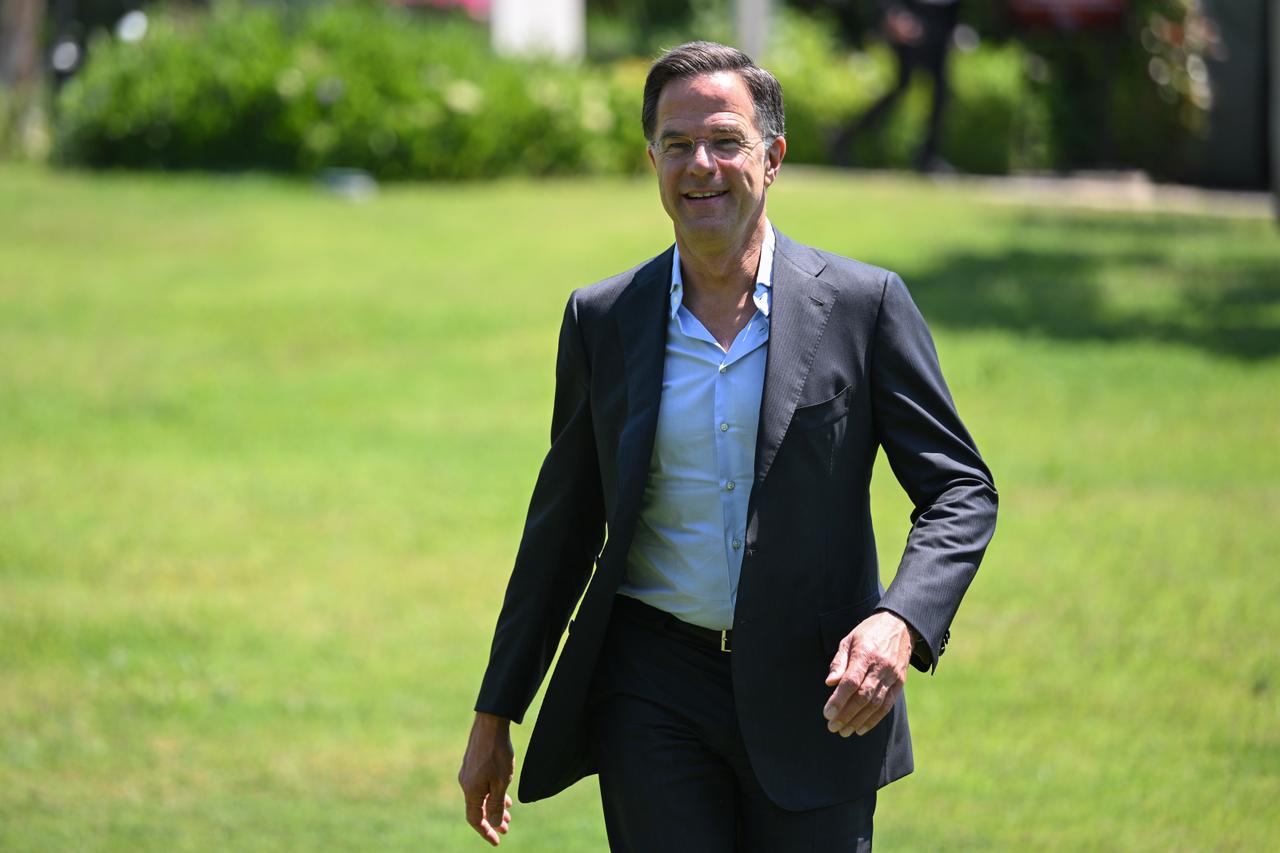
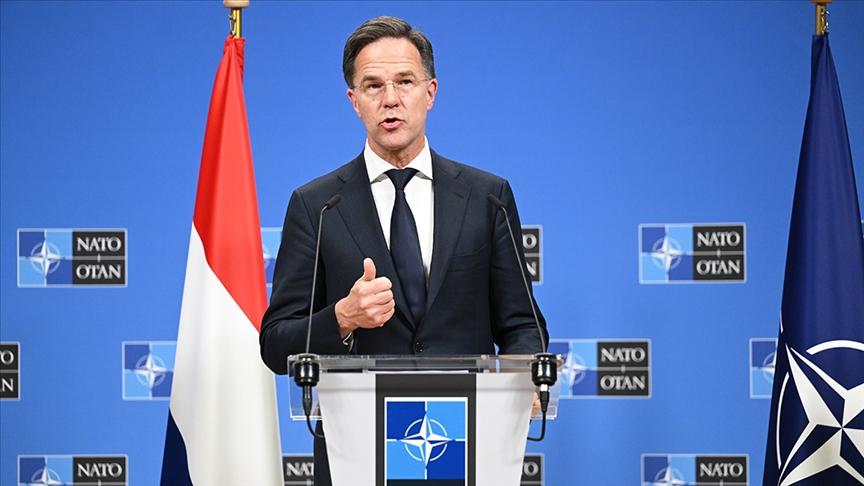
Mark Rutte in Antalya (Anadolu Ajansı)
Hungary’s opposition to Rutte’s candidacy was linked to disagreements within the European Union. Rutte had criticized Hungary’s rule of law issues and its 2021 legislation targeting the LGBTI+ community.【105】
Rutte assured Hungary that, as NATO Secretary General, he would not compel Hungary to participate in NATO operations outside its territory.【106】 Hungary withdrew its objection to Rutte’s candidacy on 18 June 2024.【107】
Klaus Iohannis withdrew his candidacy on 20 June 2024.【108】 With Romania’s endorsement of Rutte, he became the sole candidate to receive the approval of all alliance members.
On 26 June 2024, the permanent representatives of NATO’s 32 member states unanimously approved Rutte’s appointment at a North Atlantic Council meeting in Brussels.【109】
Rutte assumed office on 1 October 2024, succeeding Jens Stoltenberg.【110】 He became the third former prime minister to assume the role after Anders Fogh Rasmussen and Stoltenberg, and the fourth Dutch politician to serve as NATO Secretary General.【111】
Rutte’s term began amid the ongoing Russia-Ukraine war, increased defense spending by European countries, and a heightened focus on defense industry production and transatlantic relations on the alliance’s agenda.
The NATO Secretary General is appointed for a four-year term by consensus among member states following informal diplomatic consultations. The term may be extended with the approval of member states.【112】
The Secretary General presides over the North Atlantic Council, NATO’s principal political decision-making body.【113】 He also chairs meetings of the Nuclear Planning Group, the NATO-Ukraine Council, the NATO-Russia Council, the Euro-Atlantic Partnership Council and the NATO-Georgia Commission.【114】
The Secretary General may propose agenda items for discussion and engage in diplomatic initiatives when disagreements arise among member states. His primary role is to facilitate consensus and the development of common decisions within the alliance.【115】
Final decision-making authority in NATO rests not with the Secretary General but with the governments of member states.【116】 The Secretary General maintains direct contact with heads of state and government, foreign ministers and defense ministers to coordinate decision-making processes.
The Secretary General is also NATO’s principal spokesperson, representing the alliance before international organizations, the media and the public.【117】 As the highest-ranking official of NATO International Staff, he makes personnel appointments and oversees the organization’s operations.【118】
As NATO Secretary General, Rutte has emphasized continuing support for Ukraine, increasing defense spending by allies and accelerating defense industry production.
He has argued that defense capacity cannot be strengthened solely through increased budgets but must also involve expanding production lines, reorganizing supply chains and developing new technologies.【119】 He has stressed the need for defense companies in Europe and North America to collaborate on production and for allies to purchase defense equipment from each other.【120】
Rutte has assessed security threats linked to Russia, China and Iran as key challenges for NATO.【121】 He has stated that defense industry companies bear responsibility for ensuring the security of approximately one billion people in Europe and North America.【122】
On 22 April 2026, as part of his visit to Ankara, Rutte visited ASELSAN’s Gölbaşı Technology Campus.【123】 He was accompanied by Haluk Görgün, President of the Presidency of Defense Industries, and Ahmet Akyol, General Manager of ASELSAN.【124】
Addressing ASELSAN engineers, Rutte stated that accelerating defense production must go hand in hand with technological innovation.【125】 He noted that Türkiye has undergone a transformation in its defense industry and that ASELSAN is at the center of this process.【126】
Rutte was briefed on investments in air defense systems, munitions production, supply chains and the Çelik Kubbe project.【127】 He stated that other NATO countries could benefit from Türkiye’s production capacity and agile management and supply methods.
He advocated that allied countries should jointly produce equipment, develop collaborative innovation projects and purchase defense products from each other.【128】 He also emphasized the need to train young engineers, invest in education and expand professional development opportunities.【129】
He announced that defense industry production would be one of the main agenda items at the NATO Summit scheduled for July 2026 in Ankara.【130】
During his premiership, Rutte led four governments with differing political compositions. His first government was a minority coalition supported by a single party. His second government was formed with the center-left Labour Party. His third and fourth governments included four distinct parties.
Under Rutte’s leadership, VVD policies were reconfigured according to changing electoral conditions. While fiscal discipline and limits on public spending were advocated on economic issues, liberal approaches were adopted on environmental and some social matters.【131】 Migration policy, particularly after 2015, became more restrictive.【132】
Decision-making processes confined to a narrow circle of advisors and the party’s distancing from a clear ideological line have drawn criticism.【133】 Rutte’s occasional claims of insufficient knowledge or failure to recall details on specific political issues have also led to criticism that he shifted responsibility to subordinate officials.【134】
Public support fluctuated in response to economic conditions and crisis management. Support levels declined during economic hardship but rose during crises such as MH17 and the coronavirus pandemic.【135】
Despite numerous political crises and government resignations, Rutte remained in office and became known in the media as “Teflon Mark” or “Teflon Rutte.”【136】 This label reflected the perception that political controversies and scandals had little lasting impact on his personal standing.
Due to his objections to EU budgets and financial aid to Southern European countries, he was labeled “Mr. No.”【137】 In later years, his openness to compromise with diverse political factions led to the use of the term “Mr. Yes.”【138】
His ability to survive political crises led some journalists to compare him to Harry Houdini, the famous escape artist, and dub him “The Houdini of Politics.”【139】
Rutte has never married and lived for many years in the same apartment in The Hague.【140】 During his premiership, he continued to reside in his own home rather than in the official residence. His regular commute to work by bicycle became a well-known public habit.【141】
Rutte owned an old-model Saab automobile and for many years did not use a smartphone.【142】 His regular deletion of text messages from an old Nokia phone and his failure to retain official correspondence drew criticism. Rutte explained that the phone’s memory capacity was insufficient and began using a smartphone in 2022.【143】
In daily life, he preferred to frequent the same cafés and restaurants. He hosted French President Emmanuel Macron at a regularly visited Indonesian restaurant in The Hague and Canadian Prime Minister Justin Trudeau at a French café.【144】
Rutte’s mother, Mieke Rutte-Dilling, died in 2020 at the age of 96 during the coronavirus pandemic.【145】
Rutte continued his piano studies from childhood into adulthood. A public performance he gave on a piano at The Hague Central Station received media attention.【146】
Alongside his political duties, Rutte worked as a teacher. Since 2008, he served as a guest teacher at the Johan de Witt school group in The Hague.【147】 During his premiership, he taught classes once a week, focusing on history and social issues.【148】
Anadolu Ajansı. "Mark Rutte: From Dutch Prime Minister to NATO Chief." Accessed June 24, 2026. https://www.aa.com.tr/en/world/mark-rutte-from-dutch-prime-minister-to-nato-chief/3258683
Anadolu Ajansı. “NATO Genel Sekreteri Rutte: Türkiye Bir Savunma Sanayisi Devrimi Yaşadı.” Anadolu Ajansı. Accessed June 24, 2026. https://www.aa.com.tr/tr/dunya/nato-genel-sekreteri-rutte-turkiye-bir-savunma-sanayisi-devrimi-yasadi/3914351
Anadolu Ajansı. “NATO’nun Yeni Genel Sekreteri Mark Rutte Oldu.” Accessed June 24, 2026. https://www.aa.com.tr/tr/dunya/natonun-yeni-genel-sekreteri-mark-rutte-oldu/3258426
BBC News Türkçe. "Mark Rutte Kimdir?" Accessed June 24, 2026. https://www.bbc.com/turkce/articles/c288e0zmnvno
BBC Sounds. "Mark Rutte." BBC Sounds. Accessed June 24, 2026. https://www.bbc.com/audio/play/m0028995
Deutsche Welle. “NATO’da Yeni Dönem: Mark Rutte Resmen Genel Sekreter.” Deutsche Welle Türkçe. Accessed June 24, 2026. https://www.dw.com/tr/natoda-yeni-d%C3%B6nem-mark-rutte-resmen-genel-sekreter/a-69477823
Deutsche Welle. “NATO’nun Yeni Genel Sekreteri Mark Rutte Kimdir?” Deutsche Welle Türkçe. Accessed June 24, 2026. https://www.dw.com/tr/natonun-yeni-genel-sekreteri-mark-rutte-kimdir/a-69424883
Euronews Türkçe. “Hollanda Başbakanı Mark Rutte Kimdir?” Accessed June 24, 2026. https://tr.euronews.com/2017/03/14/hollanda-basbakani-mark-rutte-kimdir
NATO. "Mark Rutte." NATO. Accessed June 24, 2026. https://www.nato.int/en/about-us/organization/who-we-are/nato-secretaries-general/mark-rutte
NATO. "NATO Secretary General." NATO. Accessed June 24, 2026. https://www.nato.int/en/about-us/organization/nato-structure/nato-secretary-general
Posazhennikova, A. “Mark Rutte’s Role in the Fragmented Political System of the Netherlands.” *Analysis and Forecasting IMEMO Journal* 1 (2025): 46–60. Accessed June 24, 2026. https://open.mgimo.ru/handle/123456789/22644
World Economic Forum. “Mark Rutte.” World Economic Forum. Accessed June 24, 2026. https://www.weforum.org/stories/authors/mark-rutte/
van Gelder, Nika. “The Race for NATO’s Top Job: Mark Rutte.” The Hague Research Institute. Accessed June 24, 2026. https://hagueresearch.org/mark-rutte-nato/
[1]
NATO. “NATO Secretary General.” NATO. Access 24 June 2026. https://www.nato.int/en/about-us/organization/nato-structure/nato-secretary-general
[2]
NATO. “NATO Secretary General.” NATO. Access 24 June 2026. https://www.nato.int/en/about-us/organization/nato-structure/nato-secretary-general
[3]
NATO. “NATO Secretary General.” NATO. Access 24 June 2026. https://www.nato.int/en/about-us/organization/nato-structure/nato-secretary-general
[4]
BBC News Türkçe. “Who is Mark Rutte?” BBC News Türkçe. Access 24 June 2026. https://www.bbc.com/turkce/articles/c288e0zmnvno
[5]
BBC News Türkçe. “Who is Mark Rutte?” BBC News Türkçe. Access 24 June 2026. https://www.bbc.com/turkce/articles/c288e0zmnvno
[6]
World Economic Forum. “Mark Rutte.” World Economic Forum. Access 24 June 2026. https://www.weforum.org/stories/authors/mark-rutte/
[7]
NATO. “NATO Secretary General.” NATO. Access 24 June 2026. https://www.nato.int/en/about-us/organization/nato-structure/nato-secretary-general
[8]
NATO. “NATO Secretary General.” NATO. Access 24 June 2026. https://www.nato.int/en/about-us/organization/nato-structure/nato-secretary-general
[9]
Anastasia A. Posazhennikova, “Mark Rutte’s Role in the Fragmented Political System of the Netherlands,” Analysis and Forecasting. IMEMO Journal, no. 1 (2025): 50.
[10]
Posazhennikova, “Mark Rutte’s Role,” 50.
[11]
NATO. “NATO Secretary General.” NATO. Access 24 June 2026. https://www.nato.int/en/about-us/organization/nato-structure/nato-secretary-general
[12]
NATO. “NATO Secretary General.” NATO. Access 24 June 2026. https://www.nato.int/en/about-us/organization/nato-structure/nato-secretary-general
[13]
NATO. “NATO Secretary General.” NATO. Access 24 June 2026. https://www.nato.int/en/about-us/organization/nato-structure/nato-secretary-general
[14]
BBC News Türkçe. “Who is Mark Rutte?” BBC News Türkçe. Access 24 June 2026. https://www.bbc.com/turkce/articles/c288e0zmnvno
[15]
NATO. “NATO Secretary General.” NATO. Access 24 June 2026. https://www.nato.int/en/about-us/organization/nato-structure/nato-secretary-general
[16]
Posazhennikova, “Mark Rutte’s Role,” 50-51.
[17]
Posazhennikova, “Mark Rutte’s Role,” 51.
[18]
Posazhennikova, “Mark Rutte’s Role,” 51.
[19]
Posazhennikova, “Mark Rutte’s Role,” 51.
[20]
Posazhennikova, “Mark Rutte’s Role,” 52.
[21]
Posazhennikova, “Mark Rutte’s Role,” 48-49.
[22]
Posazhennikova, “Mark Rutte’s Role,” 49-50.
[23]
Posazhennikova, “Mark Rutte’s Role,” 50-53.
[24]
Posazhennikova, “Mark Rutte’s Role,” 52-53.
[25]
Posazhennikova, “Mark Rutte’s Role,” 50, 52.
[26]
Posazhennikova, “Mark Rutte’s Role,” 52.
[27]
Euronews Türkçe. “Who is Dutch Prime Minister Mark Rutte?” Euronews Türkçe. Access 24 June 2026. https://tr.euronews.com/2017/03/14/hollanda-basbakani-mark-rutte-kimdir
[28]
NATO. “NATO Secretary General.” NATO. Access 24 June 2026. https://www.nato.int/en/about-us/organization/nato-structure/nato-secretary-general
[29]
NATO. “NATO Secretary General.” NATO. Access 24 June 2026. https://www.nato.int/en/about-us/organization/nato-structure/nato-secretary-general
[30]
Posazhennikova, “Mark Rutte’s Role,” 52-53.
[31]
Posazhennikova, “Mark Rutte’s Role,” 53.
[32]
Posazhennikova, “Mark Rutte’s Role,” 53.
[33]
Euronews Türkçe. “Who is Dutch Prime Minister Mark Rutte?” Euronews Türkçe. Access 24 June 2026. https://tr.euronews.com/2017/03/14/hollanda-basbakani-mark-rutte-kimdir
[34]
Posazhennikova, “Mark Rutte’s Role,” 50, 53.
[35]
Euronews Türkçe. “Who is Dutch Prime Minister Mark Rutte?” Euronews Türkçe. Access 24 June 2026. https://tr.euronews.com/2017/03/14/hollanda-basbakani-mark-rutte-kimdir
[36]
Posazhennikova, “Mark Rutte’s Role,” 53.
[37]
Posazhennikova, “Mark Rutte’s Role,” 53.
[38]
Euronews Türkçe. “Who is Dutch Prime Minister Mark Rutte?” Euronews Türkçe. Access 24 June 2026. https://tr.euronews.com/2017/03/14/hollanda-basbakani-mark-rutte-kimdir
[39]
Posazhennikova, “Mark Rutte’s Role,” 54.
[40]
Posazhennikova, “Mark Rutte’s Role,” 54.
[41]
Posazhennikova, “Mark Rutte’s Role,” 54.
[42]
Posazhennikova, “Mark Rutte’s Role,” 54.
[43]
Posazhennikova, “Mark Rutte’s Role,” 54.
[44]
Posazhennikova, “Mark Rutte’s Role,” 54.
[45]
Posazhennikova, “Mark Rutte’s Role,” 54.
[46]
Posazhennikova, “Mark Rutte’s Role,” 54.
[47]
NATO. “NATO Secretary General.” NATO. Access 24 June 2026. https://www.nato.int/en/about-us/organization/nato-structure/nato-secretary-general
[48]
Posazhennikova, “Mark Rutte’s Role,” 54.
[49]
Posazhennikova, “Mark Rutte’s Role,” 54.
[50]
Posazhennikova, “Mark Rutte’s Role,” 54.
[51]
Posazhennikova, “Mark Rutte’s Role,” 54-55.
[52]
Posazhennikova, “Mark Rutte’s Role,” 55.
[53]
Posazhennikova, “Mark Rutte’s Role,” 50, 55.
[54]
Posazhennikova, “Mark Rutte’s Role,” 50, 55.
[55]
Posazhennikova, “Mark Rutte’s Role,” 55.
[56]
Posazhennikova, “Mark Rutte’s Role,” 55.
[57]
Posazhennikova, “Mark Rutte’s Role,” 55.
[58]
BBC News Türkçe. “Who is Mark Rutte?” BBC News Türkçe. Access 24 June 2026. https://www.bbc.com/turkce/articles/c288e0zmnvno
[59]
BBC News Türkçe. “Who is Mark Rutte?” BBC News Türkçe. Access 24 June 2026. https://www.bbc.com/turkce/articles/c288e0zmnvno
[60]
BBC News Türkçe. “Who is Mark Rutte?” BBC News Türkçe. Access 24 June 2026. https://www.bbc.com/turkce/articles/c288e0zmnvno
[61]
Deutsche Welle. “Who is NATO’s New Secretary General Mark Rutte?” Deutsche Welle Turkish. Access 24 June 2026. https://www.dw.com/tr/natonun-yeni-genel-sekreteri-mark-rutte-kimdir/a-69424883
[62]
BBC News Türkçe. “Who is Mark Rutte?” BBC News Türkçe. Access 24 June 2026. https://www.bbc.com/turkce/articles/c288e0zmnvno
[63]
Posazhennikova, “Mark Rutte’s Role,” 55-56.
[64]
Posazhennikova, “Mark Rutte’s Role,” 55.
[65]
Posazhennikova, “Mark Rutte’s Role,” 55-56.
[66]
Posazhennikova, “Mark Rutte’s Role,” 56.
[67]
Posazhennikova, “Mark Rutte’s Role,” 56.
[68]
Posazhennikova, “Mark Rutte’s Role,” 56.
[69]
Posazhennikova, “Mark Rutte’s Role,” 56.
[70]
BBC News Türkçe. “Who is Mark Rutte?” BBC News Türkçe. Access 24 June 2026. https://www.bbc.com/turkce/articles/c288e0zmnvno
[71]
BBC News Türkçe. “Who is Mark Rutte?” BBC News Türkçe. Access 24 June 2026. https://www.bbc.com/turkce/articles/c288e0zmnvno
[72]
Posazhennikova, “Mark Rutte’s Role,” 50, 56.
[73]
Posazhennikova, “Mark Rutte’s Role,” 50.
[74]
Posazhennikova, “Mark Rutte’s Role,” 56.
[75]
Posazhennikova, “Mark Rutte’s Role,” 56.
[76]
Posazhennikova, “Mark Rutte’s Role,” 56-57.
[77]
Posazhennikova, “Mark Rutte’s Role,” 56-57.
[78]
Posazhennikova, “Mark Rutte’s Role,” 57.
[79]
Posazhennikova, “Mark Rutte’s Role,” 57.
[80]
Posazhennikova, “Mark Rutte’s Role,” 57.
[81]
Posazhennikova, “Mark Rutte’s Role,” 54-58.
[82]
Posazhennikova, “Mark Rutte’s Role,” 57.
[83]
Posazhennikova, “Mark Rutte’s Role,” 57.
[84]
Posazhennikova, “Mark Rutte’s Role,” 57.
[85]
Posazhennikova, “Mark Rutte’s Role,” 57.
[86]
Anadolu Ajansı. “Mark Rutte Appointed NATO’s New Secretary General.” Anadolu Ajansı. Access 24 June 2026. https://www.aa.com.tr/tr/dunya/natonun-yeni-genel-sekreteri-mark-rutte-oldu/3258426
[87]
Posazhennikova, “Mark Rutte’s Role,” 57.
[88]
Posazhennikova, “Mark Rutte’s Role,” 50, 57-58.
[89]
Posazhennikova, “Mark Rutte’s Role,” 58.
[90]
Posazhennikova, “Mark Rutte’s Role,” 58.
[91]
NATO. “NATO Secretary General.” NATO. Access 24 June 2026. https://www.nato.int/en/about-us/organization/nato-structure/nato-secretary-general
[92]
NATO. “NATO Secretary General.” NATO. Access 24 June 2026. https://www.nato.int/en/about-us/organization/nato-structure/nato-secretary-general
[93]
Posazhennikova, “Mark Rutte’s Role,” 52-55.
[94]
BBC News Türkçe. “Who is Mark Rutte?” BBC News Türkçe. Access 24 June 2026. https://www.bbc.com/turkce/articles/c288e0zmnvno
[95]
NATO. “NATO Secretary General.” NATO. Access 24 June 2026. https://www.nato.int/en/about-us/organization/nato-structure/nato-secretary-general
[96]
Deutsche Welle. “Who is NATO’s New Secretary General Mark Rutte?” Deutsche Welle Turkish. Access 24 June 2026. https://www.dw.com/tr/natonun-yeni-genel-sekreteri-mark-rutte-kimdir/a-69424883
[97]
Deutsche Welle. “Who is NATO’s New Secretary General Mark Rutte?” Deutsche Welle Turkish. Access 24 June 2026. https://www.dw.com/tr/natonun-yeni-genel-sekreteri-mark-rutte-kimdir/a-69424883
[98]
Deutsche Welle. “A New Era at NATO: Mark Rutte Officially Secretary General.” Deutsche Welle Turkish. Access 24 June 2026. https://www.dw.com/tr/natoda-yeni-d%C3%B6nem-mark-rutte-resmen-genel-sekreter/a-69477823
[99]
Nika van Gelder. “The Race for NATO’s Top Job: Mark Rutte.” The Hague Research Institute. Access 24 June 2026. https://hagueresearch.org/mark-rutte-nato/
[100]
Nika van Gelder. “The Race for NATO’s Top Job: Mark Rutte.” The Hague Research Institute. Access 24 June 2026. https://hagueresearch.org/mark-rutte-nato/
[101]
Nika van Gelder. “The Race for NATO’s Top Job: Mark Rutte.” The Hague Research Institute. Access 24 June 2026. https://hagueresearch.org/mark-rutte-nato/
[102]
Nika van Gelder. “The Race for NATO’s Top Job: Mark Rutte.” The Hague Research Institute. Access 24 June 2026. https://hagueresearch.org/mark-rutte-nato/
[103]
Deutsche Welle. “A New Era at NATO: Mark Rutte Officially Secretary General.” Deutsche Welle Turkish. Access 24 June 2026. https://www.dw.com/tr/natoda-yeni-d%C3%B6nem-mark-rutte-resmen-genel-sekreter/a-69477823
[104]
Nika van Gelder. “The Race for NATO’s Top Job: Mark Rutte.” The Hague Research Institute. Access 24 June 2026. https://hagueresearch.org/mark-rutte-nato/
[105]
Nika van Gelder. “The Race for NATO’s Top Job: Mark Rutte.” The Hague Research Institute. Access 24 June 2026. https://hagueresearch.org/mark-rutte-nato/
[106]
Deutsche Welle. “Who is NATO’s New Secretary General Mark Rutte?” Deutsche Welle Turkish. Access 24 June 2026. https://www.dw.com/tr/natonun-yeni-genel-sekreteri-mark-rutte-kimdir/a-69424883
[107]
Anadolu Ajansı. “Mark Rutte Appointed NATO’s New Secretary General.” Anadolu Ajansı. Access 24 June 2026. https://www.aa.com.tr/tr/dunya/natonun-yeni-genel-sekreteri-mark-rutte-oldu/3258426
[108]
Anadolu Ajansı. “Mark Rutte Appointed NATO’s New Secretary General.” Anadolu Ajansı. Access 24 June 2026. https://www.aa.com.tr/tr/dunya/natonun-yeni-genel-sekreteri-mark-rutte-oldu/3258426
[109]
BBC News Türkçe. “Who is Mark Rutte?” BBC News Türkçe. Access 24 June 2026. https://www.bbc.com/turkce/articles/c288e0zmnvno
[110]
NATO. “NATO Secretary General.” NATO. Access 24 June 2026. https://www.nato.int/en/about-us/organization/nato-structure/nato-secretary-general
[111]
BBC News Türkçe. “Who is Mark Rutte?” BBC News Türkçe. Access 24 June 2026. https://www.bbc.com/turkce/articles/c288e0zmnvno
[112]
NATO. “Mark Rutte.” NATO. Access 24 June 2026. https://www.nato.int/en/about-us/organization/who-we-are/nato-secretaries-general/mark-rutte
[113]
NATO. “Mark Rutte.” NATO. Access 24 June 2026. https://www.nato.int/en/about-us/organization/who-we-are/nato-secretaries-general/mark-rutte
[114]
NATO. “Mark Rutte.” NATO. Access 24 June 2026. https://www.nato.int/en/about-us/organization/who-we-are/nato-secretaries-general/mark-rutte
[115]
NATO. “Mark Rutte.” NATO. Access 24 June 2026. https://www.nato.int/en/about-us/organization/who-we-are/nato-secretaries-general/mark-rutte
[116]
NATO. “Mark Rutte.” NATO. Access 24 June 2026. https://www.nato.int/en/about-us/organization/who-we-are/nato-secretaries-general/mark-rutte
[117]
NATO. “Mark Rutte.” NATO. Access 24 June 2026. https://www.nato.int/en/about-us/organization/who-we-are/nato-secretaries-general/mark-rutte
[118]
NATO. “Mark Rutte.” NATO. Access 24 June 2026. https://www.nato.int/en/about-us/organization/who-we-are/nato-secretaries-general/mark-rutte
[119]
Anadolu Ajansı. “NATO Secretary General Rutte: Türkiye Has Experienced a Defense Industry Revolution.” Anadolu Ajansı. Access 24 June 2026. https://www.aa.com.tr/tr/dunya/nato-genel-sekreteri-rutte-turkiye-bir-savunma-sanayisi-devrimi-yasadi/3914351
[120]
Anadolu Ajansı. “NATO Secretary General Rutte: Türkiye Has Experienced a Defense Industry Revolution.” Anadolu Ajansı. Access 24 June 2026. https://www.aa.com.tr/tr/dunya/nato-genel-sekreteri-rutte-turkiye-bir-savunma-sanayisi-devrimi-yasadi/3914351
[121]
Anadolu Ajansı. “NATO Secretary General Rutte: Türkiye Has Experienced a Defense Industry Revolution.” Anadolu Ajansı. Access 24 June 2026. https://www.aa.com.tr/tr/dunya/nato-genel-sekreteri-rutte-turkiye-bir-savunma-sanayisi-devrimi-yasadi/3914351
[122]
Anadolu Ajansı. “NATO Secretary General Rutte: Türkiye Has Experienced a Defense Industry Revolution.” Anadolu Ajansı. Access 24 June 2026. https://www.aa.com.tr/tr/dunya/nato-genel-sekreteri-rutte-turkiye-bir-savunma-sanayisi-devrimi-yasadi/3914351
[123]
Anadolu Ajansı. “NATO Secretary General Rutte: Türkiye Has Experienced a Defense Industry Revolution.” Anadolu Ajansı. Access 24 June 2026. https://www.aa.com.tr/tr/dunya/nato-genel-sekreteri-rutte-turkiye-bir-savunma-sanayisi-devrimi-yasadi/3914351
[124]
Anadolu Ajansı. “NATO Secretary General Rutte: Türkiye Has Experienced a Defense Industry Revolution.” Anadolu Ajansı. Access 24 June 2026. https://www.aa.com.tr/tr/dunya/nato-genel-sekreteri-rutte-turkiye-bir-savunma-sanayisi-devrimi-yasadi/3914351
[125]
Anadolu Ajansı. “NATO Secretary General Rutte: Türkiye Has Experienced a Defense Industry Revolution.” Anadolu Ajansı. Access 24 June 2026. https://www.aa.com.tr/tr/dunya/nato-genel-sekreteri-rutte-turkiye-bir-savunma-sanayisi-devrimi-yasadi/3914351
[126]
Anadolu Ajansı. “NATO Secretary General Rutte: Türkiye Has Experienced a Defense Industry Revolution.” Anadolu Ajansı. Access 24 June 2026. https://www.aa.com.tr/tr/dunya/nato-genel-sekreteri-rutte-turkiye-bir-savunma-sanayisi-devrimi-yasadi/3914351
[127]
Anadolu Ajansı. “NATO Secretary General Rutte: Türkiye Has Experienced a Defense Industry Revolution.” Anadolu Ajansı. Access 24 June 2026. https://www.aa.com.tr/tr/dunya/nato-genel-sekreteri-rutte-turkiye-bir-savunma-sanayisi-devrimi-yasadi/3914351
[128]
Anadolu Ajansı. “NATO Secretary General Rutte: Türkiye Has Experienced a Defense Industry Revolution.” Anadolu Ajansı. Access 24 June 2026. https://www.aa.com.tr/tr/dunya/nato-genel-sekreteri-rutte-turkiye-bir-savunma-sanayisi-devrimi-yasadi/3914351
[129]
Anadolu Ajansı. “NATO Secretary General Rutte: Türkiye Has Experienced a Defense Industry Revolution.” Anadolu Ajansı. Access 24 June 2026. https://www.aa.com.tr/tr/dunya/nato-genel-sekreteri-rutte-turkiye-bir-savunma-sanayisi-devrimi-yasadi/3914351
[130]
Anadolu Ajansı. “NATO Secretary General Rutte: Türkiye Has Experienced a Defense Industry Revolution.” Anadolu Ajansı. Access 24 June 2026. https://www.aa.com.tr/tr/dunya/nato-genel-sekreteri-rutte-turkiye-bir-savunma-sanayisi-devrimi-yasadi/3914351
[131]
Posazhennikova, “Mark Rutte’s Role,” 50-55.
[132]
Posazhennikova, “Mark Rutte’s Role,” 54-57.
[133]
Posazhennikova, “Mark Rutte’s Role,” 52-53.
[134]
Posazhennikova, “Mark Rutte’s Role,” 55-57.
[135]
Posazhennikova, “Mark Rutte’s Role,” 54-58.
[136]
BBC News Türkçe. “Who is Mark Rutte?” BBC News Türkçe. Access 24 June 2026. https://www.bbc.com/turkce/articles/c288e0zmnvno
[137]
BBC News Türkçe. “Who is Mark Rutte?” BBC News Türkçe. Access 24 June 2026. https://www.bbc.com/turkce/articles/c288e0zmnvno
[138]
BBC News Türkçe. “Who is Mark Rutte?” BBC News Türkçe. Access 24 June 2026. https://www.bbc.com/turkce/articles/c288e0zmnvno
[139]
Deutsche Welle. “Who is NATO’s New Secretary General Mark Rutte?” Deutsche Welle Turkish. Access 24 June 2026. https://www.dw.com/tr/natonun-yeni-genel-sekreteri-mark-rutte-kimdir/a-69424883
[140]
BBC News Türkçe. “Who is Mark Rutte?” BBC News Türkçe. Access 24 June 2026. https://www.bbc.com/turkce/articles/c288e0zmnvno
[141]
BBC News Türkçe. “Who is Mark Rutte?” BBC News Türkçe. Access 24 June 2026. https://www.bbc.com/turkce/articles/c288e0zmnvno
[142]
BBC News Türkçe. “Who is Mark Rutte?” BBC News Türkçe. Access 24 June 2026. https://www.bbc.com/turkce/articles/c288e0zmnvno
[143]
BBC News Türkçe. “Who is Mark Rutte?” BBC News Türkçe. Access 24 June 2026. https://www.bbc.com/turkce/articles/c288e0zmnvno
[144]
BBC News Türkçe. “Who is Mark Rutte?” BBC News Türkçe. Access 24 June 2026. https://www.bbc.com/turkce/articles/c288e0zmnvno
[145]
BBC News Türkçe. “Who is Mark Rutte?” BBC News Türkçe. Access 24 June 2026. https://www.bbc.com/turkce/articles/c288e0zmnvno
[146]
Deutsche Welle. “Who is NATO’s New Secretary General Mark Rutte?” Deutsche Welle Turkish. Access 24 June 2026. https://www.dw.com/tr/natonun-yeni-genel-sekreteri-mark-rutte-kimdir/a-69424883
[147]
NATO. “NATO Secretary General.” NATO. Access 24 June 2026. https://www.nato.int/en/about-us/organization/nato-structure/nato-secretary-general
[148]
Euronews Türkçe. “Who is Dutch Prime Minister Mark Rutte?” Euronews Türkçe. Access 24 June 2026. https://tr.euronews.com/2017/03/14/hollanda-basbakani-mark-rutte-kimdir

(Anadolu Ajansı)
Mark Rutte
Date of Birth | 14 February 1967 | ||||||||
|---|---|---|---|---|---|---|---|---|---|
Place of Birth | The Hague, Netherlands | ||||||||
Nationality | Dutch | ||||||||
Education | Leiden University, Dutch history | ||||||||
Profession | Politician, former human resources manager and teacher | ||||||||
Political Party | People's Party for Freedom and Democracy (VVD) | ||||||||
Leadership of VVD | 2006–2023 | ||||||||
Prime Ministership of the Netherlands | October 2010–July 2024 | ||||||||
Governments Presided Over | Four coalition governments | ||||||||
Secretary General of NATO | From 1 October 2024 | ||||||||
Order in NATO | 14th Secretary General | ||||||||
Main Characteristic | Longest-serving prime minister in Dutch history | ||||||||
Family, Childhood and Education
Private Sector Career
Beginning of Political Activity
Leadership of the VVD
The VVD’s Position within the Dutch Party System
2010 General Elections and Rise to Prime Ministership
First Rutte Government
2012 General Elections and Second Rutte Government
Downing of MH17
Migration Crisis and Ukrainian Referendum
2017 General Elections and Third Rutte Government
Diplomatic Crisis between the Netherlands and Türkiye
Coronavirus Pandemic
Groningen Natural Gas and Childcare Allowance Issues
2021 Elections and Fourth Rutte Government
Economic Problems and Loss of Confidence
Disagreement on Asylum Policy and Government Collapse
End of Prime Ministership
European Union Policy
Policy toward Russia and Ukraine
Nomination for NATO Secretary General
Securing Türkiye’s Support
Attitudes of Hungary and Romania
Appointment as NATO Secretary General
Role and Powers of the NATO Secretary General
Priorities as NATO Secretary General
Türkiye and the Defense Industry
Political Approach and Management Style
Public Nicknames
Private Life
Music and Teaching Activities
Career Timeline