

This article was automatically translated from the original Turkish version.
+1 More
To the Martyrs of Çanakkale, composed by Mehmet Akif Ersoy, is a poetic work that addresses the Battle of Çanakkale and is regarded as one of the most prominent examples of epic poetry in Turkish literature. The work presents a text that integrates the military, historical, and spiritual dimensions of the battle.
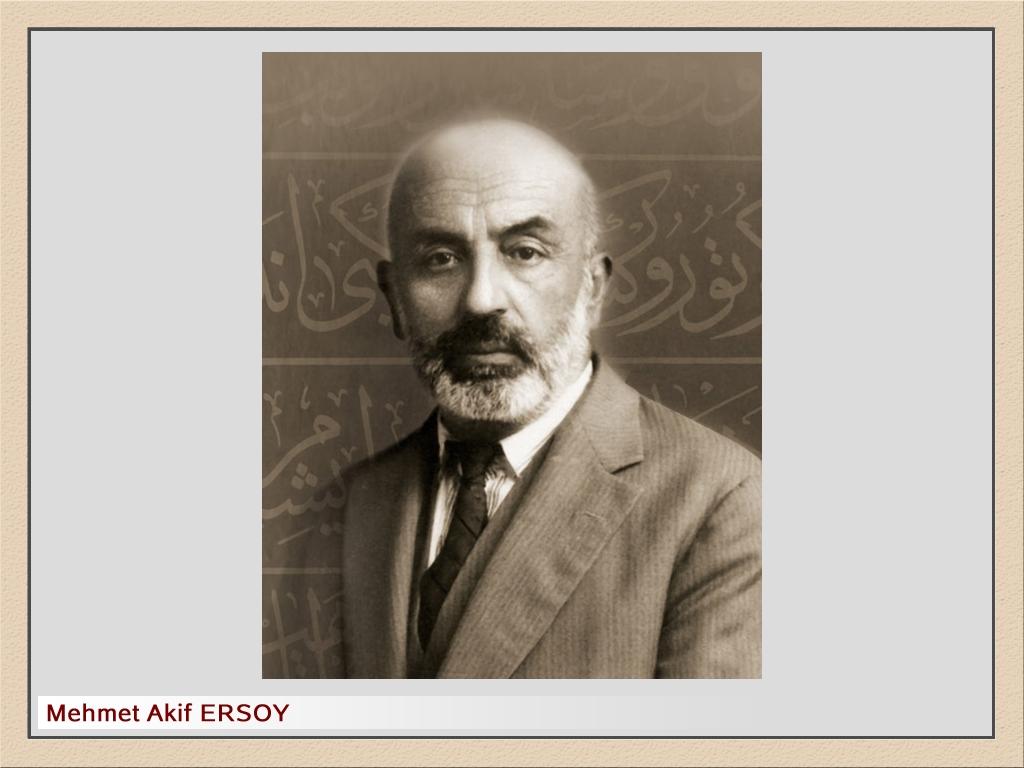
Mehmet Akif Ersoy (Safahat)
The poem does not exist as an independent work but appears at the end of the sixth book of the author’s collected works, Safahat, specifically within the section titled Asım. First published on 10 July 1924 in the journal Sebîlü’r-Reşâd, the poem is an eighty-four-line composition commemorating the victory of Çanakkale, the legacy of thousands of martyrs.【1】 Although active during the National Literature period, Mehmet Akif pursued an independent path; in this work, he blended Islamic and nationalist sensitivities with an epic style.
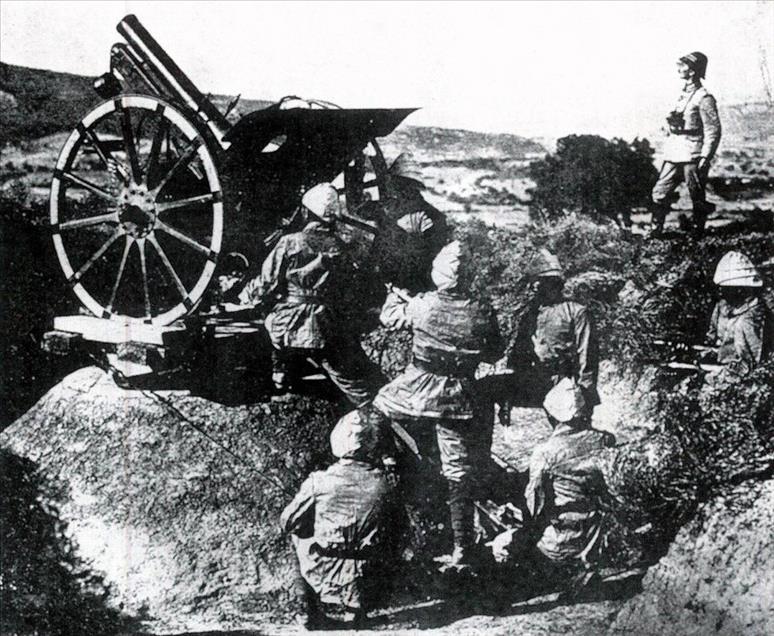
The poem must be understood within the historical context of the Battle of Çanakkale during World War I. The Ottoman State fought alongside Germany and Austria-Hungary against the Allied Powers led by Britain, France, and Russia on multiple fronts. Among these fronts, Çanakkale held a decisive strategic and political position. The Allied objective was to cross the Gallipoli Peninsula, reach the Sea of Marmara, occupy Istanbul, and thereby remove the Ottoman State from the war.
Çanakkale Savaşı (AA)
Realizing that naval forces alone could not achieve success, the Allied Powers assembled a large military force to support their campaign with land battles. Though ostensibly composed of British and French units, this army constituted a multi-national structure comprising troops from diverse geographical regions, ethnic backgrounds, and religions. Foreign legionaries, African Zouaves, Indian Gurkhas and Sikhs, labor battalions formed from Rum and Eastern Jews, Scottish, English, and Irish units, and ANZAC forces dispatched from Australia and New Zealand formed the core of this military aggregation. Additionally, units from Canada, the Middle East, and North Africa also contributed to the composition of the army.【2】
This tableau demonstrates that the battle was not merely a regional conflict but a globally organized military operation. Indeed, the expressions “Old World, New World” in the poem emphasize this multi-national military force; this panorama of troops drawn from different continents is described as a “Day of Judgment”, placing the scale and scope of the battle within a broad historical and symbolic framework.
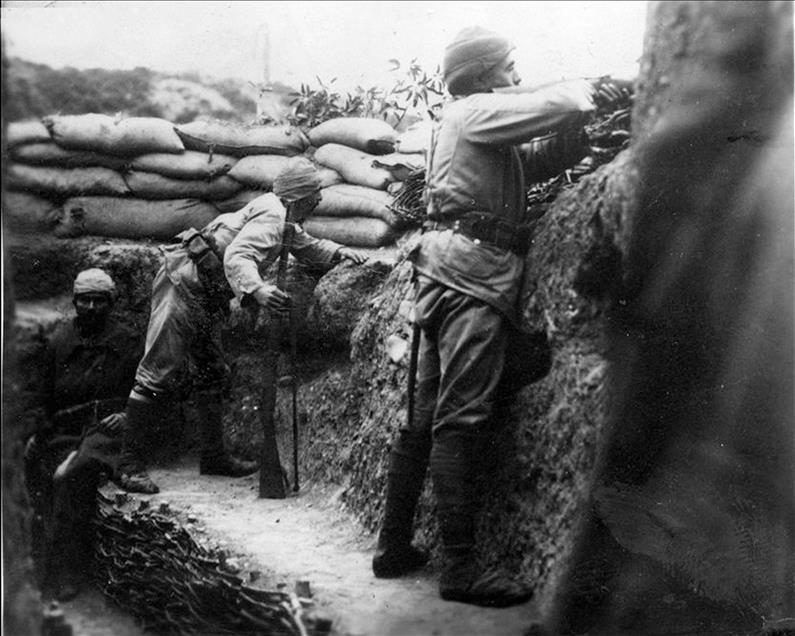
The text provides detailed descriptions of the destructive impact of modern warfare technology. Destruction wrought by fleets, artillery, mines, bombs, and aircraft is portrayed not merely as a military condition but also as a critical evaluation of modern civilization’s values.
Çanakkale Savaşı (AA)
The poet also highlights the contradiction between European-centered civilization discourse and its wartime practices. In this context, Akif employs the term “shamelessness”. The Allied Powers’ bombing of field hospitals, targeting unprotected wounded soldiers, and use of chemical weapons—prohibited by international agreements—resulted in mass atrocities and severe violations of human rights.【3】
One of the behaviors described as “savagery” in the poem includes the bombing of field hospitals containing not only Turkish wounded but also enemy wounded. In such cases, soldiers captured and treated by Turkish medical personnel were also killed.【4】 Despite Europe’s claim to teach the world lessons in civilization and humanity, its perpetration of such brutality was severely criticized by the poet. Mehmet Akif responded to this situation with the words:
“Spit on the shameless face of the People of the Cross! Spit…”【5】
Mehmet Âkif Ersoy was assigned by the Special Organization first to Berlin, Germany, and then to Arabia. During his stay in Berlin, he frequently met with Major Ömer Lütfi Bey, to whom he dedicated the poem, and discussed the military and technical progress of the war.【6】 Major Ömer Lütfi Bey recounts in his memoirs:
“Whenever he met Akif during the early days of the Çanakkale battles, he would be filled with great excitement, anxiety, hope, and fear, asking: ‘Ömer Bey, what will become of Çanakkale?’ I would reply: ‘Allah knows, but the situation is dangerous. From a military standpoint, there is no hope. Yet something extraordinary beyond natural laws must occur for us to endure.’ As I said this, he would begin to weep, saying: ‘Alas, what if our last stronghold falls?’ He never stopped crying for Çanakkale. He could not bear such things.”【7】
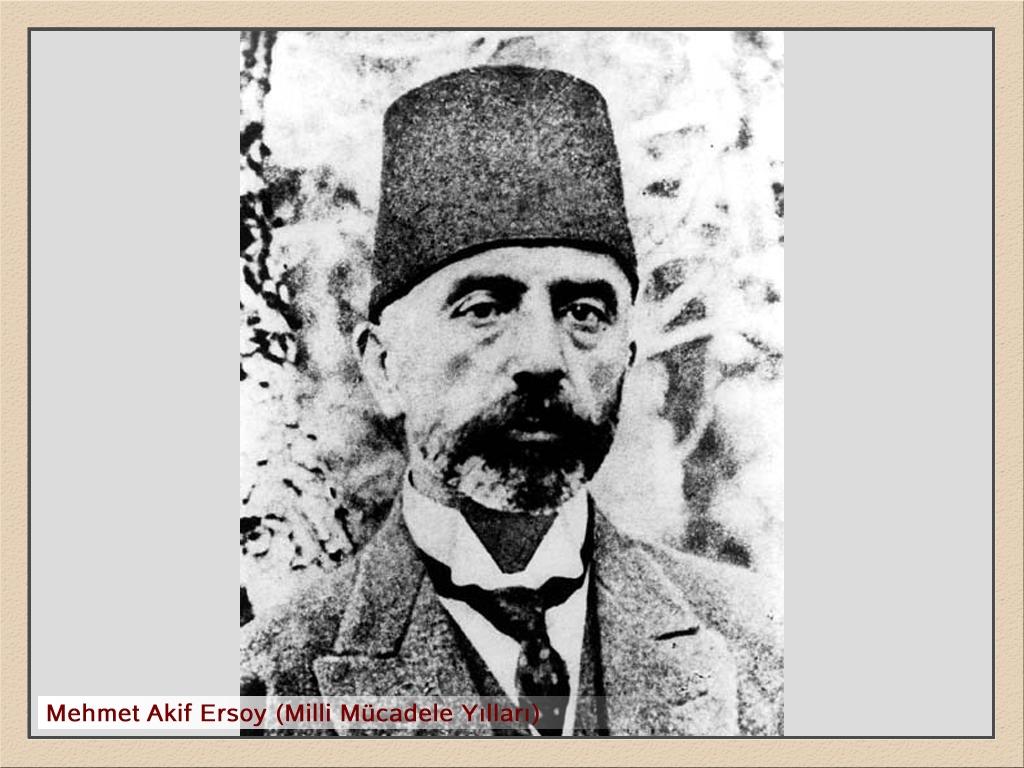
Savaş Yıllarında Mehmet Akif (Safahat)
Although Mehmet Âkif was far from his homeland, he closely followed the developments and recorded his initial impressions in the Asım section of Safahat while the war continued. In the poem, he encouraged the Turkish soldiers fighting at Çanakkale with moral and resilience, expressing his unshakable belief that the struggle would end in victory despite uncertainty and pessimism:
I said: The line of Asım... and now it has become reality:
It has not dishonored its name, nor will it ever.
Asım’s introductory section also emphasizes that the nation’s future is tied to “the line of Asım”, noting that the greatest sacrifice of the generation fighting in the freezing cold of the Caucasus and the scorching heat of Sinai was made at Çanakkale.【8】
The section “To the Martyrs of Çanakkale” is situated within the framework of a youth ideal as part of the whole of Asım. The poem does not merely glorify a specific military victory; it is structured to transform a historical event into an enduring, universal ideal connected to the generation represented by Asım. This choice allows the poem to be regarded both as a period epic and as a model of moral and sacrificial conduct for future generations.
After completing the poem, news of the definitive victory was conveyed by Deputy Commander-in-Chief Enver Pasha and reached Mehmet Âkif through Kuşçubaşı Eşref Bey at the El Muazzam station in Arabia. Upon receiving the news of victory, the poet wept uncontrollably with sobs throughout the night in the desert.【9】 Kuşçubaşı Eşref Bey describes the scene as follows:
“The moon was full. Under the legendary radiance of the moon, illuminating the star-studded desert sky in honor of our victory, Mehmet Âkif spent the entire night awake. He withdrew into the palm grove behind the station building. We heard only sobs—deep, heartfelt sobs…”【10】
At dawn, filled with spiritual peace from having fulfilled his duty, Mehmet Âkif said to Kuşçubaşı Eşref Bey:
“Now I can die, Eşref; I will not depart with closed eyes.”【11】
This episode reveals that although Mehmet Âkif was not physically present on the front, he participated profoundly in the war on intellectual and spiritual levels. The Çanakkale victory marked the first step toward freedom for the Ottoman State; influenced by this experience, Mehmet Âkif contributed significantly to the National Struggle through literary and moral efforts, ultimately composing the Independence March.
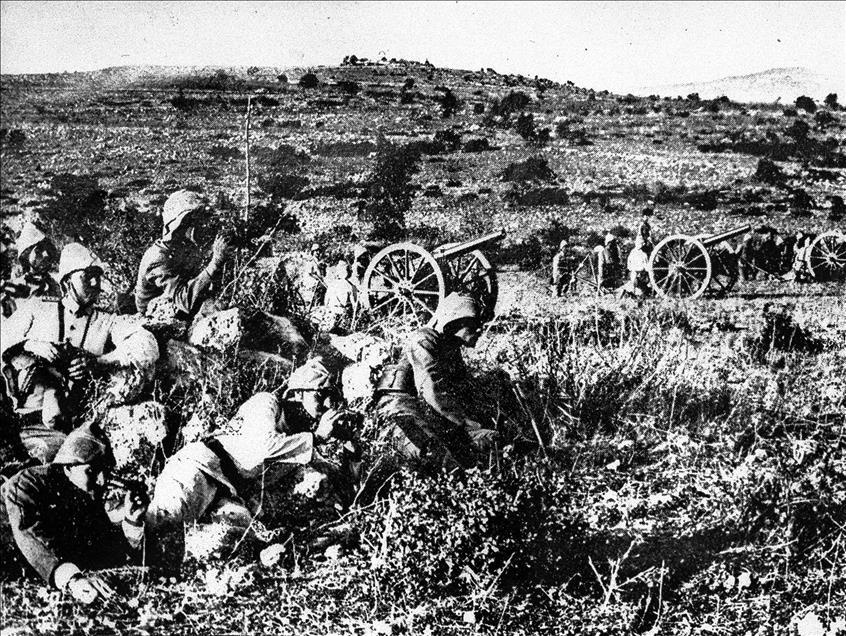
Çanakkale Savaşı (AA)
Although Mehmet Âkif Ersoy composed the poem in 1915, he did not publish it independently during the war years. It is known that the Ottoman Ministry of War paid high fees to poets who wrote patriotic verses.【12】 However, Akif refused to participate in such official incentives and did not present the poem to the public with any expectation of material reward.
His stance is directly linked to his artistic and moral principles. A similar attitude was clearly evident later during the competition for the Independence March, when he rejected any notion of a prize.
The poet composed “To the Martyrs of Çanakkale” entirely out of national and spiritual responsibility; he permitted no instrumentalization of the work for material gain. For this reason, the poem was not published immediately after the war but only on 10 July 1340 (1924), in issue 608 of the journal Sebîlü’r-Reşâd under the title “A Fragment from Asım”. The journal’s note stated that the poem was written in the final years of World War I and announced its forthcoming publication within the sixth book of Safahat, Asım. Indeed, the first edition of the book containing the poem was published in August 1924.【13】
This delayed publication reflects the spiritual value Akif ascribed to the poem and confirms that its purpose was entirely rooted in a national moral obligation. “To the Martyrs of Çanakkale” thus became not merely a war poem but also a concrete expression of an artistic and moral stance that consciously rejected material gain.
What is this Battle of the Strait? Is there its equal in the world?
The most formidable armies converge, four or five strong,
To find a path from above to reach the Sea of Marmara—
How many fleets surround this tiny land.
What shameless arrogance, when horizons are shut!
Where—by its savagery—does it declare: “This is a European!”
A den of ravenous, emotionless hyenas,
If they have come, they have opened their cages or enclosures!
Old World, New World, all nations of humanity,
Boil like sand, like a storm, like a Day of Judgment.
The seven climates of the earth stand before it,
Alongside Australia, you see: Canada!
Faces differ, languages, skins multicolored;
One simple fact prevails: Equal savagery.
Some are Hindu, some are cannibals, some I know not what calamity...
Is this vile invasion not worse than the plague?
Ah, that twentieth century, that noble creation,
How many of its proud claims are in fact base and low!
It vomited for months before Mehmetçik’s face;
It spilled its inner secrets shamelessly.
Had the mask not torn, it would still have deceived us...
Civilization, this hypocritical den, is faceless truth.
Then, agents of destruction, appointed for ruin,
So devastating that each one turns a kingdom to rubble.
From afar, sirens tear apart the horizons;
From below, earthquakes lift the blind;
Bomb flashes descend from the sky to every trench;
The lion soldier’s chest is extinguished.
Thousands of mines beneath the earth, like hell;
Each mine detonated kills hundreds of men.
Heaven pours death, earth spews corpses;
What a devastating spectacle: Human ruins are scattered...
Head, eye, torso, leg, arm, jaw, finger, hand, foot,
Spilled onto ridges, valleys, in torrents.
Those unrighteous hands clad in armor
Release lightning storms, torrents of flame.
They ignite fires upon open, motionless chests;
Countless aircraft swarm like herds.
Shells rain more frequently than rifle bullets...
Observe this heroic army, laughing at such threats!
What steel fortresses do they need, what weapons from the enemy?
Can the enemy take the fortress of layered faith from the chest?
What force could possibly overcome it?
For this is a divine foundation.
Strongholds are surrounded, lowered;
Human art cannot halt the resolve of humanity;
These chests are God’s eternal frontier;
“This is my wondrous creation, do not defile it,” He declared.
The line of Asım... I said so, and now it is true:
It has not dishonored its name, nor will it ever.
The martyrs’ bodies, look, are mountains, stones...
If they do not bow, no head in the world will bow.
Lying stretched, their clean foreheads wounded;
For the sake of a crescent, O Lord, how many suns have set!
O soldier, fallen to earth for these lands!
Let ancestors descend from heaven to kiss that pure forehead.
How great you are, your blood saves Tawhid...
Only the lions of Badr were as glorious as you...
Who would dig a grave too narrow for you?
If I said, “Let us bury you in history,” you would not fit.
Even the book of deeds cannot contain your exploits...
Only eternity can encompass you.
If I placed the Kaaba upon your head;
If I heard my soul’s revelation and inscribed it on stone;
If I took the dome of heaven and draped it over you;
If I drew all glory to your bleeding grave;
If I placed a roof of purple clouds over your tomb;
If I extended the Seven Lamps of Sirius from there;
If I brought the moonlight to lie beside you as you lay;
If I kept you waiting until dawn like a caretaker;
If I flooded your tomb with the dawn’s radiance;
If I shook the dusk’s veil each evening...
I still could not say I had done enough.
You who shattered the last Crusader’s arrogance,
Made Salahaddin, the most beloved sultan of the East,
Astonished as if you were a lion-sword...
You who surrounded Islam as it faced ruin,
Shattered and broke that iron ring upon your chest;
You whose soul walks with your glorious name;
Even if buried in the dust, you would rise... Alas,
These horizons cannot reach you, these lands cannot contain you...
O son of martyrs, do not ask me for a grave,
The Prophet stands before you with open arms.【14】
At the heart of the poem lie the military and spiritual dimensions of the struggle at Çanakkale. Its thematic structure is organized around the following themes:
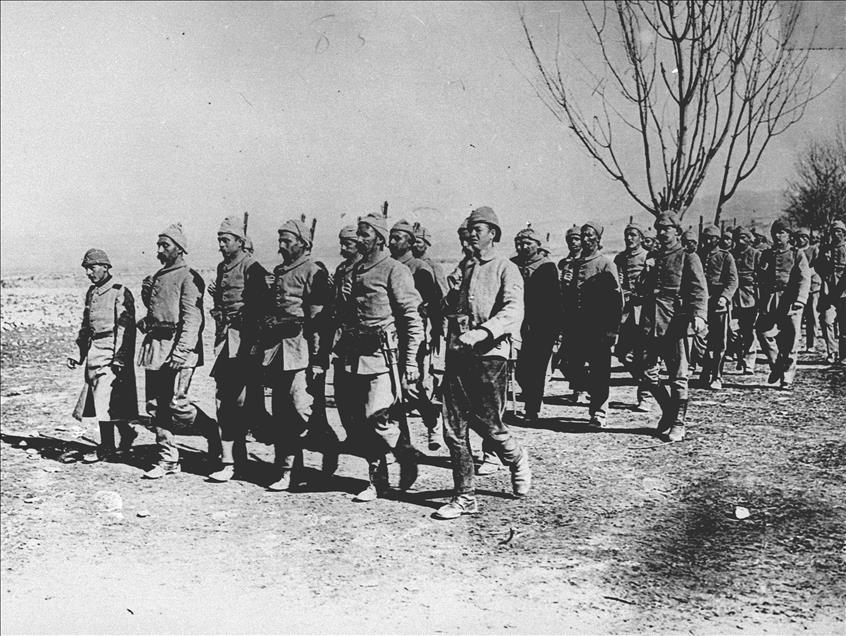
Çanakkale Savaşı (AA)
The enemy forces are depicted through their military and technological superiority; in contrast, the fundamental strength of the Turkish soldier is presented as “faith”. The contrast between material power and spiritual resistance forms the central idea of the poem.
The Çanakkale struggle is framed within historical and religious continuity. The reference to the Battle of Badr links the resistance to one of the foundational struggles in Islamic history. The phrase “for the sake of a crescent” symbolizes both Islam and the Turkish flag. The metaphor of “suns” represents the martyrs. In this context, martyrdom is not an end but a meaningful sacrifice ensuring the continuity of faith and identity.
The poem is structured in distinct thematic sections.
In the opening section, the movement of vast fleets and large armies toward the Çanakkale Strait is described. The presence of soldiers from diverse nations is emphasized, painting a picture of a global-scale attack.
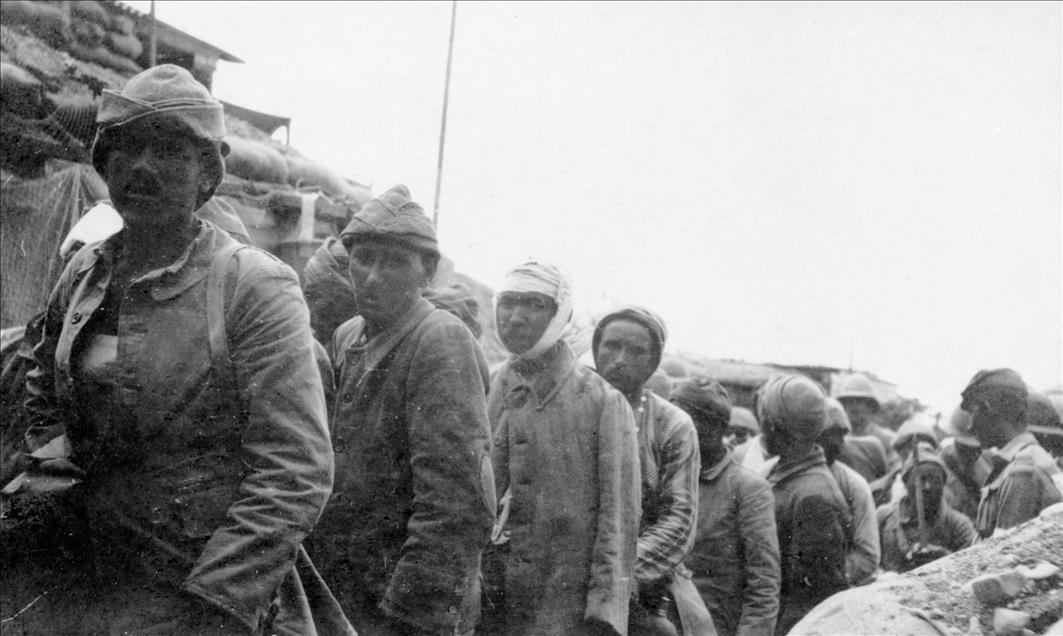
Çanakkale Savaşı (AA)
In the central section, the horror of battle is detailed through vivid imagery. The sounds of artillery, explosions of mines, and scattered limbs concretize the destructive nature of the conflict. The density of imagery intensifies the impact of the narrative.
Following the scenes of destruction, the spiritual dimension of resistance comes to the fore. The phrase “metîn istihkâm” describes the soldiers’ chests as a divinely grounded line of defense. The poem emphasizes that faith, not material weapons, is decisive.
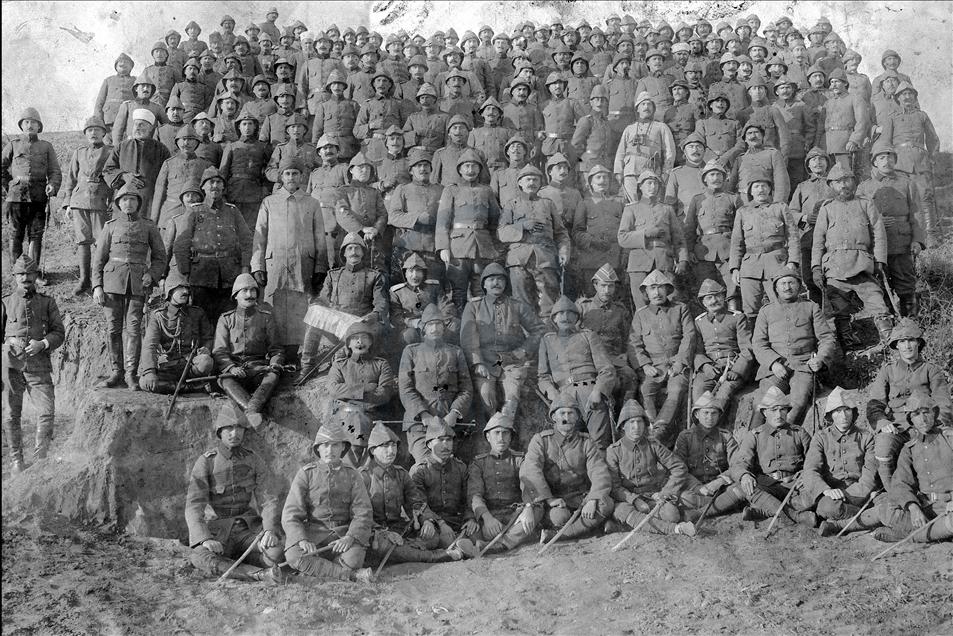
Çanakkale Savaşı (AA)
In the final section, martyrdom is addressed through cosmic and metaphysical imagery. Symbols such as the dome of heaven, stars, and eternity convey the martyrs’ greatness. The notion that any physical grave would be inadequate is expressed, affirming that martyrdom constitutes an exalted station beyond earthly bounds.
The poem is dominated by an epic and rhetorical style. Written in the aruz meter pattern “feilâtün / feilâtün / feilâtün / fâlün (feilün),” it employs a rhyme scheme reminiscent of the mesnevi form.【15】 Alliterations and harsh consonant repetitions create a rhythm reflecting the acoustic atmosphere of battle.
Similes and metaphors are used intensively in the descriptions. The language of the battle scenes is harsh and striking; in the section on martyrdom, the tone becomes elevating and idealizing. This stylistic shift strengthens the dramatic structure of the text.
In the final section, Mehmet Akif imagines a heavenly space for the Çanakkale martyrs that cannot be confined by any physical grave or tomb. Here, Akif asserts that no matter how vast and boundless a space he envisions, all human efforts remain inadequate before the martyrs’ sacrifice and spiritual grandeur. Even if he invokes the Kaaba, the dome of heaven, the clouds, the Seven Lamps of Sirius, and the moonlight, he declares that none can fully encompass the martyrs’ greatness, nourished by their blood and extending into eternity. The line,
“I still could not say I had done enough.”
reveals the poet’s admission that all human and symbolic arrangements are limited before the spiritual value of the martyrs.
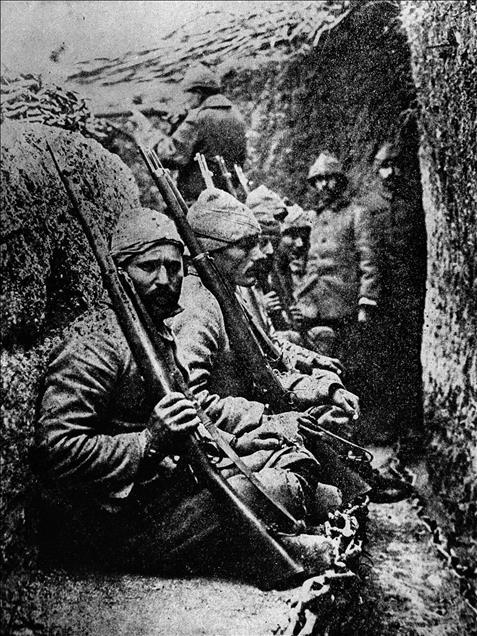
Çanakkale Savaşı (AA)
The subsequent verses reinforce that the martyrs possess not merely historical but transcendent greatness. In this section, Akif equates the martyrs with great historical heroes (Salahaddin al-Ayyubi, Kilij Arslan) and asserts that their stature cannot be contained by any physical space.
“These horizons cannot reach you, these lands cannot contain you.”
This line demonstrates that the martyrs’ greatness transcends universal boundaries and cannot be encompassed by any material measure or geographic area.
Finally, the poet emphasizes that the martyrs receive the highest reward in the afterlife:
O son of martyrs, do not ask me for a grave,
The Prophet stands before you with open arms.
In these lines, the martyrs’ spiritual elevation and afterlife status are symbolized not by a physical tomb but by divine reward and the embrace of Prophet Muhammad.
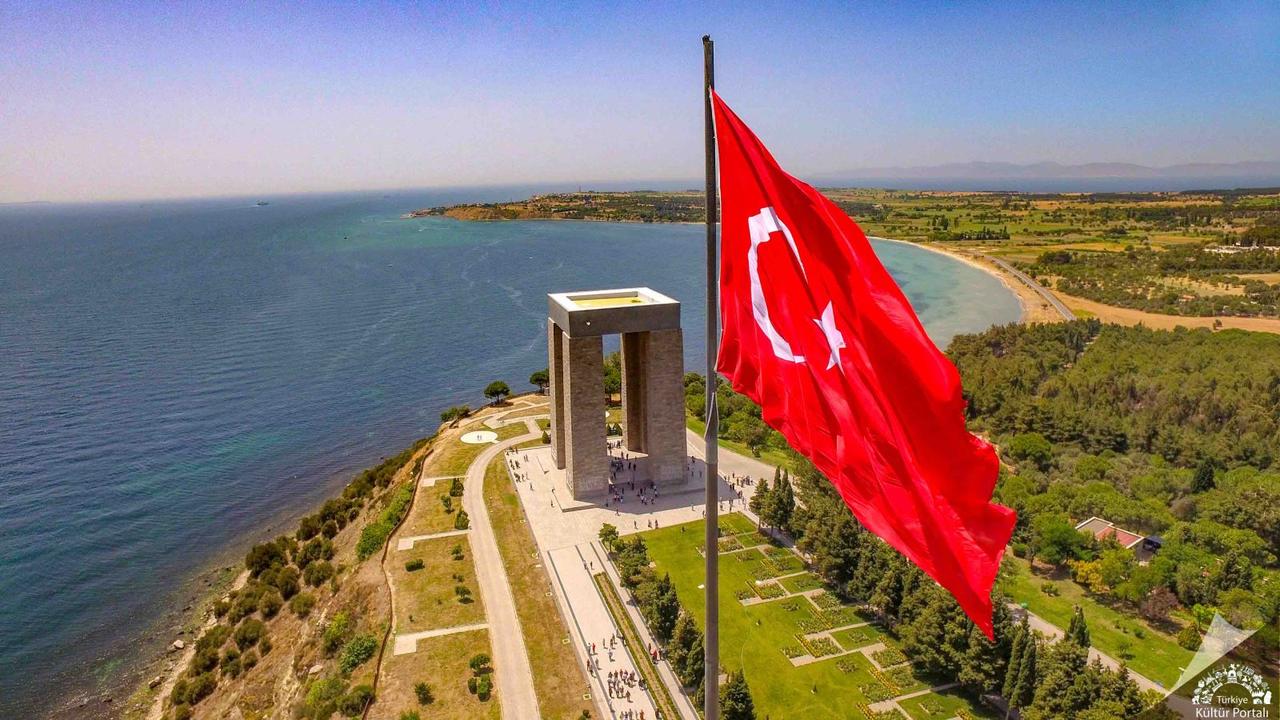
Çanakkale Şehitler Abidesi (Kültür Portalı)
“To the Martyrs of Çanakkale” is recognized as one of the literary representations of the Battle of Çanakkale. The poem transcends a mere account of military success to address the concepts of history, faith, and identity in a holistic framework, presenting martyrdom as an ideal fused with national and spiritual values.
In this regard, the poem continues to serve both as a literary reflection of a specific historical period and as one of the most significant modern examples of the epic tradition in Turkish literature.
Anadolu Ajansı. "Genelkurmay Başkanlığı 99 yıl önceki Çanakkale Cephesine dair siyah beyaz fotoğraflarını Anadolu Ajansı ile paylaştı." March 18, 2014. Accessed March 4, 2026. https://www.aa.com.tr/tr/pg/foto-galeri/canakkale-cephesi/0/77707.
Aydoğdu, Ö. "'Çanakkale Şehitlerine' Şiirinde Önvarsayım ve Önvarsayım Tetikleyicileri." Akademik Dil ve Edebiyat Dergisi 7, no. 2 (2023): 1408-1432. Accessed March 4, 2026. https://doi.org/10.34083/akaded.1327905.
Diyanet İşleri Başkanlığı. "Galeri." Dijital Safahat. Accessed March 4, 2026. https://safahat.diyanet.gov.tr/Gallery.aspx.
Doğan, D. Mehmet. "Çanakkale Edebiyatı ve Mehmed Âkif." TYB Akademi Dil Edebiyat ve Sosyal Bilgiler Dergisi 5, no. 14 (Mayıs 2015): 11. Accessed March 4, 2026. https://www.tybakademi.com/kitap/akademi14.pdf.
Doğan, D. Mehmet. "Çanakkale Şehidlerine Şiirinin Yazılışı." TYB Akademi Dil Edebiyat ve Sosyal Bilgiler Dergisi 5, no. 14 (Mayıs 2015): 19. Accessed March 4, 2026. https://www.tybakademi.com/kitap/akademi14.pdf.
Duran, Mustafa. "Cumhuriyet Dönemi Türk Şiirinde Çanakkale Muharebeleri ve Etkileri." Master's thesis, 2008. Accessed March 4, 2026. https://www.academia.edu/42937269/CUMHUR%C4%B0YET_D%C3%96NEM%C4%B0_T%C3%9CRK_%C5%9E%C4%B0%C4%B0R%C4%B0NDE_%C3%87ANAKKALE_MUHAREBELER%C4%B0_VE_ETK%C4%B0LER%C4%B0_Y%C3%9CKSEK_L%C4%B0SANS_TEZ%C4%B0_Enstit%C3%BC_Anabilim_Dal%C4%B1_T%C3%BCrk_Dili_ve_Edebiyat%C4%B1_Enstit%C3%BC_Bilim_Dal%C4%B1_Yeni_T%C3%BCrk_Edebiyat%C4%B1.
Emil, B. "Mehmet Âkif Ersoy ve 'Çanakkale Şehitleri'." Hacettepe Üniversitesi Türkiyat Araştırmaları (HÜTAD) 35, Özel Sayı (2021): 7-24. Accessed March 4, 2026. https://doi.org/10.20427/turkiyat.1031542.
Ersoy, Mehmet Akif. "Çanakkale Şehitlerine." Dijital Safahat. Accessed March 4, 2026. https://safahat.diyanet.gov.tr/PoemDetail.aspx?bID=11&pID=128.
Türkiye Kültür Portalı. "Çanakkale Şehitler Abidesi - Çanakkale." Accessed March 4, 2026. https://www.kulturportali.gov.tr/turkiye/canakkale/gezilecekyer/canakkale-sehitler-abidesi.
Yalçın-Çelik, S. Dilek. "Ay Bedir Halindeydi, Zafer Kazanıldı... Mehmet Akif Ersoy'un 'Çanakkale Şehitleri'." bilig, no. 27 (Fall 2003): 85–106. Accessed March 4, 2026. https://dergipark.org.tr/en/download/article-file/234614.
[1]
Mehmet Doğan, "Çanakkale Şehidlerine Şiirinin Yazılışı," TYB Akademi Dil Edebiyat ve Sosyal Bilgiler Dergisi 5, no. 14 (Mayıs 2015): 23, Erişim tarihi: 4 Mart 2026,https://www.tybakademi.com/kitap/akademi14.pdf.
[2]
S. Dilek Yalçın-Çelik, "Ay Bedir Halindeydi, Zafer Kazanıldı... Mehmet Akif Ersoy'un 'Çanakkale Şehitleri'," bilig, no. 27 (Güz 2003): 86, Erişim tarihi: 4 Mart 2026,https://dergipark.org.tr/en/download/article-file/234614
[3]
Mustafa Duran, "Cumhuriyet Dönemi Türk Şiirinde Çanakkale Muharebeleri ve Etkileri" (Yüksek lisans tezi, 2008), 69, Erişim tarihi: 4 Mart 2026,https://www.academia.edu/42937269/CUMHUR%C4%B0YET_D%C3%96NEM%C4%B0_T%C3%9CRK_%C5%9E%C4%B0%C4%B0R%C4%B0NDE_%C3%87ANAKKALE_MUHAREBELER%C4%B0_VE_ETK%C4%B0LER%C4%B0_Y%C3%9CKSEK_L%C4%B0SANS_TEZ%C4%B0_Enstit%C3%BC_Anabilim_Dal%C4%B1_T%C3%BCrk_Dili_ve_Edebiyat%C4%B1_Enstit%C3%BC_Bilim_Dal%C4%B1_Yeni_T%C3%BCrk_Edebiyat%C4%B1.
[4]
Mustafa Duran, "Cumhuriyet Dönemi Türk Şiirinde Çanakkale Muharebeleri ve Etkileri" (Yüksek lisans tezi, 2008), 69, Erişim tarihi: 4 Mart 2026,https://www.academia.edu/42937269/CUMHUR%C4%B0YET_D%C3%96NEM%C4%B0_T%C3%9CRK_%C5%9E%C4%B0%C4%B0R%C4%B0NDE_%C3%87ANAKKALE_MUHAREBELER%C4%B0_VE_ETK%C4%B0LER%C4%B0_Y%C3%9CKSEK_L%C4%B0SANS_TEZ%C4%B0_Enstit%C3%BC_Anabilim_Dal%C4%B1_T%C3%BCrk_Dili_ve_Edebiyat%C4%B1_Enstit%C3%BC_Bilim_Dal%C4%B1_Yeni_T%C3%BCrk_Edebiyat%C4%B1
[5]
Mustafa Duran, "Cumhuriyet Dönemi Türk Şiirinde Çanakkale Muharebeleri ve Etkileri" (Yüksek lisans tezi, 2008), 70, Erişim tarihi: 4 Mart 2026,https://www.academia.edu/42937269/CUMHUR%C4%B0YET_D%C3%96NEM%C4%B0_T%C3%9CRK_%C5%9E%C4%B0%C4%B0R%C4%B0NDE_%C3%87ANAKKALE_MUHAREBELER%C4%B0_VE_ETK%C4%B0LER%C4%B0_Y%C3%9CKSEK_L%C4%B0SANS_TEZ%C4%B0_Enstit%C3%BC_Anabilim_Dal%C4%B1_T%C3%BCrk_Dili_ve_Edebiyat%C4%B1_Enstit%C3%BC_Bilim_Dal%C4%B1_Yeni_T%C3%BCrk_Edebiyat%C4%B1.
[6]
S. Dilek Yalçın-Çelik, "Ay Bedir Halindeydi, Zafer Kazanıldı... Mehmet Akif Ersoy'un 'Çanakkale Şehitleri'," bilig, no. 27 (Güz 2003): 88, Erişim tarihi: 4 Mart 2026,https://dergipark.org.tr/en/download/article-file/234614
[7]
S. Dilek Yalçın-Çelik, "Ay Bedir Halindeydi, Zafer Kazanıldı... Mehmet Akif Ersoy'un 'Çanakkale Şehitleri'," bilig, no. 27 (Güz 2003): 88, Erişim tarihi: 4 Mart 2026,https://dergipark.org.tr/en/download/article-file/234614
[8]
Birol Emil. "Mehmet Âkif Ersoy ve 'Çanakkale Şehitleri'," Hacettepe Üniversitesi Türkiyat Araştırmaları (HÜTAD) 35, Özel Sayı (2021): 19, Erişim tarihi: 4 Mart 2026,https://doi.org/10.20427/turkiyat.1031542.
[9]
S. Dilek Yalçın-Çelik, "Ay Bedir Halindeydi, Zafer Kazanıldı... Mehmet Akif Ersoy'un 'Çanakkale Şehitleri'," bilig, no. 27 (Güz 2003): 89, Erişim tarihi: 4 Mart 2026,https://dergipark.org.tr/en/download/article-file/234614
[10]
S. Dilek Yalçın-Çelik, "Ay Bedir Halindeydi, Zafer Kazanıldı... Mehmet Akif Ersoy'un 'Çanakkale Şehitleri'," bilig, no. 27 (Güz 2003): 88, Erişim tarihi: 4 Mart 2026,https://dergipark.org.tr/en/download/article-file/234614
[11]
S. Dilek Yalçın-Çelik, "Ay Bedir Halindeydi, Zafer Kazanıldı... Mehmet Akif Ersoy'un 'Çanakkale Şehitleri'," bilig, no. 27 (Güz 2003): 88, Erişim tarihi: 4 Mart 2026,https://dergipark.org.tr/en/download/article-file/234614
[12]
Mehmet Doğan, "Çanakkale Şehidlerine Şiirinin Yazılışı," TYB Akademi Dil Edebiyat ve Sosyal Bilgiler Dergisi 5, no. 14 (Mayıs 2015): 23, Erişim tarihi: 4 Mart 2026,https://www.tybakademi.com/kitap/akademi14.pdf.
[13]
Mehmet Doğan, "Çanakkale Şehidlerine Şiirinin Yazılışı," TYB Akademi Dil Edebiyat ve Sosyal Bilgiler Dergisi 5, no. 14 (Mayıs 2015): 23, Erişim tarihi: 4 Mart 2026,https://www.tybakademi.com/kitap/akademi14.pdf.
[14]
Mehmet Akif Ersoy, "Çanakkale Şehitlerine," Dijital Safahat, Erişim tarihi: 4 Mart 2026,https://safahat.diyanet.gov.tr/PoemDetail.aspx?bID=11&pID=128.
[15]
S. Dilek Yalçın-Çelik, "Ay Bedir Halindeydi, Zafer Kazanıldı... Mehmet Akif Ersoy'un 'Çanakkale Şehitleri'," bilig, no. 27 (Güz 2003): 96, Erişim tarihi: 4 Mart 2026,https://dergipark.org.tr/en/download/article-file/234614


No Discussion Added Yet
Start discussion for "Martyrs of Çanakkale (Poem)" article
Historical Background and the Structure of the Enemy Forces
Critique of the Civilization Discourse
Akif’s Emotional Responses and “The Line of Asım”
The Non-Publication of the Poem and Akif’s Rejection of Material Gain
Çanakkale Şehitlerine
Theme and Framework
Structure and Narrative Features
Depiction of the Enemy Forces
The Violence and Destruction of War
Resistance and Faith
Elevation of Martyrdom
Language, Style, and Form
The Heavenly Space Designed for the Martyrs and Akif’s Expression of Inadequacy
Literary and Cultural Value