


This article was automatically translated from the original Turkish version.
+1 More
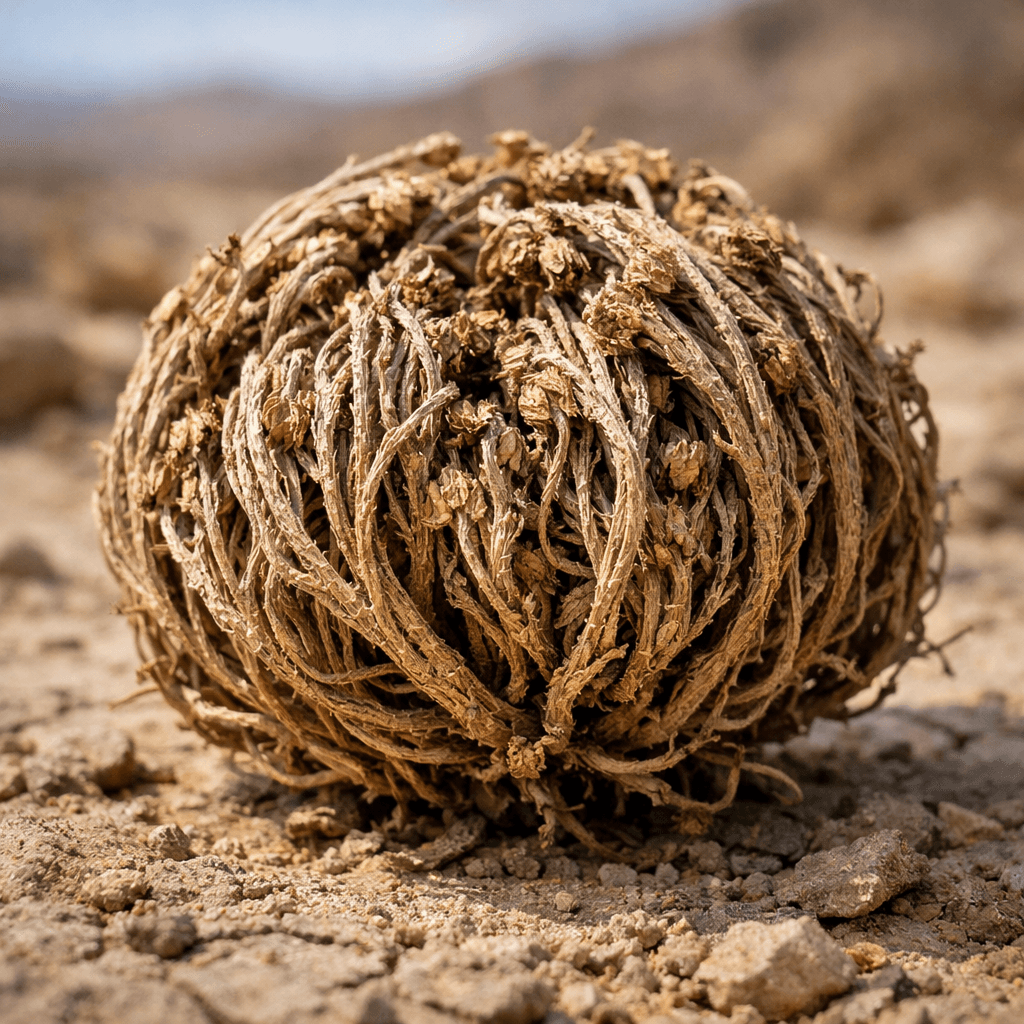
Meryem Ana Eli Otu (Anastatica hierochuntica L.)
(Yapay Zekâ ile Oluşturulmuştur)
Maryam’s Hand Herb (Anastatica hierochuntica L.) belongs to the Brassicaceae family; it is a plant that thrives in desert and extremely arid regions and is the sole species of its genus. Its most distinctive feature is its ability to curl into a ball-like shape. It is also known by names such as Kaff Maryam, Sanggul Fatimah, Rose of Jericho, and Fatma’s Hand.
During brief rainy seasons, it grows rapidly, produces small white flowers, and typically remains under 15 cm in height. When the rains cease, plant it dries out, its branches curl inward, and it forms a hard, woody ball with a diameter of 4–10 cm. Its seeds are highly resilient and can remain dormant for years until favorable conditions return.
It is widespread in the arid regions of North Africa and the Middle East (e.g., Egypt, Jordan, Saudi Arabia, Iraq, Iran, Kuwait, UAE, etc.).
Some parts of the plant contain minerals such as magnesium (Mg), calcium (Ca), and manganese (Mn), as well as phenolic compounds.
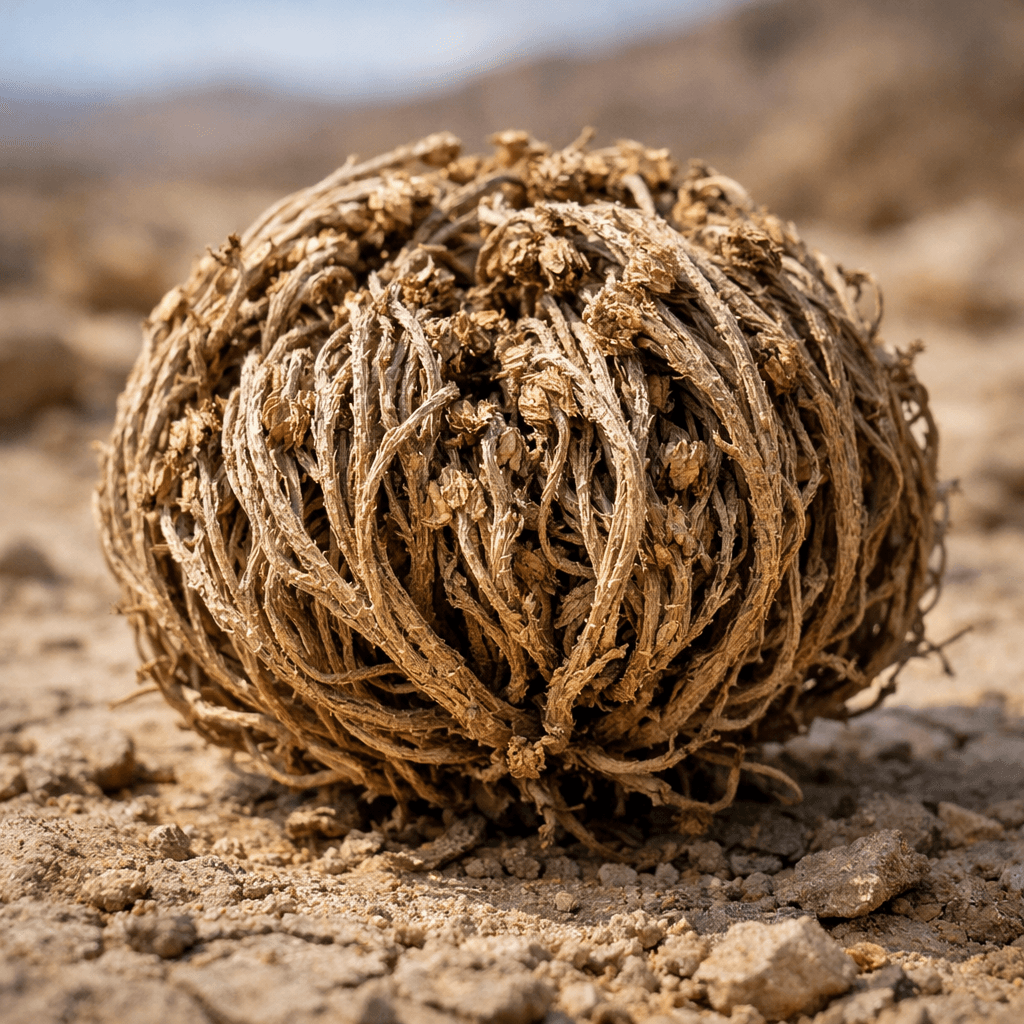
Maryam’s Hand Herb (Anastatica hierochuntica L.) (Generated by Artificial Intelligence)
Mary's Hand Herb is traditionally consumed as a tea (decoction) and is also ground into powder and mixed with honey for use.
The most prominent use is related to childbirth and reproductive health. It is used to facilitate labor, particularly in cases of difficult delivery and uterine hemorrhage. It is also associated with aiding the expulsion of stillborn fetuses, alleviating premenstrual syndrome, menstrual cramps, luteal phase deficiency in infertility, menopausal symptoms, and insufficient milk production.
In addition, the plant is used in folk medicine for complaints such as gastrointestinal disorders, indigestion, headaches, common cold, fever, malaria, epilepsy, fatigue, hypertension, diabetes, heart disease, mental disorders, asthma, depression, and infertility.
In Turkish folk medicine, the plant is closely associated with the process of childbirth. The practice involves placing the dried plant in warm or hot water, where it unfurls. It is believed that as the plant opens in the water, the cervix of the birthing woman also dilates more rapidly.
Once childbirth is complete, the practice ends; the plant is removed from the water and this act is regarded as a traditional complementary step linked to the postpartum period.
The symbolic meaning of Maryam’s Hand Herb in childbirth practices is based on its ability to unfurl in water. When placed in water, the plant swells and opens, and it is believed that this mirrors the dilation of the cervix. There is a widespread belief that this will ease labor and allow the baby to emerge as smoothly as water flows.
This belief is reinforced in Anatolia by oral rituals performed during childbirth. The midwife, while massaging the woman’s back, encourages her by saying, “This hand is not mine; it is Fatma’s Mother’s hand.” The plant is also linked to the concept of “opening the gates of need.”
The plant is also regarded as a sacred object with high spiritual value. It is considered holy not only in Muslim communities but also among Christian women. Since the Renaissance in Europe, it has been used and integrated into Christian belief as a symbol associated with the Virgin Mary, representing a sinless and painless birth.
Focusing on the plant’s unfurling in water during childbirth provides psychological and spiritual comfort to women. This focus functions like a mindfulness technique, reducing tension during contractions and helping to manage pain.
Warning: The content in this article is provided solely for general encyclopedic purposes. The information here must not be used for diagnosis, treatment, or medical advice. Before making any decisions regarding health, you must consult a physician or qualified healthcare professional. The author and KÜRE Encyclopedia assume no responsibility for any consequences arising from the use of this information for diagnostic or therapeutic purposes.

Meryem Ana Eli Otu (Anastatica hierochuntica L.)
(Yapay Zekâ ile Oluşturulmuştur)
No Discussion Added Yet
Start discussion for "Mary's Hand Herb (Anastatica hierochuntica L.)" article
Uses
Relationship with Turkish Folk Medicine