This article was automatically translated from the original Turkish version.
Realm | Animalia | ||||||||
|---|---|---|---|---|---|---|---|---|---|
Branch | Chordata | ||||||||
Class | Aves | ||||||||
Team(s) | Charadriiformes | ||||||||
Family | Laridae | ||||||||
Genus | Ichthyaetus | ||||||||
Conservation Status | Least Concern (LC) | ||||||||
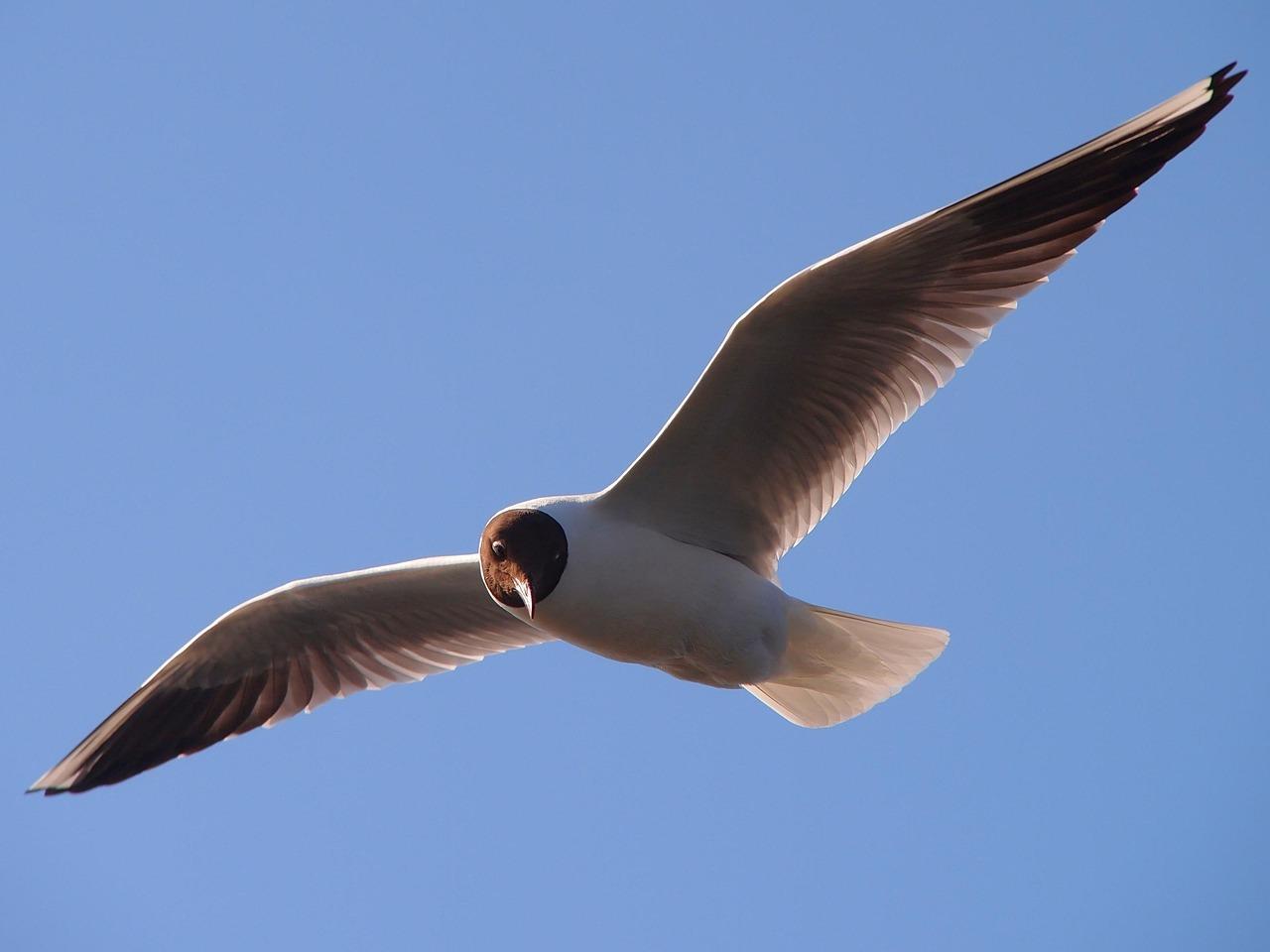
Mediterranean Gull (Ichthyaetus melanocephalus) is a gull species intermediate in size between the Black-headed Gull (Chroicocephalus ridibundus) and the Lesser Black-backed Gull (Larus canus). It is slightly larger than the Black-headed Gull but smaller than the Lesser Black-backed Gull. Its body is more robust. The bill is short, thick, and red; the legs are also red.
During the breeding season, the head becomes black, extending down to the nape. The wings are white, while the wing coverts are whitish-grey. In winter plumage, the head is white with a distinct dark mask behind the eye. In their first winter, juveniles have black bills and legs; their wings show a pale grey panel with white spots on the black flight feathers. The back feathers are brown with white edges, giving a scaled appearance. In their second year, they resemble adults, but black markings may still be visible on the wingtips.

Mediterranean Gull (flickr)
The Mediterranean Gull is found in lakes, lagoons, river mouths, seacoasts, bays, marshes, wet meadows, and floodplains. It typically nests on small islands along lake or sea shores. It spends the winter mostly along coastal areas.
The species has a wide distribution. It occurs along the coasts of the Mediterranean and Black Seas, as well as along the western coasts of the Atlantic Ocean in Europe. In Türkiye, it is observed throughout most regions during migration and winter months, especially along the coastline. Key breeding areas include the vicinity of Lake Tuz, the Marmara Region, and the Aegean Region.
Historically, until 1940, its range was limited to the Black Sea, southern Russia, Türkiye, and Greece. Since then, populations have increased and expanded westward into western Europe. During summer months, it can also be found in wetlands of central Europe and central Anatolia.
The Mediterranean Gull feeds on both terrestrial and aquatic organisms. Its diet includes insects and their larvae, molluscs, crustaceans, and small fish.
It is a migratory species. At the end of summer, it moves from inland wetlands to coastal areas, where it spends the winter. The species has a broad global distribution, with a range estimated at 100,000 to 1,000,000 km². The global population is estimated at 570,000 to 1,100,000 individuals.
The Mediterranean Gull (Ichthyaetus melanocephalus) is listed as “Least Concern” (LC) on the IUCN Red List. This classification indicates that the species is not currently at risk of global extinction.
Flickr. "Mediterranean gull JPG." Flickr. Accessed August 16, 2025. https://flic.kr/p/2pFsqrm
Ornito. "Akdeniz Martısı." ornito.org. Accessed August 16, 2025. https://ornito.org/Bird/Detail/18
Pixabay. "Sea Gull, Gökyüzü, Mavi Gökyüzü JPG." Pixabay. Accessed August 16, 2025. https://pixabay.com/tr/photos/sea-gull-g%C3%B6ky%C3%BCz%C3%BC-mavi-g%C3%B6ky%C3%BCz%C3%BC-yaz-323390/
İzkuş. "Akdeniz martısı." İzmir Kuş Cenneti. Accessed August 16, 2025. https://izmirkuscenneti.gov.tr/2022/12/02/akdeniz-martisi/

Realm | Animalia | ||||||||
|---|---|---|---|---|---|---|---|---|---|
Branch | Chordata | ||||||||
Class | Aves | ||||||||
Team(s) | Charadriiformes | ||||||||
Family | Laridae | ||||||||
Genus | Ichthyaetus | ||||||||
Conservation Status | Least Concern (LC) | ||||||||
No Discussion Added Yet
Start discussion for "Mediterranean Gull (Ichthyaetus melanocephalus)" article
Morphological Characteristics
Habitat
Distribution
Diet
Migration and Population
Conservation Status