


This article was automatically translated from the original Turkish version.
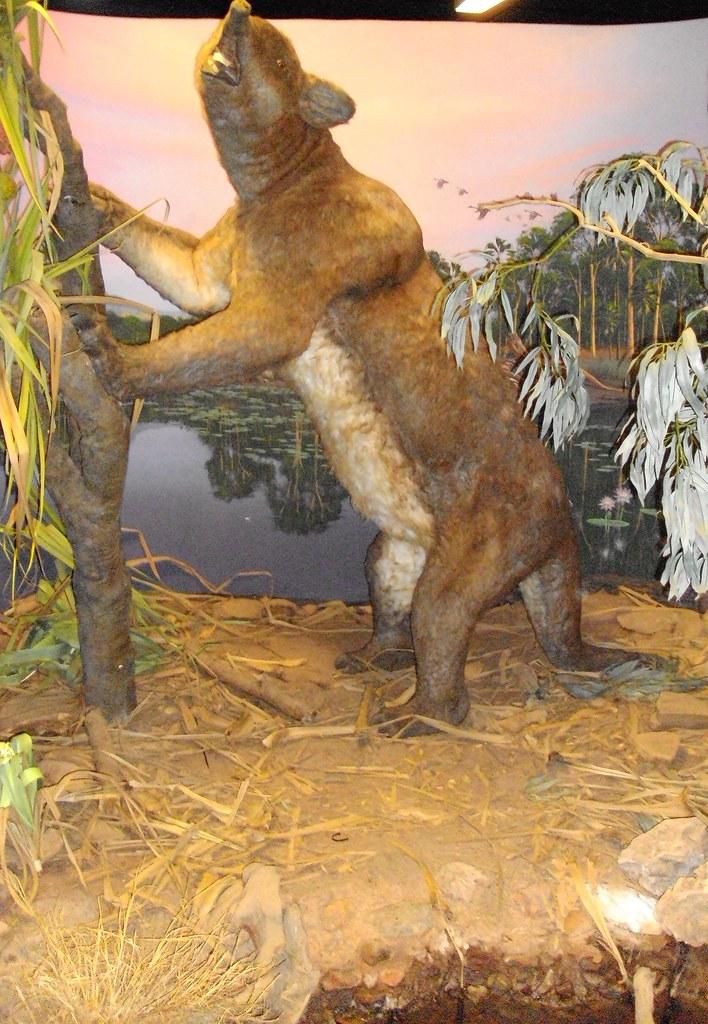
Megafauna
Definition(s) | Generally ≥1000 kg). terrestrial vertebrate animals weighing 44 kg or more (in some definitions | ||||||||
|---|---|---|---|---|---|---|---|---|---|
Etymology(s) | From Greek mega (large) and Latin fauna (animal life). | ||||||||
Geographical Distribution | Found on all continents and islands; particularly widespread globally during the Pleistocene epoch. | ||||||||
Date(s) | Pleistocene (2.6 million to 11 700 years ago) and Holocene. | ||||||||
Reasons for Extinction | Human hunting, climate change, habitat loss. | ||||||||
Present Day | Most have gone extinct; some survive in Africa and Asia (e.g., elephants, rhinoceroses). | ||||||||
The term megafauna refers to large-bodied black vertebrates. These concept can be classified in two different ways within an ecological context. In most definitions, megafauna are considered to be animals weighing more than 44 kg; however, in some studies, particularly those focusing on ecosystem engineering and seed dispersal like ecological functions, a stricter threshold of more than 1000 kg is used. This second definition encompasses very large animals such as those from the Pleistocene epoch in South America: place sloths, gomphotheres and prehistoric horses are among the species included in this group.
However, the definition of megafauna cannot be reduced solely to body size. In ecological terms, the largest organisms in an ecosystem may perform the same functional role as larger animals elsewhere. For example, in Madagascar, the 450 kg elephant birds once considered megafauna have been replaced only by turtles weighing about 10 kg. Similarly, on isolated islands such as ocean, turtles and dodo birds were once considered megafauna, whereas today these roles are fulfilled only by bats or birds weighing a few hundred grams.
A large proportion of megafauna species went extinct between 50,000 and 10,000 years ago. This wave of extinction, occurring at the end of the Pleistocene and together, is attributed to the combined effects of human impact and climate change.
In South America, for instance, seven genera of large mammals weighing over 1000 kg disappeared entirely by the end of the Pleistocene.
On isolated islands such as New Zealand, megafaunal extinction occurred much close earlier and took place within a few centuries following human settlement. The flightless moa birds of New Zealand became entirely extinct after the 13th century due to human hunting and ecosystem alterations.
The impacts of these extinctions were significant not only at the species level but also in terms of ecological functions. The disappearance of large frugivores fruit, in particular, has led to severe disruptions in processes such as seed dispersal road.
Megafauna were key agents in facilitating long-distance seed dispersal of large-fruited plants. With their extinction, the seeds of some plant species are now dispersed only by gravity, water water currents, small rodents or humans, severely limiting their range of distribution.
In Island ecosystems, the loss of megafauna has produced more fast cascading effects because medium-sized frugivores capable of replacing them are generally absent.
Allentoft, Morten E., Michael Bunce, R. Paul Scofield, Marie L. Hale, and Richard N. Holdaway.
Guimarães, Paulo R. Jr., Mauro Galetti, and Pedro Jordano.
Hansen, Dennis M., and Mauro Galetti.
“Highly Skewed Sex Ratios and Biased Fossil Deposition of Moa: Ancient DNA Provides New Insight on New Zealand’s Extinct Megafauna.” *Quaternary Science Reviews* 29, no. 5–6 (2010): 753–762. https://doi.org/10.1016/j.quascirev.2009.11.022.
“Seed Dispersal Anachronisms: Rethinking the Fruits Extinct Megafauna Ate.” *PLoS ONE* 3, no. 3 (2008): e1745. https://doi.org/10.1371/journal.pone.0001745.
“The Forgotten Megafauna.” *Science* 324, no. 5923 (April 3, 2009): 42–43. https://doi.org/10.1126/science.1172393.

Megafauna
Definition(s) | Generally ≥1000 kg). terrestrial vertebrate animals weighing 44 kg or more (in some definitions | ||||||||
|---|---|---|---|---|---|---|---|---|---|
Etymology(s) | From Greek mega (large) and Latin fauna (animal life). | ||||||||
Geographical Distribution | Found on all continents and islands; particularly widespread globally during the Pleistocene epoch. | ||||||||
Date(s) | Pleistocene (2.6 million to 11 700 years ago) and Holocene. | ||||||||
Reasons for Extinction | Human hunting, climate change, habitat loss. | ||||||||
Present Day | Most have gone extinct; some survive in Africa and Asia (e.g., elephants, rhinoceroses). | ||||||||
Megafauna
Extinctions
Ecological Importance