This article was automatically translated from the original Turkish version.
+1 More
Location | Mersin Türkiye | ||||||||
|---|---|---|---|---|---|---|---|---|---|
Year of Construction | 1897 | ||||||||
Founder(s) | German Consul Mr. Christman (due to marriage with a member of the Mavromati family) | ||||||||
Historical Significance | The stay of Atatürk and Latife Hanım for 11 days in 1925 | ||||||||
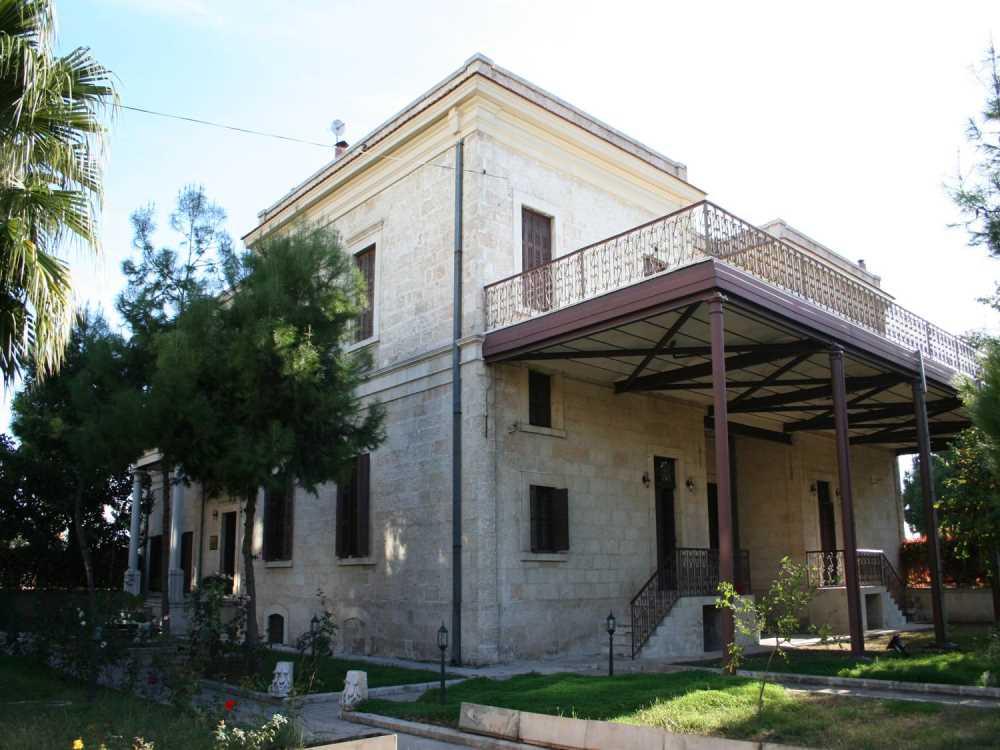
Mersin Atatürk House Museum is located in Mersin, Türkiye, on Atatürk Avenue, one of the city’s most important and busiest streets. The building was constructed in 1897 as a residence following the marriage of Christman, the then German Consul, to a lady from the Mersin-based Mavromati family. The architect of the structure, known locally as Krisman (Krizman) Mansion or Palais de Christmann, remains unknown. Situated in the southwest corner of a 1270 m² plot, the building remained in the ownership of the Mavromati family for many years before passing by inheritance to Fedon Tahinci.
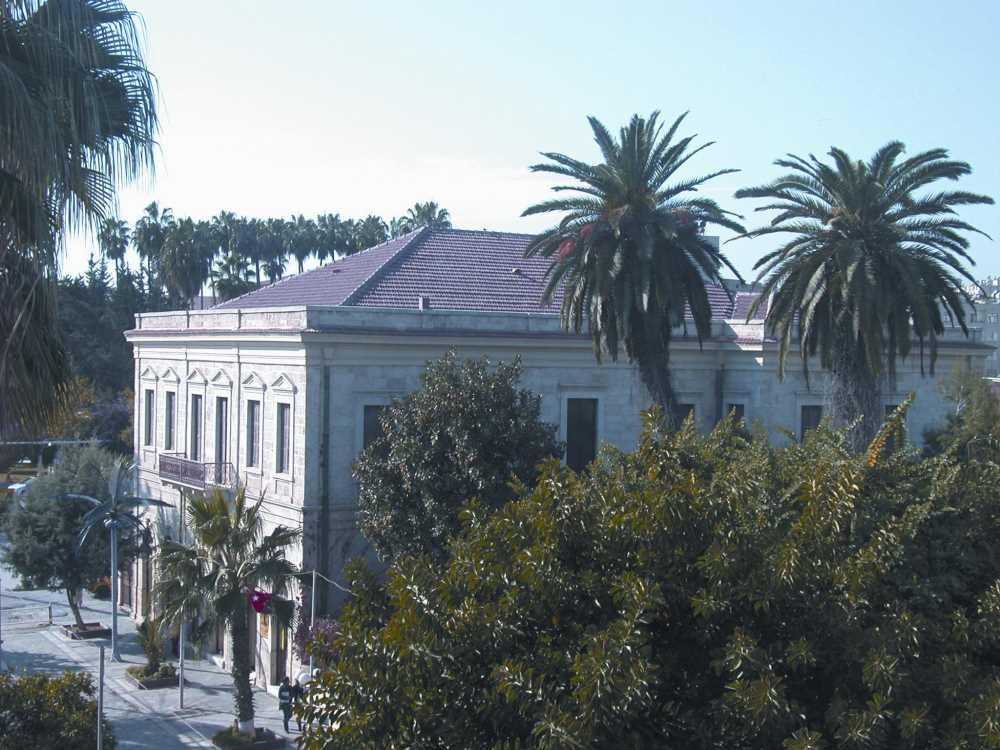
Mersin Atatürk House Museum (Türkiye Culture Portal)
The structure, built of precisely cut stone, consists of two stories above a basement level. Access to the ground floor is provided from four directions, with the street-facing portion used as a shop. There are two entrance doors on the east and west sides. The main entrance, symmetrically arranged with the balcony, is reached via stairs on the eastern side. The balcony columns and window friezes exhibit neoclassical architectural features. On the upper floor, there is a salon with painted ceiling decorations and seven rooms: two bedrooms, one study, and four sitting rooms. The cast iron door is adorned with original motifs. The garden once contained the remains of a bathhouse, but these have not survived to the present day.
Mustafa Kemal Atatürk and his wife Latife Hanım stayed in this house for eleven days during their visit to Mersin between 20 January and 2 February 1925. Prior to their arrival, the Mavromati family residence was deemed suitable for Atatürk’s accommodation and the upper floor was renovated accordingly.
In 1972, the building was purchased by Nebil Hayfavi and operated as Toros College. After the college ceased operations in 1976, the municipal council decided in 1978 to convert the structure into an “Atatürk House.” The building was nationalized by the Ministry of Culture in 1980 and, following restoration work that began in 1985, opened to the public on 12 October 1992 as the Atatürk House and Museum. Approximately one billion lira was spent on the restoration.
On the ground floor of the museum, a section dedicated to the Kuva-yi Milliye documents the heroic efforts of the region during the War of Independence. The first floor is furnished with photographs and documents relating to Atatürk’s visit to Mersin. Twenty-two personal items belonging to Atatürk, including a robe, shirt, fork, knife, and spoon, have been brought from the Anıtkabir Museum in Ankara and are displayed here. Some of these items were donated by the Tarsus-based Mehmet and Belkız Akçora family and by Taki Aleksioğlu; the cup from which Atatürk drank coffee was gifted by Erdal Akalın. On the upper floor, ethnographic artifacts from Mersin and its surrounding region are exhibited for visitors.
The Mersin Atatürk House and Museum is one of the city’s most valuable cultural heritage sites, both architecturally and historically. This building sheds light on Atatürk’s life and the founding period of the Republic of Türkiye, offering visitors a historical experience and highlighting Mersin’s role in the War of Independence.
Culture Portal. "Mersin Atatürk Evi." Accessed June 30, 2025.
Müze.gov.tr. "Mersin Atatürk Evi ve Müzesi." Accessed June 30, 2025.
Turkish Museums. "Mersin Atatürk House Museum." Accessed June 30, 2025.
Yılmaz, Lale. "Mersin Atatürk Evi Müzesi." *Türkiye Turizm Ansiklopedisi.* Accessed June 30, 2025.
Location | Mersin Türkiye | ||||||||
|---|---|---|---|---|---|---|---|---|---|
Year of Construction | 1897 | ||||||||
Founder(s) | German Consul Mr. Christman (due to marriage with a member of the Mavromati family) | ||||||||
Historical Significance | The stay of Atatürk and Latife Hanım for 11 days in 1925 | ||||||||
No Discussion Added Yet
Start discussion for "Mersin Atatürk House Museum" article
Architectural Features
Atatürk’s Visit and Stay
Usage and Nationalization Process
Museum Layout and Exhibits
Cultural and Historical Significance