

This article was automatically translated from the original Turkish version.
+2 More
Range(s) | 450-500 km | ||||||||
|---|---|---|---|---|---|---|---|---|---|
Entry into Service | 1967 | ||||||||
Engine(s) | Twin Turbo-shaft | ||||||||
Manufacturer(s) | Mil Factory | ||||||||
Status | In Production | ||||||||
Origin(s) | Soviet Union | ||||||||
Maximum Speed | 260 km/h | ||||||||
Capacity | 24-32 Passengers | ||||||||
Crew | 3 People | ||||||||
First Flight | 1961 | ||||||||
Role | Multi-purpose | ||||||||
NATO Code | Hip | ||||||||
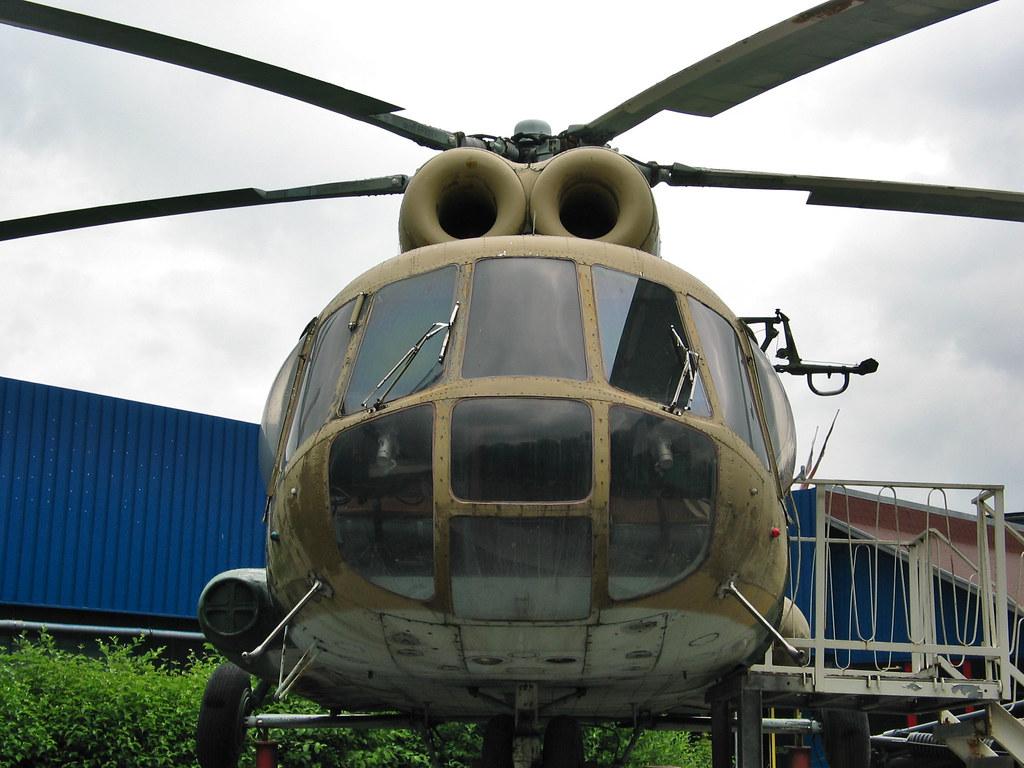
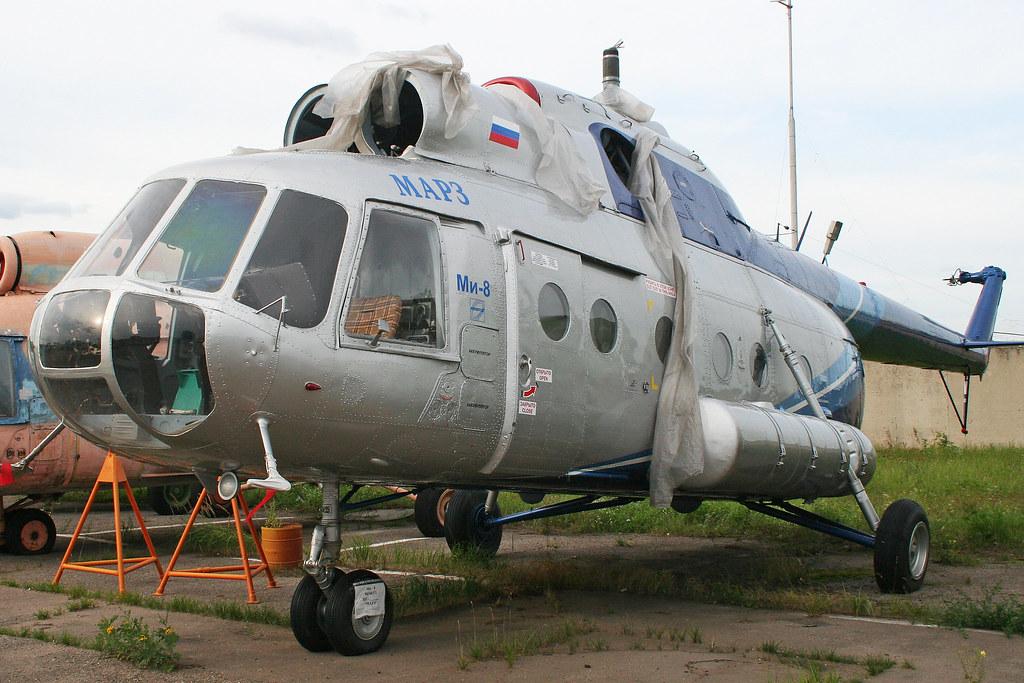
The Mil Mi-8 (NATO reporting name "Hip") is a twin-engine, multirole medium-range transport helicopter designed by the Mil Moscow Helicopter Plant during the Soviet Union era, and its production and operational use continue to this day. One of the most produced helicopters in the world, the aircraft has had a total production of between 12,000 and 17,000 units including its advanced derivatives, the Mi-14 and Mi-17 models【1】. The Mil Mi-8, actively serving in the air forces of more than 50 countries worldwide and widely used in civil aviation, is regarded as one of the primary platforms for both civilian and military logistics operations due to its durability and adaptability to harsh weather conditions.
Mil Mi - 8 (Flickr)
The development of the Mil Mi-8 was driven by the Soviet government’s need to replace its aging piston-engine Mi-4 transport helicopters, which had become obsolete for the era. Designer Mikhail Mil initially secured preliminary approval for the project by presenting it to Soviet authorities as a turbine-powered version of the Mi-4. The project gained major momentum when Soviet leader Nikita Khrushchev, during his 1959 visit to the United States, flew in a S-58 turbine-powered presidential helicopter and was sufficiently impressed to order the urgent development of a similar aircraft【2】.
The initial design, designated "Mil V-8," was built with a single engine and a four-bladed main rotor; its first test flights were conducted in June and July 1961. The design was soon revised to incorporate twin engines and a five-bladed main rotor, and the final prototype first flew on 17 September 1962. After successful completion of required testing, serial production began in 1965, and the helicopter officially entered service with the Soviet Air Force in 1967【3】.
The Mil Mi-8 features a classic aviation design with a rounded nose, a spacious cockpit with extensive glazing, and an airframe constructed from lightweight metal alloys. In its basic configuration, it employs a five-bladed aluminum alloy main rotor and a three-bladed tail rotor. The flight crew typically consists of three personnel: a commander, a navigator, and a flight technician. The helicopter’s primary powerplant comprises two Klimov TV2-117 (or TV3-117 series, depending on operational requirements) turboshaft engines, each capable of producing 1,500 horsepower or more【4】.
The platform has a high payload capacity. With a maximum takeoff weight ranging between 12,000 and 13,000 kilograms, it can carry up to 4,000 kilograms of cargo or 24 to 30 troops in standard configuration【5】. Its external load suspension system provides a lifting capacity of between 3,000 and 5,000 kilograms depending on the variant. For medical evacuation missions, the cabin can be configured to accommodate 12 patient stretchers along with necessary medical personnel.

Mil Mi - 8 (Flickr)
The modular design philosophy of the Mil Mi-8 platform has enabled the production of numerous specialized sub-variants and advanced technology versions over the decades. The unarmed military transport variant, the Mi-8T, is used primarily for cargo transport, while the armed close air support variant, the Mi-8TV (Transportnyy Vooruzhennyy), is equipped with unguided rocket pods, anti-tank missiles, and a 12.7 mm machine gun mounted in the nose【6】. Other notable variants include the electronic warfare version (Mi-8PPA), the specialized radio and radar-equipped version for space capsule recovery and general search and rescue missions (Mi-8MPS), and the VIP transport version (Mi-8S).
One of the most significant developments in the platform’s evolution is the Mi-17, an upgraded version of the Mi-8 featuring more powerful engines to enhance high-altitude and hot-climate performance. It is structurally distinguished from its predecessor by the relocation of the tail rotor to the left side. Meanwhile, the Mi-14 variant was developed to meet naval anti-submarine warfare (ASW) requirements, featuring a boat-shaped fuselage underside and retractable landing gear. Modernization of the series continues today; the Mi-8AMTSH-VN variant, designed to maximize the survivability of special operations units during night and low-visibility conditions, incorporates composite materials, threat detection sensors, full digital autopilot systems, and advanced avionics, representing one of the latest stages of this evolution.
Thanks to its large production volume and operational flexibility, the Mil Mi-8 has served as a primary aerial asset in numerous conflict zones and civil crisis scenarios around the world. During the initial phase of the 1973 Yom Kippur War, it was used to deploy troops, provide logistical support, and conduct direct air attacks against Israeli forces. Similarly, during the Soviet intervention in Afghanistan, it became one of the most decisive aircraft on the battlefield, performing transport missions as well as laying anti-tank mines, creating smoke screens, and providing active fire support to ground units.
The platform has also delivered critical services in humanitarian aid and civil aviation operations. Heavily utilized in logistical food and medical supply missions during armed conflicts and civil crises in Africa, the helicopter carried out hazardous tasks such as dropping tons of radiation-absorbing material onto the leaking reactor core following the 1986 Chernobyl Nuclear Power Plant disaster【7】. Alongside the Russian Federation, numerous countries including India, China, Poland, Egypt, Afghanistan, and the Czech Republic rely on the Mi-8 as a backbone of their air forces. It remains actively in service for firefighting missions, recovery of space capsule crews upon return to Earth, and commercial air cargo operations.
Mil Mi - 8(Youtube)
Accessed November 26, 2025.
Accessed November 26, 2025.
Accessed November 26, 2025.
Air Charter Service. "MIL MI-8." Accessed February 20, 2026.
Army Technology. "Mi-8 / Mi-17 Hip Multimission Helicopter." Army Technology. July 24, 2020. Accessed February 20, 2026.
Gaijin Games Kft. "Mi-8TV." War Thunder Wiki. Accessed February 20, 2026.
Kurtuluş, Özkan. "Yeni nesil Mi-8 helikopteri Rusya'da görüldü." DefenceTurk. April 8, 2024. Accessed February 20, 2026.
M.Haluk SEVEL. "MIL Mi-8." Accessed February 20, 2026.
Ministry of Defence & Armed Forces of the Czech Republic. "Mil Mi-8 - NATO code: HIP." Ministry of Defence & Armed Forces of the Czech Republic. Accessed February 20, 2026.
Muller, Divan. "The Mil Mi-8." Aviation News Journal. Accessed February 20, 2026.
Palt, Karsten. "Mil Mi-8 - Specifications - Technical Data / Description." flugzeuginfo.net. October 27, 2019. Accessed February 20, 2026.
Peter S. "Mil MI-8 Takeoff (odlet)." YouTube. Accessed February 20, 2026. https://www.youtube.com/watch?v=VSdjbjjM4k4
Vogt, Thomas. "Mil Mi-8 | Technik Museum Sinsheim, 2005." Flickr. March 8, 2023. Accessed February 20, 2026.
Wilson, Alan. "Mil Mi-8 Hip [RF-20432]." Flickr. August 19, 2013. Accessed February 20, 2026.
Şimşek, Alaeddin. "Mil Mi-8." Kokpitteyiz. January 1, 2021. Accessed February 20, 2026.
[1]
M.Haluk SEVEL. "MIL Mi-8." Access date: 20 February 2026.
[2]
Gaijin Games Kft. "Mi-8TV." War Thunder Wiki. Access date: 20 February 2026.
[3]
Ministry of Defence & Armed Forces of the Czech Republic. "Mil Mi-8 - NATO code: HIP." Ministry of Defence & Armed Forces of the Czech Republic. Access date: 20 February 2026.
[4]
Şimşek, Alaeddin. "Mil Mi-8." Kokpitteyiz. 1 January 2021. Access date: 20 February 2026.
[5]
Army Technology. "Mi-8 / Mi-17 Hip Multimission Helicopter." Army Technology. 24 July 2020. Access date: 20 February 2026.
[6]
Gaijin Games Kft. "Mi-8TV." War Thunder Wiki. Access date: 20 February 2026.
[7]
Muller, Divan. "The Mil Mi-8." Aviation News Journal. Access date: 20 February 2026.

Range(s) | 450-500 km | ||||||||
|---|---|---|---|---|---|---|---|---|---|
Entry into Service | 1967 | ||||||||
Engine(s) | Twin Turbo-shaft | ||||||||
Manufacturer(s) | Mil Factory | ||||||||
Status | In Production | ||||||||
Origin(s) | Soviet Union | ||||||||
Maximum Speed | 260 km/h | ||||||||
Capacity | 24-32 Passengers | ||||||||
Crew | 3 People | ||||||||
First Flight | 1961 | ||||||||
Role | Multi-purpose | ||||||||
NATO Code | Hip | ||||||||
History and Development Process
Design Characteristics and Technical Infrastructure
Operational Variants and Advanced Models
Operational History and Usage Scope