This article was automatically translated from the original Turkish version.
+2 More
Type of Geographical İndication | Mahreç Sign | ||||||||
|---|---|---|---|---|---|---|---|---|---|
Registration Number | 15 | ||||||||
Registration Date | 02.06.1997 | ||||||||
Product / Product Group(s) | Rugs and kilims | ||||||||
Province(s) | Muğla | ||||||||
Applicant/Registrant(s) | Milas Chamber of Commerce and Industry | ||||||||
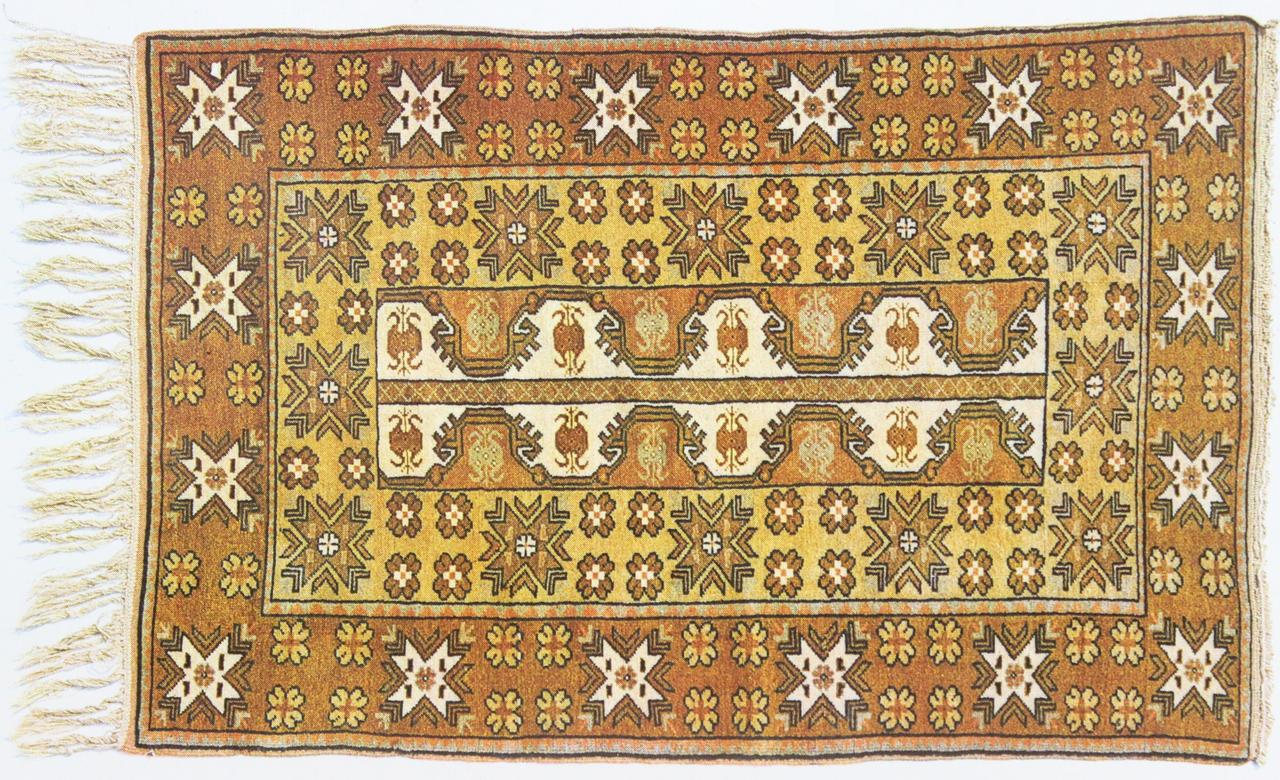
Milas Hand-Knotted Rug is an original craft product registered with a geographical indication, preserving Anatolia’s deep-rooted weaving tradition. Registered as a geographical indication in 1997 by the Milas Chamber of Commerce and Industry, this rug draws attention through its technical characteristics and cultural background. Carrying the accumulated heritage of centuries, the Milas Rug reflects traces of a life intertwined with nature in its colors and motifs. Woven using traditional techniques, these rugs carry forward the historical identity and aesthetic understanding of the region. Each knot bears the imprint of the past, weaving cultural heritage into living memory like a silent storyteller.
Milas Hand-Knotted Rug (AA)
The history of weaving is as ancient as human history itself. Initially created for covering and protection, textiles gradually acquired aesthetic and cultural dimensions. A direct relationship exists between geography and weaving: wool and hair textiles developed in regions where animal husbandry was practiced, cotton fabrics in areas where cotton was cultivated, and silk textiles in places where sericulture was carried out.
One of the earliest examples of Turkish weaving tradition is the Pazırık Carpet, discovered in 1949 by Professor Rudenko during excavations at the Pazırik kurgan in the Altai Mountains. Measuring 200 × 189 cm with a pile height of 2 mm and containing 36,000 knots per 10 cm², this carpet has entered world literature as the earliest known example of the “Turkish knot” technique.
The presence of the Milas Rug in Anatolia dates back to the 16th and 17th centuries. Initially produced in prayer rug dimensions to suit the nomadic Yörük lifestyle, these rugs were woven in small sizes emphasizing portability and practicality. Over time, sizes diversified in response to merchant demands; beginning in the 19th century, with the start of European carpet trade by the British, European Baroque influences began to appear in Milas Rugs. During this period, botanical ornamentation increased and a central “göbek” motif was introduced.
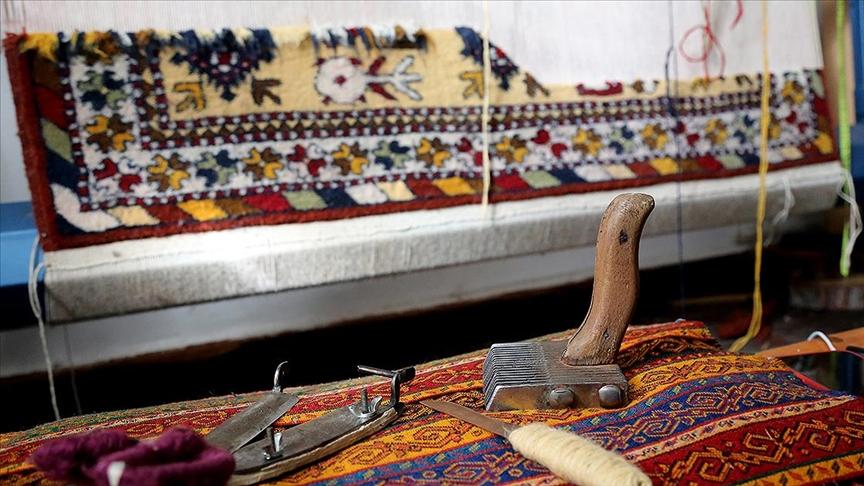
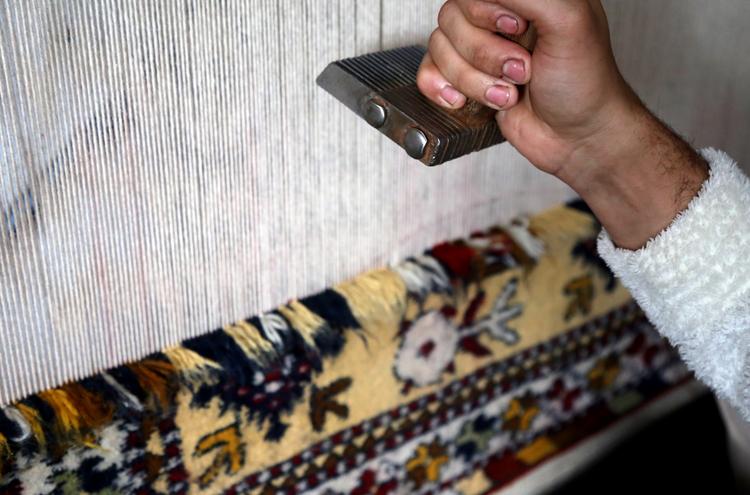
The Milas Hand-Knotted Rug is woven using the traditional “double knot” (Turkish knot) technique with wool yarn. Production takes place on looms known as “ıstar.” According to its registration certificate, the technical specifications of the rug are as follows:
Milas Hand-Knotted Rug (AA)
The Milas Rug is woven using wool yarn dyed with natural plant dyes. Red and yellow tones dominate the palette. The 26 known colors are derived from plants such as almond branches, mulberry leaves, artichoke, mint, and walnut. This natural dyeing tradition imparts aesthetic and cultural depth to the rug.
Motifs serve as a silent communication medium reflecting the emotions and thoughts of the women who weave them. Common motifs in Milas Rugs include eşme, cıngıllı Cafer, tobacco leaf, badılcan leaf, mirror slipper, eğmeli göllü, water path, Lâdik tulip, chicken foot, snake amulet, and the tree of life. Structural sections of the rug are named “küçük su, çentik, inek sidiği, mihrap, göbek and eğme.”
The weaving tradition in Milas and surrounding villages is currently sustained by a limited number of producers. Efforts to preserve this tradition continue in settlements such as Bodrum Karaova, Karacahisar, Ören, Türkevleri, Çökertme, Bozalan, Kayaönü, Gürceğiz, Bayır, Mumcular and Çitlik.
Depending on motif and color variety, Milas Rugs are known by different names: Milas, Karaova Ada Milas Piçi, Yılanlı Milas, Bozalan Ladik, Karacahisar Göbeklisi, Şişeli, Kabuksuz, Caferli Halı are among the types exemplifying this richness.
The protection of the Milas Hand-Knotted Rug under the geographical indication framework is enforced by quality control commissions during production and marketing stages. Production that deviates from the technical specifications is not permitted to be sold under the name “Milas Hand-Knotted Rug.” This practice aims to safeguard the cultural identity and traditional values of the product.
Anadolu Ajansı. "Muğla'nın geleneksel motifleri asırlık tezgahlarda geleceğe aktarılıyor." Accessed October 19, 2025. https://www.aa.com.tr/tr/kultur/muglanin-geleneksel-motifleri-asirlik-tezgahlarda-gelecege-aktariliyor/2763409.
Milas Kaymakamlığı. "Milas Halıları." Accessed October 19, 2025. http://www.milas.gov.tr/milas-halilari.
Turk Patent and Trademark Office. "Milas El Halısı." Coğrafi İşaretler Portalı. Accessed October 19, 2025. https://ci.turkpatent.gov.tr/cografi-isaretler/detay/37878.
Turkish Patent and Trademark Office. "Milas El Halısı Coğrafi İşaret Tescil Belgesi." Accessed October 19, 2025. https://ci.turkpatent.gov.tr/Files/GeographicalSigns/3f4b1716-dfe3-4794-8d56-89941f5d47b5.pdf.

Type of Geographical İndication | Mahreç Sign | ||||||||
|---|---|---|---|---|---|---|---|---|---|
Registration Number | 15 | ||||||||
Registration Date | 02.06.1997 | ||||||||
Product / Product Group(s) | Rugs and kilims | ||||||||
Province(s) | Muğla | ||||||||
Applicant/Registrant(s) | Milas Chamber of Commerce and Industry | ||||||||
Historical Background
Technical Features
Color and Motif Diversity
Production and Prevalence
Monitoring and Protection