

This article was automatically translated from the original Turkish version.
+1 More
Type of Geographical İndication | Origin Name | ||||||||
|---|---|---|---|---|---|---|---|---|---|
Registration Number | 446 | ||||||||
Registration Date | 28.08.2019 | ||||||||
Product / Product Group(s) | Processed and unprocessed fruits vegetables and mushrooms | ||||||||
Province(s) | Muğla | ||||||||
Applicant/Registrant(s) | Muğla Chamber of Commerce and Industry | ||||||||
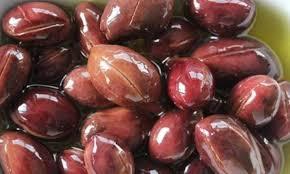
Milas Oil-Cured Olives are a table olive variety produced from Memecik olives grown in the Milas district of Muğla Province, using a traditional method of brining and preserving in olive oil. Registered as a geographical indication on 28 August 2019 by the Milas Chamber of Commerce and Industry, they have been granted “name of origin” status.
The Milas district is highly suitable for olive cultivation due to its calcareous alluvial and clay-sandy soil structure. The region’s climate and soil conditions are fundamental in shaping the aromatic profile of the Memecik olive variety. The olives ripen through natural rainfall irrigation, a process that supports the development of fruity aromas. Notes of orange mandarin and lemon, reminiscent of citrus fruits, are distinctive sensory characteristics of Milas Oil-Cured Olives.
The production of Milas Oil-Cured Olives begins with hand-harvesting of Memecik olives in December, when they begin to turn from purple to black, ensuring no damage to the fruit. The olives are slit into two or three incisions according to size and then brined in containers filled with drinking water. This water is replaced three times at intervals of 20 to 25 days. During the third replacement, 2% rock salt is added. The brined olives are rinsed, drained, and placed in jars, with three to four natural lemon slices added per kilogram of olives. The olives are then completely covered with Memecik olive oil produced within the boundaries of Milas, with a free acidity level not exceeding 1%. No additives, flavorings, or thermal treatments are used in the production process.
Sensory analyses have detected no abnormal fermentation defects or other defects such as moldy, soapy, or metallic notes. Saltiness, bitterness, and acidity are perceived at low to medium intensity. Fibrousness and crispness are medium to high in intensity.
Milas Oil-Cured Olives are sold in glass, tin, or plastic packaging conforming to the Turkish Food Codex, in volumes ranging from 1 to 20 liters. They should be stored in cool, dark environments, and jars should not be opened frequently.
The conformity of the product with its geographical indication criteria is monitored at least once annually by a three-member oversight body coordinated by the Milas Chamber of Commerce and Industry. Monitoring covers the production process, physical and chemical characteristics, packaging, and storage conditions. Accredited laboratory analyses may be conducted where necessary.
Turkish Patent and Trademark Office. "Milas Yağlı Zeytini." *Geographical Indications Portal.* Accessed October 19, 2025. https://ci.turkpatent.gov.tr/cografi-isaretler/detay/38457.
Turkish Patent and Trademark Office. *Milas Yağlı Zeytini Tescil Belgesi.* Turkish Patent and Trademark Office. Accessed October 19, 2025. https://ci.turkpatent.gov.tr/Files/GeographicalSigns/9ad59193-e975-476a-9665-3e7d31ba35c2.pdf.

Type of Geographical İndication | Origin Name | ||||||||
|---|---|---|---|---|---|---|---|---|---|
Registration Number | 446 | ||||||||
Registration Date | 28.08.2019 | ||||||||
Product / Product Group(s) | Processed and unprocessed fruits vegetables and mushrooms | ||||||||
Province(s) | Muğla | ||||||||
Applicant/Registrant(s) | Muğla Chamber of Commerce and Industry | ||||||||
Geographical and Agricultural Characteristics
Production Process
Physical and Sensory Characteristics
Chemical Characteristics
Packaging and Storage
Monitoring