


+1 More

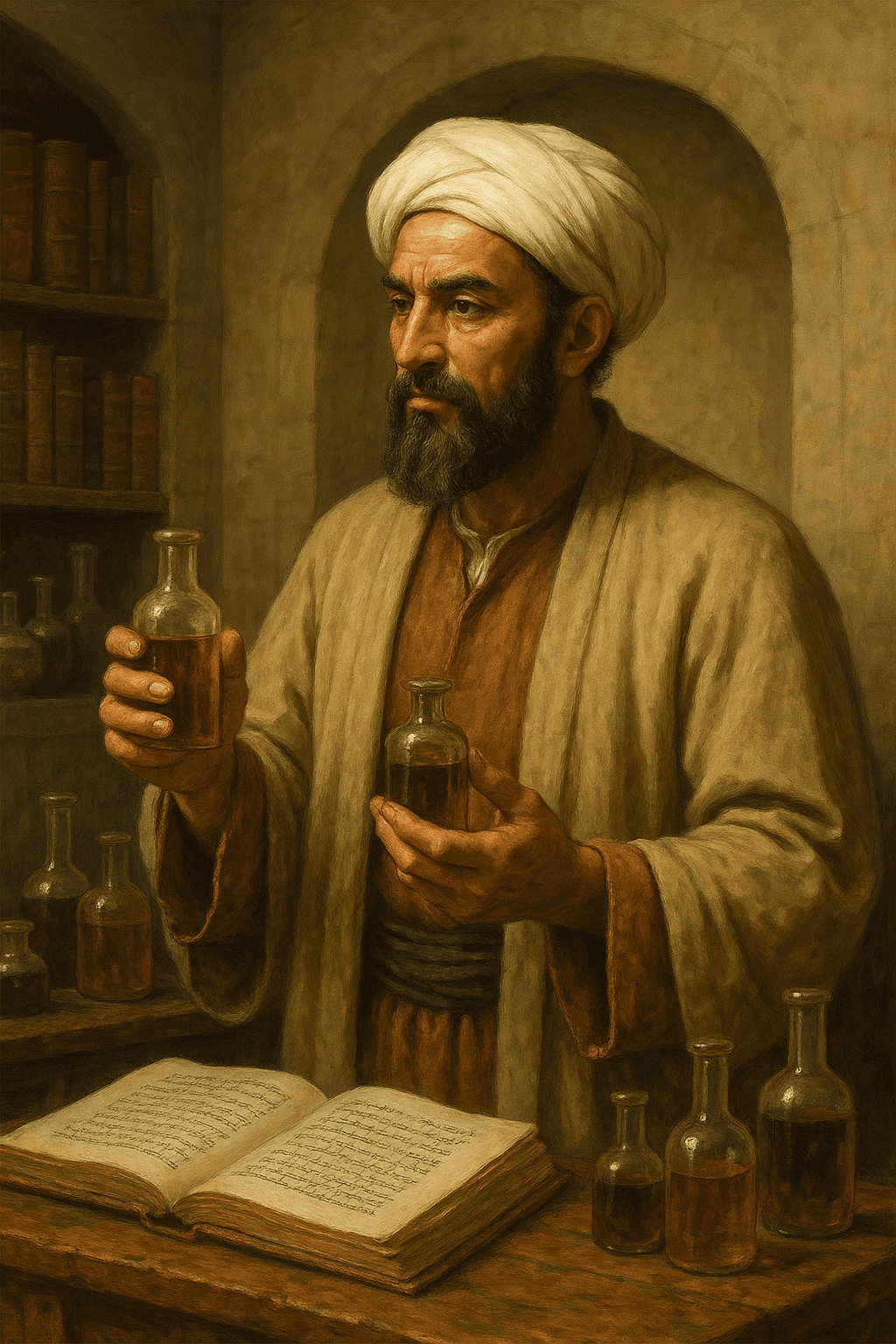
Mühezzebüddin b. en-Nakkash
Place and Date of Birth | Baghdad - 6th/12th century | ||||||||
|---|---|---|---|---|---|---|---|---|---|
Place and Date of Death | Damascus - 12 Muharram 574/25 June 1178 | ||||||||
Babası | Isa ibn Habatullah an-Nakkash | ||||||||
Areas of Interest | Medicine, Literature, Hadith, Arabic Language and Literature | ||||||||
Teachers | Amir al-Dawla Habatullah ibn Sa'id ibn at-Tilmiz, Abu al-Qasim Umar ibn al-Husayn, Umar ibn al-Qurashi | ||||||||
Positions Held | Physician, Medical Teacher, Munshi (responsible for official state correspondence) | ||||||||
State Officials Associated with | Nur al-Din Mahmud Zengi, Saladin Yusuf ibn Ayyub | ||||||||
Cities Resided In | Baghdad, Cairo, Damascus | ||||||||
Institutions Worked at | Nuri Hospital (Great Hospital), Divan-i Insha | ||||||||
His full name was Abu’l-Hasan Ali ibn Ibn Abi Abdullah Isa ibn Hebetullah an-Nakkaş; he was born and raised in Baghdad. He was a physician, hadith scholar, and poet.
His father, Isa ibn Hebetullah an-Nakkaş, was a man engaged both in textile trade (bezzāzlik) and literature. Mühezzebüddîn praised his father’s scholarly and literary qualities in a lament he composed in his honor. In his poems, he expressed both his devotion to his father and his human emotions in the face of death.
He possessed deep knowledge of Arabic language and literature and was also fluent in Persian. After receiving his initial education in these fields, he pursued medical studies. He obtained his foundational medical training under Emînüddevle Hebetullah ibn Sa‘id ibn at-Tilmiz, a renowned physician and prominent court physician of the Abbasid era, and worked alongside him for many years. In addition, he studied hadith; he attended lectures on hadith from Abu’l-Qasim Umar ibn al-Husayn in Baghdad and transmitted reports from him. He also received hadith transmissions from Judge Umar ibn al-Qurashi.
After completing his studies and practical training in Baghdad, Mühezzebüddîn moved to Damascus, where he continued practicing medicine. Particularly during the reign of Sultan Nureddin Mahmud Zengi (d. 569/1174), he served at the large hospital established in Damascus—the Nuri Bimaristan. In this institution, he not only provided medical care but also organized public lecture sessions for his students.
Although he resided in Cairo for a period, he returned to Damascus, where he lived until his death. Beyond medicine, he was involved in diplomatic correspondence and composed official letters and documents sent on behalf of Sultan Nureddin to various regions. In this field, he was regarded as one of the leading experts in the art of “insha” (formal prose composition) of his time.
After Nureddin’s death in 569/1174, Mühezzebüddîn entered the service of Saladin Yusuf ibn Ayyub (d. 589/1193), the Ayyubid ruler of Damascus. Saladin also held Mühezzebüddîn in high esteem, and he continued his medical duties during Saladin’s reign.
Mühezzebüddîn had a broad scholarly and professional network. He worked for many years alongside the eminent physician Emînüddevle Ibn at-Tilmiz. He was also connected to literary circles, and several of his poems have been preserved in various sources. The famous commander and poet Usama ibn Munqidh, in a poetic letter addressed to him, emphasized both his medical expertise and professional reputation.
The poem from Usama ibn Munqidh’s letter requesting belesan oil:
My limbs, in knowledge and all wisdom...
Are in the service of Mühezzeb.
And under the weight of a long life...
I grow weak and complain to time.
Now, a belesan oil perfectly suited...
To restore strength to my gait is needed.
All this is but a vain hope...
That an old man past eighty may rise again.
The desire for life after a long span...
Yet death is the ultimate end of man.
Medicine was Mühezzebüddîn’s primary field of activity. However, he also accumulated significant knowledge in Arabic language, literature, and insha (formal writing). He composed poetry, some of which has been recorded in biographical sources concerning him. His writings and lifestyle reflect ascetic tendencies. He never married, had no children, and devoted his life largely to scholarship. Sources describe him as generous, of noble character, and deeply committed to professional excellence.
Mühezzebüddîn ibn an-Nakkāsh died on Saturday, 12 Muharram 574/30 June 1178 in Damascus. His funeral was held at Qasyun Mountain.
Zirikli, Hayreddîn b. Mahmud b. Muhammed. El-A‘lâm. Lübnan 2002. C. IV.
Zirikli, Hayreddîn b. Mahmud b. Muhammed. El-A‘lâm. Lübnan 2002. C. IV.
el-Ömerî, Şihâbeddîn Ahmed b. Yahya. Mesâlikü’l-Ebsâr fî Memâliki’l-Emsâr. Abu Dabi 1423. C. IX.
es-Safedî, Selahaddin Halil b. Aybek. el-Vâfî bi'l-Vefayât. thk. Ahmed Arnavut-Türki Mustafa. Beyrut 2000. C. XXI.
İbn Ebî Useybia, Muvaffakuddîn Ebü’l-Abbas Ahmed b. el-Kâsım b. Halîfe b. Yûnus es-Sa’dî el-Hazrecî. Uyûnu’l-Enbâ fî Tabakâti’l-Etıbba. thk. Nizâr Rızâ. Beyrut, 1965.
İsa, Ahmed. Tarihu’l-Bimaristânât fi’l-İslâm. Daru’r-Raidi’l-Arabî. Beyrut 1981.

Mühezzebüddin b. en-Nakkash
Place and Date of Birth | Baghdad - 6th/12th century | ||||||||
|---|---|---|---|---|---|---|---|---|---|
Place and Date of Death | Damascus - 12 Muharram 574/25 June 1178 | ||||||||
Babası | Isa ibn Habatullah an-Nakkash | ||||||||
Areas of Interest | Medicine, Literature, Hadith, Arabic Language and Literature | ||||||||
Teachers | Amir al-Dawla Habatullah ibn Sa'id ibn at-Tilmiz, Abu al-Qasim Umar ibn al-Husayn, Umar ibn al-Qurashi | ||||||||
Positions Held | Physician, Medical Teacher, Munshi (responsible for official state correspondence) | ||||||||
State Officials Associated with | Nur al-Din Mahmud Zengi, Saladin Yusuf ibn Ayyub | ||||||||
Cities Resided In | Baghdad, Cairo, Damascus | ||||||||
Institutions Worked at | Nuri Hospital (Great Hospital), Divan-i Insha | ||||||||
No Discussion Added Yet
Start discussion for "Mühezzebüddîn ibn al-Nakkāsh (d. 574/1178)" article
His Family
Education
Institutions and Positions Held
Associations with Contemporary Figures
Areas of Interest and Character